Anthony Ribben
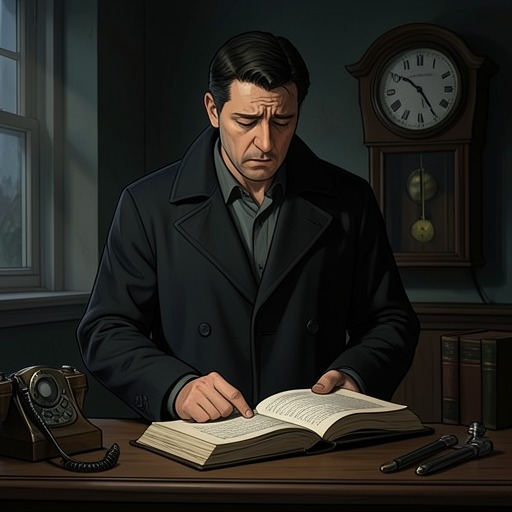
BabelAnthony Ribben is a postgraduate at Babel whose disappearance, presumed death, and sudden return give him an unusually disruptive place in the story. Introduced as a tall, slender Black man with advanced knowledge of French, Spanish, and German, he first appears as one more gifted linguist within the institution; later, his reappearance reveals that he has become a secretive and purposeful organizer. His decisive significance lies in the change from language as academic distinction to language as an instrument for political resistance.
Identity and Introduction
Anthony enters the narrative by shaking hands with the other students and introducing himself as a postgraduate specializing in French, Spanish, and German. His linguistic ability is linked to his upbringing: his guardian, Mr Falwell, fancied himself a Romanticist and hoped Anthony would pursue poetry, but sent him to Babel when Anthony’s talent for languages proved more than passing. The explanation gives Anthony both a personal history and a position within the institution’s hierarchy. He is not merely studying languages for ornament or literary prestige; his ability has been recognized as an unusual capacity that requires specialized training.
His first appearance also establishes him through social contrast. When Ramiz Rafi Mirza identifies his own knowledge of Urdu, Arabic, and Persian, Anthony’s introduction becomes part of a sequence in which the students answer one another by naming their languages. Anthony therefore belongs to a multilingual community whose members are valued according to what they can translate and where their knowledge may carry them. The scene’s sociability is not entirely comfortable: Robin Swift cannot understand the French exchanged nearby and senses that he has been judged. Anthony’s presence thus helps expose the cultural capital and exclusion operating within Babel’s student world.
Disappearance and Presumed Death
Anthony’s disappearance becomes known only after his absence has already altered the institution around him. During a research expedition to Barbados the previous summer, he vanished on the night before his ship was due to return to Bristol. By the time Professor Jerome Playfair tells the others, Babel has heard nothing from him and presumes that he is dead. The announcement is delivered with startling casualness, as though Anthony’s fate were no more consequential than deciding whether to go punting, and that indifference makes the news more disturbing rather than less.
The disappearance affects the postgraduate community on the eighth floor, where Anthony’s colleagues are sufficiently upset to wear black for the rest of the week. Other cohorts and fellows join them, though participation is presented as optional. Anthony is not therefore an isolated academic whose absence passes unnoticed; he has a recognized place within Babel and relationships strong enough to produce a communal public response. Yet the handling of his presumed death also shows how institutional ritual can flatten personal catastrophe. His guardian, Mr Falwell, is the only family connection mentioned, and he is notified by post and said to be deeply upset. Anthony’s story is consequently suspended between private grief and bureaucratic announcement.
Return and Recruitment
The apparent finality of Anthony’s death is overturned in Ramiz Rafi Mirza’s third year, when Anthony appears again “back from the dead.” His return is not presented as a simple homecoming or an explanation of the Barbados expedition. Instead, it is immediately connected to a question that changes Ramiz’s direction: Anthony asks whether Ramiz will join them. Ramiz answers without hesitation. The exchange marks Anthony as a recruiter and a representative of an organized project whose existence has previously been concealed from the reader and from Ramiz.
The timing of the return is crucial to Ramiz’s development. Before Anthony reappears, Ramiz has become skilled at performing the identities expected of him in Oxford: he can imagine himself as an accomplished postgraduate, a solicitor, or an interpreter moving between London and Calcutta, earning money and returning with gifts for his family. At the same time, he fears becoming the kind of imperial functionary his guardian Horace Wilson intended him to be, and he sees anticolonial resistance as scarce and seemingly hopeless. Anthony’s invitation provides a concrete alternative to that despair. It does not erase Ramiz’s uncertainty, but it converts his dissatisfaction into allegiance and action.
Political Objective and Methods
Anthony later gathers the group on the main road, where he steps forward, counts them with one finger as though checking a group of ducklings, and instructs them to follow him. The gesture combines informality with command. His authority does not depend on a grand speech or formal office; it is visible in his knowledge of where they must go and in his ability to assemble them at the necessary moment. The scene confirms that his return has placed him at the center of a coordinated operation.
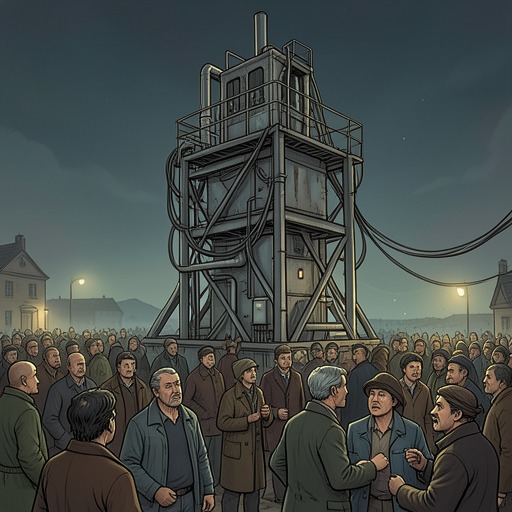
When the group begins its work, Anthony states the central objective: they must convince Parliament and the British public that taking Britain to war against China would be contrary to their own interests. This is a political campaign rather than a private act of revenge or a purely academic exercise. Its immediate background is the destruction of the opium shipment by Commissioner Lin, followed by Lin’s proclamation banning English trade from Canton. Jardine & Matheson use the confrontation to demand military action, presenting war as a defense of British honor and a remedy for humiliation in the East. Anthony’s task is to challenge that imperial framing before the House of Lords can approve a military expedition.
The stakes he identifies are wider than the immediate dispute over trade. The question is silver: defeating China would open the greatest reserve of silver in the world to the British Empire, enabling faster warships and more powerful, accurate guns. Victory would therefore supply the material basis for further imperial expansion across Africa, Asia, and South America. Anthony’s strategy recognizes that moral condemnation alone may not persuade Parliament or the public. The argument must expose how the language of honor conceals an economic and military project whose consequences would extend throughout the colonized world.
Narrative Role and Significance
Anthony’s narrative function is shaped by controlled absence. His first appearance establishes him as a gifted multilingual scholar; his disappearance turns him into an institutional loss; his return revises the meaning of that loss by revealing a hidden political life. The structure makes him a figure of delayed knowledge: what seems to be death becomes concealment, and what seems to be academic specialization becomes preparation for intervention. His reappearance also gives the novel a hinge between personal uncertainty and organized resistance.
Through Anthony, multilingual ability acquires a double meaning. Babel can treat languages as credentials that produce useful servants of empire, but Anthony redirects the same skills toward persuading the imperial public not to pursue war. He embodies the possibility that translation need not remain subordinate to the state that trains translators. His political work still takes place inside the institutions and public arguments of Britain, yet its purpose is to interrupt the imperial conversion of linguistic and economic power into violence.
He is also a figure of collective rather than solitary action. The invitation to Ramiz, the gathering of the group, and the division of the political task all show Anthony operating through networks. His authority is practical: he knows when to appear, whom to recruit, and what argument must be made before the parliamentary decision. The character’s mystery remains part of his power, but the evidence makes his central commitment clear. Anthony Ribben returns from presumed death not simply to resume his studies, but to place translation in the service of preventing an imperial war.