Griffin Harley Lovell
BabelGriffin Harley Lovell is Robin Swift’s older half-brother and one of the book’s most consequential revelations: his appearance gives Robin a living counterpart, his history exposes the hidden costs of Babel’s power, and his actions force Robin to confront the possibility that resistance can reproduce the violence it opposes. Griffin is at once criminal, insurgent, brother, murderer, and protector, a figure whose sharp intelligence and deliberate secrecy make him both an ally and an enduring source of danger.
Identity and Background
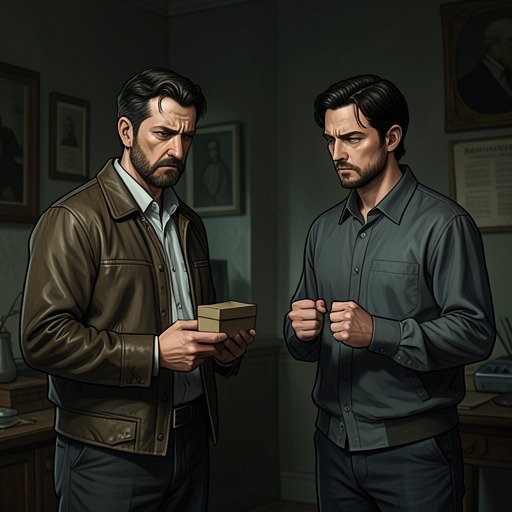
Griffin first identifies himself to Robin as Griffin Lovell. Although the two initially appear to be strikingly alike, closer observation distinguishes them: Griffin is several years older, taller, much thinner, and marked by a harder maturity. His face resembles a print illustration of Robin with the contrasts intensified and the colour drained away; his voice is deeper, less forgiving, and more assertive, while his darker hair and paler skin give the resemblance an almost unnerving artificiality. The likeness establishes him as Robin’s double, but the differences show what experience has made of that shared origin.
Griffin’s name is itself a record of abandonment and self-invention. He explains that Professor Richard Linton Lovell once took him to a street corner, told him that foundlings were often named after the places where they had been abandoned, and left him to walk through the city until he found a name that did not sound ridiculous. Griffin chose Harley after seeing the word above a shop, attracted not to any special place but to the sound and physical shape of the name, especially the release of its second syllable. He insists, however, that the chosen name does not alter his essential identity: he is a Lovell, just as Robin is no Swift. The distinction between assigned name, chosen name, and inherited name makes his identity both linguistic and familial.
Plot Trajectory and Objectives
Griffin introduces Robin to the truth behind the previous night’s forbidden action. He states that he is a criminal and that his colleagues regularly steal silver, manuscripts, and engraving materials from Babel, then move them across England to associates elsewhere in the world. He characterizes Robin’s participation as treason, warning that discovery would mean imprisonment in Newgate for twenty years, preceded by torture intended to extract information about the network. His account is delivered rapidly and almost without changes in tone, as if danger has become routine and explanation itself has been reduced to procedure.
His justification is concise but politically expansive: some people need silver more than wealthy Londoners. Griffin therefore frames theft not as private enrichment but as redistribution from an institution and class that possess the means of silver-working toward people excluded from them. His resistance is practical rather than romantic. He works through clandestine routes, materials, and associates, using the same circulation systems that make Babel’s power possible against the institution that controls them.
Griffin’s secrecy also limits Robin’s access to that resistance. When Robin asks why Griffin is not joining a particular operation and why he cannot use the bar himself, Griffin answers that he cannot, adding that Robin already knows the reason. The forced calm of the reply reveals a concealed wound or restriction without explaining it in the moment. Griffin’s authority thus depends partly on withheld knowledge: he recruits Robin into danger while preserving boundaries around his own vulnerability.
Family, Secrecy, and Moral Conflict
The discovery that Robin and Griffin are half-brothers changes their relationship from resemblance to obligation. Griffin greets Robin as a brother only after stating the truth plainly, while Robin responds by demanding the full story. Their bond is therefore not sentimental recognition alone; it begins as an inquiry into missing history, disputed names, and the circumstances that separated them. Griffin becomes the living evidence that Robin’s official identity is incomplete, and his existence destabilizes the categories through which Robin has understood family and belonging.
That intimacy is repeatedly threatened by concealment. Professor Richard Linton Lovell later uses Griffin’s name as though it were a curse and asks Robin whether he knows what happened to Eveline Brooke. He then reveals that Griffin murdered her five years earlier, when she was working alone on the eighth floor after midnight. Eveline was described as Babel’s finest student and the university’s pride, absorbed in research so completely that she failed to notice the surrounding lights had been turned off. The accusation transforms Griffin in Robin’s eyes: the brother who explained treason as aid to the needy is also implicated in the death of an exceptional student.
The revelation is especially devastating because Robin has already suspected the general outline of the story while refusing to assemble its final piece. Griffin’s silence has allowed their relationship to exist under a partial truth. Once the murder is named, Robin must hold incompatible images together: Griffin is not simply a criminal villain, nor is he an innocent victim of institutional power. He is a protector and a killer, a political actor and a secretive brother whose past cannot be separated from the danger surrounding the present.
Confrontation with Sterling Jones
Griffin’s final confrontation with Sterling Jones takes place during the escape from Oxford Castle. The square appears deserted because the sentries are occupied with the flames, and the high walls provide shadows for concealment, but Sterling stands between the fugitives and the gate. His hair is burned, his face scratched and bloody, and dust and blood cover his coat. He invokes Griffin’s destruction of the castle and directly connects it with Eveline Brooke’s death, asking whether killing her had not been enough.
Griffin’s response is protective as well as tactical. When Sterling approaches, Griffin puts a hand out before Robin and Victoire Desgraves as though shielding them from a charging beast. He then assesses the immediate threat with cold precision, identifying three possible targets and one gun, and asks Sterling whom he intends to shoot. The exchange reduces the emotional history between the two men to a lethal geometry, but the protective gesture shows that Griffin’s calculations are not merely self-preserving; he places himself between Sterling and the others.
The gunfight is simultaneous and almost instantaneous. Griffin draws his revolver as Sterling aims at Griffin’s chest, and both apparently pull their triggers at the same moment. They collapse together after a single report. Robin finds a wet, spreading patch of blood over Griffin’s left shoulder and tries to determine whether the wound is survivable, while Victoire screams. Griffin, still conscious enough to speak, directs Robin to his front pocket, making the pocket and its contents the immediate focus of his final action. His ending leaves the outcome suspended at the moment of injury, but it fixes him physically between the people he has protected and the rival whose violence has followed him through the story.
Narrative Role and Significance
Griffin functions as Robin’s double and dark inheritance. Their resemblance makes kinship visible before it becomes intelligible, while Griffin’s greater age and hardened appearance embody a possible future shaped by abandonment, clandestinity, and violence. His chosen name also extends the book’s concern with language: a sound noticed above a shop becomes a self-selected identity, yet Griffin still claims the Lovell name as the deeper truth. Names can be imposed, discovered, or reclaimed, but none of them remains politically neutral.
His relationship with Robin also gives the resistance movement a personal cost. Griffin does not merely explain that Babel steals and redistributes silver; he makes Robin’s entry into that world inseparable from family recognition. The same man who offers Robin a brotherly connection also brings him into treason, conceals a murder, and confronts a lethal enemy in front of him. Through Griffin, the narrative refuses a clean division between heroic rebellion and criminal action. The question is not whether Griffin occupies one moral category, but how his loyalties, injuries, and violence have been produced by the institutions and histories he is fighting.