Ella
BelovedElla is a formidable, practical woman in the free black community of Cincinnati who first appears as a rescuer of fugitive slaves and later becomes the driving force behind the community's intervention at 124 Bluestone Road. Her unflinching realism, shaped by a brutal past, leads her to reject both Sethe's infanticide and the haunting that follows, ultimately mobilizing the thirty women who exorcise Beloved and save Sethe from herself.
Identity and Background
Ella is introduced as a short, young woman who greets Sethe on the Ohio bank after her harrowing escape from Sweet Home. She arrives with a croaker sack containing a wool blanket, cotton cloth, two baked sweet potatoes, and a pair of men's shoes, immediately demonstrating her role as a practical provider for fugitives. She is married to John, who is "out yonder a ways," and together they work with Stamp Paid to ferry runaways across the river. Ella's past is marked by profound trauma: her puberty was spent in a house where she was shared by a father and son, whom she calls "the lowest yet." This experience gave her a disgust for sex and became the standard against which she measures all atrocities. She also delivered, but would not nurse, a hairy white child fathered by "the lowest yet," which lived five days without making a sound. These experiences forged her into a woman who believes love is a serious disability and who values action over cogitation, which she says "clouded things and prevented action."
Role in the Underground Railroad and Early Encounters with Sethe
Ella's first meeting with Sethe occurs when she responds to Stamp Paid's signal—an open sty with a white rag tied to the post, indicating a child is among the crossing. She kneels, empties her sack, and immediately begins to assess Sethe's condition, listening "for the holes—the things the fugitives did not say; the questions they did not ask." She wraps a cloth strip tightly around the newborn Denver's navel and tries to force Sethe's feet into the men's shoes, splitting them down the heel when they will not fit. Ella tells Sethe that her children have made it to Baby Suggs' house on Bluestone Road, and she offers the grim advice, "If anybody was to ask me I'd say, 'Don't love nothing.'" This early encounter establishes Ella's pragmatic, guarded worldview and her role as a gatekeeper of survival knowledge. Later, after Sethe's infanticide and imprisonment, Ella "junked her and wouldn't give her the time of day," viewing Sethe's crime as prideful and misdirected, and Sethe herself as too complicated.
The Exorcism of 124 and the Community's Intervention
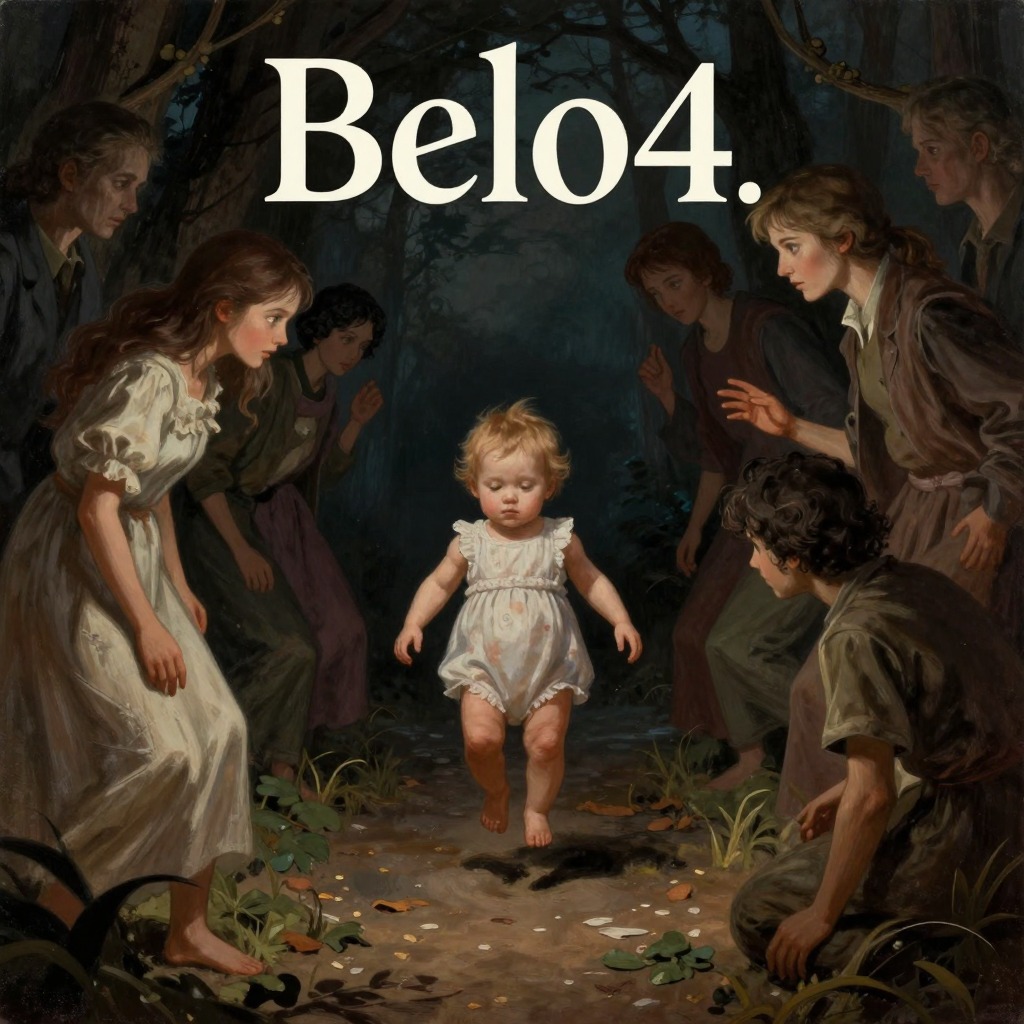
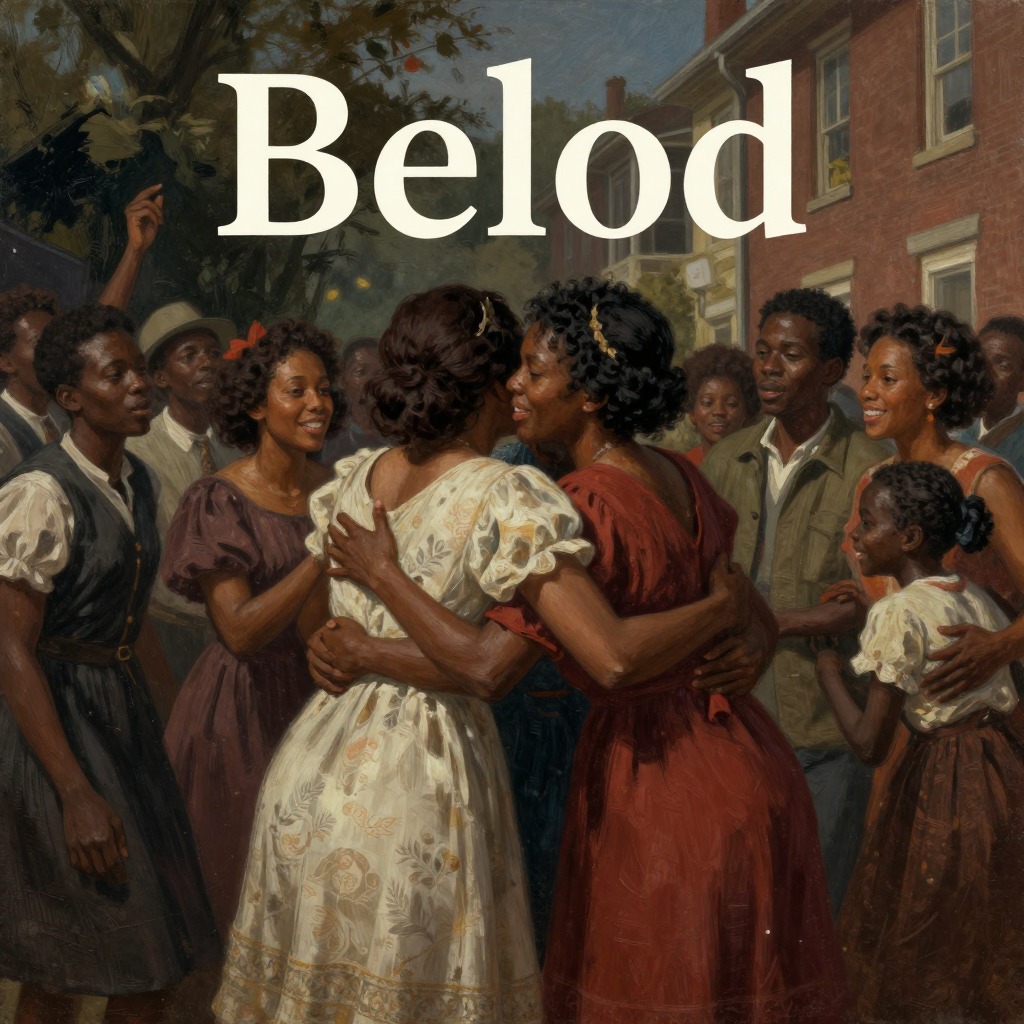
When rumors spread that Sethe's dead daughter has returned to torment her, Ella is initially skeptical but becomes infuriated at the idea of "past errors taking possession of the present." She argues, "What's fair ain't necessarily right," and insists that "the children can't just up and kill the mama." Ella is the one who convinces the other women that rescue is in order, declaring, "First. Then we got to get down to business" when they ask if they should pray. She leads the thirty women who gather outside 124 on a hot Friday afternoon, standing among those who "held 124 in a fixed glare," trying to see through the walls to what is really inside. When the women begin to sing, their voices build into "a wave of sound wide enough to sound deep water and knock the pods off chestnut trees," and Sethe, trembling "like the baptized," comes to the door with Beloved. Ella, seeing the naked, pregnant Beloved, hollers, and the sound becomes the catalyst for the exorcism. When Sethe, mistaking Edward Bodwin for schoolteacher, attacks him with an ice pick, it is Ella who "clipped her" with a fist to the jaw, preventing a murder. Ella's decisive action saves both Sethe and Bodwin, and afterward she remains uncertain whether Beloved is truly gone, suggesting she might be "hiding in the trees waiting for another chance."
Relationships and Conflict
Ella's relationships are defined by her refusal to sentimentalize. She is a friend to Stamp Paid, but she challenges him when he defends Sethe, asking, "What run him off? Tell me that," and she is unmoved by his appeals to Christian charity. She tells Stamp, "I ain't got no friends take a handsaw to their own children," and she distances herself from Sethe, whom she once helped. Her conflict with Sethe is not personal but ideological: Ella believes in stomping out the past, while Sethe is consumed by it. Ella's own past, including her abuse by "the lowest yet," makes her particularly sensitive to any form of possession or invasion, whether by a ghost or by white men. She respects the ghost as long as it stays in its ghostly place, but when it "took flesh and came in her world," she sees it as an invasion that must be met with force.
Change and Significance
Ella undergoes little change herself; she remains consistent in her practicality and her belief that "sufficient unto the day is the evil thereof." Her significance lies in her role as a catalyst for communal action. She embodies the community's collective memory and its capacity for both judgment and rescue. While she never fully reconciles with Sethe, her intervention at 124 ensures that Sethe survives to begin the slow process of reclaiming her life. Ella's story underscores the novel's themes of survival, the weight of the past, and the necessity of communal support in the face of unspeakable trauma. Her refusal to let the past "take possession of the present" offers a counterpoint to Sethe's rememory, suggesting that while the past cannot be forgotten, it must not be allowed to destroy the living.