Miss Bodwin
BelovedMiss Bodwin, the sister of Edward Bodwin, is a white abolitionist who, together with her brother, plays a significant, albeit peripheral, role in the lives of the Black community in Cincinnati. She is first mentioned as the whitewoman who brought Christmas gifts to 124 Bluestone Road during the War years, including cologne for Sethe and Denver, oranges for the boys, and a wool shawl for Baby Suggs. This act of generosity, remembered by Denver, establishes her as a figure of kindness and material support, though her presence is always from a distance, mediated by gifts rather than direct engagement.
Identity and Background
Miss Bodwin is introduced as part of the Bodwin siblings, who are described as "undeniably brother and sister, both dressed in gray with faces too young for their snow-white hair." They are Scots, and Mr. Garner, who brought Baby Suggs to them, had known them for over twenty years. They are abolitionists who "hated slavery worse than they hated slaves," and they provide housing and employment to freed Black people. Miss Bodwin, in particular, is noted for her role in the Society, an abolitionist group, and for her personal involvement in supporting individuals like Baby Suggs and Sethe.
Role in the Community and at 124
Miss Bodwin's most direct impact on the narrative is through her material gifts and her provision of the house at 124 Bluestone Road. When Baby Suggs first arrives in Cincinnati, it is the Bodwins who offer her a house, "two rooms upstairs, two down," in exchange for laundry, seamstress work, and other services. This house becomes the central setting of the novel, the site of both the haunting and the family's struggles. Miss Bodwin's Christmas visits, bringing cologne and oranges, are remembered by Denver as rare moments of joy and connection to the outside world. However, her benevolence is also marked by a certain condescension, as seen when she calls Baby Suggs "Jenny," a name Baby Suggs does not recognize, and when she and her brother assume the house's previous tenants were "not clean."
Relationship with Sethe and Denver
Miss Bodwin's relationship with Sethe is indirect but significant. It is through the Bodwins' influence that Sethe obtains her job at Sawyer's Restaurant, as noted in Sethe's internal monologue: "the Bodwins got me the cooking job at Sawyer's." This job provides Sethe with a livelihood and a sense of independence. For Denver, Miss Bodwin becomes a potential benefactor later in the novel. When Denver seeks work, she goes to the Bodwins' house, and it is Miss Bodwin who takes an interest in her education, teaching her "book stuff" and suggesting she might attend Oberlin. Denver describes this as "experimenting on me," indicating a relationship that is both supportive and objectifying.
The Attack and Its Aftermath
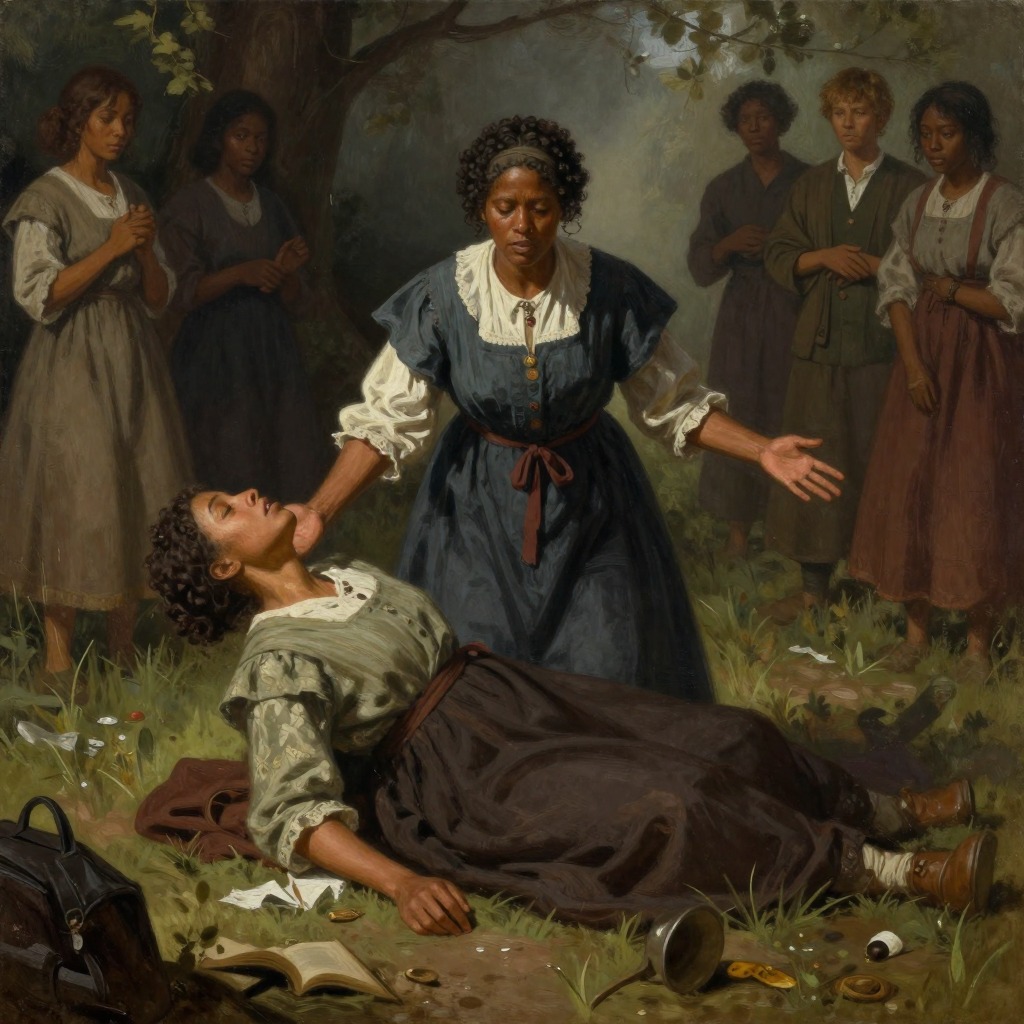
Miss Bodwin's most dramatic involvement occurs during the community exorcism of Beloved. As the women sing outside 124, Edward Bodwin arrives in a cart to pick up Denver for her night shift. Sethe, mistaking him for schoolteacher, attacks him with an ice pick, but is restrained by the community. Miss Bodwin, though not present at the scene, is deeply affected. Janey Wagon reports that Miss Bodwin is "so glad her boss ain't dead" and that she and Denver would be looking for a job, implying that Miss Bodwin's trust in Sethe is shattered. The incident also leads Miss Bodwin to decide to sell 124, as Janey tells Stamp Paid: "His sister say it's full of trouble. Told Janey she was going to get rid of it." This decision marks the end of the Bodwins' connection to the house and, symbolically, to the family's past.
Significance
Miss Bodwin represents the complex role of white abolitionists in the lives of freed Black people. She is a source of material support and education, yet her benevolence is tinged with paternalism and a lack of deep understanding of the trauma her beneficiaries have endured. Her decision to sell 124 after the attack underscores the limits of her commitment and the fragility of the relationships between white benefactors and the Black community. In the novel's broader themes, Miss Bodwin embodies the ambivalent nature of white allyship, which can provide tangible aid but cannot fully comprehend or protect against the psychological and emotional scars of slavery.