Howard
BelovedHoward is the elder of Sethe's two sons, who, along with his younger brother Buglar, flees 124 Bluestone Road as a thirteen-year-old after the house's spiteful ghost commits an unbearable insult. His departure marks the beginning of the family's disintegration and is a recurring absence that haunts Sethe's memory and Denver's childhood.
Identity and Introduction
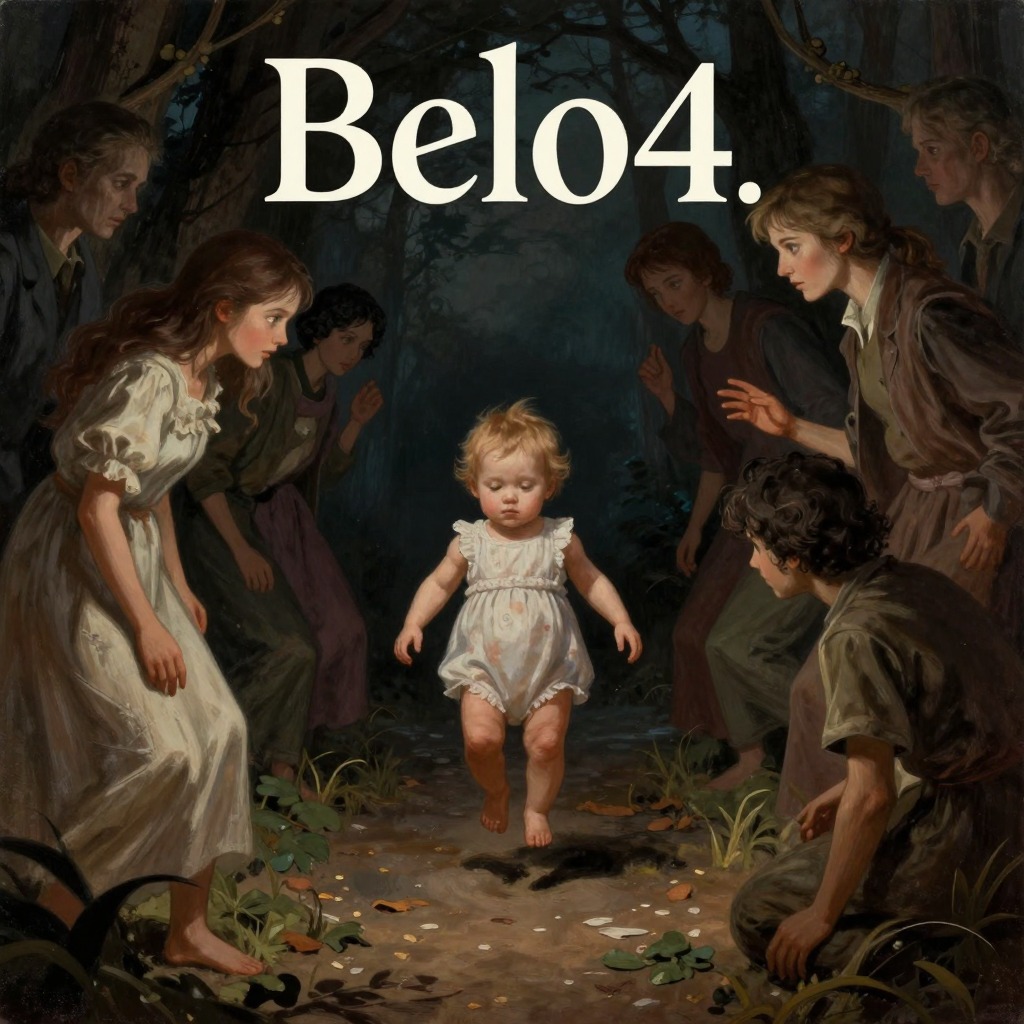
Howard is introduced in the novel's opening pages as one of the two sons of Sethe and Halle, living at 124 Bluestone Road in Cincinnati, Ohio, in 1873. He is distinguished from his brother Buglar by a physical trait that Sethe remembers long after his departure: "Howard at least had a head shape nobody could forget." This detail becomes a fragile anchor for Sethe's fading memory of her son, who, along with Buglar, had run away by the time they were thirteen years old. The brothers' flight is triggered by the house's haunting, which they experience as a series of increasingly personal insults. For Howard, the decisive moment comes when "two tiny hand prints appeared in the cake," a sign that he cannot bear to witness a second time. Unlike Buglar, who flees after merely looking in a mirror shatters it, Howard waits for this second, more intimate violation before he too stuffs quilt packing into his hat, snatches up his shoes, and creeps away from the lively spite the house felt for them.
Life and Plot Trajectory
Howard's life at 124 is marked by the escalating malevolence of the baby ghost, which drives him and his brother to flee within two months of each other, in the dead of winter, leaving their grandmother Baby Suggs, their mother Sethe, and their little sister Denver alone in the gray and white house on Bluestone Road. Before his departure, Howard is a source of joy and mischief in the family. Sethe recalls a day at Sweet Home when Howard and Buglar, then young boys, "run up and roll down" a small hill near the second patch, their short fat legs running up the hill, laughing. This memory of their happiness contrasts sharply with the later image of their backs walking down the railroad tracks, away from her. After leaving, Howard's fate is largely unknown to the family. Sethe, scanning the fields every morning and evening for her boys, gradually stops, and their thirteen-year-old faces fade completely into their baby ones, which come to her only in sleep. In her dreams, she sometimes sees them in beautiful trees, their little legs barely visible in the leaves, or running along the railroad track laughing, too loud to hear her call. Denver, who misses her brothers, remembers how they would sit clustered on the white stairs, she between the knees of Howard or Buglar, while they made up die-witch! stories with proven ways of killing her dead. She also recalls that Howard and Buglar, before they ran away, would sleep holding hands, a detail she later describes to Beloved. The brothers' departure is so traumatic that Denver, who was ten when they left, is left with no children willing to circle her in a game or hang by their knees from her porch railing.
Key Actions and Objectives
Howard's primary action in the novel is his flight from 124, an act of self-preservation that he undertakes without waiting for one of the house's relief periods. His objective is simply to escape the ghost's persecution, which he perceives as an unbearable insult. This flight is not a considered rebellion but a desperate, instinctive response to a supernatural threat. Sethe later reflects that Howard and Buglar "walked off just before Baby Suggs died," and she wonders if they left because of the ghost, though Denver doubts this, thinking that if so, what took them so long, since they had lived with it as long as she had. The brothers' departure is also a rejection of the family's suffering, a choice to leave rather than endure the haunting that their mother and sister continue to face. In this sense, Howard's objective is to find a life free from the ghost's tyranny, a goal that aligns him with the novel's broader theme of escape from the past, though his escape is from a supernatural rather than a historical oppression.
Relationships and Conflict
Howard's relationships are defined by his absence. For Sethe, he is a lost child whose memory she struggles to preserve. She remembers his head shape, and in her dreams she sees him in beautiful trees, a vision that shames her because the sycamores of Sweet Home "beat out the children every time" in her memory. For Denver, Howard is a beloved brother whose departure leaves a void. She remembers the pleasure of sitting between his knees on the white stairs, and she misses him and Buglar, who would be twenty-two and twenty-three years old by the time of the novel's present. The conflict that drives Howard away is not with his family but with the ghost of his dead sister, whose venomous presence makes the house unlivable. His flight is a direct response to this conflict, and it has lasting consequences for those he leaves behind. Sethe, in particular, is haunted by the loss of her sons, and her grief is compounded by the fact that she does not know where they are or if they are alive. The brothers' departure also contributes to the family's isolation, as 124 becomes a house shunned by the community, with no visitors and no friends.
Change and Ending
Howard's story is one of departure without return. He never appears again in the novel's present, and his fate remains unknown. Sethe, who once hoped for his return, eventually gives up, thinking, "There will never be a day, she thought, when Halle will knock on the door," a sentiment that extends to her sons as well. The novel's ending, which describes the aftermath of Beloved's disappearance, notes that Sethe's sons, Howard and Buglar, are gone, and she is left with only Denver. The final image of Howard is that of a boy running up and rolling down a hill at Sweet Home, a memory of innocence that contrasts with the sorrow of his loss. His absence is a permanent wound in the family, a reminder of the cost of the haunting and the impossibility of reclaiming what has been lost.
Narrative Role and Evaluation
Howard's narrative role is primarily that of an absent presence. He is a character whose departure shapes the lives of those who remain, but he himself is never developed as a fully realized figure. His story is told through the memories and regrets of others, particularly Sethe and Denver, and his flight serves as a symbol of the family's fragmentation. Howard's escape from 124 is also a contrast to the novel's central action of confronting the past. While Sethe and Denver must learn to live with the ghost and its legacy, Howard and Buglar choose to flee, a choice that the novel presents as both understandable and tragic. His absence underscores the theme of loss that pervades the novel, and his memory, like that of the dead baby, is a presence that cannot be fully forgotten. In this way, Howard is not just a minor character but a key element in the novel's exploration of how the past haunts the present and how the living must reckon with the dead.