Lady Jones
BelovedLady Jones is a mixed-race woman of gray eyes and yellow woolly hair, every strand of which she hates, though whether it is the color or the texture even she does not know. She married the blackest man she could find, had five rainbow-colored children, and sent them all to Wilberforce after teaching them all she knew right along with the others who sat in her parlor. Her light skin got her picked for a colored girls' normal school in Pennsylvania, and she paid it back by teaching the unpicked—the children who played in dirt until they were old enough for chores. The colored population of Cincinnati had two graveyards and six churches, but since no school or hospital was obliged to serve them, they learned and died at home. She believed in her heart that, except for her husband, the whole world, including her children, despised her and her hair. She had been listening to "all that yellow gone to waste" and "white nigger" since she was a girl in a houseful of silt-black children, so she disliked everybody a little bit because she believed they hated her hair as much as she did. With that education pat and firmly set, she dispensed with rancor, was indiscriminately polite, saving her real affection for the unpicked children of Cincinnati, one of whom sat before her in a dress so loud it embarrassed the needlepoint chair seat.
The School in the Parlor
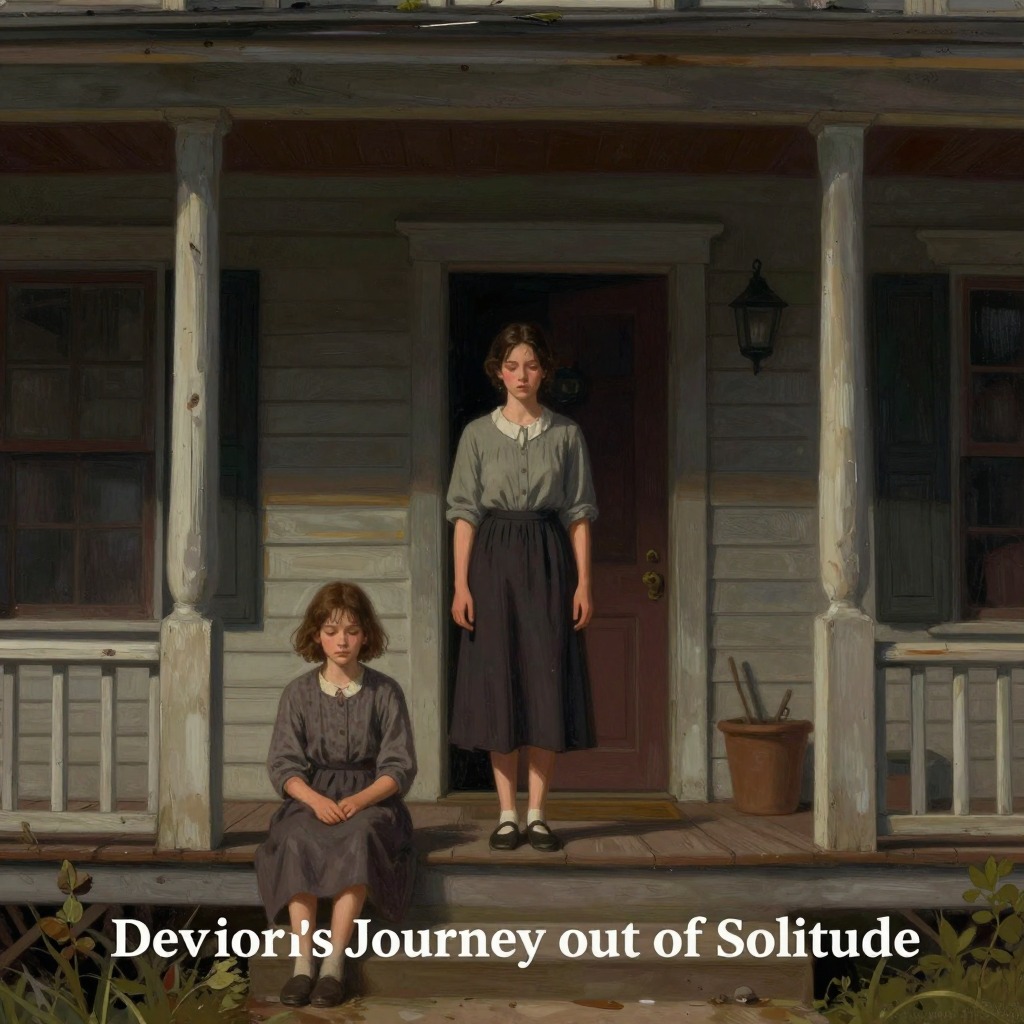
When Denver was seven, she walked off looking for the house other children visited but not her. She found Lady Jones' house and was too timid to go to the front door, so she peeped in the window. Lady Jones sat in a straight-backed chair; several children sat cross-legged on the floor in front of her. Lady Jones had a book. The children had slates. Lady Jones was saying something too soft for Denver to hear, and the children were saying it after her. Four times Denver went to look. The fifth time Lady Jones caught her and said, "Come in the front door, Miss Denver. This is not a side show." So Denver had almost a whole year of the company of her peers and along with them learned to spell and count. Those two hours in the afternoon were precious to her, especially because she had done it on her own and was pleased and surprised by the pleasure and surprise it created in her mother and her brothers. For a nickel a month, Lady Jones did what whitepeople thought unnecessary if not illegal: she crowded her little parlor with the colored children who had time for and interest in book learning. The nickel, tied to a handkerchief knot, tied to her belt, that Denver carried to Lady Jones thrilled her. Denver practiced every morning and starred every afternoon, learning the capital w, the little i, the beauty of the letters in her name, and the deeply mournful sentences from the Bible Lady Jones used as a textbook.
The Question That Silenced Denver
Denver was so happy she did not even know she was being avoided by her classmates—that they made excuses and altered their pace not to walk with her. It was Nelson Lord, the boy as smart as she was, who put a stop to it; who asked her the question about her mother that put chalk, the little i, and all the rest that those afternoons held, out of reach forever. He asked, "Didn't your mother get locked away for murder? Wasn't you in there with her when she went?" She should have laughed when he said it, or pushed him down, but there was no meanness in his face or his voice. Just curiosity. But the thing that leapt up in her when he asked it was a thing that had been lying there all along. She never went back. The second day she did not go, Sethe asked her why not. Denver did not answer. For two years she walked in a silence too solid for penetration but which gave her eyes a power even she found hard to believe. When Lady Jones approached the ignorant grandmother one day on the road, a woods preacher who mended shoes, to tell her it was all right if the money was owed, the woman said that was not it; the child was deaf. And deaf Lady Jones thought she still was until she offered her a seat and Denver heard that.
The Return of the Starving Girl
Years later, when 124 had fallen into starvation and Sethe had lost her job at Sawyer's Restaurant, Denver stood on the porch of 124 ready to be swallowed up in the world beyond the edge of the porch. She walked the remembered route, shocked to see how small the big things were: the boulder by the edge of the road she once could not see over was a sitting-on rock; paths leading to houses were not miles long; dogs did not even reach her knees. She found the house with the post and scrap-lumber fence, now gray instead of white, the stone porch sitting in a skirt of ivy, pale yellow curtains at the windows, and the laid brick path to the front door. She knocked, and Lady Jones went to the door expecting raisins. She was older, of course, and dressed like a chippy, but the girl was immediately recognizable to Lady Jones. Everybody's child was in that face: the nickel-round eyes, bold yet mistrustful; the large powerful teeth between dark sculptured lips that did not cover them. Some vulnerability lay across the bridge of the nose, above the cheeks. And then the skin. Flawless, economical—just enough of it to cover the bone and not a bit more. She must be eighteen or nineteen by now, thought Lady Jones, looking at the face young enough to be twelve. "Why, Denver," she said. "Look at you." Lady Jones had to take her by the hand and pull her in, because the smile seemed all the girl could manage. Other people said this child was simple, but Lady Jones never believed it. Having taught her, watched her eat up a page, a rule, a figure, she knew better.
The Kindness That Saved a Family
Denver asked for work, saying she could not do anything but would learn it if Lady Jones had a little extra food, because her ma'am did not feel good. Lady Jones gave her some rice, four eggs, and some tea, and told her that no one, not herself, not anyone she knew, could pay anybody anything for work they did themselves. "But if you all need to eat until your mother is well, all you have to do is say so." She mentioned her church's committee invented so nobody had to go hungry. That agitated her guest, who said, "No, no," as though asking for help from strangers was worse than hunger. Lady Jones said goodbye to her and asked her to come back anytime. Two days later Denver stood on the porch and noticed something lying on the tree stump at the edge of the yard. She went to look and found a sack of white beans. Another time a plate of cold rabbit meat. One morning a basket of eggs sat there. As she lifted it, a slip of paper fluttered down with the name "M. Lucille Williams" written in big crooked letters. So Denver paid a second visit to the world outside the porch, although all she said when she returned the basket was "Thank you." Every now and then, all through the spring, names appeared near or in gifts of food, and Lady Jones tried to identify the plate or pan or the covering towel. When she could only guess, Denver followed her directions and went to say thank you anyway, whether she had the right benefactor or not. When she was wrong, a small conversation took place. All of them knew her grandmother and some had even danced with her in the Clearing. At least once a week, Denver visited Lady Jones, who perked up enough to do a raisin loaf especially for her, since Denver was set on sweet things. She gave her a book of Bible verse and listened while she mumbled words or fairly shouted them. By June Denver had read and memorized all fifty-two pages—one for each week of the year.
The Quiet Architect of Rescue
It was the word "baby," said softly and with such kindness, that inaugurated Denver's life in the world as a woman. The trail she followed to get to that sweet thorny place was made up of paper scraps containing the handwritten names of others. Lady Jones did not believe the story that Sethe's dead daughter had come back to fix her, and hated the ignorance of those who did. Yet when the thirty women made up their company and walked slowly toward 124 on that wet and hot Friday afternoon, Lady Jones was among those who did not come, because she did not believe the story and hated the ignorance of those who did. But her earlier kindness had already done its work: the gifts of food had strengthened Denver, and Denver's own visit to the Bodwins' house, arranged through Janey Wagon, had led to the night work that put her in the world. When the women assembled outside 124 and began to sing, the sound broke over Sethe and she trembled like the baptized in its wash. It was the community's response, set in motion by Lady Jones's simple act of feeding a starving girl, that finally freed the house of Beloved and allowed Sethe to begin the long work of reclaiming herself.