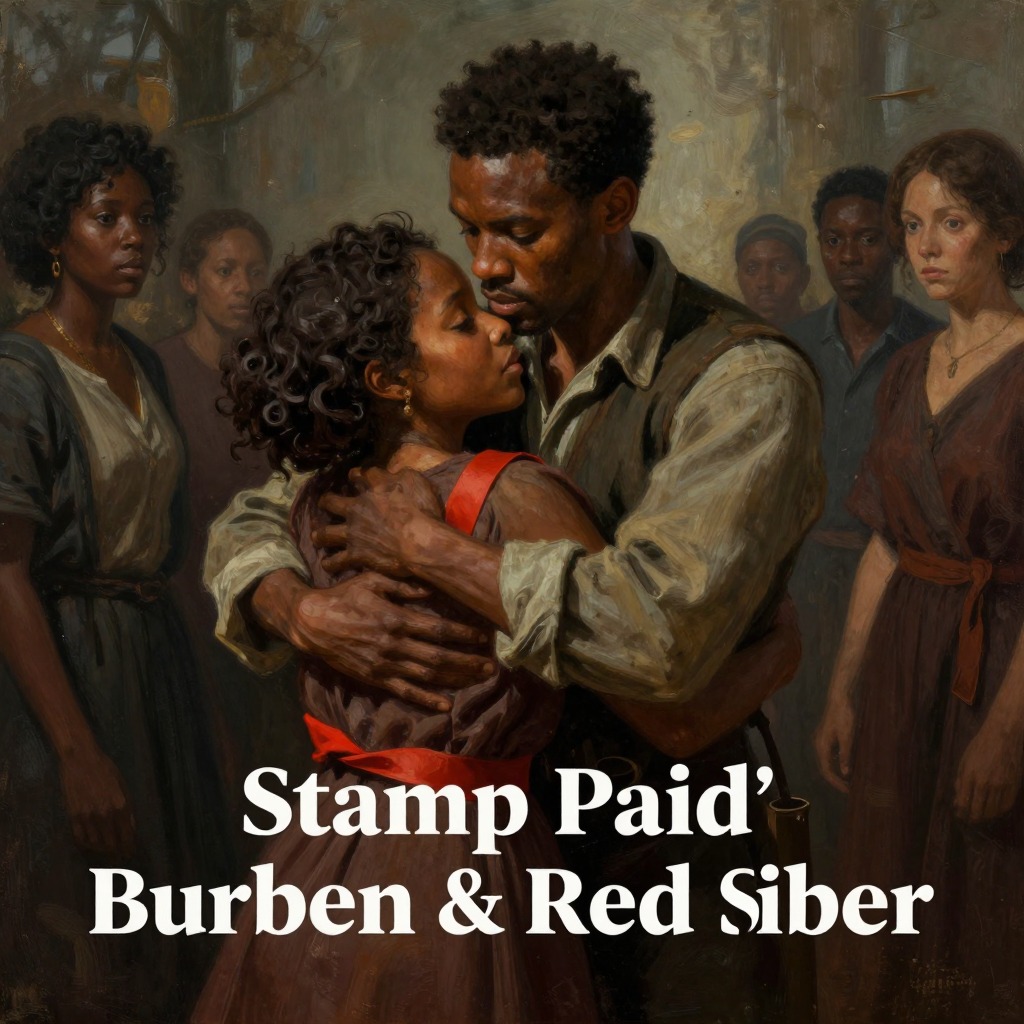
Vashti
BelovedVashti is the wife of Stamp Paid, a woman whose suffering under slavery becomes the defining trauma of her husband's life. Though she appears only in Stamp's recollection, her story shapes his identity and his entire philosophy of living. Stamp's decision to rename himself from Joshua to Stamp Paid is a direct response to what happened to Vashti, and her memory haunts him even as he dedicates himself to the freedom of others.
Identity and Background
Vashti is introduced through Stamp Paid's memory as his wife, a woman he loved deeply. The couple worked together in the fields, planting and picking, and their life was marked by the constant threat of violence and exploitation. Stamp describes her as having a "real small neck," a detail that becomes significant when he contemplates breaking it in a moment of despair. Vashti's suffering is not just physical but also emotional, as she is forced into a relationship with the young master of the plantation, a boy of seventeen or twenty. Stamp's account reveals that Vashti wore a cameo on a black ribbon, a gift from the master, which she put on every time she went to him. This object becomes a symbol of her degradation and of the power dynamics that governed their lives.
Life and Suffering
Vashti's life is marked by her exploitation at the hands of the young master. Stamp Paid tells Paul D that he never touched Vashti during this time, not once, even though they were married. The couple's relationship is strained as Vashti is often gone at night, and Stamp is left to endure the pain of knowing what is happening. He describes how he took any chance to get near the great house to see the young master's wife, hoping to catch a glimpse of Vashti. In one poignant moment, he approaches the mistress and asks about Vashti, mentioning the black ribbon she wears, which reveals his knowledge of the affair. The mistress's reaction—turning rosy—confirms his suspicions. Stamp's despair reaches a low point when Vashti returns one Sunday morning and sits by the window, saying, "I'm back, Josh." He looks at the back of her neck and decides to break it, "like a twig—just snap it." But he does not; instead, he changes his name.
Consequences and Stamp Paid's Transformation
Vashti's suffering and eventual death have profound consequences for Stamp Paid. After the incident with the young master, Stamp decides to leave the plantation, taking a boat up the Mississippi to Memphis and then walking to Cumberland. Vashti does not accompany him; she dies, and Stamp is left to carry the burden of her loss. His decision to rename himself "Stamp Paid" is a way of declaring that he owes nothing to anyone, that the debt of his suffering has been paid in full. He tells Paul D, "I never touched her all that time. Not once." This renaming is not just a personal act but a philosophy that guides his life: he extends his debtlessness to others by helping them pay off their own misery. Stamp becomes a ferryman for runaways, a provider of food and information, and a pillar of the community, all in an attempt to make sense of Vashti's suffering and his own survival.
Narrative Role and Significance
Vashti's story is told through Stamp Paid's recollection, making her a figure of memory and loss. Her presence in the novel serves to illuminate the brutal realities of slavery and the ways in which individuals cope with trauma. Stamp's account of Vashti is not just a personal confession but a testament to the resilience of the human spirit. Her death, though not described in detail, is a catalyst for Stamp's transformation from a man on the brink of violence to a man dedicated to the service of others. Vashti's memory also connects to the novel's broader themes of love, loss, and the search for identity. In a narrative filled with characters who are haunted by their pasts, Vashti stands as a reminder of the personal costs of slavery and the enduring power of love and memory.