Sack of Thunder-ten-Tronckh Castle
CandideThe sack of the Castle of Thunder-ten-Tronckh destroys the family and home at the center of Candide’s early life, turning the war’s abstract violence into personal loss. Pangloss initially tells Candide that Cunegonde has died along with her family; Cunegonde’s later account overturns that report, making the attack both a catastrophe and the event from which her survival story proceeds.
The Attack and the Household’s Destruction
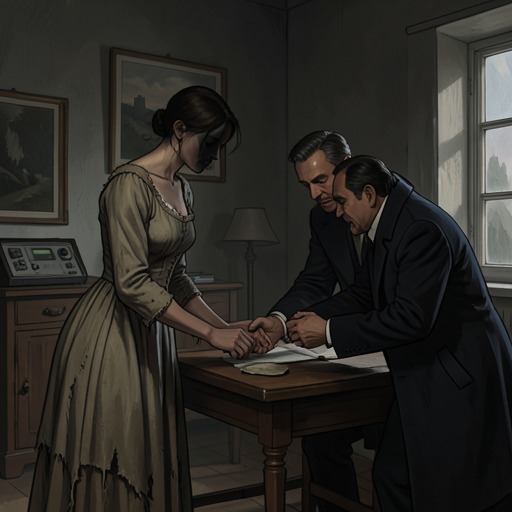
Cunegonde recalls being asleep when the Bulgarians arrived at the Castle of Thunder-ten-Tronckh. She says that they killed her father and brother and cut her mother to pieces. Her account places the assault within a broader attack on the household: she describes seeing her family harmed before a soldier attacked her, and says that the episode left a mark on her side. The violence is presented as part of the wartime destruction of the castle, not as an isolated encounter.
Pangloss’s earlier report to Candide gives the event a wider scale. He says that Cunegonde was believed dead, that the Baron had been killed while trying to defend her, and that the Baroness and their son had also been killed. He describes the castle as so thoroughly destroyed that not a stone, barn, sheep, duck, or tree remained. The domestic world Candide had known is thus erased along with its inhabitants—or, as Cunegonde’s later testimony establishes, nearly all of them.
Conflicting Reports and Survival
The attack reaches Candide first as news of total loss. On hearing that Cunegonde is dead, he faints; when he recovers, he asks Pangloss about the causes and sufficient reasons behind the philosopher’s own miserable condition. Pangloss’s account joins the deaths at the castle to the attack on himself, while Candide’s distress shows the immediate personal consequence of believing that Cunegonde has been killed.
Cunegonde’s later narration corrects that understanding. She survived the assault and can describe its beginning from inside the castle, including her initial unconsciousness and her struggle to resist the soldier who attacked her. Her recollection changes the meaning of Pangloss’s report: the sack did devastate her family, but it did not end her life. The difference between the two accounts also makes survival itself a fact Candide cannot know from the first report.
Retaliation and the War’s Logic
Pangloss frames the destruction as part of reciprocal devastation. After recounting the castle’s ruin, he claims that the Abares have done the same to a neighboring barony belonging to a Bulgarian lord, presenting that parallel destruction as revenge. The symmetry does not restore the people or property lost at the Castle of Thunder-ten-Tronckh; it extends the pattern of destruction to another community.
The sack therefore supplies a concrete counterweight to Pangloss’s confidence that private misfortunes contribute to a general good. The attack kills members of Cunegonde’s family, destroys the estate, and leaves Candide to understand the world through a report of irreparable loss. Its later retelling does not undo those consequences, but it exposes the gap between the catastrophe as first reported and the surviving witness’s account.