Shipwreck of James the Anabaptist
CandideThe Shipwreck of James the Anabaptist is the disaster in which James dies after saving a sailor who had struck him. The episode makes the difference between practical compassion and abstract philosophical explanation stark: James acts to preserve another life, while Pangloss describes the drowning as part of a necessary order and prevents Candide from trying to intervene.
Storm and Wreck
As the passengers reasoned during their voyage, the sky darkened and a tempest arose within sight of Lisbon. The ship was badly damaged: its sheets were torn, its masts broken, and the vessel began to founder. Some passengers, overcome by the ship’s motion, were scarcely aware of the danger; others cried out and prayed. Amid the confusion, no one could establish effective command.
James’s Rescue and Death
James was on deck and tried to help during the crisis. When a sailor struck him and fell overboard, James hauled the man back up; the effort sent James into the sea. Candide saw his benefactor surface and disappear beneath the water. He moved to jump in after him, but Pangloss stopped him, arguing that the Bay of Lisbon had been made for James to drown in. The sailor whom James had saved made no attempt to help him.
Survivors and Immediate Aftermath
The ship foundered, and everyone aboard died except Pangloss, Candide, and the sailor. The sailor reached shore by swimming, while Pangloss and Candide came ashore on a plank. Once they had recovered enough to walk, they headed toward Lisbon with some money left, hoping to avoid starvation after surviving the wreck. They lamented James’s death as they entered the city.
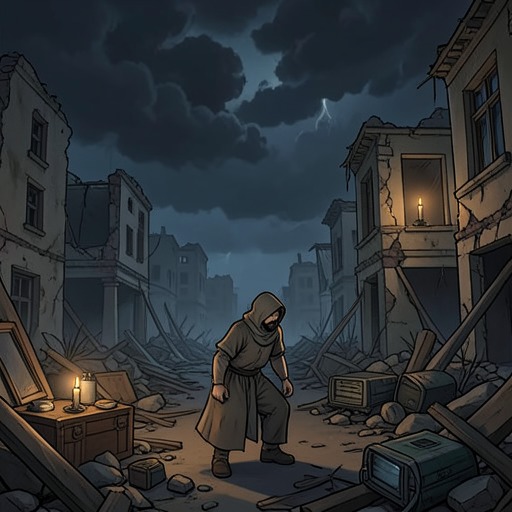
The shipwreck is followed almost immediately by the Lisbon earthquake. The earth shook, the harbour waters rose and damaged anchored vessels, and collapsing buildings killed thirty thousand inhabitants, according to the narrative. Pangloss sought a physical explanation, proposing a subterranean sulphur connection between Lima and Lisbon; Candide found the idea plausible but asked instead for practical help. The earthquake is a distinct catastrophe, but its placement carries forward the wreck’s contrast between suffering and explanations that do not relieve it.
Narrative Significance
James’s death gives concrete force to the disagreement about whether private misfortunes serve a general good. The sailor’s conduct reverses the expected moral order: the person James saves survives, while the rescuer dies and the sailor shows no concern for him. Pangloss’s claim that the drowning was necessary turns that reversal into a test of his optimism, while Candide’s attempted response registers the human cost that the argument cannot undo. The later Lisbon earthquake extends the episode’s pattern of catastrophe followed by confident explanations and institutional responses.