Narrator’s combat exhaustion and psychological strain
CherryThe narrator’s combat exhaustion and psychological strain develop as an accumulation rather than a single crisis: too many patrols, too little rest, repeated exposure to death, and the growing conviction that the unit’s work has no meaningful purpose. His medical responsibilities intensify that pressure. Faced with a wounded Iraqi man and a grieving family, he must act while recognizing how little he can control; later, exhaustion and frustration spill into open conflict with Lieutenant Evans.
Identity and Conditions
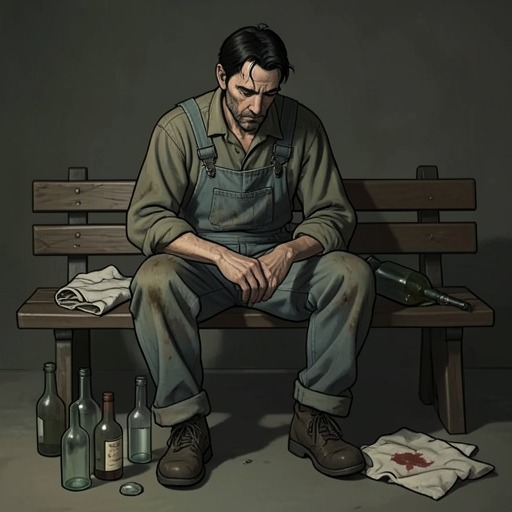
After Yuri becomes incapacitated and is not expected to return, the first section is left without its assigned medic. The narrator is sent on most of its patrols in addition to those he already makes with the third section. The increased workload leaves him exhausted and continually tense, waiting for the war to reach him. His role brings a particular strain: he is expected to function as a medic in situations where treatment is uncertain and the surrounding violence can abruptly overwhelm care.
The pressure is not only a matter of frequency. On one day, after an improvised explosive device ambush the previous night, the narrator is sent out again despite being worn down. The heat and brightness make it difficult for the patrol to follow a thought; the men see translucent red stars. At dawn, Koljo has also killed a dog, a detail that matters to the narrator because he loves dogs. When Shoo tells him that he must leave again within an hour, the narrator protests that he has already gone out ten times that week and fears the repeated missions will kill him. The patrol is described as an easy census mission, with the narrator meant to stay by the vehicles, but that reassurance does not undo the cumulative fatigue.
Medical Duty and Helplessness
The clearest test of the narrator’s medical role comes after soldiers shoot an Iraqi man. The man is young, barefoot, and lying on his back in a white undershirt stained with blood. The narrator is responsible for treating him, but he cannot identify the wound’s full path. He packs gauze into the entry wound, covers it with a plastic bag secured on three sides with tape, and asks Sullivan to hold the dressing while he searches for an exit wound. Because he finds none and cannot know where the bullet has lodged, even the basic task of locating the injury becomes an exercise in uncertainty.
Afterward, the narrator itemizes what he believes he should have done differently: used much more gauze to seal the wound, placed the man on his injured side, and raised his feet. He admits that the explanation about raising the feet was something to say when he did not know what else to do. He cannot establish an IV because the man’s veins are flat, and says he will give him morphine to prevent shock. This recollection presents medical responsibility not as mastery but as an obligation carried out under pressure, with the narrator’s later self-reproach fixed on specific decisions and omissions.
Exposure to Death and Its Aftermath
The wounded man’s death is followed by a second scene of helplessness. The narrator lays out a body bag beside the naked corpse and rolls the dead man inside. An older woman rushes out of a house, screaming and trying to reach the bag. Soldiers push her back; she falls to her knees, pours handfuls of dirt over her head, and strikes her face against the ground. A very pregnant young woman joins her, while two young boys scream. As four soldiers carry the body bag away, the older woman follows and tries to seize it.
The narrator describes himself as close to crying and perhaps shooting himself when automatic AK-47 fire erupts in three long bursts and the group disperses. He takes cover in a ditch as the infantry returns fire. The immediate danger does not resolve what he has just witnessed. Later, Sullivan tells him that the older woman was struck and killed by their own fire that morning; the narrator believes the report because Sullivan would not have said it without being sure. The confirmation turns a moment of battlefield confusion into a lasting burden of witnessing civilian death, including the death of someone whose grief had unfolded directly in front of him.
Anger, Alienation, and Futility
The narrator’s fatigue also changes how he responds to command. In an argument with Evans, he accuses the lieutenant of ignoring warnings and recalls advising him not to enter a field that was too soft, after which the unit became stuck. He says that four soldiers were killed and blames Evans, then immediately qualifies his own outburst: the men were acquaintances rather than friends, Evans did not kill them, and the narrator believes that the unit would have been killed had it not become stuck. The correction exposes the instability of the accusation without erasing the anger behind it. Under strain, the narrator turns a complicated outcome into a charge, then revises it as he recounts it.
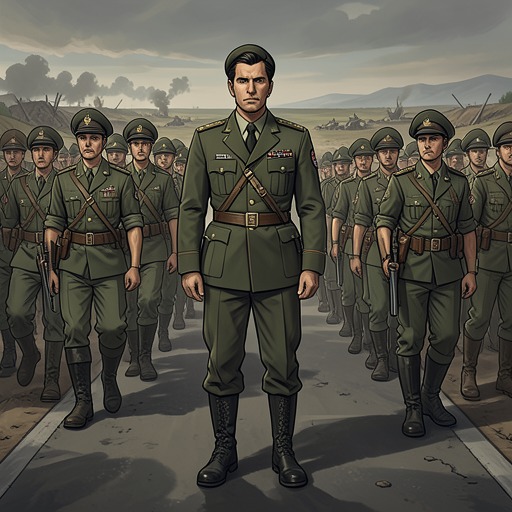
By autumn, the narrator sees the whole unit as damaged and ready for the deployment to end. He describes soldiers who kick in doors, destroy houses, and shoot people as psychologically wrecked, and says that the work has lost its interest and purpose. Deaths arrive singly or in pairs, without heroism or decisive battles; the men seem to him like expensive, glorified scarecrows, walking the same roads to appear occupied. Rumors of deaths, a patrol base destroyed by a car bomb, and women killed by gunfire—including one holding a baby and another who was pregnant—extend the sense that violence continues without producing a clear result. The arrival of autumn gives the deployment a marker and makes its approaching end imaginable, but it does not make its losses meaningful.
The narrator’s alienation is personal as well as military. He contrasts himself with North, who is more invested in America and appears to embody the hardness and certainty the narrator lacks. He does not enjoy the war and does not consider himself tough; in his account, his status as a veteran rests on the luck of not having been killed. At the same time, he suspects that Emily is sleeping with other men, and imagines an intruder whenever he searches a house. These suspicions intensify his isolation but remain suspicions, not established facts. Together with the recurring patrols and the remembered failures of care, they show strain narrowing his world to danger, distrust, and survival. The account offers no diagnosis: its emphasis is on exhaustion, moral unease, and a soldier’s growing conviction that he has endured a costly routine without being allowed to do anything that feels like meaningful combat.