Certainty is the great enemy of unity
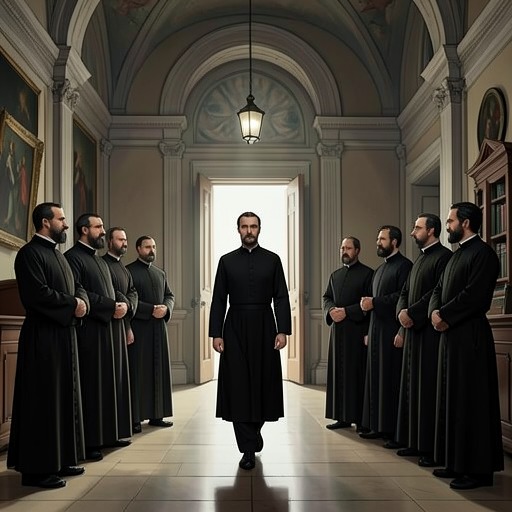
Conclave“Certainty is the great enemy of unity” is Lomeli’s warning that absolute confidence can fracture the Church rather than secure it. Spoken in his homily to the cardinal-electors, the phrase makes doubt not a failure of faith but one of the conditions that keeps faith alive; its force is tested when Scavizzi answers with a vision of the Church as a ship endangered by competing doctrines, and later when the conclave must weigh legal procedure against urgent consequences.
The homily’s argument
Lomeli builds the claim from the image of the Church as a living body: its members serve in different ways, and no person or faction should dominate the others. Drawing on Paul’s exhortation to be subject to one another, he presents tolerance not as indifference but as a practical necessity for a community whose different limbs must work together. Unity, in this account, is not sameness imposed from above; it depends on the capacity to live with difference.
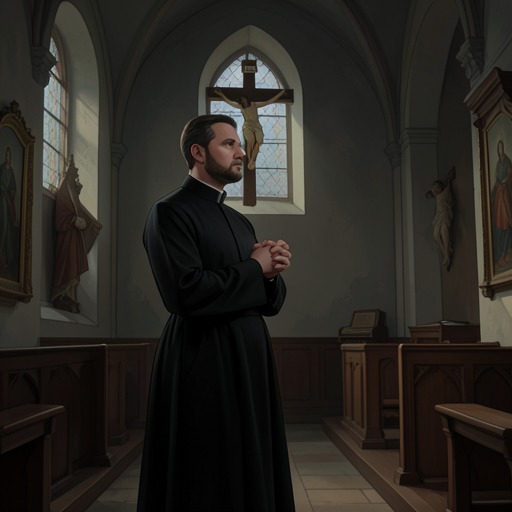
The homily then turns from diversity to certainty. Lomeli calls certainty the enemy of both unity and tolerance, and invokes Christ’s cry of abandonment on the cross as an expression of anguish rather than untroubled assurance. Doubt does not empty faith of meaning: it preserves mystery, and therefore preserves the need for faith. The argument culminates in his prayer that the Church receive a Pope who doubts and thereby keeps Catholic faith living and capable of inspiring the world; he also asks for a Pope who sins, seeks forgiveness, and carries on.
Scavizzi’s counter-image
Scavizzi directly challenges the use Lomeli has made of Paul’s Letter to the Ephesians. He insists that the passage calls for unity in faith and knowledge of Christ, not an embrace of doubt, and recasts the Church as the Barque of St Peter in a storm. A series of named ideologies—among them atheism, nationalism, liberalism, individualism, feminism, and capitalism—becomes the wind and waves threatening its course.
Where Lomeli sees tolerance as necessary to the body’s life, Scavizzi warns that accommodating every passing idea would leave the ship lost. He calls for a captain who will ignore the doubters and hold the rudder fast, and argues for a Church that moves the world rather than one that moves with it. The opposing metaphors sharpen the dispute: Lomeli’s Church is a body whose parts require one another; Scavizzi’s is a vessel whose survival depends on a firm hand and a fixed direction.
Doubt, law, and authority
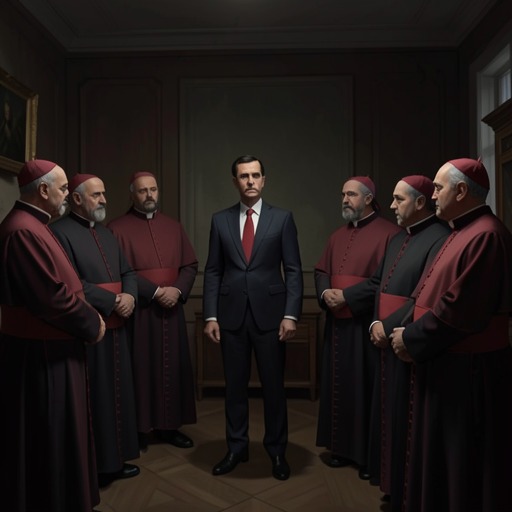
The phrase’s concern with certainty resonates beyond the homily’s theological argument. When the secret elevation of Vincent Benítez is questioned, Lomeli points to the late Pope’s revision of canon law on in-pectore appointments. He later invokes paragraph thirty-nine of the Apostolic Constitution: a cardinal-elector arriving re integra, before a new Pope has been elected, may join the election at whatever stage it has reached. For Lomeli, the rule makes Benítez legally a cardinal, even as others question whether the late Pope’s appointment should be accepted.
This dispute exposes a tension between certainty about authority and the interpretation of rules. Lomeli acknowledges that papal infallibility concerns doctrine, not appointments, yet argues that canon law gives him grounds to recognize Benítez’s status. The election’s procedure itself is carefully formalized: each elector must carry a folded ballot to the altar and swear that the vote is given to the person he believes should be elected before God. Law and ritual promise a legitimate result, but their application still requires judgment.
The crisis of procedure
After bombs strike in Rome while the conclave remains unresolved, Lomeli confronts a choice with no safe certainty. Suspending the conclave would honor the victims but prolong the leadership vacuum; accelerating the vote would violate the Apostolic Constitution and risk producing a Pope whose legitimacy could be challenged from the start. The black smoke above the city and the black smoke from the Sistine chimney make the parallel visible: political catastrophe outside, unresolved election inside.
Lomeli does not erase the conflict by appealing to urgency alone. Before speaking about what has happened, he seeks the conclave’s authority under paragraphs five and six of the Apostolic Constitution, which permit discussion of certain matters in special circumstances if a majority agrees. He then proposes a vote on whether the cardinals should receive the information. The large majority in favor, set against the smaller group opposing it, turns procedural uncertainty into a collective decision. Across these episodes, the phrase is less a rejection of rules than a warning against mistaking one interpretation, faction, or moment of confidence for the whole truth.