You are not a shepherd. You are a manager.
Conclave“You are not a shepherd. You are a manager.” is the late Pope’s defining description of Jacopo Baldassare Lomeli’s service, first offered as reassurance and later repeated as an accusation Lomeli seems to make against himself. The phrase joins two sides of his vocation: the spiritual shepherd he hopes to be and the administrator whose work the Church needs him to perform.
Origin and Meaning
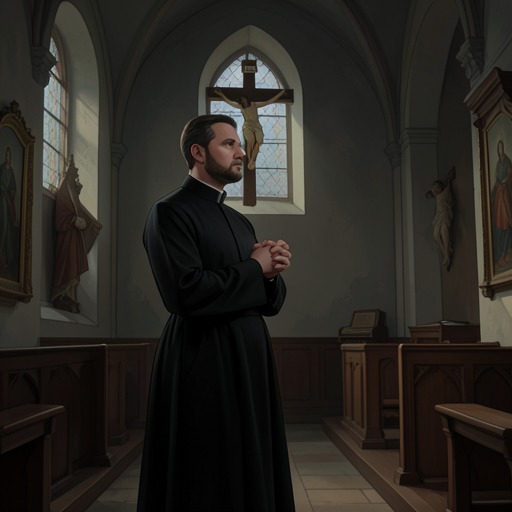
During their final meeting, Lomeli confessed that prayer had become difficult and asked permission to leave Rome, resign as Dean, and retreat to a religious order. At seventy-five, he was old enough to retire. The Pope refused the request, distinguishing between those called to shepherd and those needed to manage the farm, and telling Lomeli that his role was not pastoral but managerial. He also assured him that God would return to him, as God always did.
The reassurance did not spare Lomeli hurt. He wondered whether the Pope truly saw him only as a manager, and the two parted with a coldness that remained their last exchange. The sentence therefore carries both care and injury: it tells Lomeli that his service matters, while naming the very limitation he fears.
A Refrain Under Pressure
After the Pope’s death, Lomeli’s private recollection becomes a recurring inner voice. Faced with the responsibility of guiding the cardinals as they choose the next Pope, he thinks of himself as an unworthy servant and recalls the manager’s role. He then accepts the task in the terse thought, “Manage.” The word converts the disputed label into an obligation he can act upon, even while his spiritual uncertainty remains unresolved.
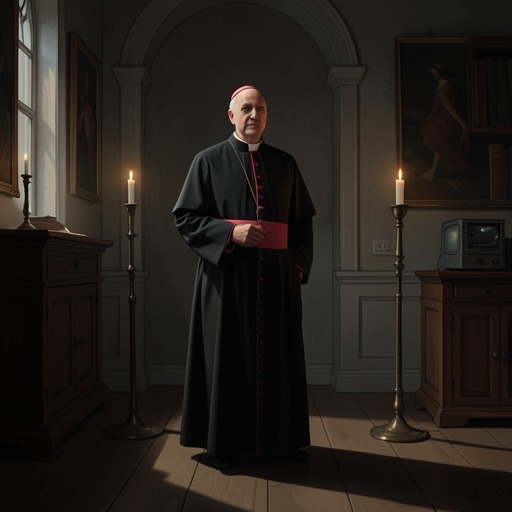
The phrase returns with particular force as Lomeli prepares to celebrate the Mass before the conclave. In the same red vestments worn by successive deans, Zanetti places the mitre on his head and gives him the golden crozier. Testing its weight, Lomeli hears the familiar reminder that he is a manager, not a shepherd. He briefly wants to hand back the crozier, remove the vestments, and disappear; instead, he smiles and says that it feels good. The scene makes the phrase a test of whether he can carry a public office without feeling that he has falsely claimed a pastoral identity.
Administration and the Church
The phrase also resonates with the late Pope’s own pontificate, which Bellini describes as a sustained struggle over the administration of the Church. The Pope rejected full ceremonial regalia and chose to live at Casa Santa Marta rather than the Apostolic Palace. He demanded financial transparency from the Curia, including proper accounts, disclosure, outside tenders for building work, and receipts; he then brought in accountants and management consultants to examine files from offices established on the first floor of Casa Santa Marta.
The audit evidence makes that managerial conflict concrete. In a concealed case, Lomeli finds documents listing official Curial apartments, including his own 445-square-metre apartment, while the Pope’s residence at Casa Santa Marta is listed as 50 square metres. An attached report estimates the APSA property portfolio at 347,532 square metres and a potential value above €2.7 billion, against a stated book value of €389.6 million; it also reports a paid occupancy rate of only 56 percent and suggests that much income was not properly declared. These figures give “manager” a wider institutional force: careful oversight is not merely a lesser vocation but a necessary response to hidden finances and weak accountability.
Reversal and Significance
The late Pope’s attempt to reform the Curia brought leaks and public embarrassment, while Tedesco and his allies attacked him over statements on gay people, divorced couples, and the promotion of women. Bellini describes the resulting paradox: the more the outside world admired the Pope, the more isolated he became within the Holy See, until he scarcely trusted anyone. The Church’s need for management thus appears not as an alternative to spiritual leadership but as work conducted amid resistance, mistrust, and institutional imperfection.
For Lomeli, the refrain never settles the question of whether he is a shepherd. It instead defines the work he must perform while that question remains open: to manage the Church’s immediate responsibilities, guide the election, and continue serving despite a crisis of prayer. The phrase’s return at the crozier gathers its central tension into one image—the shepherd’s staff in the hands of a man who has been told that his calling is to manage.