Divine will and discernment
ConclaveDivine will and discernment are the contested spiritual logic through which the conclave’s changing votes are interpreted. Lomeli seeks signs of God’s purpose in the arithmetic, yet the ballot swings repeatedly unsettle his conclusions; his effort to discern the divine therefore remains bound to patience, legal procedure, and the possibility that God’s will may not preserve the unity he has spent his life serving.
Reading the Ballots
At the first ballot, Lomeli follows the required procedure: each elector displays and carries a folded ballot to the altar, swears that the vote is given to the person he believes should be elected before God, and deposits it. The sacred language makes discernment an individual act of conscience, but the count that follows yields no obvious consensus. Thirty-four cardinals receive votes, more than a quarter of the conclave, and the dispersed support leaves the leading candidates nearly level. Lomeli’s own name appears repeatedly; when he tallies five votes, he worries that his candidacy may have diverted support from Bellini and weakened the outcome he hoped to support. The ballots are at once votes cast before God and political facts with consequences for alliances and momentum.
After the first count, no candidate is close to the seventy-nine votes needed to win. Lomeli considers the constitution’s provision for as many as thirty ballots over twelve days before the electors could move to a different system. The prospect matters spiritually as well as procedurally: a prolonged contest offers more time for discernment, but also exposes the cardinals to the uncertainties of a deadlock. Rather than treating the first result as a divine verdict, the process requires them to keep voting.
Provisional Certainty and Reversal
The second ballot seems to bring a clearer direction. Adeyemi gains sixteen votes from candidates who have fallen away, while Tedesco adds seven; Bellini and Tremblay barely move. Lomeli reads Adeyemi’s increase as a powerful endorsement, but notices that Benítez, whose dramatic arrival has already drawn attention, has also risen from one vote to two. The figures allow an interpretation of emerging momentum, not a conclusion that the election is decided.
By the third ballot, Lomeli is convinced that Adeyemi will be elected before day’s end. He sees the developing totals as a prophecy, reasoning that even if Tedesco temporarily blocked a two-thirds majority, resistance would soon collapse. He also anticipates that cardinals would be reluctant to risk a schism by obstructing what he considers a striking manifestation of divine will. His forecast thus combines spiritual reading with political expectation: the same votes that appear to indicate God’s choice also create incentives to accommodate a likely winner.
The apparent direction breaks after the lunch recess. Adeyemi loses thirty-two votes—more than half his support—while Tremblay gains eleven, Bellini eight, Lomeli six, Tedesco four, and Benítez three. Lomeli suspects that news from the dining hall has frightened enough electors to change their votes. The dream of an African pontiff now appears finished, Tedesco returns to the lead, and the earlier promise of a rapid Adeyemi victory gives way to new speculation about Tremblay. Benítez’s five votes, for someone the electors had barely known two days earlier, strike Lomeli as extraordinary. The abrupt reversal makes the count a poor instrument for easy certainty: developments outside the ballot can remake what appeared to be the will emerging within it.
Conscience, Law, and the Limits of Interpretation
The problem of discernment also arises in the legal status of Benítez. The late Pope’s revision of the canon law governing in pectore appointments becomes central when Lomeli argues that an elector who arrives re integra may participate in the election. He cites paragraph thirty-nine of the Apostolic Constitution: a cardinal-elector arriving before a new pastor has been elected may join at the stage the election has reached. The argument does not disclose why Benítez’s appointment was kept secret; it establishes, for Lomeli, that the man is legally a cardinal and entitled to take part. Spiritual discernment cannot be separated from determining who is authorized to cast a vote.
Nor does the ballot’s religious meaning relieve the Dean of procedural responsibility. When a major crisis confronts the conclave, Lomeli weighs pausing the election against accelerating it in violation of the Apostolic Constitution. He fears that an election whose legality could be doubted would leave the new Pope’s decrees challenged from the beginning. He therefore invokes the Constitution’s special-circumstances provisions and puts the question of receiving information to a vote. The cardinals decide collectively to hear it. Here discernment is not a private intuition or a reading of numbers alone; it depends on an authorized process for deciding what the electors may consider.
Acceptance, Schism, and the Unfinished Answer
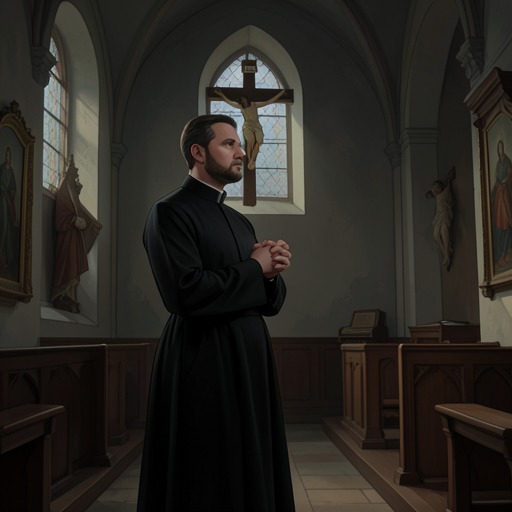
After the fifth ballot, Tremblay bows his head and joins his hands in prayer. Lomeli, who has sometimes found the gesture ostentatious, closes his eyes and gives thanks, asking that Tremblay receive the wisdom and strength to fulfil his mission if he is the chosen candidate. The response marks a shift from trying to determine the result in advance to praying for the responsibilities of whoever may be elected. Lomeli then announces that no one has achieved the required majority and that voting will resume the following morning.
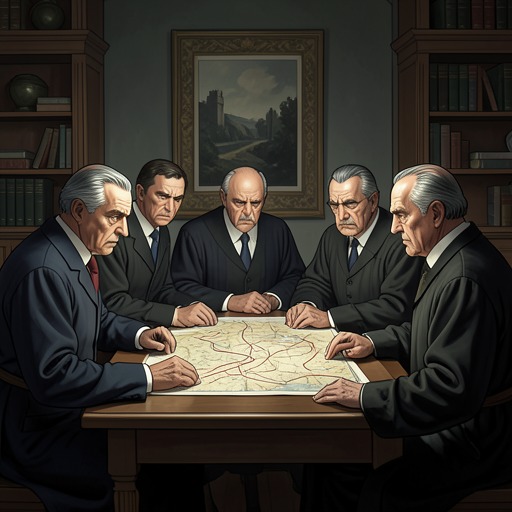
Later, Bellini and Sabbadin assess the arithmetic differently from Lomeli’s early confidence in Adeyemi. Bellini has fifteen votes and Lomeli twelve; even transferring Bellini’s support to Lomeli would not make him the leading alternative to Tremblay and Tedesco. Their proposed alliance could bring Tremblay to sixty-seven, twelve short of the two-thirds majority. Lomeli accepts the logic reluctantly. Bellini argues that if the Holy Spirit operates through the conclave, they must accept the possibility that God wishes them to entrust the Keys of St Peter to Tremblay, despite their lack of enthusiasm. Discernment here means allowing an unwelcome result to remain possible, not claiming that preference and divine purpose coincide.
Benítez offers Lomeli a still more unsettling account. He says that his faith is in God alone, and that he is not alarmed by a long conclave or even a schism: perhaps that, too, is what God wants. His answer directly challenges Lomeli’s assumption that unity must be the surest sign of faithful discernment. For Lomeli, schism contradicts the work of his whole life; for Benítez, fear of division cannot by itself establish what God intends.
The final recorded count makes the difficulty visible in numbers once more: Benítez receives ninety-two votes, Lomeli twenty-one, and Tedesco five. Benítez’s overwhelming total contrasts with the earlier ballots on which Lomeli repeatedly treated Adeyemi’s rising support as a near-prophecy. The trajectory does not resolve divine will into a method of prediction. Instead, it shows human discernment working through prayer, law, argument, changing circumstances, and results that can overturn confident readings. The election’s spiritual claim is inseparable from the humility required when no early interpretation of the votes proves final.