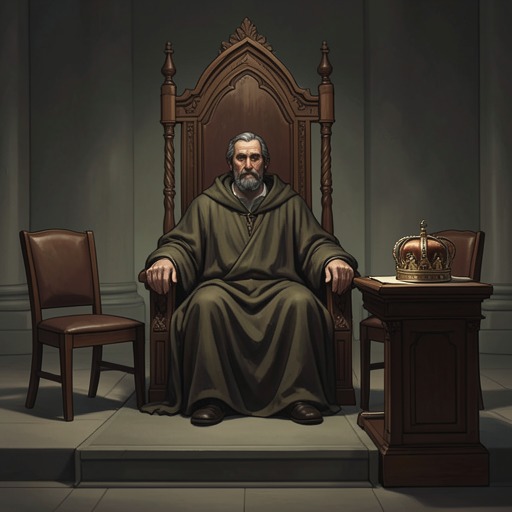
The Papacy as a Cross and a Cup of Suffering
ConclaveThe Papacy as a Cross and a Cup of Suffering is the novel’s recurring image for the burden of becoming pope: a calling that Jacopo Baldassare Lomeli dreads, considers refusing, and finally entrusts to God. Its meaning shifts as the election unfolds, joining personal fear to the obligations of office and, at the end, to a new willingness to accept whatever outcome comes.
The Burden of the Office
Lomeli’s resistance is not simple ambition in reverse. As the seventh ballot approaches without a two-thirds majority, he is certain that he does not wish to become pope and prays to be spared the papacy. He thinks of the office as a Calvary and recalls that Luciani tried to refuse election at the end of the first conclave of 1978, only to yield to his colleagues’ pleas. Lomeli resolves that, if elected, he will stand firm rather than accept a role he believes he cannot fulfill.
His reasoning turns on the difference between enduring suffering and causing spiritual harm. Lomeli is prepared to bear the loneliness, isolation, and agony of the papacy; what he cannot accept is the possibility of being an insufficiently holy pope. He treats self-knowledge as a responsibility: if he has been given insight into his own limits, he must use it. In this early formulation, refusing the office appears not as escape from hardship but as a duty to protect the Church from an unworthy leader.
The Cup and the Election
The cup image gives that conflict its prayerful form. As the final ballot is counted, Lomeli’s inward appeal returns: he asks the Lord to let the cup pass from him. The repeated prayer makes the vote count more than a procedural suspense. Each ballot brings him closer to the possibility he fears, while the formal sequence of the election continues beyond his control.
The election itself is governed by rules that Lomeli treats as binding even under pressure. He reads aloud the prescribed procedure for casting ballots: each elector carries a folded vote to the altar, swears before Christ that it is the vote he believes should be given, and deposits it in the receptacle. Later, when coordinated attacks strike Rome while the conclave is still in session, he rejects the suggestion that the voting process should simply be accelerated. Suspending the conclave would prolong the leadership vacuum; breaking the Apostolic Constitution, however, could leave the next pope’s authority open to challenge. The crisis sharpens the same dilemma embodied by the cup: leadership demands action, but the means of acting carry consequences of their own.
From Reluctance to Surrender
The image does not end with a decision to seize the office. After the cardinals are allowed to discuss the attacks, Lomeli leads them back toward the Sistine Chapel. In the courtyard, while singing, he gives thanks and senses the Holy Spirit among them. His prayer changes from a plea for escape to an acceptance of uncertainty: if the lot falls to him, so be it; God’s will, rather than his own, is to prevail.
That movement is a change in disposition, not confirmation that Lomeli has been elected. He reaches peace with the possible outcome before the result is known. The final image of the cup therefore holds fear and consent together: he remains aware of the burden, but no longer treats his own preference as the decisive measure. The papacy is figured as a cross to be borne, while the act of bearing it becomes an act of trust rather than personal ambition.