Styles’s condition as a run-down guest house
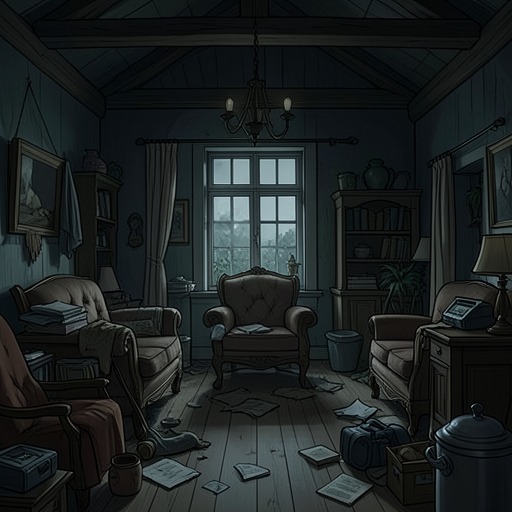
CurtainStyles’s condition as a run-down guest house marks the transformation of a remembered family home into a strained commercial enterprise. The estate retains enough of its old form to awaken Arthur Hastings’s memories, yet its overgrown drive, shabby exterior, improvised modern conveniences, and rooms altered for paying visitors make clear that the house is no longer the home he knew. Its decline is not simply a backdrop: it shapes Hercule Poirot’s return, Hastings’s reunion with his old friend, and the practical arrangements through which the guests are brought together.
From family home to guest house
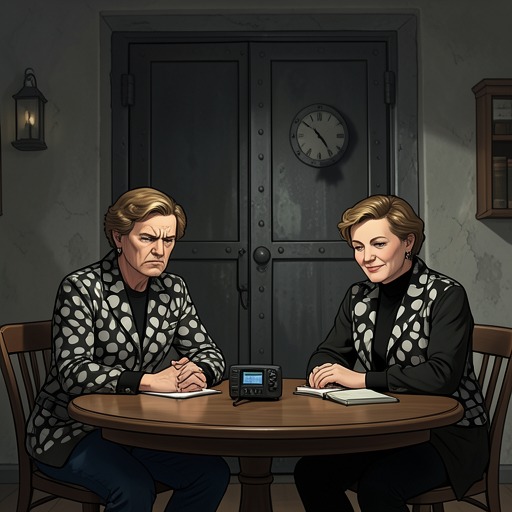
Hercule Poirot explains the change in a letter headed from Styles Court. The house is now a guest house run by a retired colonel and his wife, and Poirot describes Mrs Luttrell as the effective manager: she makes the business pay, while her sharp tongue leaves her husband to suffer. His comic suggestion that he would take a hatchet to her captures the friction behind the establishment’s cheerful presentation. The former home has acquired a new purpose, but its domestic life has not become tranquil; commercial necessity and marital strain occupy the rooms once associated with Hastings’s earlier visit.
Poirot has chosen to return after seeing the guest-house advertisement in a newspaper. For an old man, he writes, revisiting the place that first became his home in England offers the pleasure of reliving the past. That return is also practical. A baronet connected to Judith Hastings’s employer is staying at Styles, and the Franklins are to be persuaded to come for the summer. Poirot therefore arranges for Hastings to join them, announcing that the Franklins and Judith have already arrived. The guest-house business, with its rooms and negotiated rates, supplies the means for an intimate reunion: Poirot secures Hastings a room with a bath and bargains with Mrs Luttrell for a particularly good price.
The estate in Hastings’s return
The journey to Styles reveals the contrast between the surrounding village and the estate. Styles St Mary’s railway station seems almost untouched by time, set among fields without any apparent reason for existing; the village, by contrast, has changed markedly, with petrol stations, a cinema, two additional inns, and rows of council houses. Passing through this altered landscape, Hastings reaches the gate and finds the park much as he remembers it. The continuity is incomplete: the drive is badly maintained, and weeds have grown up through the gravel.
The house itself remains externally recognizable, but needs a coat of paint. Its familiar outline briefly revives the past, while the neglected approach and shabby surface register the years that have passed. Hastings sees a woman bending over a garden bed and, momentarily, the old scene seems to repeat itself. The woman is not Evelyn Howard, however, but the elderly Mrs Luttrell. The near-recognition makes the estate’s persistence felt through memory, while the difference in the person who now occupies its garden underscores how thoroughly time has changed the household.
Mrs Luttrell presents the property’s commercial predicament with genial candor. She says that she and her husband bought Styles in a fit of madness and have been trying to make it pay; she never expected to become a hotelkeeper, but proudly warns Hastings that she is businesslike and piles on the extras. Their shared laughter makes the speech sound like a joke, yet Hastings takes it as probably literal. Behind her gushing manner he detects a hard edge. The guest house’s welcome thus carries an openly transactional underside: hospitality is something Mrs Luttrell manages for profit, not merely a continuation of the house’s former domestic warmth.
Altered rooms and new uses
Inside, the conversion is visible in the plan of the house. Poirot has arranged for Hastings to occupy the room he had used on his previous visit, but the old large bedrooms along the corridor have been partitioned into several smaller ones. Reusing the same room does not restore the old arrangement; the familiar location has been reshaped to accommodate more guests.
Hastings’s room has retained its basic form, but even it has been adapted for modern convenience. Hot and cold water have been installed, and part of the room has been partitioned off to make a small bathroom. The furnishings are cheap and modern, a choice Hastings finds disappointing because he would have preferred a style closer to the house’s architecture. The bath that Poirot advertised as a benefit therefore embodies the trade-off at Styles: the establishment can offer updated facilities, but the alterations and furnishings do not respect the character of the old building.
The change reaches beyond the bedrooms. Mrs Luttrell tells Hastings that Judith is shut up in a studio at the bottom of the garden, rented and fitted out by Dr John Franklin. In place of the garden’s purely domestic or ornamental use, the studio houses Franklin’s scientific work: hutches of guinea pigs, mice, and rabbits. Mrs Luttrell is uneasy about the science and pities the animals. The estate has become a collection of leased spaces and specialized uses, from paying bedrooms in the house to a laboratory in the garden.
Memory, business, and the house’s significance
Styles holds together two incompatible versions of the same place. For Poirot, it is the house that first became his home in England, and returning to it permits him to revive the past. For Hastings, the old park and familiar room invite recognition, but the weeds, paintwork, partitions, and altered furnishings refuse to let the past return unchanged. The house’s identity survives most strongly in these points of recognition, yet each is qualified by evidence of neglect or adaptation.
The guest-house arrangement also turns nostalgia into action. Poirot’s longing to revisit Styles becomes the occasion for assembling Hastings, Judith, the Franklins, and the baronet under one roof. But the reunion depends on Mrs Luttrell’s business: she advertises rooms, charges for extras, and negotiates their price. The estate’s commercial decline is thus inseparable from its renewed narrative purpose. Styles is no longer the settled family home remembered by its returning guests; it is an aging, altered establishment where old associations and new occupants are brought into uneasy proximity.