Barbara Franklin’s depression and nervous condition
CurtainBarbara Franklin’s depression and nervous condition become central to the uncertain interpretation of her death. The evidence never settles into a single uncomplicated account: Dr John Franklin describes a period of improvement, Nurse Craven reports persistent depression and signs of distress, and Hercule Poirot tells the inquest that Barbara had recently spoken of wanting to escape life. Together, these accounts shape the suicide verdict, but the novel later reveals that Arthur Hastings killed Barbara without knowing the truth of his action, transforming the apparent explanation into part of a concealed design.
Symptoms and Conflicting Observations
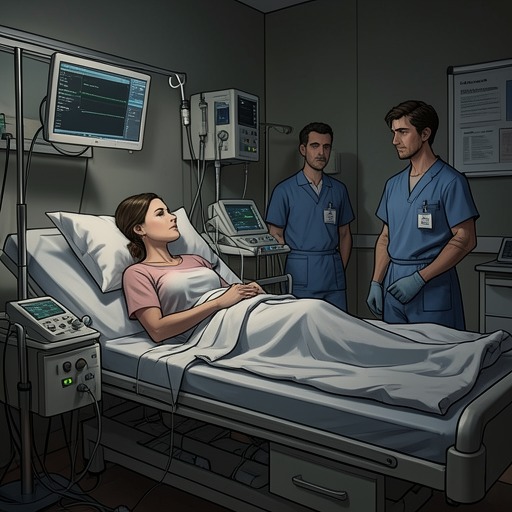
Dr John Franklin testifies that Barbara had been in a low, nervous state for some time, without organic disease. He describes rapid changes of mood and says that, more recently, she had seemed cheerful and improved in health and spirits. On the evening before her death, he thought she was in good spirits and not melancholy; he also says that the couple had not quarrelled and were on good terms. His account therefore presents her condition as real but apparently improving, rather than as an obvious immediate warning of suicide.
Nurse Craven supplies a different emphasis. She had attended Barbara for more than two months and says that Barbara suffered badly from depression. The nurse had heard her say at least three times that she wanted to end it all, felt her life was useless, and believed herself a burden to her husband. Nurse Craven connects these expressions to Barbara’s awareness that Dr Franklin had declined an appointment abroad rather than leave her. The testimony makes Barbara’s fears about her effect on his career a recurring part of her distress, even though Dr Franklin says he had not expressed annoyance or blamed her for obstructing him.
The accounts also differ over Barbara’s state on the last evening. Dr Franklin remembers her as cheerful, while Nurse Craven hesitates before describing her as excited after a bad day marked by pain and giddiness. Although she seemed better later, the nurse considers her good spirits unnatural: Barbara appeared feverish and artificial. Asked whether Barbara was a likely person to take her own life, Nurse Craven struggles to decide, then answers that, on balance, she thinks so because Barbara was very unbalanced. The testimony does not simply confirm a settled diagnosis; it records observers interpreting the same person and evening in different ways.
Words About Death and the Inquest
Dr Franklin acknowledges that Barbara had occasionally spoken of ending her life, but says he did not take the remarks seriously. He gives both a personal and medical judgment that she was not a suicidal type. Nurse Craven, by contrast, says Barbara repeatedly spoke of wanting to end her life and of being a burden, while Sir William Boyd Carrington recalls that Barbara had discussed suicide with him some days earlier. He describes her as unselfish, devoted to her husband, and deeply concerned that her illness might impede his career. Judith Hastings says that she had never heard Barbara mention suicide and that Barbara seemed much as usual, though perhaps overexcited, on the final evening.
Hercule Poirot’s evidence gives the inquest its most pointed account of Barbara’s despair. He says that, on the day before her death, she had been very depressed, worried about her health, and had described episodes in which life did not seem worth living. He reports that she wished to be out of it all and had said that it would be wonderful to go to sleep and never wake up. His testimony links her private statements to the public question of how she obtained the poison, strengthening the possibility that she acted intentionally.
The coroner directs the jury to distinguish among accidental ingestion, deliberate self-poisoning, and administration by another person. The medical evidence identifies physostigmine sulphate as the cause of death. The jury also hears that Barbara was in poor health and a bad nervous condition, had spoken of suicide, and was described by Poirot as leaving the laboratory with a small bottle and appearing startled when seen. The bottle that had contained the poison is missing; Nurse Craven suggests Barbara may have washed it and put it away in a bathroom cupboard. With no evidence establishing when or how the poison was taken, the coroner leaves the conclusion to the jury. After a short deliberation, it finds that Barbara took her own life while temporarily of unsound mind.
The Final Reversal
The inquest’s account depends on reading Barbara’s depression as evidence of suicidal intention. It makes her concern for Dr Franklin’s career and her remarks about death into a plausible explanation for the poisoning, while the disagreement among witnesses remains part of the record. Poirot’s testimony in particular carries weight: his account appears to connect Barbara’s emotional state to her access to the laboratory and the missing bottle.
That explanation is later overturned. In a message addressed to Hastings, Poirot says that Hastings has not suspected the truth about Barbara’s death and declares that Hastings killed her. This revelation changes the significance of the earlier testimony without erasing it: Barbara’s depression and her reported wish to die helped the inquest reach its verdict, but the apparent suicide was not the final truth of the event. Her condition functions both as a genuine source of suffering, described through several witnesses, and as the basis for a public explanation that conceals what happened.