Barbara Franklin’s invalidism
CurtainBarbara Franklin’s invalidism shapes the household around her and ultimately becomes a key part of the explanation offered for her death. The narrative presents a woman described as physically fragile and psychologically unwell, while also showing how her symptoms are interpreted differently by her husband, her nurse, acquaintances, and the coroner. That conflict between lived distress and other people’s judgments makes her illness more than a medical detail: it affects what she can ask of others and how her intentions are understood.
Appearance, Care, and Self-Presentation
When Arthur Hastings first meets Barbara, she is lying on a day bed, propped up with pillows, wearing a delicate white-and-pale-blue negligee. He describes her as slender, with large brown eyes, centrally parted hair, and a long, gentle face; her skin seems exceptionally fragile. The account establishes the visual language through which her invalidism is first conveyed: she appears delicate, and her welcome is a smile and an outstretched hand.
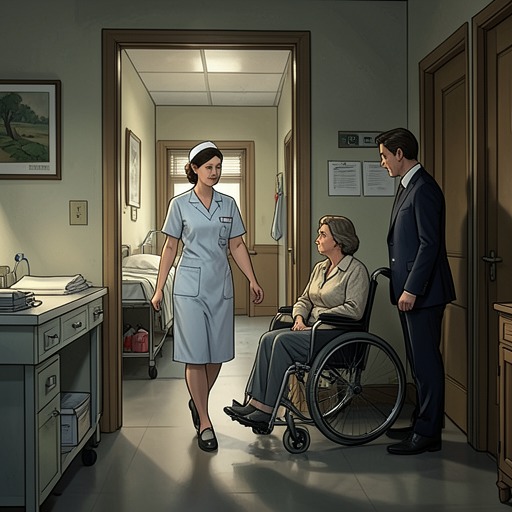
Barbara speaks of Nurse Craven as indispensable, saying that the nurse is exceptionally good to her and treats her like a baby. The remark presents care as close and constant, but also as a relationship in which Barbara is positioned as dependent. Nurse Craven, by contrast, is described as taciturn; when introduced, she merely inclines her head rather than joining Barbara’s warm praise.
A Condition Others Dispute
The household does not share a single view of Barbara’s illness. Nurse Craven tells Hastings that Barbara is skilled at getting her own way and suggests that she can use an appearance of weakness or a nervous episode when opposed. She characterizes Barbara as someone who may lie back, close her eyes, and look pathetic, and says she can be sleepless and exhausted by morning. Hastings is startled by this account and asks whether Barbara is genuinely an invalid; the nurse’s interpretation leaves that question unsettled rather than establishing that the illness is feigned.
Elizabeth Cole offers a more qualified suspicion. She does not claim that Barbara has no illness, but observes that Barbara seems able to do whatever she wants. Elizabeth’s judgment is informed by the effect of Barbara’s condition on Dr Franklin: he had been offered an opportunity to continue his tropical-medicine research in Africa, but Barbara objected because she believed she could not withstand the climate and did not want to be left behind, particularly if the appointment required economical living. Dr Franklin declined the opportunity. Elizabeth suspects that Barbara’s health may limit him, while Hastings initially reasons that he could not leave his wife in her condition.
The Household’s Shifting Attention
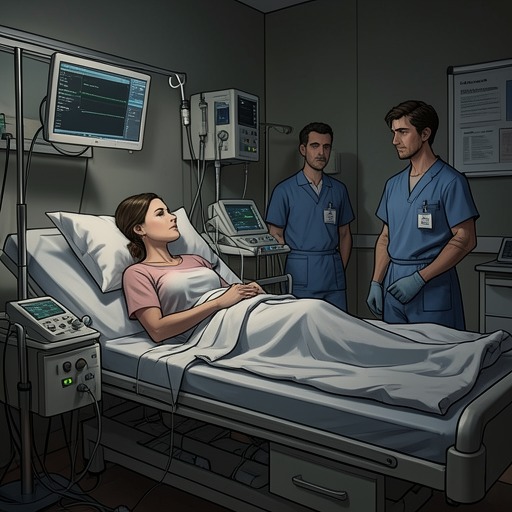
Barbara’s invalidism is also a claim on attention within the household. After Daisy Luttrell is shot, a nurse arrives to care for her, allowing Nurse Craven to return to Barbara. During this interval, Hastings observes that Barbara appears irritated because she is no longer the principal invalid receiving attention. He sees her lying in a hammock chair with a hand at her side and complaining of palpitations; she rejects the food served to her, while presenting her demands as patient endurance. The contrast does not disprove her illness, but it shows how the visible routines of illness can also become a source of household tension.
Barbara tells Hastings that she sometimes feels so depressed that ending her life would be a relief, and connects that thought to the belief that Dr Franklin would then be free. Nurse Craven dismisses the remarks as talk without serious intent and says Barbara’s spirits improve once the attention surrounding Daisy’s injury has passed. The exchange exposes a sharp divide between Barbara’s words and her nurse’s confidence about what they mean; neither observation, on its own, resolves whether the statements signal danger.
Medical Evidence and the Inquiry
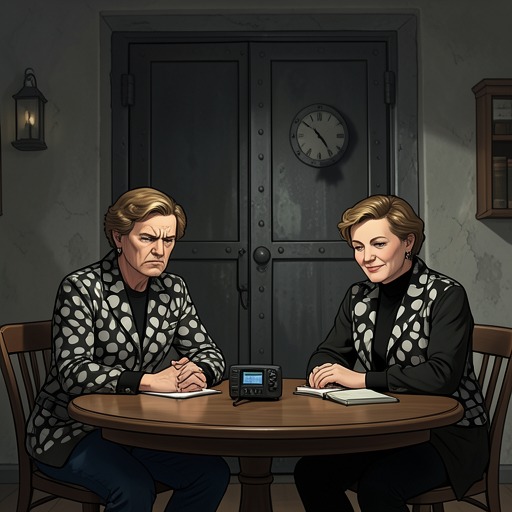
At the inquest, Dr Franklin describes Barbara as having been in a low and nervous state for some time, without organic disease, and subject to depression and rapid changes of mood. He says that she had recently seemed cheerful and improved, that they had been on good terms, and that she had not appeared melancholy on the last evening of her life. He also confirms that she had sometimes spoken of ending her life, though he did not take those comments seriously and did not consider her suicidal.
Nurse Craven’s testimony gives the inquiry a different account of the severity and meaning of Barbara’s distress. She says she had attended Barbara for more than two months and had heard her at least three times say that she wanted to end her life, that her life was useless, and that she burdened her husband. Craven connects these statements to Barbara’s knowledge that Dr Franklin had recently refused an appointment abroad rather than leave her. Asked directly whether Barbara was likely to take her own life, Craven hesitates before concluding that, on balance, she was: she considered Barbara very unbalanced.
Sir William Boyd Carrington recalls playing picquet with Barbara on the night she died and noticing no sign of depression. He nevertheless confirms that, days earlier, she had spoken about suicide. In his view she was unselfish, devoted to her husband, ambitious for his career, and distressed by the thought that her health was obstructing it. His testimony complicates any simple division between the appearance of cheerfulness and the possibility of serious despair.
Invalidism as Evidence and Interpretation
The coroner’s summing-up places Barbara’s nervous condition, melancholy, and lack of organic disease alongside testimony that Hercule Poirot had seen her leave the laboratory holding a small bottle and appear startled. The medical evidence identifies the cause of death as physostigmine sulphate poisoning; the jury must decide whether she took it accidentally, deliberately, or whether another person administered it. The coroner presents the belief that she was obstructing her husband’s career as a possible motive for suicide, while noting that Dr Franklin had not complained of her delicacy and had appeared kind and affectionate. In this account, the idea that she hindered him is attributed to Barbara herself, not to an expressed grievance from her husband.
After a short delay, the jury finds that Barbara took her own life while temporarily of unsound mind. The verdict converts a contested history of illness into a legal explanation: her depression and unstable nervous state support the conclusion, while the evidence of her apparent improvement and the conflicting judgments of those around her remain part of the record. Her invalidism thus carries practical consequences during her life and interpretive consequences after her death, shaping both the choices made on her behalf and the official account of her final act.