Event 1
Murder of Ursula Brinker
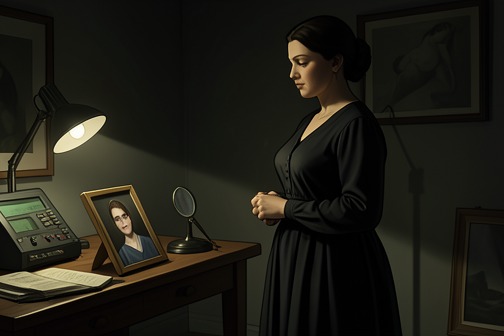
The murder of [Ursula Brinker](entity:character-recall-character-ursula-brinker-3e19219c4eed) is an unresolved case that turns a family’s private loss into the founding purpose of a cold-case organization. Ursula, the only child of [Hedda Brinker](entity:character-recall-character-hedda-brinker-778622821b2a) and [Toby Brinker](entity:character-recall-character-toby-brinker-f4006b2fbb7a), was killed during spring break of her junior year at [Arizona](entity:location-recall-location-4abaad620253) State University in [Tempe](entity:location-recall-location-tempe-91e8859532e7). The identity of the person or persons responsible was never established. Decades later, her mother’s search for help would connect the case to [Brandon Walker](entity:character-recall-character-brandon-walker-926c548f3946) and [The Last Chance](entity:organization-recall-organization-the-last-chance-e0a4f35be780), a volunteer network created to take on investigations local agencies had set aside.
## Ursula and the Circumstances of the Case
Born in 1938, Ursula was remembered as bright, outgoing, and popular. At school she had been a cheerleader, student-body treasurer, and valedictorian. Her promising public profile stands in stark contrast to the sparse account of her death: she was murdered during her university’s spring break, but the available account supplies neither a precise date nor details about the circumstances. It identifies the perpetrator only as an unknown person or persons.
The uncertainty was not resolved in the years immediately after the murder. When Brandon Walker asked whether the case had ever been solved, [Ralph Ames](entity:character-recall-character-ralph-ames-aa4ecf296212) answered that it had not and that it remained open. The case’s central fact was therefore also its lasting absence: Ursula’s murder was known, but investigators had not identified who had killed her or produced a viable explanation that could settle the family’s questions.
## Toby Brinker’s Suspicion and the Search for Answers
According to Hedda, Toby never recovered from Ursula’s death. He believed the killer had been better connected than the Brinkers and that some kind of cover-up explained why the person responsible had escaped capture. That was Toby’s suspicion, not an established finding. He hired several private investigators, but none found an answer or even a viable suspect; nor did they uncover evidence of a cover-up.
The distinction matters to the case’s history. Toby’s belief gave the family a possible explanation for the investigation’s failure, but repeated efforts to test the case did not substantiate it. The murder remained unresolved without the suspected cover-up becoming proof. The account preserves both the force of Toby’s conviction and the limits of what the investigators were able to establish.
## From Family Loss to The Last Chance
The Brinkers had been clients of Ralph Ames’s father. When his father retired, Ralph took over the relationship, and after Toby’s death he continued speaking with Hedda. The Brinkers had no living heirs. Hedda had seen a television program about the [Vidocq Society](entity:organization-recall-organization-vidocq-society-0e994f0e2b3c), a Philadelphia group that brought together retired law-enforcement and forensic professionals to consider cold cases, and she wanted it to take on Ursula’s murder. The group declined.
Hedda then asked Ralph whether she had enough money to establish a similar organization on the West Coast, extending its reach from the Mississippi westward. At the time, he told her that she lacked the funds for so large an undertaking. After Hedda won the jackpot, however, she arranged for the first proceeds to be paid into a newly created 501(c) nonprofit called The Last Chance. The connection between the murder and the organization is specific: Hedda’s interest in building a cold-case group followed her unsuccessful attempt to find one willing to take Ursula’s case.
The Last Chance was organized by invitation. It sought mainly retired police investigators and forensic experts who would be motivated to help with cases thought impossible to solve. Investigators volunteered their services and expertise, while the organization covered expenses, paid for laboratory facilities and analyses, and provided clerical and other support. Monthly meetings, held mostly in Phoenix and sometimes in Denver, gave presenters—usually family members—a place to bring cases when local law-enforcement agencies were unwilling or unable to commit more resources. Members might work on a case in small numbers, or the group might vote to approach it together.
## The Case Comes to Brandon Walker
[G. T. Farrell](entity:character-recall-character-g-t-farrell-c1a30a4bd74e), a founding member of The Last Chance, had been a young campus police officer at Arizona State University when Ursula was murdered. He remained in contact with Hedda and Toby over the years and wanted Brandon Walker to consider the case. In the conversation with Ralph Ames, Brandon recognized the organization’s cold-case work but doubted that he could solve a murder more than forty years old, especially after the Brinkers’ private investigators had failed. Ralph did not claim that Brandon alone could resolve it; he argued that a case might eventually be solved and explained how The Last Chance could bring expertise and resources to it.
Brandon’s involvement gives Ursula’s still-open murder a new place in the narrative without making the outcome certain. The case joins the organization’s wider purpose: to revisit investigations that families cannot let go of and that local departments have stopped pursuing. Ursula’s death had haunted Toby, remained unresolved despite private investigation, and helped prompt Hedda to seek a different institutional approach. The transition from family grief to organized cold-case work does not itself solve the murder, but it changes who may be willing and equipped to examine it.
Event 2
Gina Antone murder
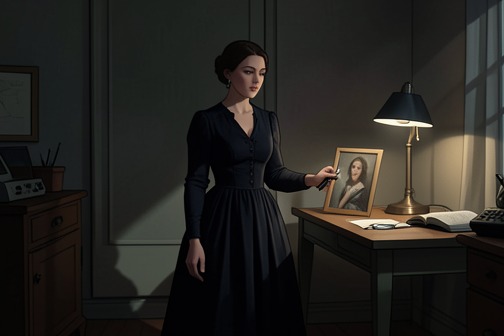
The [Gina Antone murder](entity:event-recall-event-7b4557345411) was a homicide just off the reservation that drew the [Pima County](entity:location-recall-location-804fc987bb67) Sheriff’s Department into an investigation leading to [University of Arizona](entity:organization-recall-organization-university-of-ar-bd4e0af485e7) professor [Andrew Philip Carlisle](entity:character-recall-character-andrew-philip-carli-8b78d73a8934) and, in turn, his student [Garrison Ladd](entity:character-recall-character-garrison-ladd-7df759e82590). Recalled in the course of the later inquiry into [Roseanne Orozco’s murder](entity:event-recall-event-roseanne-orozco-s-murde-0cc75b8c4882), the case has no definitive resolution in the available account: its trail narrowed toward Garrison, his death was treated as a suicide, and Carlisle’s plea bargain left [Brandon Walker](entity:character-recall-character-brandon-walker-926c548f3946) dissatisfied.
## Background and Jurisdiction
Brandon Walker remembered Gina Antone as a young Indigenous woman murdered a year before [Roseanne Orozco](entity:character-recall-character-roseanne-orozco-2b8e1f1df4ee). Gina’s death occurred just outside the reservation and was attributed to Anglos. Those circumstances placed the case under the jurisdiction of the Pima County Sheriff’s Department, rather than the tribal or federal authorities responsible for murders on Native land.
That distinction matters in the later comparison with Roseanne’s case. Although investigators never established where Roseanne was killed, they assumed she had died on the reservation and that her killer was Indigenous. The two cases therefore entered different investigative channels, even as both became part of Brandon’s understanding of the failures surrounding reservation homicides.
## Investigation and Its Trail
The investigation into Gina’s murder led Brandon to Carlisle, a creative-writing professor at the University of Arizona. From Carlisle, the trail eventually reached one of his star pupils, Garrison Ladd, who was [Diana Ladd](entity:character-recall-character-diana-ladd-0a6d9491c5d6)’s first husband. The account establishes this investigative connection, but does not specify the evidence or actions that carried investigators from one man to the other.
As the investigation closed in, Garrison died in what was mistakenly believed to be a suicide. His death interrupted the pursuit of the case’s trail without providing Brandon with a satisfying conclusion. The narrative does not give a fuller account of the circumstances of his death or establish a final legal finding about Gina’s murder.
## Outcome and Lingering Effects
Carlisle received what Brandon regarded as a slap-on-the-wrist plea bargain. For Brandon, that outcome was inadequate; it left a lasting bitterness rather than a sense that justice had been done. The combination of Gina’s murder, Garrison’s death, and Carlisle’s plea became a heavy burden for Diana as well.
By [1970](entity:time-recall-time-1970-96062041573c), Diana had had enough of murder and heartache. She did not want to hear about Roseanne Orozco’s killing, in part because Gina’s death and the events around Garrison and Carlisle remained so close to her own life. Her reluctance was not indifference to Roseanne’s loss so much as the response of someone whose capacity to absorb further tragedy had been strained.
## Significance in the Later Inquiry
Brandon’s recollection of Gina’s case gives the later investigation into Roseanne’s murder a history of its own. He had been glad that the call about Roseanne had not come to him: the earlier case had ended with Garrison dead and Carlisle’s plea bargain, leaving him with a bitter sense of unfinished justice. That history helps explain why the Orozco case resurfaced not as an isolated old homicide, but against the memory of another investigation whose apparent conclusion had satisfied neither him nor Diana.
Event 3
Roseanne Orozco murder in a refrigerator box
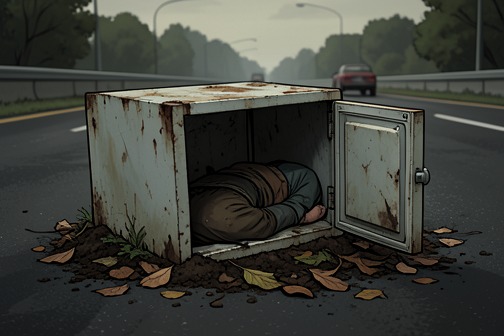
[Roseanne Orozco murder in a refrigerator box](entity:event-recall-event-e0749a7925ca) was a [1970](entity:time-recall-time-1970-96062041573c) killing that became a long-neglected, unresolved case—and a test of whose memories and evidence investigators would take seriously. Roseanne, fifteen and pregnant, disappeared from a hospital and was found the following week in a cooler near a highway. The murder’s location and perpetrator were never established; the initial investigation instead centered on her father, [Henry Orozco](entity:character-recall-character-henry-orozco-37d3dd716b79), while information from Roseanne’s mother and sister went unheard. More than thirty years later, [Emma Orozco](entity:character-recall-character-emma-orozco-5a01d4c50053)’s decision to reopen the case brought those failures back into view.
## Discovery and the Limits of What Was Known
The discovery entered the novel through [Benny Gutierrez](entity:character-recall-character-benny-gutierrez-b6f015569296), who encountered the cooler while working near a highway. He had assumed it might have been lost from a traveler’s pickup and hoped it contained beer or food. When he opened it, he found Roseanne’s body. His encounter established the cooler as the case’s defining object, but it did not reveal who had killed her, where the murder had occurred, or how she had come to be inside it.
Benny’s discovery also remained with him long after the scene. Less than two years later, at thirty-eight, he died of cirrhosis and acute alcohol poisoning. The narrative presents that medical explanation alongside a Tohono O’odham spiritual understanding: a siwani might have said that Benny’s spirit had been affected by the dead girl’s kokoi. Even in his final moments, the memory of the cooler returned to him. His death does not resolve the murder; instead, it shows how the discovery’s consequences extended beyond the investigation and stayed lodged in the life of the person who found her.
When Emma Orozco finally told [Brandon Walker](entity:character-recall-character-brandon-walker-926c548f3946) that her daughter had been murdered in 1970, she was speaking more than three decades after the crime. Brandon understood why she had come: the killer had never been caught. Emma’s account identified the body as Roseanne’s and described it as having been found along the highway beyond [Giwo Tho’ag](entity:location-recall-location-faf4895ecd32), cut up and placed in a box. Brandon recognized the case as the girl found in an ice chest near [Quijotoa](entity:location-recall-location-1ae727e40e8f), although he had not been the investigator assigned to it.
## The Original Investigation and Its Suspicions
The murder site was never found. Investigators assumed Roseanne had died somewhere on the reservation and that her killer was Native. That assumption placed the case outside the usual jurisdiction of the [Pima County Sheriff's Department](entity:organization-recall-organization-pima-county-sher-28cde77ee195), which had investigated the separate [Gina Antone murder](entity:event-recall-event-7b4557345411) because Antone had been killed off the reservation by Anglos. Responsibility for an on-reservation killing of one Native person by another fell to the [Federal Bureau of Investigation](entity:organization-recall-organization-federal-bureau-o-f1c5664278d2) or local tribal police.
The [Papago Tribal Police Force](entity:organization-recall-organization-papago-tribal-po-01871e18d2d3), sometimes referred to as [Law and Order](entity:expression-recall-expression-law-and-order-da115f061786), was called to Roseanne’s case. Brandon recalled that the tribal police lacked training, equipment, and money, while Federal Bureau of Investigation inquiries into reservation murders were often cursory. The investigation produced no resolution. Its institutional weakness mattered not only because the case went cold, but because it left the family’s knowledge and the circumstances of Roseanne’s disappearance without an effective path into the official account.
Roseanne was fifteen and pregnant when she died. No one knew who the baby’s father was, and her family knew of no boyfriend. Investigators suspected incest and considered Henry Orozco, Roseanne’s father, as a possible perpetrator. Emma said Henry was deeply upset when the investigators raised the accusation, and she rejected the idea that he had abused his daughter. With no DNA testing available at the time, investigators could neither prove nor disprove paternity. Henry was never tried, but he was not formally cleared; when the investigation was allowed to go cold, he was willing to put the case aside. Emma’s later decision to pursue it came after Henry’s death, when she no longer accepted silence as an answer.
## Roseanne’s Silence and the Family’s Testimony
Emma and her daughter [Andrea Tashquinth](entity:character-recall-character-andrea-tashquinth-fb3d761ebed0) supplied a history that complicated the assumptions surrounding Roseanne. According to Emma, Roseanne stopped speaking to anyone when she was about five. Her parents sought help from [Indian Health Service](entity:organization-recall-organization-indian-health-se-c488314d4e34) doctors and a medicine man, without success. Years later, Brandon corrected an assumption that Roseanne had been autistic: Emma’s account was that the child had suddenly ceased speaking, not that a diagnosis had explained her condition.
Andrea connected that silence to Roseanne’s first day at school. She remembered Roseanne crying because she feared being left with their grandmother, and then becoming frightened when she could not stay in Andrea’s class. The principal carried Roseanne away and put her in a dark coat closet. After school, Roseanne would not tell Andrea what had happened. She never spoke again—not to her sister, her parents, or anyone at school. Doctors in their community and in Phoenix found nothing that helped; a medicine man offered no remedy either. Andrea’s recollection did not establish a medical cause, but it gave the family history a specific, traumatic turning point that the earlier investigation had not incorporated.
Andrea also recalled a different disappearance. After Roseanne became ill and had her appendix removed, she remained sick and missed the start of the school year. Their mother took her to the hospital for tests. Henry was supposed to collect Roseanne after work, but when he arrived she was gone. The family assumed she had walked out. The following week her body was found in a cooler beside the road. Andrea believed someone at the hospital might have been involved, perhaps a member of staff or a visitor, but she could not identify anyone. She had tried to raise the possibility with investigators when she was sixteen; they showed no interest. Her age, and the investigators’ existing focus on Henry, meant that her suspicion did not become a productive lead.
## Reopening the Case
Brandon’s renewed inquiry began with listening. He understood that direct questioning could be considered impolite among the Tohono O’odham, so he allowed Emma to tell the story in her own way. Her willingness to revisit her daughter’s death before a relative stranger and a white investigator required courage, particularly in a community where open displays of grief were discouraged. Emma explained that her husband had wanted the family to forget the past; after his death, she felt able to insist that she was Roseanne’s mother and wanted to know what had happened.
Andrea repeated her belief that the answer might lie at the hospital and said that nobody had listened when she first raised it. The possibility gained force when Emma said the hospital had told her there was no record of [Roseanne Orozco](entity:character-recall-character-roseanne-orozco-2b8e1f1df4ee) ever being admitted. Emma disputed that account: the hospital had found her own records, including entries for the births of Andrea and Roseanne and for a hysterectomy fifteen years earlier. She concluded that someone at the hospital was involved, though this remained her inference rather than proof of a perpetrator.
Brandon knew that a study funded through an [Arizona](entity:location-recall-location-4abaad620253) State University grant in the early 1990s had entered existing [Sells](entity:location-recall-location-sells-004492d6e296) hospital health records into computers, including records reaching back to the 1950s. Roseanne’s July 1970 appendectomy should therefore have been traceable. But digitization did not guarantee access: Brandon expected the hospital to resist a request from him, and the later claim that no record existed sharpened the contradiction rather than settling it. The reopening thus turned on both a possible documentary trail and the family’s testimony about what the official investigation had failed to pursue.
## Remains, Evidence, and the Case’s Unresolved Meaning
Roseanne’s baby was a girl, and her remains had been buried separately from her mother’s. When Brandon asked whether the baby had been embalmed, Emma said she did not know; no one had told the family. The separation created a possible avenue for new forensic inquiry decades after the murder, at a time when methods unavailable in 1970 might help test old assumptions about the baby’s paternity and the case’s suspects.
Emma, Sam Tashquinth, and Emma’s grandson acted before the proposed inquiry could run through the tribal council: after dark, Sam and her grandson exhumed the baby’s remains and brought them to Brandon. Their decision made the remains available quickly, but it compromised the chain of evidence. Brandon recognized the conflict between obtaining answers for a family and preserving evidence in a form that could support accountability in court. The act showed the costs of delay and institutional mistrust without itself resolving the evidentiary questions.
The murder therefore remains defined by a gap between what the family remembered and what the investigation established. Roseanne’s disappearance from the hospital, Andrea’s early but disregarded suspicion, Emma’s challenge to the hospital’s denial of records, and the renewed possibility of forensic testing all reopened lines of inquiry; none, in the available account, identifies the killer. The case’s significance lies as much in that unresolved status as in the original crime: a young woman’s death was left unexplained while the people closest to her struggled to make their knowledge count.
Event 4
Larry Stryker's assault of Roseanne Orozco
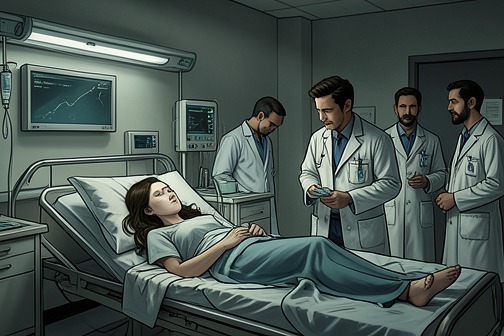
[Larry Stryker](entity:character-recall-character-larry-stryker-52f1ff0e9396)’s assault of [Roseanne Orozco](entity:character-recall-character-roseanne-orozco-2b8e1f1df4ee) was not an isolated breach of medical care but one instance of a longstanding scheme in which doctors exploited female patients under sedation. Roseanne was fifteen, had been admitted for treatment of a ruptured appendix, and was due to leave the hospital the next day. Larry’s assault led to her pregnancy; the discovery set off a chain of concealment and violence that ended in her murder and reshaped both Larry and Gayle Stryker. The episode exposes how professional authority and gaps in oversight made repeated abuse possible, while Roseanne’s muteness and the later dismissal of her family’s concerns left the harm difficult to recognize and pursue.
## The Hospital Scheme
Larry later described the abuse as having grown out of a seemingly inconsequential misstep. He and other young doctors at the reservation hospital treated their conduct as a reward for working at an isolated facility. When a high school girl became a patient, the doctor responsible for her care would alert the others. During evening rounds, that attending physician administered a sedative in a dose intended to render her unconscious; the other doctors then entered her room in turn and assaulted her. The girl would wake after the night, surgery, or procedure without knowing what had happened. The doctors treated the routine as harmless, but its operation depended on the patients’ vulnerability, their trust in medical staff, and the concealment that sedation enabled.
For years, the doctors used condoms, ostensibly to protect themselves and the patients from sexually transmitted infections. That precaution did nothing to make their actions consensual or medically legitimate. Larry’s condom broke while he assaulted Roseanne, and he immediately understood what had happened but told no one. His silence preserved the scheme temporarily and left Roseanne, rather than the person who had harmed her, to bear the consequences. The narrative’s account of the broken condom marks a turning point in Larry’s private recollection, not an excuse for the assault: what changed was the risk of discovery, not the nature of his responsibility.
## Roseanne’s Pregnancy and the Disclosure
Roseanne had already endured a traumatic experience at school as a very young child. Her sister, [Andrea Tashquinth](entity:character-recall-character-andrea-tashquinth-fb3d761ebed0), recalled that after a principal forcibly removed Roseanne from her, shut her in a dark closet, and made Andrea return to class, Roseanne stopped speaking and never spoke again. Her parents sought help from doctors in the area and in Phoenix, and also consulted a medicine man, but none helped her. This history matters to the hospital episode because Roseanne’s silence was part of her life long before Larry assaulted her; it should not be mistaken for evidence that she was unharmed or unable to suffer.
After Roseanne left the hospital, her mother, [Emma Orozco](entity:character-recall-character-emma-orozco-5a01d4c50053), brought her back to the clinic several times because she was not getting better. Larry initially kept the assault secret. He eventually admitted Roseanne to the hospital for an extensive battery of tests, and the pregnancy test was the only one that came back positive. Roseanne was due to be released the following day after her treatment for the ruptured appendix. Larry told Gayle that afternoon as soon as he learned the test result. His disclosure moved the crisis into the hands of a spouse who had already participated in the couple’s concealment, with fatal consequences for Roseanne.
## Concealment and Consequences
Larry later wondered what might have happened had he not told Gayle. He thought he might have lost his medical license and would not have become one of [Tucson](entity:location-recall-location-tucson-01e85518a44a)’s most respected citizens. This is his own retrospective calculation, centered on the career and public standing he retained; it does not lessen the harm to Roseanne. The aftermath, he acknowledged, changed both spouses. Gayle became more controlling and increasingly focused on his sexual conduct, while their shared response to the pregnancy tied his private wrongdoing to her subsequent violence.
The couple’s alibis for the night Roseanne died proved unnecessary: neither [Law and Order](entity:expression-recall-expression-law-and-order-da115f061786) nor the [Pima County Sheriff's Department](entity:organization-recall-organization-pima-county-sher-28cde77ee195) asked them where they had been or what they had done. Years later, Larry still wondered how one act had shaped the course of his life, but his recollection also points to the surrounding institutional failure. The doctors had relied on routine, medical access, and the expectation that their patients would leave unaware; afterward, investigators did not question the couple. Roseanne’s assault thus sits within a wider pattern in which people with authority could exploit girls with little effective protection or scrutiny.
## The Buried Case and the Wider Pattern
When Andrea later tried to explain that she believed Roseanne had been harmed at the hospital, she said the people investigating the case had not listened. At sixteen, she had little authority in their eyes, and her suspicion that someone at the hospital might have taken Roseanne was set aside while suspicion fell on her father. Her account also supplied a concrete outline of Roseanne’s last known movements: after her appendix operation and later tests, their father was expected to collect her from the hospital, but she was already gone. Her body was found the next week in an ice chest beside the road.
The old investigation’s blind spots persisted in the handling of hospital records. Emma later challenged the claim that there was no record of Roseanne Orozco ever being admitted: the same records showed Emma’s own hospitalizations, including the births of Andrea and Roseanne. That discrepancy does not by itself establish who removed or lost Roseanne’s record, but it reinforced Emma’s and Andrea’s belief that the hospital was central to the case. Their testimony and the missing documentation turn the assault from Larry’s private recollection into part of a larger inquiry into a death that had gone unexamined for years.
The broader pattern also extended beyond the hospital. Larry recalled that Gayle could obtain new girls for him through detention centers served by [Medicos for Mexico](entity:organization-recall-organization-medicos-for-mexi-14452984ce53). The charity gave the Strykers money, public respectability, and access to a recurring supply of vulnerable girls; its limited outside scrutiny and poorly specified expense accounts also helped fund their lavish life. This larger system does not establish that every girl supplied through the organization experienced the same abuse, but it shows how the couple’s resources and standing helped sustain exploitation. Roseanne’s case is decisive because the assault produced a pregnancy that threatened to expose Larry, and the response to that threat joined his abuse to Gayle’s murder and their years of apparent impunity.
Event 5
Maria Elena Dominguez's abduction and captivity
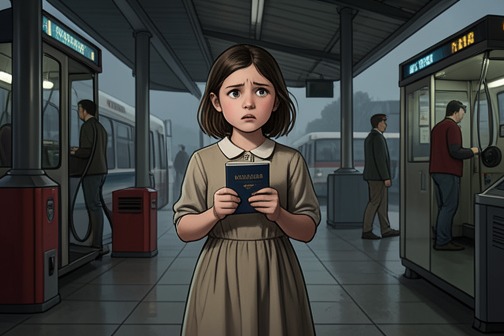
[Maria Elena Dominguez](entity:character-recall-character-maria-elena-domingu-1a138472964a)’s abduction begins as a promise of rescue: an arranged trip from [El Asilo Seguro](entity:organization-recall-organization-el-asilo-seguro-23c0a8b87037) to a home in the [United States](entity:location-recall-location-5d55e9152db1), with schooling ahead. The doctor who meets her in [Nogales](entity:location-recall-location-5747851564ab) is familiar and reassuring, but he is her captor. The reversal exposes how an institution’s promise of protection can become the route by which a vulnerable girl disappears.
## Departure Under a Promise
At El Asilo Seguro, Señora Duarte told Maria Elena that a benefactor in the United States had arranged for her to live with him and his wife and attend school. Maria Elena had once dreamed of becoming a teacher, though she had not attended school for three years; the prospect stirred hope even as she recognized that no one had consulted her before making the arrangements. Señora Duarte presented the papers as settled: Maria Elena was to travel from [Hermosillo](entity:location-recall-location-4f7f0d63ba67) to Nogales that afternoon, carrying a ticket, passport, identification card, and money for food and water. She was instructed to change out of her uniform and given cast-off clothes for the journey. The ill-fitting shoes and clothes marked the haste and meagerness of her preparation, but she was elated to be leaving. At the bus station she briefly considered changing her ticket and returning to [Chiapas](entity:location-recall-location-6e730e78d33a), then wondered who, after four years, could still be there to take her in. Instead, she boarded for Nogales, imagining the possibility of a new life and even of someday finding Madelina, a friend who had also been sent north from the institution.</n
The three-hour bus ride offered Maria Elena a rare interval in which no one directed her movements. She ate food she had chosen herself and felt full, a small but striking contrast with the hunger she had known at El Asilo Seguro. At Nogales, anxiety gave way to relief when she recognized the man waiting on the platform: the doctor who had treated children at the institution the previous summer. She knew him as Señor the Doctor and trusted the familiarity of his face. Seeing him there seemed to confirm the promise she had been given; she hurried off the bus with her knapsack, believing she was being welcomed into a safer future.
## The Journey Reversed
The apparent welcome continued as the doctor drove Maria Elena across the border in a car, without anyone examining her papers. He asked whether she was hungry or thirsty and gave her food, then offered coffee. Its familiar taste became her last clear memory before she awoke in a locked room. The contrast between the journey’s apparent care and what followed turns ordinary gestures of hospitality into part of the deception: the man she recognized from El Asilo Seguro had used that familiarity to gain her trust and take her into captivity.
The room had no windows, and Maria Elena could not tell whether it was night or day or how long she had been there. The doctor controlled when the light came on and when the door opened. He sexually abused her and took away the relative safety she had found among the other girls at El Asilo Seguro. Her earlier belief that she was being taken to a home and a school gave way to the knowledge that the promised future had been a means of isolating her.
Maria Elena tried to refuse the food the doctor left for her, hoping to end her suffering, but after he discovered what she was doing, he punished her physically and watched her eat. The food that had once marked a welcome became another part of his control over her. Confined and unable to contact anyone, she grieved for Madelina as well as for herself, fearing that her friend had also been sent to a false benefactor and might be dead. She abandoned the imagined reunion they might one day have had.
In the dark, Maria Elena reconsidered the speed and secrecy of her departure. She came to believe that Señora Duarte knew what would happen to the girls she sent to supposed benefactors and was involved in the arrangement. In her understanding, a selected girl left the institution that same day, without returning to the other children or leaving them any indication of where she was going. The pattern made her disappearance seem part of a system rather than an isolated betrayal. Her thoughts turned back to the unexplained disappearance of her mother and brother in Chiapas; now she hoped they were dead, and wished for death herself.
## Vulnerability Before the Journey
Before Maria Elena Dominguez left El Asilo Seguro, she had learned to survive there alongside Madelina and Lucia. The three girls had arrived from [Colima](entity:location-recall-location-729a75671786) and recognized the danger posed by boys carrying knives. To discourage their attention, they claimed that all three had been sent away from their previous institution because they were HIV-positive. The ruse kept the boys away; the girls relied on one another, spoke only among themselves, and tried to remain unnoticed. Their small circle of mutual protection contrasts with the isolation that followed Maria Elena’s departure.
The promise of a home in the United States also drew strength from departures the girls had already witnessed. Madelina had been sent north the year before, and Maria Elena had imagined the United States as a place where her friend might be living. That precedent made a new life elsewhere seem possible, even though Maria Elena had no way to verify what had become of Madelina. The apparent routine of sending girls away thus offered hope while concealing the uncertainty behind each disappearance.
## Trust and the Failure of Protection
The doctor’s familiarity made the deception possible in a way the promised documents could not prevent. Maria Elena had seen him treat children at El Asilo Seguro, many of whom had gone years without medical care; she therefore recognized him as someone associated with help, not danger. He also knew the girls’ claim that they were HIV-positive was a ruse, yet this knowledge did not protect her. The same institution where the girls had learned to guard themselves by staying together sent Maria Elena away alone with a man she had reason to trust. The episode makes her captivity more than a private betrayal: the appearance of medical care and an authorized placement concealed the absence of meaningful protection.
Event 6
Maria Elena Dominguez's murder and body disposal
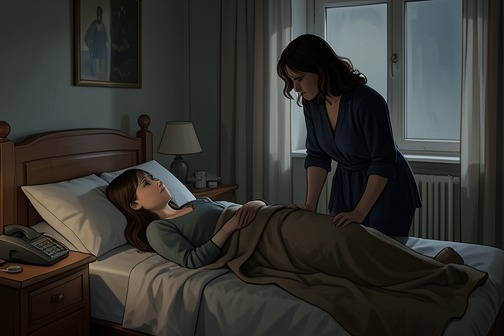
[Maria Elena Dominguez](entity:character-recall-character-maria-elena-domingu-1a138472964a)’s murder occurs after a period of captivity and repeated abuse by a doctor. The decisive turn comes when the doctor’s wife appears at her bedside instead of the doctor. Maria Elena recognizes that the woman has come not to watch another episode of abuse but to kill her. She does not try to escape or defend herself; after enduring what the narrative describes as unrelenting horror, she experiences death as release. The scene’s central revelation is therefore double: the wife has been complicit in Maria Elena’s suffering, and her arrival marks the end of the captive girl’s ordeal.
## Captivity and Anticipation
When Maria Elena hears the lock, she expects the doctor to enter. She has only a blanket and knows it cannot protect her from what has happened during earlier visits. Rather than look at the person approaching, she closes her eyes, trying to delay the moment of recognition and distance herself from the next episode of abuse. She understands this as a limited way to preserve what remains of her inner self, since the doctor has already taken control of her body. The narrative stays close to that effort to endure: Maria Elena cannot stop what is coming, but attempts to withhold her attention from it for as long as possible.
The visit lasts longer than the doctor’s usual approach, and Maria Elena eventually opens her eyes. Instead of the doctor, she sees his wife. This reversal matters because Maria Elena once interpreted the woman’s presence as a possible rescue. During the early days of her captivity, she had believed that another woman might intervene and make the doctor stop. Instead, the wife sat on the stairs, watched, and approved of what he did. The hope Maria Elena had attached to her presence is thus replaced by knowledge of her complicity.
## The Wife’s Complicity
The wife’s earlier visits had altered the pattern of the abuse without ending it. When she watched, the doctor did not bring his camera, but the treatment Maria Elena endured was worse. At times the wife nodded, and the doctor stopped immediately; he followed her upstairs, leaving Maria Elena alone before returning later to continue. On other occasions, the wife quietly disappeared from the stairs. When the doctor noticed she was gone, he retaliated against Maria Elena. The wife’s presence therefore offered no dependable protection: her signals shaped what the doctor did, while her departures could expose the captive to further punishment.
In the murder scene, the wife stands beside the cot rather than remaining near the top of the stairs, where she had previously watched. Her clothes are also unusual: she wears a green stocking cap beneath a red-and-blue baseball cap, a sweatshirt, ill-fitting jeans, and rubber gloves. Maria Elena notices the gloves and then the machete. These details clarify that the visit is not another instance of the established pattern. The wife is no longer observing the doctor’s actions; she has arrived with a weapon and is present to kill Maria Elena herself.
## The Killing
Once she sees the machete, Maria Elena understands the wife’s intention. The recognition is immediate, and the narrative describes it as a moment of clarity: the woman who once seemed capable of rescue has come as the agent of death. Maria Elena watches the blade rise and fall, but does not try to dodge or defend herself. The account does not present her response as consent to the abuse that preceded this moment; rather, it locates her stillness in the exhaustion and desperation produced by the captivity. After prolonged suffering, she regards death as the only possible end to what is happening.
The scene’s focus remains on Maria Elena’s awareness and response, not on a graphic description of the injury. She wills herself toward the blow, and the narration frames her death as a release from the terror she has endured. That framing gives the moment a grim reversal: the person who had once seemed to offer hope is the killer, while death—ordinarily the threat at the center of the scene—becomes, from Maria Elena’s perspective, an end to continued suffering.
## Consequences and Significance
The murder completes the wife’s transformation in Maria Elena’s understanding. Earlier, the woman had watched the doctor and sometimes influenced when he stopped, but Maria Elena had initially mistaken her presence for a possible intervention. The final encounter removes that uncertainty. The wife is not simply a witness who fails to help; she comes armed and kills the captive herself. Maria Elena’s death thus reveals the full extent of the wife’s participation in the violence that had defined the girl’s confinement.
The scene also makes the long duration of the captivity central to the meaning of the killing. Maria Elena’s response is shaped by the repeated anticipation of abuse and by the collapse of her earlier hope that someone might rescue her. The narrative’s attention to her closed eyes, her eventual recognition of the wife, and her refusal to struggle traces a change from trying to postpone the next assault to understanding that the encounter will end her life. Her death is consequently depicted not as an isolated act but as the culmination of a sustained captivity in which the expected rescuer had become one of the perpetrators.
Event 7
Mitch Johnson's kidnapping of Lani Walker
## Background and Stakes
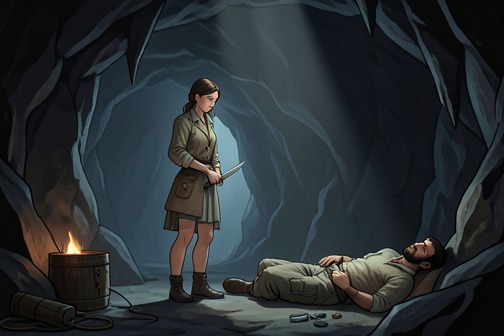
[Mitch Johnson](entity:character-recall-character-mitch-johnson-92cf5e757f76)’s kidnapping of [Lani Walker](entity:character-recall-character-lani-walker-2f6e7ef623c2) culminates in a confrontation in a limestone cave, where Lani kills him in self-defense. The account reaches the reader through recollections, especially [Brandon Walker](entity:character-recall-character-brandon-walker-926c548f3946)’s memory of arriving on [Ioligam](entity:location-recall-location-e17727158f95) and finding that Mitch was already dead. Brandon had gone there expecting to retrieve his daughter and take her home. Instead, [Gabe Ortiz](entity:character-recall-character-gabe-ortiz-d23fb996276f) blocked his way and explained that Lani had to remain by herself, fast, avoid salted food, and pray for sixteen days. The immediate question of rescue had become a question of what Lani needed after surviving the encounter.
The event is set against the complicated history of Lani’s adoption and her place within the [Tohono O’odham Nation](entity:location-recall-location-tohono-o-odham-natio-69c0323d0ec6). As a child, she had been called the Ant-Bit Child after surviving an ant attack while left in the care of an elderly caretaker. Her blood relatives had been afraid of what her survival signified and had refused to take her in. [Rita Antone](entity:character-recall-character-rita-antone-9905e041b1eb) told Brandon that they believed Lani had been singled out by [I’itoi](entity:character-recall-character-i-itoi-20cb199ab224) and might endanger her family; [Nana Dahd](entity:character-recall-character-nana-dahd-f1df44437efb), by contrast, understood being ant-bit as a sign that Lani was special. Brandon had heard these accounts without believing that they defined his daughter. The kidnapping and cave conflict force him to face how differently Lani might understand her own life.
## The Cave Confrontation
The available recollections establish the decisive outcome without making the cave encounter a contest of physical strength: Mitch Johnson, Lani’s kidnapper, is dead by the time Brandon arrives, and Lani has killed him. Gabe Ortiz identifies the killing as self-defense and justified, while also insisting that taking a human life has consequences for Lani and her soul. The survival of the encounter therefore does not close it. In Gabe’s understanding, Lani must come to terms with why it happened and with the meaning she gives to her own survival.
Lani’s own memory centers on a moment of unexpected aid. During the confrontation, a flying bat passes close enough to touch her skin. She understands that brief contact as giving her the knowledge that the cave’s darkness is her friend rather than her enemy: surrendering to it, instead of fighting it, can save her. The memory alters the cave from a setting of danger into a place in which she discovers a way to endure. Later, on a final visit, she leaves her remaining shoe as an offering to the bones of Betraying Woman and finds dried bat bones that become a talisman of her own. These acts belong to the aftermath of the confrontation, but they show how Lani makes its survival meaningful to herself.
## The Sixteen-Day Rite
Brandon arrives wanting to take Lani home at once, but Gabe tells him that the fast and isolation are what Lani herself wants and needs. Brandon protests the length of the rite and its being undertaken away from her parents; Gabe answers that the decision belongs to Lani. The disagreement exposes a painful limit in Brandon’s role as a father. His wish to protect her cannot substitute for her own judgment about what recovery requires.
During the sixteen days, Gabe visits Lani daily. He brings soothing salve and the salt-free evening meal required by [e lihmhun](entity:concept-recall-concept-e-lihmhun-a6df45102aef), and the two talk about many things. Lani does not tell him about the scar she keeps secret, though she is sure he knows about it; their silence on that subject is distinct from the conversations they do have. On the final night, Gabe brings the medicine pouch he had received years earlier from [Looks at Nothing](entity:character-recall-character-looks-at-nothing-e578c78467cd), the old blind medicine man who had mentored him. After they eat, Gabe draws a circle around them, takes wild tobacco from the pouch, rolls and lights it with Looks at Nothing’s old Zippo lighter, and shares the peace smoke with Lani. The smoke leaves her light-headed, and some of the conversation slips from her conscious memory, while other parts remain clear. The rite thus combines prescribed fasting with a personal exchange between a godfather and his goddaughter.
## Identity and Family Aftermath
Gabe asks Lani who she is. She answers with the name her adoptive parents gave her, but he presses her to say what Nana Dahd called her and then to name herself beyond that. Lani has not yet told anyone about the new name she chose after the battle in the cave. She whispers Nanakumal Namkam. The moment links the killing, her survival, and the emerging identity she claims for herself, without suggesting that the experience is easy or complete.
Brandon and [Diana Ladd](entity:character-recall-character-diana-ladd-0a6d9491c5d6) experience the aftermath differently from Lani. Brandon remembers that she had been a carefree teenager when she was taken from them and that, when Gabe brought her home to [Gates Pass](entity:location-recall-location-gates-pass-56c31fb8039a) sixteen days later, she seemed more serious and more attuned to her heritage. He had once thought of her chiefly as the child who had entered his life and captured his heart; now, he feels that Mitch Johnson has taken something precious from her. The change is not marked by a single argument or an explicit break between daughter and parents. Lani remains at home, learns to drive, graduates from high school at the top of her class, and continues to be their daughter, but the earlier ease between them does not return unchanged.
## Consequences and Significance
The kidnapping and cave conflict mark both a survival and a rupture. Lani survives Mitch Johnson’s attack, yet the event leaves her adoptive parents unable to restore the childhood she had before it. Brandon sometimes wonders whether Diana feels betrayed because Lani turned to Gabe rather than to her parents in her hour of need. His recollection records that hurt without making Lani’s choice a rejection of her family: she undertakes the rite because she believes it is necessary, and Gabe supports her in completing it.
The event’s narrative weight lies in the difference between returning someone to safety and understanding what safety can mean after violence. Brandon reaches Ioligam expecting the first; Gabe insists that Lani’s own chosen process comes first. In the cave, a bat’s touch helps Lani interpret darkness as a means of survival; during the rite, the question of who she is opens beyond the name her parents gave her. Her return home ends the period of separation, but it does not undo the experience. The family is reunited, while the relationships within it have been permanently changed.
Event 8
Lani Walker's sixteen-day purification ritual
[Lani Walker](entity:character-recall-character-lani-walker-2f6e7ef623c2)’s sixteen-day purification ritual, or [e lihmhun](entity:concept-recall-concept-e-lihmhun-a6df45102aef), follows her killing of [Mitch Johnson](entity:character-recall-character-mitch-johnson-92cf5e757f76) and becomes a passage from survival toward a new understanding of her life and responsibilities. The ritual is not presented as a punishment: [Fat Crack Ortiz](entity:character-recall-character-fat-crack-ortiz-b469ce85e59f) explains that Lani’s act was justified self-defense, while insisting that taking a human life remains grave for her and her soul. Her return after sixteen days changes the relationship with her adoptive parents and deepens her connection to Tohono O’odham traditions.
## Circumstances and Purpose
When [Brandon Walker](entity:character-recall-character-brandon-walker-926c548f3946) reached [Ioligam](entity:location-recall-location-e17727158f95), Mitch Johnson was already dead and Lani had killed him. Brandon expected to take his daughter home, but Fat Crack told him that she had chosen to remain by herself, fast, eat no salted food, and pray for sixteen days. Brandon protested the length and hardship of the observance, asking where she would sleep and what she would eat in the approaching summer. Fat Crack answered that Lani’s wishes mattered, and that the observance was what she had to do.
Fat Crack gave the ritual a purpose beyond compliance with custom. He explained that Lani had taken a human life, even though she had acted in self-defense and was justified. The act still required her to come to terms with what had happened and to consider why she was alive while Mitch was dead. In his account, the purification period joined reflection on the killing to a search for [I’itoi](entity:character-recall-character-i-itoi-20cb199ab224)’s purpose in her life. He also connected the practice to Lani’s identity as Kulani O’oks and to her potential to become a great medicine woman, a future he said required her to abide by the old ways.
## The Sixteen Days and Fat Crack’s Care
Although Brandon understood the observance as Lani staying alone, Fat Crack remained responsible for her care. He promised Brandon that he would look after her, describing this as one chief medicine man’s responsibility to another. During the sixteen days, he visited Lani every day, bringing soothing salve and the salt-free evening meal required by the fast. Their conversations gave Lani a setting in which to consider what she had done and what the time apart was for.
Lani’s recollection of the period includes the work she undertook while by herself. She made a medicine basket of her own and gave [Nana Dahd](entity:character-recall-character-nana-dahd-f1df44437efb)’s basket to Davy because she knew he wanted it. When Fat Crack asked what she had done with the time, she also spoke of breaking pottery and releasing the spirit of the person it represented. Fat Crack acknowledged that she had put the period to good use, but returned her attention to the harder question: who she was after taking a life. The ritual thus encompasses practical making, spiritual reflection, and an effort to understand the consequence of the killing, rather than functioning only as a prescribed interval away from home.
## The Final Night
On the last night, Fat Crack brought the evening meal and his huashomi, a fringed buckskin medicine pouch that had been given to him years earlier by the blind medicine man [S’ab Neid Pi Has](entity:character-recall-character-s-ab-neid-pi-has-cbe508a7fcb8), also known as [Looks at Nothing](entity:character-recall-character-looks-at-nothing-e578c78467cd). After they ate together, Fat Crack drew a circle around himself and Lani with a stick. Inside it, he opened the pouch, took out wild tobacco, rolled it into a crude cigarette, and lit it with Looks at Nothing’s old Zippo lighter. Lani smoked the traditional peace smoke for the first time with Fat Crack, who was her family friend, godfather, tribal chairman, and respected medicine man.
The smoke left Lani light-headed, and she remembered some of their conversation only indistinctly. The questions she retained concerned the point of e lihmhun and why she had been required to remain apart for so long. Fat Crack’s response tied the rite to what she had done during it and to the work of understanding its meaning. The enclosing circle and shared smoke mark the final evening as a distinct moment within the observance: it is both a rite shared with her mentor and the threshold before her return to family life.
## Return and Consequences
Brandon went home without Lani that Sunday. He held [Diana Ladd](entity:character-recall-character-diana-ladd-0a6d9491c5d6) as she wept and tried to explain why their daughter was staying away. He had difficulty accepting that Lani had turned to Fat Crack rather than to her parents at a moment of need, but recognized that arguing would not change her decision. Sixteen days later, Fat Crack brought Lani home to [Gates Pass](entity:location-recall-location-gates-pass-56c31fb8039a).
Brandon remembered her return as a marked change. She had left as a carefree teenager, still little more than a child; she came back a serious-minded young woman, more attuned to her Indian heritage. The shift did not take the form of a single rupture or argument. Lani remained their daughter, learned to drive, earned her license, and graduated from high school at the top of her class, yet the relationship with her adoptive parents was never quite the same. Brandon did not blame Fat Crack, but understood that Mitch’s kidnapping and death had taken something from the family that affection alone could not restore.
The ritual’s significance lies in this double consequence. It gives Lani a culturally grounded way to confront the fact that she has taken a life, while making visible a change her parents cannot direct or undo. Fat Crack’s care bridges the family’s distress and Lani’s commitment to the old ways; her return restores her to the household without restoring their earlier closeness. The sixteen days therefore mark not a simple return to normal, but Lani’s emergence with a more defined spiritual identity and a changed place within her family.
Event 9
Delia Ortiz's escape from Manny Chavez
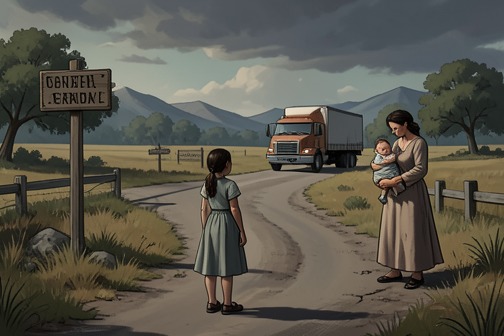
[Delia Ortiz](entity:character-recall-character-delia-ortiz-6e3a2b64eaa4)’s escape from [Manny Chavez](entity:character-recall-character-manny-chavez-e4cc0f96d6e2) begins as a child’s attempt to keep her family together and becomes the decisive break that allows [Ellie Chavez](entity:character-recall-character-ellie-chavez-fde613434509) to leave with her children. At seven, Delia was frightened of going, but she also recognized the danger in staying. When Manny tried to stop Ellie, Delia intervened; afterward, with their truck unavailable and no safe time to search for it, Ellie sought help from [Sister Justine](entity:character-recall-character-sister-justine-b34c27c035f6). Their departure from [Sells](entity:location-recall-location-sells-004492d6e296) began a separation from Manny that later became inseparable from Delia’s return to the reservation and her bond with [Fat Crack Ortiz](entity:character-recall-character-fat-crack-ortiz-b469ce85e59f).
## The choice to leave
Ellie’s plan was to take Delia and her baby brother, Eddie, with her to pursue a special program at [Arizona](entity:location-recall-location-4abaad620253) State University. Sister Justine had helped her gain entry, and Ellie saw the opportunity as a chance to become a teacher rather than remain a teacher’s aide. Delia, only seven, did not want to leave. She asked whether she and Eddie could stay with their father or with their aunt, but Ellie believed neither arrangement would work. The choice was therefore not a simple move for education: Ellie was trying to take the children with her and leave a household in which she feared Manny would prevent her from going.
Manny appeared as Ellie was explaining the plan. Delia knew he had been drinking and understood that his presence changed the situation. He warned Ellie that if she left, she would not return with the children. Ellie refused to yield. What might have been an ordinary departure became a confrontation in which the children’s safety and Ellie’s ability to leave were directly at stake.
## Delia intervenes
When Manny attacked Ellie, Delia and Eddie were both present: Delia watched from a corner, while Eddie cried in his crib. Ellie fought back, but Manny brought her down. As he moved to continue the assault, Delia rushed forward and struck him from behind at knee level. Manny lost his balance and fell against a coffee table. The bottle he was holding broke on the concrete floor. Delia’s action interrupted the attack long enough for Ellie to get back up and attend to the children.
Ellie checked Delia and Eddie for injuries from the broken glass and found that neither child had been hurt. The urgent task was to leave before Manny woke. Ellie had been packing carefully before the confrontation; afterward, she put in whatever would fit and sat on the overfilled suitcases to close them. The altered packing matters to the escape’s practical course: there was no leisurely preparation, only the quickest way to get the children and a few belongings out of the house.
## A departure without the truck
Once outside with two suitcases, Ellie discovered that Manny’s pickup was gone. He had apparently hidden it to keep her from leaving. Searching for it might have been possible, but it would have cost time, and Ellie feared Manny might wake. She took the children on foot to the pay phone outside the trading post and called Sister Justine in [Topawa](entity:location-recall-location-topawa-82fc631e9530).
Sister Justine came in the convent’s nine-passenger station wagon. Seeing Ellie’s condition, she recommended a hospital, but Ellie refused because she believed Manny would know to look for her there. She needed to get away first. Sister Justine accepted that decision, and the three of them left together. The escape was thus made possible not by the missing truck or a formal refuge, but by a phone call, a trusted helper, and a vehicle that could carry Ellie and both children to Topawa.
## What the escape meant later
The book returns to this childhood departure through Delia’s adult understanding of her history with Fat Crack Ortiz. He was Leo’s father and the grandfather of the child Delia was carrying, but his importance reached further back: he had hired Delia and brought her back to the reservation years after she and Ellie had fled Manny’s home in Sells. Delia recognized him as the person who had made that original escape possible. The narrative does not detail how he enabled it; it establishes the fact as the foundation from which much of Delia’s later life, for good and ill, followed.
That retrospective connection changes the meaning of the escape. It is not only a childhood flight from Manny’s control, but also the beginning of a chain of dependence, return, and family obligation. As an adult, Delia knows that being at war with [Lani Walker](entity:character-recall-character-lani-walker-2f6e7ef623c2) would worsen her already difficult situation with Fat Crack. Her awareness of what she owes him is rooted in the moment when, as a child, she acted to protect Ellie and then relied on others to help them leave. The escape marks a rupture with Manny, but it also leads toward Delia’s eventual return to the reservation and her complicated place within the Ortiz family.
Event 10
Brandon Walker joins TLC
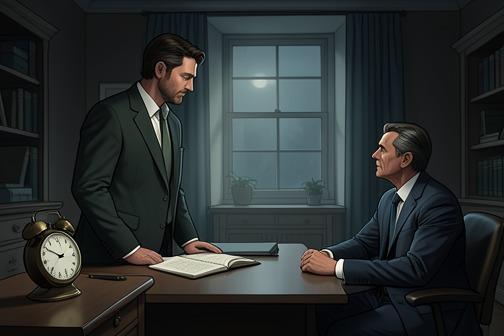
[Brandon Walker](entity:character-recall-character-brandon-walker-926c548f3946) joins [The Last Chance](entity:organization-recall-organization-the-last-chance-e0a4f35be780) at a moment when he is unsure whether his experience can still matter. [Ralph Ames](entity:character-recall-character-ralph-ames-aa4ecf296212)’s invitation turns an organization founded to revive neglected cold cases into a lifeline for Brandon himself: within six months, he understands that the work has restored both his purpose and his sense of having a place in the world. The decision also leads into his responsibility for [Emma Orozco](entity:character-recall-character-emma-orozco-5a01d4c50053)’s effort to reopen questions surrounding her daughter Roseanne’s death.
## The cold-case project behind the invitation
The Last Chance grows out of [Hedda Brinker](entity:character-recall-character-hedda-brinker-778622821b2a)’s long effort to find answers about the murder of [Ursula Brinker](entity:character-recall-character-ursula-brinker-3e19219c4eed). Hedda’s husband, Toby, believed the person responsible was better connected than the Brinkers and that some kind of cover-up might explain why the killer was never caught. Yet private investigators hired by Toby found neither a viable suspect nor evidence of a cover-up. His death did not end Hedda’s concern; with no living heirs, she continued looking for a way to pursue the case.
Hedda had seen a television program about the [Vidocq Society](entity:organization-recall-organization-vidocq-society-0e994f0e2b3c), a group of investigators and forensic specialists that considered cold cases, and tried to interest it in Ursula’s murder. The group declined. She then asked Ralph Ames whether she had enough money to create a similar organization on the West Coast, extending from the Mississippi westward. Ames initially doubted that she could finance such a major undertaking. Hedda eventually won the jackpot, but did not simply collect the first proceeds: she first established a 501(c) nonprofit so the money could be paid into it. That organization became The Last Chance.
## How The Last Chance operates
The Last Chance is invitation-only. It seeks out mostly retired police investigators and forensic experts whom it believes share its goals and will be motivated by the prospect of helping solve cases others consider beyond repair. Members volunteer their services and expertise; the organization covers expenses, laboratory facilities and analyses, and clerical and other support.
Monthly meetings provide a route from a family’s unresolved loss to a possible investigation. Most take place in Phoenix, with some in Denver. Family members usually present cases when they believe local law-enforcement agencies are unwilling or unable to devote further resources to what those agencies regard as a dead end. The group may assign a case to two or three members or vote to take it on together. The model therefore depends both on expert participation and on relatives being able to bring forward a case that official attention has not resolved.
[G. T. Farrell](entity:character-recall-character-g-t-farrell-c1a30a4bd74e) connects the organization’s work to Ursula Brinker’s case. He had been a young campus police officer at [Arizona](entity:location-recall-location-4abaad620253) State University when Ursula was murdered, remained in contact with Hedda and Toby over the years, and became one of The Last Chance’s founding members. Farrell wanted to know whether Brandon would join. The offer was more than a practical request for investigative labor: it came from people who still regarded Brandon’s experience and expertise as useful.
## Brandon accepts
Brandon’s response is immediate. He finishes his Campari and accepts, asking Ames to tell Farrell that he owes him. Ames instead invites him to speak to Farrell himself and explains that the next meeting will be in Denver in two weeks; The Last Chance’s travel agent will arrange Brandon’s flight. The exchange makes the invitation concrete: he is not merely being praised for past work but is being brought into a functioning organization, with a place at its next meeting.
The speed of Brandon’s acceptance troubles him afterward. He worries that he seized on Ames’s proposal too eagerly, as though he had reached for a lifeline, and wonders whether he seemed desperate. His doubts reflect the experience of being cast aside and ignored, which has made him question his own worth and past decisions. The offer meets that uncertainty directly by treating him as someone whose abilities can still serve a purpose. His acceptance is thus both a professional commitment and a personal turning point, even though he initially fears that his need for the opportunity has shown too plainly.
## A renewed purpose, and a case to carry
Six months later, Brandon no longer regards joining The Last Chance as a mistake. He believes that working with Ames and the organization has given him his life and purpose back. The benefit does not make his new responsibility emotionally uncomplicated. Thanks to [Fat Crack Ortiz](entity:character-recall-character-fat-crack-ortiz-b469ce85e59f), Brandon now has a case that needs to be guided into and through The Last Chance, and his renewed excitement is accompanied by guilt: his happiness has arisen from someone else’s prolonged grief.
That case brings him into contact with Emma Orozco, Roseanne’s mother, who has waited decades before speaking openly about the murder. Brandon does not press her with direct questions; knowing that direct questioning can be considered impolite among the Tohono O’odham, he begins with an observation about how long she waited. Emma explains that her husband, Henry, had urged the family to forget the past, but that after his death she wants to know what happened to her daughter. Brandon recognizes the courage involved in raising the subject with a stranger and a white investigator, and understands why the word murder remains difficult for her to say. The loss of a child, he knows, can divide a life into a before and an after.
The investigation later exposes how much had been left unheard. [Andrea Tashquinth](entity:character-recall-character-andrea-tashquinth-fb3d761ebed0) recalls that Roseanne stopped speaking after a distressing experience at school, and says she tried to tell the authorities that the hospital might be connected to Roseanne’s disappearance. At sixteen, Andrea found that no one was interested in her opinion. Emma, in turn, insists that the hospital’s claim to have no record of Roseanne’s admission cannot be right, because her own records show that she was there at the relevant time. These accounts give the case a human dimension beyond the absence of a solved investigation: family members had tried to make their knowledge count and had not been taken seriously.
Brandon’s work also remains constrained by questions of authority and evidence. The historical investigation fell under different jurisdictions depending on where a killing occurred and who was involved; in Roseanne’s case, the assumed reservation location and identities of the people involved meant that the investigation was not Brandon’s original assignment. Later, Emma arranges for Roseanne’s baby’s remains to be exhumed without waiting for tribal-council permission. Brandon thanks her for the difficult decision, while recognizing that the action creates a serious problem for the chain of evidence. The Last Chance can help pursue a case that survivors believe has been neglected, but renewed attention does not erase the procedural and institutional obstacles accumulated over decades. Brandon’s membership gives him a way to take up that work; it does not promise an easy resolution.
Event 11
Roseanne Orozco’s murder
[Roseanne Orozco’s murder](entity:event-recall-event-roseanne-orozco-s-murde-0cc75b8c4882) is both a family’s lasting bereavement and a cold case shaped by whose testimony and deaths received serious attention. Roseanne disappeared from a hospital and was found dead in an ice chest near [Quijotoa](entity:location-recall-location-1ae727e40e8f). For years, her sister [Andrea Tashquinth](entity:character-recall-character-andrea-tashquinth-fb3d761ebed0)’s suspicion that something had happened at the hospital went unheard, while the investigation on the reservation failed to resolve the crime. The case was eventually linked to Gayle Stryker and [Larry Stryker](entity:character-recall-character-larry-stryker-52f1ff0e9396), although the available account does not detail their specific roles in Roseanne’s death.
## Disappearance and discovery
Roseanne had undergone an appendectomy at the Indian Health Services Hospital in the summer. Later, still unwell when school began, she was taken back for tests. Andrea recalled that their father was supposed to collect her after work, but Roseanne was already gone when he arrived. The family never saw her again. The following week, someone found her body in an ice chest along the road.
A highway worker found the body near Quijotoa. Roseanne’s remains had been cut apart and placed in the cooler, giving the case the enduring public nickname [Girl in the Box](entity:expression-recall-expression-girl-in-the-box-1c5e6975a7df). That name preserved one stark feature of the crime, but did not identify its perpetrator or explain what had happened before her disappearance. Within the family, the discovery became a warning as well as a memory: [Leo Ortiz](entity:character-recall-character-leo-ortiz-44584a9944fb) later recalled that his grandmother used the story to frighten children into behaving.
## The family’s account and the hospital suspicion
Roseanne’s death followed a childhood marked by a different, earlier silence. Andrea remembered Roseanne’s first day of school: frightened at being separated from her sister, the four-year-old cried, and the principal carried her away to a dark coat closet. After school, Roseanne would not speak. She never spoke again, despite attending school and being taken to doctors in the area and in Phoenix. Their father also consulted a medicine man, who said he could do nothing for her. Andrea’s recollection establishes the depth of Roseanne’s isolation, but does not establish a cause for her later death.
Years afterward, Andrea connected Roseanne’s final hospital admission to her disappearance. She had tried to tell the [Papago Tribal Police Force](entity:organization-recall-organization-papago-tribal-po-01871e18d2d3) that the hospital mattered, but said no one listened. At sixteen, she found that investigators were not interested in her opinion. The family and authorities instead suspected their father. Andrea believed that Roseanne had been assaulted at the hospital, but she could not identify a perpetrator; she considered possibilities including someone who worked there or a visitor. Her suspicion remained a suspicion, not a proven account of what happened.
[Emma Orozco](entity:character-recall-character-emma-orozco-5a01d4c50053), Roseanne’s mother, also lived with unanswered questions. She said that after the case, her husband Henry urged the family to forget and not dwell on the past. After Henry died, Emma decided that, as Roseanne’s mother, she wanted to know what had happened. Her willingness to revisit the murder meant speaking about a painful family history with [Brandon Walker](entity:character-recall-character-brandon-walker-926c548f3946), an outsider to her community. Brandon understood that direct questioning could be impolite among the Tohono O’odham, and treated Emma’s decision to speak as an act requiring resolve rather than as a routine interview.
## An investigation obstructed and reopened
The crime’s location complicated jurisdiction. The actual murder site was never found; investigators assumed Roseanne had died somewhere on the reservation and had been killed by another Native person. Under those assumptions, responsibility lay with the [Federal Bureau of Investigation](entity:organization-recall-organization-federal-bureau-o-f1c5664278d2) or tribal police, rather than with the [Pima County](entity:location-recall-location-804fc987bb67) Sheriff’s Department. Brandon recalled that the tribal force lacked training, equipment, and money, while Federal Bureau of Investigation inquiries into reservation murders were often cursory. The original investigation produced no resolution.
Records offered a possible route back into the case. A study funded by [Arizona](entity:location-recall-location-4abaad620253) State University in the early 1990s had digitized existing health records from the hospital in [Sells](entity:location-recall-location-sells-004492d6e296), including records dating to the 1950s. Roseanne’s July [1970](entity:time-recall-time-1970-96062041573c) appendectomy should therefore have been documented. But an archive’s existence did not guarantee access: Brandon expected a request from him, a white man, to meet resistance, and hoped Emma might fare better. When she later said hospital staff had claimed no record showed Roseanne admitted, she rejected that explanation. The staff had found Emma’s own hospital record, listing three admissions, including the births of Andrea and Roseanne. The discrepancy strengthened Emma’s conviction that someone at the hospital was involved, but it did not by itself prove what had happened to Roseanne there.
## Long-delayed revelations and the case’s legacy
The case’s consequences extended beyond the original failed inquiry. To obtain Roseanne’s baby’s remains, Emma arranged for Sam Tashquinth and her grandson to exhume them after dark, without first seeking permission from the tribal council. The decision achieved its immediate purpose, but Brandon recognized that bypassing the process compromised the chain of evidence. The episode placed the family’s urgency to pursue answers beside the requirements for evidence that could support accountability in court, as well as the tribe’s role in authorizing action involving remains on the reservation.
The murder’s eventual resolution came through a later conversation, not through the account of the original investigation. After the deaths of Gayle Stryker and Larry Stryker, [Brian Fellows](entity:character-recall-character-brian-fellows-5c1605d16c35) told Brandon that both had been involved in Roseanne’s murder, along with other crimes. He promised to explain further when Brandon was well enough; the details were not given in that exchange. In the same aftermath, investigators’ DNA and fingerprint work connected the Strykers to fourteen separate cases, while photographs in Larry’s notebooks depicted additional unidentified girls. Roseanne’s murder thus emerged as part of a wider pattern, even as the surviving account left the exact circumstances of her killing unresolved.
The case turns on the difference between a death that became a public story and a loss that remained immediate to a family. The nickname, the ice chest, and the old hospital records kept traces of Roseanne’s story in circulation; Andrea’s unheeded warning and Emma’s return to the investigation exposed how little those traces had once counted. The later identification of the Strykers changed the understanding of the case, but did not erase the years in which Roseanne’s family had to carry its questions without an answer.
Event 12
Roseanne Orozco disappears from the hospital
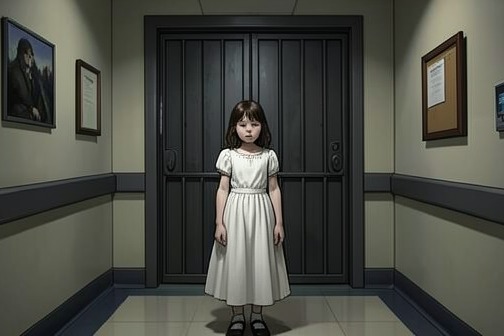
[Roseanne Orozco](entity:character-recall-character-roseanne-orozco-2b8e1f1df4ee)’s disappearance followed a return to the hospital in [1970](entity:time-recall-time-1970-96062041573c), after an appendectomy and continuing illness. Her family believed she had left before her father could collect her; the following week, her body was found in an ice chest beside a road. Years later, her sister [Andrea Tashquinth](entity:character-recall-character-andrea-tashquinth-fb3d761ebed0) connected the disappearance to Roseanne’s earlier hospital stay and said that authorities had ignored her suspicions. The event thus remains not only a family loss but a case shaped by testimony discounted and records whose apparent absence could not be reconciled with [Emma Orozco](entity:character-recall-character-emma-orozco-5a01d4c50053)’s own memories.
## Background and Hospitalization
That summer, Roseanne had surgery for appendicitis at the [Sells Indian Health Services Hospital](entity:location-recall-location-sells-indian-health-b70e3afa2a7a). According to Andrea, Roseanne remained ill after leaving the hospital. Emma Orozco later recalled that a doctor diagnosed an infection from the surgery and gave Roseanne medication. When Roseanne became too sick to attend school, Emma took her to a doctor, who admitted her for tests.
The two hospital stays matter to the family’s account. Andrea suspected that something had happened during the earlier admission for surgery; Roseanne disappeared during the later admission for tests. Andrea remembered that [Henry Orozco](entity:character-recall-character-henry-orozco-37d3dd716b79) was supposed to collect his daughter after work, but when he arrived, she was already gone. The family never saw her again. The next week, someone found her body in an ice chest along the road.
## The Family’s Account
Andrea remembered Roseanne’s disappearance as the end of a sequence of events whose beginnings had never been explained. As children, the sisters had attended school together until Roseanne was placed in a different class. After a frightening encounter with the principal, Roseanne stopped speaking and never spoke again. Her parents sought medical help, including consultations in Phoenix, but no doctor identified a cause. Andrea’s recollection supplies important context for how the family understood Roseanne’s vulnerability, although it does not establish what happened at the hospital.
When [Brandon Walker](entity:character-recall-character-brandon-walker-926c548f3946) asked Andrea what she remembered about Roseanne’s death, she said she had tried to tell the tribal police that the hospital was involved, but nobody had listened. She suspected that someone connected to the hospital—perhaps a staff member or a visitor—had assaulted Roseanne during the earlier stay. Andrea was sixteen at the time she tried to raise this possibility. She said that her age meant others were not interested in her opinion, while investigators were convinced that her father was responsible. Her suspicion remained an allegation, not a proven account of the disappearance or assault.
## Records and Unanswered Questions
Emma’s account confirmed that Roseanne had been admitted for appendicitis and later returned to the hospital, but the hospital’s response to a records inquiry appeared to contradict the family’s recollections. Emma said a hospital employee reported that no record existed of Roseanne Orozco ever being admitted. The employee suggested the records might have been lost because so much time had passed. Emma rejected that explanation: the same search had located her own records of three hospital stays, including the births of Andrea and Roseanne and a later hysterectomy.
Brandon had reason to think older records might still exist. He remembered that a grant-funded study in the early 1990s had entered existing hospital health records, some dating back to the 1950s, into computers. The project examined longevity and causes of death among the Tohono O’odham; it also contributed to the hospital’s capacity to establish a kidney dialysis center. Brandon therefore believed Roseanne’s July 1970 appendectomy records might be retrievable, while recognizing that the existence of a database did not guarantee access to it. The conflicting account of the records strengthened Emma’s conviction that someone at the hospital was involved, but it did not by itself prove that conclusion.
## Investigation and Significance
The disappearance became part of a homicide investigation that had never produced a clear account for Roseanne’s family. Because investigators assumed that she had been killed on the reservation by another Native person, responsibility lay with the FBI or the local tribal police rather than the county sheriff’s department. Brandon remembered that reservation investigations were often cursory, and that the tribal police lacked training, equipment, and funding. He had not followed the case at the time and learned from Emma that the investigation had achieved nothing.
In the later inquiry, Emma’s memories and Andrea’s long-unheard suspicion helped Brandon revisit the case, but they did not remove the evidentiary gaps. The narrative places the family’s testimony beside institutional failure: Andrea had tried to speak when the event was recent, while the possibility of retrieving medical records remained uncertain decades later. Roseanne’s disappearance is therefore presented both as a specific sequence—readmission, absence before her father arrived, and discovery of her body the following week—and as an unresolved event whose unanswered questions were compounded by the failure to listen.
Event 13
Roseanne stops speaking after school trauma
[Roseanne Orozco](entity:character-recall-character-roseanne-orozco-2b8e1f1df4ee)’s silence began after a traumatic first day at school, as recalled by her sister [Andrea Tashquinth](entity:character-recall-character-andrea-tashquinth-fb3d761ebed0). A principal forcibly separated the frightened four-year-old from Andrea, carried her to a dark closet, and shut her inside. Roseanne never spoke again; the episode gives a concrete origin to her silence and exposes how the school’s treatment of a distressed child shaped the course of her life.
## Andrea’s account
Andrea recounts the episode to [Brandon Walker](entity:character-recall-character-brandon-walker-926c548f3946), explaining that Roseanne had cried when Andrea first left for school by bus. Their grandmother was mean, and Roseanne feared being left alone with her. When Roseanne begged to go along, Andrea told their grandmother that Roseanne was supposed to attend too. The lie got her permission to take her younger sister to school.
At first, the day went well. Then Roseanne discovered that she and Andrea were assigned to different classes. She became frightened and cried so hard that the principal came. Andrea describes him as huge: he picked Roseanne up under one arm, while she kicked and screamed, and carried her down the hall. Andrea followed, repeatedly asking him to put Roseanne down, but he continued to his office, where he threw her into a coat closet without a light and slammed the door. He sent Andrea back to class. She could still hear Roseanne crying as she walked away.
## The beginning of Roseanne’s silence
Andrea did not see Roseanne again until the children were getting on the bus after school. Roseanne’s face was still wet, as if she had been crying throughout the day. Andrea tried to get her to explain what had happened on the ride home, but Roseanne would not answer. She never spoke again—not to Andrea, not to their parents, and especially not to anyone at school.
The account makes the sequence stark: separation from her sister, force, confinement, and then silence. Roseanne’s mutism is not presented as an unexplained trait that preceded the school day; Andrea places its onset immediately after the principal’s actions. The closet’s darkness and the sound of Roseanne crying down the hall mark the moment when an adult’s handling of a frightened child becomes the defining wound of her school experience.
## Adults’ responses and the cost of the incident
Roseanne continued attending school because her father made her, but she did not answer questions in class or turn in papers. Her parents took her to doctors both locally and in Phoenix, without finding an explanation or help. Her father also brought her to a medicine man, who described her as intellectually disabled and said nothing could be done. The account records these attempts to explain or address Roseanne’s silence, but none changed the conditions she faced at school or restored her speech.
Andrea’s memory also carries the episode’s emotional force into the present conversation. Brandon responds in anger at the principal’s treatment of an innocent four-year-old, while Andrea’s account stays with what she saw and heard: Roseanne being carried away, the closet door closing, and her sister’s crying continuing down the hall. The contrast makes the harm legible without treating Roseanne’s silence as a mystery detached from its circumstances.
## A later change at school
Two years after the incident, the school had a new principal, whom Andrea remembers as kind. When the secretary told him what had happened, he arranged for Andrea and Roseanne to be in the same class. Andrea says Roseanne became her shadow. That change restored their daily closeness at school, although the account does not say that Roseanne began speaking again.
Andrea’s recollection thus contains both the lasting consequence of the first principal’s actions and a limited institutional correction by his successor. The later principal changed Roseanne’s classroom circumstances; he did not undo the earlier trauma or reverse her silence. In telling Brandon that Roseanne had been her shadow, Andrea gives their closeness a final, personal shape: after the separation that began the episode, the sisters were together again in class.
Event 14
AFIS fingerprint match reveals a serial-murder lead
The AFIS fingerprint match transforms an investigation from a search for one victim and one perpetrator into a cross-case inquiry spanning decades. A latent print associated with unidentified remains near Interstate 8 connects the current crime scene to an unsolved Yuma County case; a subsequent database search brings [Roseanne Orozco](entity:character-recall-character-roseanne-orozco-2b8e1f1df4ee)’s [1970](entity:time-recall-time-1970-96062041573c) murder into the same pattern. The match does not name a killer, but it changes what investigators must explain—and eventually shifts attention away from [Larry Stryker](entity:character-recall-character-larry-stryker-52f1ff0e9396) toward someone present both when Roseanne died and at [Erik LaGrange](entity:character-recall-character-erik-lagrange-267f19623518)’s house.
## Background: A Cold Case and New Questions
Roseanne Orozco’s case had remained unresolved for more than three decades. In 1970, investigators had theorized that the father of her baby might be responsible. When they learned that Roseanne’s father was not the baby’s father, however, they let the investigation slide. By the time [Brandon Walker](entity:character-recall-character-brandon-walker-926c548f3946) revisited the case with [Emma Orozco](entity:character-recall-character-emma-orozco-5a01d4c50053), newer investigative tools offered a way to test old assumptions, though doing so meant reopening painful questions. Roseanne’s baby had been buried separately from her mother, a detail that raised further investigative possibilities; Emma did not know whether the baby had been embalmed.
The renewed inquiry also mattered to Emma as more than an exercise in evidence. She had waited a long time to talk about Roseanne’s death. Her husband, Henry, had urged her to forget the past, but after his death she wanted answers as Roseanne’s mother. Brandon understood why the murder remained central to a family’s life even after public attention had moved on. That personal persistence supplied the reason to return to a case that official investigators had allowed to go cold.
## Processing the Scene Prints
At the laboratory, [Alvin Miller](entity:character-recall-character-alvin-miller-b7c3e2accaab) began with the presumed murder weapon, a machete recorded as having been found soaking in soapy water in a kitchen sink. The washing had removed some blood, but the more decisive limitation was that the machete yielded no usable fingerprints. The plates and silverware offered better evidence. Miller recovered two comparatively clear sets of prints, then spent nearly two hours enhancing their lines and whorls by hand before sending the images into the identification system.
A comparison with the suspect’s prints showed that they appeared on both sets of dishes. Miller considered it likely that the suspect had served the meal and cleared up afterward, but he did not treat that result as the central lead. He set those prints aside and concentrated on the unidentified ones. If they belonged to the victim and she was already in a database, an identification might become possible before the medical examiner completed the identification process. The distinction mattered: a print’s presence on an object established contact, but did not by itself establish the full circumstances or prove guilt.
## The AFIS Hit and the Serial-Case Hypothesis
The decisive database result came when Miller told [Brian Fellows](entity:character-recall-character-brian-fellows-5c1605d16c35) that AFIS had matched one print from the crime scene. The match was to a single fingerprint found on the inside of a garbage bag containing dismembered human remains, discovered three years earlier near a rest area on Interstate 8, beyond Gila Bend and partway toward the California border. The victim in that case was an unidentified female estimated to be thirteen to fifteen years old, and the case remained open.
The match did not mean that the unidentified girl from the Interstate 8 case was the perpetrator in the current investigation. Miller regarded that as unlikely and instead proposed a serial-homicide possibility: LaGrange might be involved, but another person could be involved as well. His suggestion was a working hypothesis, not a conclusion established by the fingerprint alone. He advised Fellows to look for other cases sharing the same method, turning a single database hit into a broader search.
Fellows used the Violent Criminal Apprehension Program, or VICAP, to search for female victims between twelve and twenty whose bodies had been dismembered. The query returned forty-one unsolved crimes across more than three decades. Roseanne Orozco appeared at the very end as the earliest case in the database. Fellows knew Brandon had mentioned Roseanne that morning while they were digging [Fat Crack Ortiz](entity:character-recall-character-fat-crack-ortiz-b469ce85e59f)’s grave, and the coincidence made a connection difficult to dismiss. Yet the chronology itself warned against a simplistic identification of the culprit: Erik LaGrange could not plausibly have been an established serial killer at five years old. Fellows’s instinct was that the cases were connected, but he still needed evidence explaining how.
## What the Match Established—and What It Did Not
The database search produced a lead, not a solved case. Fellows requested records from the Yuma County Sheriff’s Department for the Interstate 8 investigation and sought Roseanne’s old file as well. The latter request had not yet surfaced, and, because Roseanne’s homicide had occurred on the reservation, he thought relevant material might still be held at the [Law and Order](entity:expression-recall-expression-law-and-order-da115f061786) office in [Sells](entity:location-recall-location-sells-004492d6e296). The need to gather files from separate agencies reflected the practical difficulty of joining cases that had been investigated at different times and in different jurisdictions.
Later comparisons refined the lead and overturned an expectation about Larry Stryker. None of the Orozco prints matched the prints on the [Burger King coffee cup](entity:object-recall-object-burger-king-coffee-cup-b832bf330795) collected from Larry. But one Orozco print did match an unidentified print recovered from LaGrange’s house; the same was true of the Yuma County evidence. Brian therefore told Brandon that Larry was not their suspect on the basis of the cup comparison. Brandon had invested substantial belief and emotion in the theory that Larry was a serial killer and struggled to abandon it. Brian’s conclusion was narrower: the remaining viable suspect had to be someone present when Roseanne was killed in 1970 and also present at LaGrange’s house on the later Saturday night.
The event’s significance lies in this sequence of qualifications. The print inside the garbage bag connected a new scene to an older unsolved case; VICAP revealed the scale of potentially comparable crimes; and the later Orozco comparison linked Roseanne’s case to both LaGrange’s house and the Yuma County evidence. Yet each result also imposed limits on what could be claimed. AFIS exposed a pattern and redirected the investigation, while the eventual exclusion of Larry demonstrated that a compelling theory could not substitute for the distinctions among a print match, contact with a scene, and proof of responsibility.
Event 15
Roseanne Orozco cold case reopened
The reopening of [Roseanne Orozco’s murder](entity:event-recall-event-roseanne-orozco-s-murde-0cc75b8c4882) case begins not with a new forensic match but with a mother’s decision to ask again. Decades after Roseanne disappeared from a hospital and her body was found in an ice chest beside a road, [Emma Orozco](entity:character-recall-character-emma-orozco-5a01d4c50053) turned to [Brandon Walker](entity:character-recall-character-brandon-walker-926c548f3946), a member of [The Last Chance](entity:organization-recall-organization-the-last-chance-e0a4f35be780), to investigate what official inquiries had left unresolved. Listening to Emma and her sister Andrea brought an overlooked hospital lead back into view; pursuing it also revealed how age, racial and institutional power, and weak investigative resources had helped keep the case from being properly examined.
## A case left behind
Roseanne’s disappearance followed a hospitalization for appendicitis in the summer of [1970](entity:time-recall-time-1970-96062041573c). Andrea recalled that Roseanne remained unwell after the operation and was later admitted for tests. Their father was meant to collect her after work, but when he arrived, Roseanne was gone. The family was told to assume she had left on her own. The following week, her body was found in an ice chest along the road. The place where she had actually been killed was never established.
The case’s jurisdiction had also shaped its investigation. Authorities assumed that Roseanne had died on the reservation and that an Indigenous person had killed her. In Brandon’s understanding, a murder of an Indigenous person by another Indigenous person on Native land fell to either the [Federal Bureau of Investigation](entity:organization-recall-organization-federal-bureau-o-f1c5664278d2) or local tribal police. The case differed from the earlier murder of Gina Antone, whose death occurred off the reservation and was investigated by the [Pima County Sheriff's Department](entity:organization-recall-organization-pima-county-sher-28cde77ee195). Brandon remembered reservation investigations in the early seventies as often cursory, and the [Papago Tribal Police Force](entity:organization-recall-organization-papago-tribal-po-01871e18d2d3), sometimes called [Law and Order](entity:expression-recall-expression-law-and-order-da115f061786), lacked training, equipment, and money. The contrast helps explain the case’s neglect without establishing who killed Roseanne or where the murder took place.
Brandon had not been the investigator assigned to Roseanne’s homicide. At the time he was newly divorced, struggling with alimony and child-support payments, sometimes working as a rent-a-cop, and living with his parents while his father’s health declined. He had been relieved when the case did not come to him and did not follow its outcome. Years later, Emma’s account made clear to him that the investigation had not produced answers.
## Listening to the family
Emma had waited a long time to speak about the murder. Her husband, [Henry Orozco](entity:character-recall-character-henry-orozco-37d3dd716b79), had urged the family to forget what had happened, but after his death Emma wanted to know what became of her daughter. She approached Brandon as Roseanne’s mother, not merely as a relative repeating an old rumor. Brandon understood that seeking answers in the presence of a stranger and a white man went against the reserve and teachings Emma had lived with. Rather than press her with direct questions, which he knew could be considered impolite among the Tohono O’odham, he began with an observation and gave her room to speak. Her hand tightened around her walker as she explained why she had returned to the past.
Andrea supplied an essential part of the family’s memory. She remembered Roseanne as a four-year-old, frightened on her first day of school and distressed when she could not stay in Andrea’s class. A large principal carried the child away and shut her alone in a dark coat closet. Andrea heard Roseanne crying as she was sent back to class. At the end of the day, Roseanne was still tearful; on the bus home she would not answer Andrea. She never spoke again, to her family or at school. Her parents took her to doctors in the area and in Phoenix, and later to a medicine man, but none could help.
That childhood history did not explain Roseanne’s murder, but it showed how much of her life had already been difficult to make legible to outsiders. Andrea had been sixteen when she tried to tell Law and Order that the hospital might be involved in Roseanne’s disappearance. No one wanted to hear her opinion, especially when investigators were convinced their father was responsible. Asked years later what she remembered, Andrea again pointed to the hospital. She did not claim to know who had taken Roseanne; she suggested that someone working there, perhaps an orderly or nurse, or a visitor, could have been involved. Her tentative lead had once been dismissed because of who was speaking and how little authority she was granted.
## Following the hospital lead
Brandon treated Andrea’s suspicion as something to check rather than as proof. He wrote down her impression and recognized that cold-case work required following leads earlier investigators had ignored. He also knew the family would need access to medical records. A study funded in part by an [Arizona](entity:location-recall-location-4abaad620253) State University grant in the early nineties had entered existing records from the [Sells Indian Health Services Hospital](entity:location-recall-location-sells-indian-health-b70e3afa2a7a) into computers, including records dating back to the fifties. The study examined Tohono O’odham longevity and tracked diseases and causes of death; together with tribal casino funds, it helped make the hospital’s kidney dialysis center possible. Roseanne’s July 1970 appendectomy records might therefore be searchable, but their existence did not guarantee access. Brandon expected that a white investigator asking alone would meet a respectful refusal and be told no such records were available.
He asked Emma to accompany him and request Roseanne’s records as her mother. At the hospital, staff said they had no record of Roseanne ever being admitted and suggested that records from so long ago might have been lost. Emma rejected that explanation: the hospital had found her own file, documenting three admissions, including the births of Andrea and Roseanne and her later hysterectomy. For Emma, the discrepancy confirmed that Andrea had been right to suspect someone at the hospital. It did not identify a perpetrator, but it turned a dismissed family intuition into a specific line of inquiry—and made the missing record itself part of the problem Brandon had to investigate.
## Evidence, authority, and the limits of the reopening
The investigation also forced a conflict between the family’s urgency and the requirements of a criminal case. Emma arranged for her grandson and Sam Tashquinth to exhume the remains of Roseanne’s baby after dark, without first seeking permission from the tribal council because she believed the official process would take too long. The action obtained the remains, but Brandon recognized that it compromised the chain of evidence. As a member of The Last Chance rather than a sworn police officer, he faced both the need to help survivors pursue answers and the need to preserve evidence that could stand up in court. He thanked Emma for a difficult decision without pretending that its legal consequences had disappeared.
The reopening thus proceeds through two forms of recovery: the recovery of family testimony that institutions had discounted, and the attempted recovery of records and remains that might support further investigation. Andrea’s memory of Roseanne’s silence, her early warning about the hospital, Emma’s persistence over the missing admission record, and Brandon’s effort to verify rather than simply accept a suspicion all become consequential. Yet the evidence presented here does not solve the murder. It establishes why the case deserved renewed attention, identifies a hospital connection to investigate, and leaves the question of responsibility unresolved.
Event 16
Fat Crack Ortiz's death
[Fat Crack Ortiz](entity:character-recall-character-fat-crack-ortiz-b469ce85e59f)’s death is framed through what he passes on and the people who must carry on without him. Before his death, he entrusts [Brandon Walker](entity:character-recall-character-brandon-walker-926c548f3946) with a medicine pouch intended for [Lani Walker](entity:character-recall-character-lani-walker-2f6e7ef623c2), and their shared [Peace Smoke](entity:expression-recall-expression-peace-smoke-71b11e80fc4d) becomes a quiet farewell. [Wanda Ortiz](entity:character-recall-character-wanda-ortiz-d7fa9e598e76) later confirms that Fat Crack Ortiz is gone; the family’s funeral plans then make clear that mourning will be shaped by the living as well as by the deceased.
## The Farewell and the Handoff
Fat Crack Ortiz gives the pouch to Brandon Walker with a specific instruction: when Lani Walker comes home, Brandon is to give it to her. He explains that [Looks at Nothing](entity:character-recall-character-looks-at-nothing-e578c78467cd) and he, both old and blind siwanis, wanted Lani to have it. Brandon understands that this is more than a routine transfer and recognizes what Fat Crack Ortiz is telling him. He accepts the responsibility and thanks him.
The exchange is practical as well as ceremonial. Fat Crack Ortiz gathers the lighter and remaining pieces of paper from the blanket on his lap and puts them into the huashomi before offering the bag. Once Brandon promises to deliver it, Fat Crack Ortiz directs him to find Wanda and check whether the tortillas are ready. That ordinary household task follows a moment of parting without diminishing it: the conversation moves from a legacy being entrusted to Brandon back to the continuing rhythms of family life.
The pouch is not the only thing Fat Crack Ortiz gives away. He and Brandon have smoked the Peace Smoke many times during their friendship, but on this occasion the act is described as Fat Crack Ortiz’s own friendly gift of thanks and goodbye. The significance becomes clear to Brandon through the combination of gestures: the medicine pouch is being sent on to Lani Walker, and the tobacco has been given away. The handoff makes the coming loss legible before anyone formally reports it.
## Foreboding and Confirmation
After Brandon leaves, Wanda Ortiz asks her husband to come inside because it is getting hot. Fat Crack Ortiz refuses, and Wanda returns to the house. The chill he feels, the narration makes clear, is not caused by the weather. Having completed the Peace Smoke and given away the pouch and sacred tobacco, he is left with a foreboding he identifies as neijig.
That unease belongs to a life in which glimpses of the future have sometimes come to him. When [Leo Ortiz](entity:character-recall-character-leo-ortiz-44584a9944fb) and [Delia Ortiz](entity:character-recall-character-delia-ortiz-6e3a2b64eaa4) told him that Delia was pregnant, he had understood that one baby would die before birth and that another, a boy, would thrive. He kept both predictions to himself. Now he senses that something is wrong concerning his old friend Brandon Walker, but he no longer has Looks at Nothing’s precious crystals, and his blindness leaves him unable to clarify or prevent what he fears. The episode places his foreboding beside the farewell, without suggesting that he knows or controls the circumstances of his own death.
Wanda Ortiz confirms the death directly when Lani Walker calls. Wanda says that she went outside to check on Fat Crack Ortiz and that he is gone. Lani Walker does not ask for clarification: she understands what Wanda means, says she is coming home, and plans to call her parents before setting out. The brevity of the exchange conveys both the certainty of the news and the distance Lani must cross to respond to it.
## Lani Walker’s Return and the Funeral Plans
Lani Walker is away and has to arrange her return rather than leave immediately. She contacts her professors, makes arrangements for her finals, and organizes for her belongings to be packed and shipped home. The only available flight will not bring her to Phoenix until early the following afternoon. Only after purchasing her ticket does she try to call her parents. Her return is therefore shaped by the practical demands of travel and school, even as Fat Crack Ortiz’s death has made home her immediate destination.
Brandon Walker also comes to the house to express his sympathy. Wanda Ortiz tells him that Fat Crack Ortiz was ready, then explains the funeral plans: the service is scheduled for four o’clock Monday afternoon in the high school gym, led by the minister from the Presbyterian church. The family plans to bury him at [Ban Thak](entity:location-recall-location-ban-thak-b216a662f9b7), where Fat Crack Ortiz’s parents and his aunt [Rita Antone](entity:character-recall-character-rita-antone-9905e041b1eb) are buried. These details place the funeral within established family ties and a community setting rather than presenting it as a private or isolated observance.
The choice of minister exposes a difference between Fat Crack Ortiz’s religious identity and Wanda Ortiz’s understanding of what the family needs. Fat Crack Ortiz was a Christian Scientist, and Wanda explains that Christian Scientists do not believe in funerals. She nevertheless chooses a Presbyterian service because she grew up Presbyterian and believes that the funeral is for her, the children, and The People. The plans are not represented as a simple statement of what Fat Crack Ortiz would have wanted; Wanda distinguishes his beliefs from the needs of those who remain.
## What the Death Leaves Behind
The sequence gives the death a shape through acts of entrustment, recognition, and communal preparation. Fat Crack Ortiz does not merely leave a pouch behind: he directs Brandon Walker to place it in Lani Walker’s hands and identifies Looks at Nothing as part of the intention behind the gift. The paired reference to the two blind siwanis ties the object to a relationship and a shared judgment about its recipient, while the Peace Smoke marks the exchange between the two old friends as a goodbye.
The scenes also distinguish private foreboding from public confirmation. Fat Crack Ortiz senses that something is wrong but cannot resolve it; Wanda Ortiz is the one who discovers that he is gone, and Lani Walker receives the news at a distance. Brandon Walker, meanwhile, has already recognized the meaning of the handoff. By the time the funeral is planned, the loss has moved through several forms of response: an entrusted object, a phone call, a journey home, and a service arranged according to the needs of the survivors. The event’s emphasis falls not on the circumstances of death but on the relationships and responsibilities it leaves in motion.
Event 17
Looks at Nothing's medicine pouch entrusted to Lani
The handoff of [Looks at Nothing’s medicine pouch](entity:object-recall-object-looks-at-nothing-s-med-df0b894d0d32) is both a practical charge and a farewell: [Fat Crack Ortiz](entity:character-recall-character-fat-crack-ortiz-b469ce85e59f) gives the treasured huashomi to [Brandon Walker](entity:character-recall-character-brandon-walker-926c548f3946) and asks him to pass it to [Lani Walker](entity:character-recall-character-lani-walker-2f6e7ef623c2) when she comes home. The pouch, inherited by Fat Crack from [Looks at Nothing](entity:character-recall-character-looks-at-nothing-e578c78467cd), carries a healing lineage that Brandon understands may reach back generations; its transfer makes explicit that Fat Crack knows he is dying and is entrusting that legacy to Lani.
## The Handoff
Before giving Brandon the pouch, Fat Crack speaks of Lani and his daughter-in-law, [Delia Ortiz](entity:character-recall-character-delia-ortiz-6e3a2b64eaa4). He believes both women are intelligent, will do good things for The People, and will eventually become friends. Brandon thinks they are already friends, but Fat Crack sighs and does not explain his concern. Instead, he fumbles with the blanket on his lap until he finds his lighter, gathers it with the few remaining pieces of paper, and puts them into the huashomi. He then holds the bag out to Brandon.
Brandon asks what it is and what he is supposed to do with it. Fat Crack tells him to take it, explaining that he no longer needs it. When Lani comes home, Brandon is to give it to her and tell her that Looks at Nothing and Fat Crack, two old blind siwanis, both wanted her to have it. Brandon understands the meaning of the request, accepts it, and thanks his friend. Fat Crack answers, then sends him to find [Wanda Ortiz](entity:character-recall-character-wanda-ortiz-d7fa9e598e76) and check whether the tortillas are ready. The ordinary domestic instruction follows the moment of succession without ceremony: a life-changing charge is placed amid the familiar routines of a household.
## A Legacy Passed Forward
The pouch is not simply a possession Fat Crack has chosen to give away. Brandon understands that [Gabe Ortiz](entity:character-recall-character-gabe-ortiz-d23fb996276f) is passing on a tradition that may have traveled from one medicine man to another all the way back to the ancient medicine woman Kulani O’oks. The transfer therefore joins the immediate relationship between Fat Crack and Lani to a much longer chain of healing knowledge. Fat Crack does not give the pouch directly to Lani in this scene; Brandon is made its temporary bearer, responsible for delivering both the object and the message attached to it.
The request also identifies Lani as the intended inheritor in the language of two elders. Fat Crack tells Brandon that both he and Looks at Nothing wanted her to have the pouch. Because Looks at Nothing had passed it to Fat Crack, the gift to Lani carries the authority of that earlier relationship as well as Fat Crack’s own confidence in her. The object moves forward while its previous keepers are described as blind, making the succession a matter of knowledge and vocation rather than sight. The handoff does not show Lani receiving or using the pouch; its immediate action is the decision to entrust it to her and Brandon’s acceptance of responsibility for conveying it.
## Brandon’s Burden and Doubt
Brandon recognizes the farewell in the gift. He understands that Fat Crack is saying goodbye and knows he is dying, yet is left wondering what he can do with that knowledge. His cell phone has a full signal, so he could call Lani at once, but he hesitates: Fat Crack has not explicitly asked him to summon her or said that he expects her to hurry home. Brandon puts the phone away and continues to think about what has happened. The burden is not only to deliver the pouch; it is also to decide how to respond to a message whose urgency Fat Crack has left unstated.
That uncertainty is sharpened by Brandon’s difficulty reconciling Fat Crack’s identities. Brandon is a born-and-bred Mil-gahn and cannot fully understand how his friend can be both a devout Christian Scientist and a powerful medicine man. He wonders whether Lani can return to the [Tohono O’odham Nation](entity:location-recall-location-tohono-o-odham-natio-69c0323d0ec6) as both a fully qualified physician and a medicine woman. Fat Crack and Lani, unlike Brandon, appear to have no doubt that these seemingly opposed roles can coexist. The pouch’s transfer gives that unresolved question a material form: Fat Crack entrusts Lani with a traditional healing inheritance even as Brandon struggles to imagine how it can accompany her medical future.
## The Pouch After the Transfer
Later, at home, the pouch becomes visible in a different way. As [Diana Ladd](entity:character-recall-character-diana-ladd-0a6d9491c5d6) heads to the refrigerator, Damsel lunges for it and manages to snatch it from Brandon’s hand. Brandon rescues it from the dog’s mouth and lays it on the kitchen counter. Its appearance is specific and worn: a buckskin packet with frayed fringe. The moment interrupts an ordinary evening and makes the object, previously carried as a private obligation, an unmistakable presence in the household.
Diana is surprised by it. In all the years she and Brandon had been friends with Fat Crack and Wanda, Fat Crack had never shown her his treasured pouch, the one he had received from Looks at Nothing. Brandon explains, with a husky voice and a pause, that Fat Crack gave it to him that afternoon for Lani. Diana reads his bleak expression as evidence that Fat Crack knew he was going to die. She comforts Brandon, telling him that neither he nor Lani could have changed what was coming. Brandon accepts that there was nothing to be done, but says that losing an old friend hurts and makes him feel his age. The pouch thus connects the future Fat Crack wants for Lani with the loss Brandon is already experiencing: its inheritance continues, but its delivery begins in grief.
Event 18
Lani returns home after Fat Crack's death
[Lani Walker](entity:character-recall-character-lani-walker-2f6e7ef623c2)’s return home after [Fat Crack Ortiz](entity:character-recall-character-fat-crack-ortiz-b469ce85e59f)’s death is both an urgent journey and a recognition of where her family’s obligations lie. Told by [Wanda Ortiz](entity:character-recall-character-wanda-ortiz-d7fa9e598e76) that Fat Crack Ortiz is gone, Lani immediately commits to coming home. The trip is delayed by the practical demands of university finals and travel arrangements, but its emotional destination comes into focus when she learns that her father and brother are at [Ban Thak](entity:location-recall-location-ban-thak-b216a662f9b7), helping prepare the grave. What first looks like an absence at the airport becomes evidence that they are already doing what matters.
## The Call and the Decision
Wanda Ortiz has gone outside to check on Fat Crack Ortiz when she calls Lani with the news. Lani asks whether it is Wanda, then understands what the word “gone” means without needing an explanation. She takes a deep breath, closes her eyes, and says she is coming home. Before setting out, she will call her parents; the decision itself is immediate, even though getting there will take time.
Lani spends several hours contacting her professors, arranging her finals, and organizing for her belongings to be packed and shipped home. Only after these arrangements are made does she book a flight. The only available option will bring her to Phoenix early the following afternoon. The delay is logistical rather than a change of heart: she has already decided to return, and she completes the arrangements needed to do so.
## The Journey and the Expected Welcome
After buying her ticket, Lani tries to reach her parents. She first calls her father, [Brandon Walker](entity:character-recall-character-brandon-walker-926c548f3946), but he does not answer. Her mother, [Diana Ladd](entity:character-recall-character-diana-ladd-0a6d9491c5d6), then calls to tell her what has happened; Lani explains that Wanda has already reached her and gives her mother the flight details. She plans to take the shuttle from the airport. Diana tells her not to: someone will meet her in Phoenix.
During the long flight from Minneapolis, Lani hopes that either Brandon or her brother, Davy Ladd, will be there to collect her. Instead, she sees Candace and Tyler waving from beyond the security checkpoint. Lani does not dislike Candace, but their lives and backgrounds have left them with little in common apart from their shared love for Lani’s brother. In her exhaustion and grief, the prospect of the ride home with Candace is especially disappointing. Candace once misunderstood “Fat Crack” as part of Fat Crack Ortiz’s last name, a small but telling sign of how little she knew of the loss Lani and Davy shared.
## The Grave at Ban Thak
As they walk toward the luggage carousels, Candace explains that [Gabe Ortiz](entity:character-recall-character-gabe-ortiz-d23fb996276f)’s sons asked Brandon and Davy to help dig the grave at a village on the reservation. She comments on the use of picks and shovels, comparing it with machine-dug graves back home. Lani stops listening to the complaint. Her attention shifts from the airport pickup she had hoped for to the work her father and brother have undertaken.
Neither Brandon nor Davy has come to the airport, but both are at Ban Thak, helping with the burial. The distinction changes the meaning of their absence: they have not failed to come home for her; they are already present where the family’s loss requires them. The narrative identifies Davy as the Boy with Two Mothers and Four Fathers, placing Lani’s immediate family within a wider network of kinship. Their shared action at the grave makes that network concrete, rather than merely a description.
## From Disappointment to Belonging
For the rest of the drive, Lani is virtually impervious to Tyler’s crying and shouting from his car seat. Her hurt has passed, and she is content. The emotional turn is not caused by a conventional welcome at the airport. It comes through learning what Brandon and Davy are doing: digging a grave by hand, together, because that is what the moment calls for.
Lani’s private conclusion that this is the way things ought to be gives the return its force. She arrives still grieving Fat Crack Ortiz, and the evidence does not suggest that the grief is resolved. Instead, the journey carries her from the shock of the call through fatigue and disappointment to reassurance in a family’s practical act of care. The grave links mourning to responsibility, while the contrast between Candace’s incomprehension and Lani’s recognition marks the difference between witnessing a custom from outside and understanding why her own people are there.
Event 19
Delia accepts a tribal attorney position on the reservation
[Delia Ortiz](entity:character-recall-character-delia-ortiz-6e3a2b64eaa4)’s acceptance of a tribal attorney position on the reservation is the decision that turns a private crisis into a return home. The offer had once been refused; after the collapse of her relationship with [Philip Cachora](entity:character-recall-character-philip-cachora-5e8235dc6912) and a weekend spent fearing for her health, Delia called [Gabe “Fat Crack” Ortiz](entity:character-recall-character-gabe-fat-crack-orti-36dbee387077) again and accepted. The choice joins an immediate break with her life in Washington to a longer movement back toward family and community.
## Background to the Decision
Delia’s relationship with Philip had been deteriorating for years. She had continued in the hope that things might change, despite recognizing that the marriage was nearing its end. Gabe had already offered her the tribal attorney position, but when he sent word through her aunt [Julia Joaquin](entity:character-recall-character-julia-joaquin-4e950e17526c), Delia had rebuffed his attempt to help. Her refusal left an available path home unchosen even as the problems in her marriage deepened.
Two weeks after an earlier confrontation, Delia came home from work early with a migraine and found Philip unconscious in the apartment with a sixteen-year-old male prostitute. She did not wake either of them. Instead, she left and checked into the Savoy, separating herself from the scene without first calling her family or explaining what had happened. The discovery made the damage in the relationship impossible to set aside, but the immediate decision she faced was also about her own health.
## The Weekend of Uncertainty
The next morning Delia called in sick and went to see her obstetrician-gynecologist, where she underwent tests for sexually transmitted diseases. The results would not be available until Monday. She returned to the hotel and spent the next eighteen hours worrying that Philip might have contracted AIDS and passed it to her. In the evidence of the episode, this fear is not a confirmed diagnosis but a period of uncertainty that sharply narrows Delia’s attention to what might happen to her.
Delia called no one—not even her mother, [Ellie Chavez](entity:character-recall-character-ellie-chavez-fde613434509), or [Ruth Waldron](entity:character-recall-character-ruth-waldron-968678c1d0eb). She did not want to confront Ruth, who liked Philip, with the reality of the relationship, and contact with Ellie carried the burden of painful family history. She remained at the hotel through the weekend, eventually ordering food after realizing she was hungry. She also contacted [Santa Fe](entity:location-recall-location-santa-fe-ef80121842d3) information and gathered numbers for people named Cachora. The effort to find family marks a first movement toward home, although she did not call her mother or Ruth during the stay.
## Accepting the Position
When Delia returned to Dr. Hanley’s office on Monday afternoon, she was intensely anxious. The doctor told her that she was HIV-negative; the result barely registered at first. Delia left in a daze, found a pay phone, and obtained the tribal chairman’s number. She then reached Gabe, identified herself as Delia Cachora, and asked whether the tribal attorney position was still available.
Gabe confirmed that it was and asked why she was calling. Delia paused, took a deep breath, and accepted the position, asking whether he would still have her. Gabe welcomed her return and said her aunt Julia would be pleased. The exchange is brief, but its sequence matters: the health result comes first, followed by Delia’s deliberate call and acceptance. The position is not a newly created solution to her crisis; it is the earlier offer that she had declined and now chooses to take.
## Consequences and Significance
The acceptance establishes a concrete next step after Delia’s separation from Philip. The narrative connects her departure from the apartment, her testing, and her call to Gabe without claiming that the job itself resolves every consequence of the relationship. What changes is her decision: rather than continue to refuse assistance, Delia agrees to return and take up work as a tribal attorney.
The moment also makes the return relational rather than merely professional. Gabe’s welcome and his reference to Julia place the position within an existing network of family and community ties. Against Delia’s silence toward her mother and Ruth during the weekend, the call to Gabe becomes the first explicit request for a way back. The episode’s decisive outcome is therefore both practical and personal: Delia accepts the available work and commits herself to coming home.
Event 20
Manny takes Eddie from Tempe
[Manny Chavez](entity:character-recall-character-manny-chavez-e4cc0f96d6e2) takes Eddie from [Tempe](entity:location-recall-location-tempe-91e8859532e7) in a confrontation that abruptly separates two siblings and leaves [Delia Ortiz](entity:character-recall-character-delia-ortiz-6e3a2b64eaa4) struggling for years to understand her mother’s decision. Manny arrives after four years apart, demands his son, and leaves with him after [Ellie Chavez](entity:character-recall-character-ellie-chavez-fde613434509) agrees to the return. The immediate loss becomes a lasting question for Delia: why was Eddie taken back to the reservation while she, the daughter who had excelled at school, remained behind?
## Background and Return
For the four years before the confrontation, Ellie, Delia, and Eddie had stayed with [Ruth Waldron](entity:character-recall-character-ruth-waldron-968678c1d0eb) in Tempe. Ellie was studying in the undergraduate program at [Arizona](entity:location-recall-location-4abaad620253) State University, and Ruth became a surrogate mother to the children. She took them to ball games, the zoo, and the Arizona State Fair, helped with homework, and attended parent-teacher association meetings when Ellie could not. Her care provided the household’s steadiness while Ellie was occupied with school.
Delia was twelve and close to promotion into eighth grade when her father reappeared. She had come home from the library carrying an armload of books, with her little brother beside her, and found an unfamiliar pickup in the driveway. Manny was on Ruth’s front porch, shouting at Ruth and Ellie. Delia recognized him immediately as the same angry, drunken father she remembered from before the family left [Sells](entity:location-recall-location-sells-004492d6e296). For Eddie, by contrast, the man was a stranger: he had been too young when they left to remember him.
## The Confrontation and Separation
Manny’s demand was public and forceful. He shouted, “I want my son!” and accused the adults of turning Eddie into “an Anglo and a queer, too.” The insult framed the dispute as a struggle over who would shape the boy, but the children witnessed an argument whose meaning Delia could not yet fully grasp. Eddie, eager to leave with the loud stranger in a shiny pickup, did not share his sister’s recognition or alarm.
The argument went back and forth while Delia and Eddie watched. In the end, Ellie agreed that Eddie would return to the reservation with Manny. The event was not presented to Delia as a legal custody transfer: as far as she knew, there had been no divorce, court order, or exchange of legal documents. Her mother simply handed Eddie over. At twelve, Delia could see the decision but not its unstated implications, and she could not understand why Ellie did not resist more forcefully.
## Aftermath for Eddie and Delia
Delia later came to believe that Ellie must have known Manny’s departure could mean losing Eddie permanently. That fear proved accurate. Eddie entered the care of his grandmother Chavez in [Big Fields](entity:location-recall-location-big-fields-8660cbaedefe), who spoiled him even more than Ellie and Ruth had. He grew up fat and lazy and became a drunk like his father. After graduating from eighth grade, he stopped attending school, and Manny made no effort to change his mind.
As an adult, Eddie contacted Delia only when he needed money: after wrecking another pickup, or after being released from jail and needing support until he could find day work. The reunion on Ruth’s porch therefore did not restore a sibling household; it began a separation that persisted into adulthood, with contact reduced to requests for help.
## Delia’s Unanswered Questions
At first, Delia’s judgment of the episode was blunt: her brother was a stupid, spoiled brat. But that assessment did not settle what troubled her. She wondered why Manny had come to Tempe for Eddie and not for her, why he had chosen the boy who had repeated kindergarten over his straight-A daughter, and why Eddie had been considered worthy of return to the reservation when she was not. The questions expose the unequal meaning of the same family rupture: Eddie was claimed and carried away, while Delia was left to interpret both her mother’s surrender and her father’s choice. The book presents no answer to her questions; their persistence is part of the event’s consequence.
Event 21
Gabe “Fat Crack” Ortiz’s death
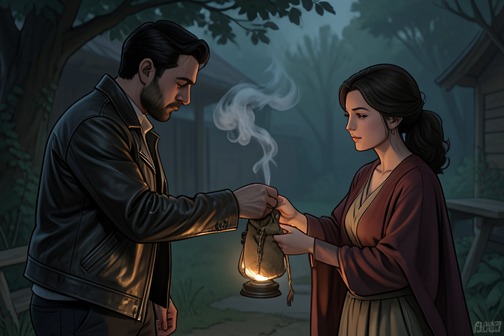
[Gabe “Fat Crack” Ortiz’s death](entity:event-recall-event-gabe-fat-crack-ortiz-s-2bc5471073f9) is disclosed not through a depiction of its circumstances but through what he entrusted to [Brandon Walker](entity:character-recall-character-brandon-walker-926c548f3946) before he died. Fat Crack knew his life was ending and asked Brandon to give his medicine pouch to [Lani Walker](entity:character-recall-character-lani-walker-2f6e7ef623c2). When Brandon later places it in Lani’s hands, the transfer turns an absence into a final communication: Fat Crack cannot speak to her again, but his choice of messenger and gift reach her after his death.
## The last meeting and the handoff
Brandon tells Lani that he saw Fat Crack early the previous afternoon. As Brandon was leaving, the two performed the [Peace Smoke](entity:expression-recall-expression-peace-smoke-71b11e80fc4d) ritual, and Fat Crack gave him the fringed leather pouch with instructions to pass it to Lani. Brandon does not initially explain what the pouch means; he brings it into the room and places it gently in her hands. Lani recognizes it as [Looks at Nothing](entity:character-recall-character-looks-at-nothing-e578c78467cd)’s huashomi and holds the frayed buckskin against her breast. Her immediate question—why Brandon has it—gives way to the understanding that Fat Crack had chosen to send it to her.
The pouch carries a history beyond this final exchange. It had belonged to Looks at Nothing and had been entrusted to Fat Crack; now Fat Crack entrusts it onward to Lani. The sequence makes the object a material link between healer, apprentice, and successor, as well as a personal bequest from her godfather. The transfer is practical—Brandon has been asked to carry it—but its weight for Lani is plainly more than practical. She receives something associated with her spiritual inheritance at the same moment she learns how deliberately Fat Crack prepared for his death.
## His decision about care
Brandon apologizes that he and the others did not call Lani sooner. He admits that he had not understood how seriously ill Fat Crack was, and he thinks no one else understood either. Lani reproaches herself for not having known. Brandon answers that Fat Crack could have arranged for [Wanda Ortiz](entity:character-recall-character-wanda-ortiz-d7fa9e598e76) to call her if he had wanted her there. His explanation shifts the scene away from the assumption that Lani’s absence was simply an oversight: Fat Crack knew he was dying, yet did not ask for her to come.
The reason becomes clear when Lani realizes that, if Fat Crack had told anyone, they would have taken him to the hospital. Brandon confirms that this would have been wrong in Fat Crack’s eyes. The account does not specify his medical condition, the immediate cause of death, or the precise place where he died. Instead, it establishes his choice through the consequences he anticipated: telling others would have led to hospital care he did not want. The story presents that decision as his own, not as a failure to recognize that death was near. His final meeting with Brandon, the Peace Smoke, and the entrusted pouch show that he understood what was happening and acted accordingly.
## Lani’s grief and Brandon’s response
Lani says that all she wanted was one more conversation with Fat Crack, another chance to ask what else she should know. Her regret gives the gift its painful double meaning: it preserves a connection, but it cannot provide the conversation she longs for. Brandon tries to kneel beside her, but pain in his left knee stops him. Instead, he takes her hands, helps her up, and holds her as she cries. His physical effort is small and constrained; the embrace is what he can offer in the moment.
Brandon tells her that those left behind are never ready to let go and always want more, while Fat Crack was ready. He says Fat Crack did not need to tell him this directly; Brandon understood it from his actions. That distinction matters. Fat Crack’s readiness is conveyed not as an explanation of death but through choices: he gave the pouch away, sent it through someone he trusted, and did not summon the hospital. Lani’s wish for one more exchange remains unmet, while Brandon’s account offers a different kind of knowledge—that Fat Crack had reached his own decision.
## Narrative significance
The death enters the narrative retrospectively, in a conversation between Brandon and Lani rather than in a final scene with Fat Crack. This form keeps the focus on what his absence does to those still living: Lani’s self-reproach, her desire for one last talk, and Brandon’s effort to comfort her. It also makes the pouch the scene’s central evidence of intention. It confirms that Fat Crack anticipated his death and entrusted something important to Lani, without supplying a medical explanation the scene does not provide.
The episode holds two understandings of the ending together. To Lani, Fat Crack’s death means a conversation lost and the painful conviction that she should have known more. To Brandon, the handoff and the decision not to call the hospital show that Fat Crack was prepared to die on his own terms. The pouch cannot undo the separation, but it gives Lani a tangible inheritance from the person she wanted to speak with once more.
Event 22
Fat Crack's funeral and funeral feast
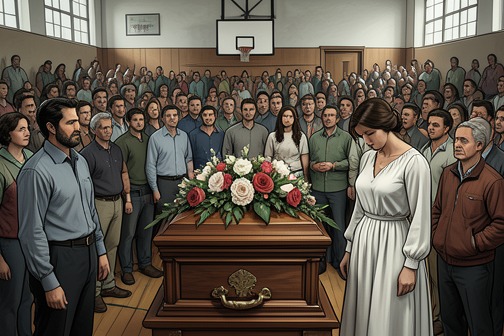
[Fat Crack Ortiz](entity:character-recall-character-fat-crack-ortiz-b469ce85e59f)’s funeral and funeral feast turn a public farewell into a reckoning with the private acts through which he bound people to one another. At [Baboquivari High School](entity:location-recall-location-baboquivari-high-sch-ac6da44fa8f9), [Delia Ortiz](entity:character-recall-character-delia-ortiz-6e3a2b64eaa4) and [Lani Walker](entity:character-recall-character-lani-walker-2f6e7ef623c2) each explain how he changed her life; Delia’s testimony, in particular, moves her from resentment toward the recognition that Lani, too, has a rightful place among the mourners. The burial at [Ban Thak](entity:location-recall-location-ban-thak-b216a662f9b7) and the meal that follows extend that recognition from the family to the wider community.
## The service and the man being mourned
The gym at Baboquivari High School is filled beyond its seating: the bleachers are packed, folding chairs cover the floor, and an open casket surrounded by banks of flowers stands on a makeshift podium. The gathering reflects Fat Crack Ortiz’s standing in the community. Years of running a car-repair and tow-truck business with his two sons had led to his representing [Sells](entity:location-recall-location-sells-004492d6e296) on the tribal council and later serving as tribal chairman. His place as [Looks at Nothing](entity:character-recall-character-looks-at-nothing-e578c78467cd)’s chosen successor had further strengthened his influence.
The service initially fails to do justice to that history. Reverend Jeremy Moon, a Korean-born pastor of Sells First Presbyterian Church who is new both to the [United States](entity:location-recall-location-5d55e9152db1) and to the [Tohono O’odham Nation](entity:location-recall-location-tohono-o-odham-natio-69c0323d0ec6), has agreed to officiate as a favor to [Wanda Ortiz](entity:character-recall-character-wanda-ortiz-d7fa9e598e76). He repeatedly calls the deceased Gabriel Ortiz, making plain that he never knew Fat Crack and knows little about the person the packed gym has come to honor. Delia sits in the front row between [Leo Ortiz](entity:character-recall-character-leo-ortiz-44584a9944fb) and Wanda, painfully aware of her disagreements with her father-in-law, but she also feels that the eulogy is an embarrassment to a man respected by the people in the room. The distance between the pastor’s unfamiliar name and the community’s knowledge of Fat Crack creates the need for someone who knew him to speak.
## Delia’s testimony and changed perspective
Delia has not planned to give a eulogy, and Wanda has not asked her to speak. Yet when Reverend Moon invites additional comments, Delia rises. She stumbles on the steps, and Fat Crack’s older son steadies her; at the lectern, she is nervous not because public speaking is new to her but because she is addressing her own people, who feel in some ways as unfamiliar to her as Fat Crack did to the pastor. The encouraging nods of Leo and the older son help her begin.
Delia explains that Fat Crack saved her life twice. When she was seven, her parents were having difficulties, and her mother needed to leave the reservation to study in [Tempe](entity:location-recall-location-tempe-91e8859532e7). The nuns at [Topawa](entity:location-recall-location-topawa-82fc631e9530) offered the family a broken-down car, but it would not run. Fat Crack arrived in his old tow truck and spent the day getting it working. That repair made it possible for Delia’s mother to pursue her education and for Delia to receive one herself. Years later, when Delia was living in [Washington, D.C.](entity:location-recall-location-washington-d-c-2a63ac520a1d), and struggling in her marriage, Fat Crack offered her work back home on the reservation. She initially refused, but, as she acknowledges, refusing him and making the refusal stick were different things. His invitation brought her home at a moment when she did not know where to turn.
Her account also recalls Fat Crack’s influence beyond the two rescues. Delia remembers her aunt [Julia Joaquin](entity:character-recall-character-julia-joaquin-4e950e17526c) despairing that she would find a suitable husband, while Wanda told her that she and Fat Crack had reached similar conclusions about their sons, both then confirmed bachelors. Delia reflects humorously that Fat Crack may have stirred things up or performed the [Peace Smoke](entity:expression-recall-expression-peace-smoke-71b11e80fc4d): the sons later married, as did Delia and Leo. The audience answers this story with gentle, approving laughter. Delia then describes Fat Crack as a medicine man who had not wanted the position but accepted it, and who carried it out carefully and seriously. Although she and he had disagreed, she calls him honorable and says she will miss him every day. Her praise restores the personal name and character missing from the officiant’s remarks, while making room for both affection and past conflict.
## Lani’s claim to kinship
After Delia returns to her seat to polite applause, Lani steps to the lectern. Delia, pregnant and feeling old, heavy, and jealous beside the young woman’s poise, privately resents what she sees as Lani’s attempt to claim membership in the Ortiz family. But Lani does not claim a place through marriage or blood. She recounts that Wanda saved her life when she was a baby, and that after Lani was adopted, Wanda and Fat Crack became her godparents. Those in the gym know the story of the Ant-Bit Child: when Lani’s blood relatives regarded the baby as a dangerous object and would not take her, Wanda and [Gabe Ortiz](entity:character-recall-character-gabe-ortiz-d23fb996276f) helped arrange her unconventional adoption.
Lani also tells the mourners that Fat Crack stayed beside her when she needed a medicine man during a difficult period. Her words are measured: she welcomes the large attendance in his honor and says she will miss him forever. Delia can find no fault in the tribute, yet still feels the sting of Lani’s having spoken. The scene does not erase Delia’s jealousy; instead, it makes her reconsider it. Watching Lani return to her seat, Delia begins to understand that Fat Crack had exerted a lasting influence on Lani as he had on her, and that Lani’s relationship with him gives her a genuine reason to grieve publicly. When Leo asks whether Delia is all right, she nods but cannot speak. She finally admits she is okay as tears come, then leans on his shoulder. Her grief is mixed with the suspicion that she has let Fat Crack down one last time and can no longer make amends. The funeral thus changes Delia’s understanding of Lani, but leaves her regret unresolved.
## Burial and the funeral feast
The cortege stretches for a mile on its way to the cemetery at Ban Thak. By the time it arrives, the sun has dropped behind the crest of [Ioligam](entity:location-recall-location-e17727158f95). Mourners crowd the dusty cemetery, negotiating crumbled headstones and crooked crosses and standing on what may be graves to hear Reverend Moon’s words. After the casket is lowered and covered with new blankets from JC Penney, Leo and [Richard Ortiz](entity:character-recall-character-richard-ortiz-d04654e52683) help Wanda place the first shovelful of earth on it. The children then take their turns, one by one, while the men fill the grave. The blankets, the shared act of covering the casket, and the family’s turns at the grave make the burial a communal labor rather than a private farewell.
The mourners then move toward the feast house as cooking fires fill the warm desert twilight with the smell of wood smoke. Wanda stands at the door and offers a short blessing, giving thanks that even in sorrow the community has food and can remember to live. She opens the door to the first group. The meal is served in carefully limited waves: groups of forty or fifty enter every fifteen or twenty minutes, and the next group waits until those inside have finished and left. [Brian Fellows](entity:character-recall-character-brian-fellows-5c1605d16c35) and [Brandon Walker](entity:character-recall-character-brandon-walker-926c548f3946), who arrived at the gym after the service had begun, stand near the end of the line while their wives help cook and serve. The feast extends the funeral’s acts of remembrance into acts of care: those who have gathered to mourn are fed in turn, and grief is held within the work of sustaining the living.
Event 23
Roseanne Orozco murdered and dismembered
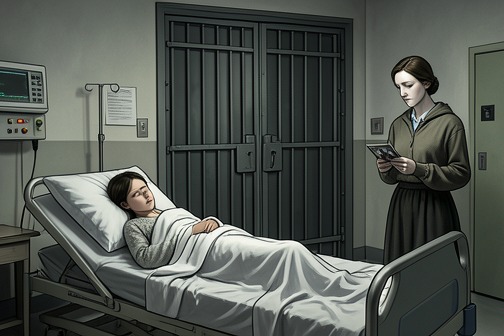
[Roseanne Orozco murdered and dismembered](entity:event-recall-event-roseanne-orozco-3cae0927c1c6) is the unresolved [1970](entity:time-recall-time-1970-96062041573c) killing of fifteen-year-old [Roseanne Orozco](entity:character-recall-character-roseanne-orozco-2b8e1f1df4ee), whose disappearance from a hospital and death on the [Tohono O’odham Nation](entity:location-recall-location-tohono-o-odham-natio-69c0323d0ec6) left her family without answers. The case became more than a decades-old homicide file: its sparse record, ignored witness testimony, and uncertain hospital history show how easily an investigation could stall when the victim and her community had little influence over the institutions responsible for pursuing it.
## Background and Disappearance
Roseanne’s sister [Andrea Tashquinth](entity:character-recall-character-andrea-tashquinth-fb3d761ebed0) later recalled that Roseanne had undergone an appendectomy in July 1970. After leaving the hospital, she remained unwell; when her condition did not improve, their mother took her for medical attention, and Roseanne was admitted for tests. Andrea said their father was meant to collect her after work, but when he arrived Roseanne was gone. The family never saw her alive again. Her disappearance from the hospital was initially treated as though she might simply have walked out, a supposition that did not explain what happened next.
Andrea also remembered Roseanne’s earlier difficulty at school. On Roseanne’s first day, Andrea took her along by telling their grandmother that she was supposed to attend. At school, Roseanne became distressed when the sisters were separated into different classes. The principal took her away and left her alone in a dark closet. Andrea said Roseanne was still crying when she saw her after school, and from then on she did not speak—not to her family or at school. Doctors in the area and in Phoenix found no physical explanation. Their father also consulted a traditional healer, who said he could not help her. This history establishes the silence and vulnerability that preceded the murder; it does not explain who later killed her.
## Discovery and the Investigation
The following week, Roseanne’s body was found in a Coleman cooler by highway workers collecting rubbish along Highway 86, west of [Sells](entity:location-recall-location-sells-004492d6e296). The autopsy established that she had been pregnant. The surviving case file records a killing followed by concealment and abandonment of the body, but offers no resolution about the person responsible or the place where the murder occurred.
The Papago Tribal Police, then the name of the [Papago Tribal Police Force](entity:organization-recall-organization-papago-tribal-po-01871e18d2d3), served as the primary investigative agency. The [Pima County Sheriff's Department](entity:organization-recall-organization-pima-county-sher-28cde77ee195) had a secondary role and retained little material from the case. The division of responsibility reflected the location and circumstances investigators assumed: although the actual murder site was never found, they believed Roseanne had died on the reservation and had been killed by another Native person. [Brandon Walker](entity:character-recall-character-brandon-walker-926c548f3946) recalled that homicide investigations on Native lands could fall to either the [Federal Bureau of Investigation](entity:organization-recall-organization-federal-bureau-o-f1c5664278d2) or local tribal police. In this case, the tribal investigation did not produce an identified killer or a durable investigative lead.
The file’s thinness was itself consequential. After the initial inquiry, its entries stopped within weeks and the case went dormant. Decades later, when [Brian Fellows](entity:character-recall-character-brian-fellows-5c1605d16c35) compared the archived material with reports of other dismemberment cases, Roseanne’s file appeared strikingly similar to them. That resemblance brought the old case back into view, but the surviving paperwork could not supply what the original inquiry had failed to establish.
## Unheard Testimony and the Hospital Question
Andrea had tried to direct investigators toward the hospital. She believed Roseanne had been harmed there, and considered someone who worked at the hospital, such as a nurse or orderly, or a visitor as possible suspects. These were possibilities, not proof. Andrea said she had attempted to tell the tribal police at the time, when she was sixteen, but no one was interested in her opinion. Her testimony never became an effective investigative lead, in part because investigators were already convinced that their father was responsible.
The surviving information did not substantiate that suspicion. [Henry Orozco](entity:character-recall-character-henry-orozco-37d3dd716b79) was initially treated as a prime suspect in Roseanne’s murder and as the father of her unborn child. A blood test excluded him as the baby’s father, after which investigators also dropped him as an official murder suspect. The file records the change in suspicion, but does not name or establish another perpetrator.
Years later, [Emma Orozco](entity:character-recall-character-emma-orozco-5a01d4c50053) told Brandon Walker that the hospital had denied having any record of Roseanne’s admission. Emma disputed the explanation that records from so long ago might have been lost: the hospital had found her own records, including three admissions, one connected with Roseanne’s birth. Brandon remembered that health records from the Indian Health Services Hospital in Sells had been digitized through a study supported by [Arizona](entity:location-recall-location-4abaad620253) State University, making Roseanne’s July 1970 appendectomy records seem potentially accessible. Yet the existence of digitized records did not guarantee that investigators or the family could obtain them. Emma concluded that someone at the hospital was involved, but the available evidence does not confirm her suspicion.
## Family Persistence and the Case’s Afterlife
Emma had waited decades to speak about Roseanne’s death. After her husband Henry died, she explained that she wanted to know what had happened to her daughter. Brandon recognized that revisiting the case meant challenging a lifetime of teaching and custom, and that the task was particularly difficult for a mother whose loss had never been resolved. His approach was to make an observation rather than press Emma with direct questions, allowing her to tell the story in her own way.
The effort to recover evidence also created a conflict between urgency and procedure. Emma arranged for Roseanne’s baby’s remains to be dug up after dark, without first seeking permission from the tribal council because obtaining it would take too long. That decision made the remains available for renewed investigation, but Brandon understood that bypassing permission damaged the chain of evidence and could complicate the prospect of holding anyone accountable in court. The act expressed the family’s determination to pursue answers while exposing the procedural and community responsibilities that a belated investigation could not simply set aside.
Roseanne’s murder remained unsolved in the evidence presented here. The case’s return did not erase the lost weeks, the early abandonment of the investigation, or Andrea’s experience of not being heard. Instead, it made those failures newly legible: Roseanne’s disappearance, pregnancy, and death were facts, while the hospital theory and the identity of her killer remained unresolved.
Event 24
Brandon questions Larry Stryker about the Roseanne case
[Brandon Walker](entity:character-recall-character-brandon-walker-926c548f3946)’s interview with Lawrence Stryker is the point at which an old investigation’s gaps begin to look less like mere absence and more like withheld knowledge. Acting as a member of [The Last Chance](entity:organization-recall-organization-the-last-chance-e0a4f35be780), Brandon questions a former hospital doctor about [Roseanne Orozco](entity:character-recall-character-roseanne-orozco-2b8e1f1df4ee), whose unresolved murder had been neglected for decades. Larry first claims not to remember her, then recalls a striking range of details; his shifting account leaves Brandon wary, but does not establish that Larry committed the crime.
## Background and Stakes
Brandon approaches Larry after reconstructing Roseanne’s last months and the failures that allowed her disappearance to remain unexplained. Roseanne had stopped speaking after a traumatic first day at school. Years later, she was hospitalized after becoming ill; her family understood that she had undergone an appendectomy and was subsequently admitted for tests. When her father arrived to take her home, she was gone. Her body was found the following week in an ice chest beside a road. Her family had been told, or had assumed, that she left the hospital on her own.
The hospital’s records might have helped establish what happened during those admissions. Brandon remembered that a study funded by [Arizona](entity:location-recall-location-4abaad620253) State University in the early 1990s had digitized Indian Health Services hospital records dating back to the 1950s. The records were meant to support research into longevity and the causes of death among the Tohono O’odham; the study also contributed, alongside tribal casino revenue, to the hospital at [Sells](entity:location-recall-location-sells-004492d6e296) having a kidney dialysis center. Roseanne’s July [1970](entity:time-recall-time-1970-96062041573c) appendectomy should therefore have been traceable. But the existence of a record system did not guarantee that Brandon could obtain the records.
That obstacle had become concrete when [Emma Orozco](entity:character-recall-character-emma-orozco-5a01d4c50053) was told there was no hospital record for Roseanne. Emma rejected the explanation that the records might simply have been lost: the hospital had found her own file, which recorded three admissions, including the births of Andrea and Roseanne and Emma’s later hysterectomy. [Andrea Tashquinth](entity:character-recall-character-andrea-tashquinth-fb3d761ebed0) had earlier tried to tell [Law and Order](entity:expression-recall-expression-law-and-order-da115f061786) that the hospital might be involved, but, at sixteen, she was not taken seriously. Against that history, Larry’s recollection is not a neutral detail. It is a potential lead in a case where the family’s testimony and the institutional archive have repeatedly failed to meet.
## The Interview and the Changing Account
Brandon introduces himself as part of The Last Chance, a voluntary group that investigates cold cases law enforcement agencies lack time or resources to pursue. He explains that Roseanne was a teenager, that she had been a patient at the hospital at Sells shortly before her death, and that he wants to know whether Larry remembers anything about her. Larry pauses briefly, then says he does not recall anyone by that name.
Brandon reads the denial as a lie. His investigative instincts tell him that Larry knows exactly who Roseanne was, but the recognition brings a second thought: Brandon is a private citizen questioning a possible suspect in a real homicide, alone. Habit keeps him in the conversation even as caution tells him to leave. He advances carefully, describing Roseanne’s childhood mutism and the fact that no physical cause had been found for it.
Larry’s answer reverses his first claim. He now remembers Roseanne as the mute girl, recalls that she had been evaluated repeatedly, and suggests that some trauma may have caused her silence. He also remembers her appendicitis operation, a later hospital admission for tests, confusion over who would collect her, and her failure to return home. He recalls that her father had been suspected in connection with her condition. Brandon corrects the implication: [Henry Orozco](entity:character-recall-character-henry-orozco-37d3dd716b79) had initially been suspected of fathering Roseanne’s baby, but a blood test established that he was not the father. Roseanne’s killer, Brandon adds, was never caught.
The movement from complete denial to near-total recall makes Larry’s account more troubling than either statement would be alone. Brandon explicitly notices the contradiction. Larry’s knowledge of the case is extensive enough to include its medical history and the circumstances of Roseanne’s disappearance, despite his initial insistence that he did not know her.
## The Missing Detail and the Unresolved Confrontation
Brandon next asks for Roseanne’s attending physician, a question that would help connect her hospital treatment to a specific person. Larry says he cannot remember. He explains that three or four doctors worked at Sells at a time, lived in the hospital housing compound, and exchanged cases; the physician might have been one doctor or several. Brandon recognizes the abrupt boundary in Larry’s recall: the man who has moved from no knowledge to detailed recollection now cannot supply the detail most useful to the inquiry.
The possibility that Larry is lying does not, for Brandon, amount to proof that he is the killer. It does, however, raise the stakes. Larry is also a family friend who knows where Brandon and Diana live and knows Lani’s name and residence. Brandon feels fear at the possibility that his questions may place his family within reach of someone dangerous, but keeps his voice conversational. He asks whether Roseanne might have found a way to communicate her troubles to a personal physician she expected to help. Larry’s expression briefly shifts, then returns to control.
Brandon says that he has already checked the records and that Roseanne’s file is missing, although other records from the same period remain. Larry offers a smooth explanation: a clerical error, perhaps a misspelling that makes a computerized record impossible to retrieve. Brandon agrees without endorsing the explanation, then ends the visit, thanking Larry for giving him time despite the lack of an appointment. He leaves with neither an admission nor a named doctor, but with a sharper contradiction to investigate.
## Significance
The interview gathers several kinds of evidence without confusing them. Larry’s statements are observations Brandon can compare; the missing record is a fact about the archive; Brandon’s conclusion that Larry is lying remains an inference, not a verdict. That distinction matters because the interview produces suspicion rather than resolution. Larry’s apparent familiarity with Roseanne and his selective failure to remember the physician increase the pressure on the case, while the absent file prevents the hospital’s records from confirming or correcting his account.
The scene also places the investigation beside a longer history of voices not being heard. Andrea had tried to direct attention toward the hospital, but her age undermined her testimony; Emma later challenges the claim that Roseanne’s record never existed. Brandon’s questioning makes space for those accounts and tests a former doctor’s version against them, yet it cannot undo the institutional failures or restore the missing documentation. The encounter’s decisive result is therefore not a solved murder, but a changed field of suspicion: [Larry Stryker](entity:character-recall-character-larry-stryker-52f1ff0e9396)’s denials and recollections have made his knowledge part of the case.
Event 25
Gayle Stryker accuses Erik LaGrange on television
Gayle Stryker’s televised accusation of [Erik LaGrange](entity:character-recall-character-erik-lagrange-267f19623518) is a calculated intervention in a murder investigation: she turns breaking news into a public story that places suspicion on a former employee and distances [Medicos for Mexico](entity:organization-recall-organization-medicos-for-mexi-14452984ce53) from the crime. Her statement follows LaGrange’s murder charge and attempted suicide, and converts a looming workplace review into an apparent motive. The episode shows how Gayle uses the authority of her office and the reach of television to shape the meaning of events before the investigation has established the facts.
## Circumstances and opportunity
Gayle spends the day unable to decide what to do about [Larry Stryker](entity:character-recall-character-larry-stryker-52f1ff0e9396) and [Brandon Walker](entity:character-recall-character-brandon-walker-926c548f3946). Tired and frustrated, she goes to bed at her [El Encanto](entity:location-recall-location-65c6efe6eaf1) home and switches on the television. KOLD-TV’s Ten O’Clock News reports that LaGrange, formerly the director of development at Medicos for Mexico, has been charged with first-degree murder in the death of an unidentified teenage girl whose dismembered body was found near Vail. The report adds that he attempted suicide in his cell at [Pima County Jail](entity:location-recall-location-pima-county-jail-8eff1774d85f) shortly before nine that evening and has been taken to [St. Mary’s Hospital](entity:location-recall-location-st-mary-s-hospital-427761790b54) in guarded condition.
Gayle immediately interprets the report as an opportunity. She regards the possibility of LaGrange’s death as useful because, in her view, suicide or even an attempt at it could make an assumption of guilt seem persuasive. If he survives, she believes she can still control the public interpretation. Earlier, she had told Bill Forsythe that LaGrange faced an unsatisfactory job-performance review. The new allegation allows her to recast that workplace problem as a potential motive for murder. The review does not establish such a motive; in Gayle’s hands, however, it becomes material for a story designed to sound plausible.
## The broadcast statement
Gayle looks up KOLD-TV’s number and calls the station’s breaking-news line, asking to speak with the news director so she can make a public statement. When the assistant news director tries to put her off, Gayle insists on speaking with Gary Fisher, the station’s evening anchor, whom she knows through charity events. Her position as chief operations officer at Medicos for Mexico gives her a route onto the broadcast; her personal connection at the station helps her press that advantage.
After the sports segment, KOLD-TV gives her a brief appearance during its Ten O’Clock News. The camera shows a stock photograph of Gayle while her voice is heard. She presents Medicos for Mexico as having recently learned that LaGrange may have used his position of trust to entice young women to enter the country illegally. She further says he is suspected of involvement in the girl’s murder, and expresses shock and regret that someone associated with the organization might have used its good name to conceal wrongdoing. Her phrasing marks the claims as possibilities, but the broadcast places them together in a compact public indictment.
## Managing suspicion
The force of Gayle’s performance lies in its combination of institutional language and personal certainty. She speaks as a senior officer of Medicos for Mexico, invokes the organization’s reputation, and describes LaGrange as a trusted employee. At the same time, she transfers suspicion onto him, presenting the organization as a deceived party rather than as a subject requiring scrutiny. The accusation therefore serves two purposes: it gives viewers a proposed account of the crime, and it offers a defense of the institution with which Gayle is identified.
The surrounding investigation makes the distinction between an allegation and established evidence especially important. The victim has not yet been identified in the report, and LaGrange has been charged, not convicted. Gayle nevertheless treats the suicide attempt as useful to the appearance of guilt and uses his threatened job review as a possible explanation for murder. The scene presents her as knowingly managing that impression: she regards repetition and forceful presentation as tools for making a claim seem true, rather than as substitutes for proof.
## The unheard testimony behind the case
The broadcast also sits against a history of testimony about [Roseanne Orozco](entity:character-recall-character-roseanne-orozco-2b8e1f1df4ee) that investigators and authorities failed to take seriously. [Andrea Tashquinth](entity:character-recall-character-andrea-tashquinth-fb3d761ebed0) had tried to tell [Law and Order](entity:expression-recall-expression-law-and-order-da115f061786) that Roseanne’s disappearance had to be connected to the hospital where she had been treated. After Roseanne was released from the hospital, her family expected her to come home; when [Henry Orozco](entity:character-recall-character-henry-orozco-37d3dd716b79) arrived to collect her after work, she was already missing. Her body was found the following week in an ice chest beside a road. Andrea had raised the possibility of someone at the hospital, but recalls that nobody listened. She was sixteen, and investigators were convinced that her father was responsible.
Andrea’s account also carries an earlier history of being disregarded. As children, she took Roseanne to school after their grandmother allowed it; when Roseanne became frightened because she could not remain in Andrea’s class, the principal carried her away and shut her in a dark coat closet. After that day, Roseanne stopped speaking. Her parents sought help from doctors and a medicine man, but the cause of her silence remained unexplained to them. Years later, Andrea’s hospital suspicion still had not found an audience. [Emma Orozco](entity:character-recall-character-emma-orozco-5a01d4c50053)’s discovery that Roseanne’s hospital admission did not appear in the record she found further unsettles the assumption that the old account had been adequately documented. Against this history, Gayle’s ability to secure airtime and command attention contrasts sharply with the family’s difficulty getting their knowledge heard.
## Immediate effect and significance
Gayle regards the broadcast as a masterful performance and regrets only that she did not record it. Her confidence in the appearance she has created makes her think a recording would ordinarily be worth keeping, although she recognizes that this particular statement may be dangerous to preserve. The scene does not establish that viewers or investigators accept her account. It does establish that she has put a polished accusation into public circulation while the case is still unfolding.
The television appearance is thus not a resolution of the murder but an attempt to seize control of its interpretation. Gayle’s claim borrows credibility from her organizational title and the news format, while its carefully qualified wording leaves room to deny that she stated more than suspicion. In the wider investigation, that maneuver echoes a persistent imbalance: the well-positioned speaker can make her version visible, while Andrea’s earlier warning was discounted. The broadcast makes that disparity part of the case itself.
Event 26
Erik LaGrange’s suicide and death in jail
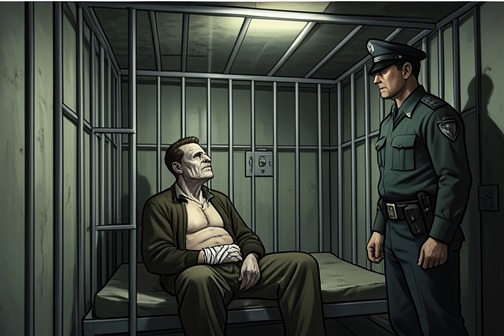
[Erik LaGrange](entity:character-recall-character-erik-lagrange-267f19623518)’s suicide attempt and death in jail turn his imprisonment from a looming threat into an irreversible outcome, while leaving the murder investigation unresolved. He had maintained his innocence, but a hurried bail hearing sent him toward trial without bail; after his attempt, his condition deprived investigators of the chance to question him further. His death became both a personal tragedy and an opportunity for Gayle Stryker to influence how the public understood his guilt.
## Arrest, Hearing, and Despair
Erik’s crisis followed a rapid collapse in his circumstances. On Saturday morning, his principal worry had been losing his job. By Monday, he was trying to absorb the prospect of losing his freedom, perhaps even his life. He believed that he had done nothing wrong, but that someone had convinced the police he was responsible for murder. He also understood that the detectives investigating the case intended to pursue it against him. In his thinking, neither Gayle nor God would come to his rescue.
When a guard unlocked his cell, Erik briefly misunderstood what was happening and hoped he was being released. Instead, the guard handcuffed him and took him to a bail hearing. The proceedings lasted only minutes. A judge accepted the prosecutor’s position that there was ample evidence to bind Erik over for trial; when asked to enter a plea, Erik had to be prompted before saying he was not guilty. Bail was never considered. The hearing therefore gave him no immediate route out of custody and confirmed that the case would continue toward trial.
As he waited with other prisoners to return to the cell block, Erik studied their faces, tattoos, and expressions, trying to understand how he had become one of them. He imagined that they, or others like them, might be his companions for the rest of his life. The scene ends with his sense of possibility narrowing to despair: he could see no way out. The account establishes that state of mind before his later attempt, though it does not specify a single cause for it.
## Attempt and Hospitalization
The attempt occurred in Erik’s [Pima County Jail](entity:location-recall-location-pima-county-jail-8eff1774d85f) cell. [Brian Fellows](entity:character-recall-character-brian-fellows-5c1605d16c35) learned of it when he and [PeeWee](entity:character-recall-character-peewee-eab8d89d5b4d) were due to interview their suspect again. They had postponed the interview until the following day because they were concerned about arriving late for a funeral; by the time Brian received the news, Erik had attempted suicide and was on life support at [St. Mary’s Hospital](entity:location-recall-location-st-mary-s-hospital-427761790b54). Brian recognized the lost opportunity. In his work, he had more than once seen a suspect die before answering the question that might have completed an investigation. He expressed sympathy and left to go to the hospital.
The change in Erik’s condition also altered the investigative timetable. The interview that had been delayed was no longer simply postponed: investigators might have to proceed without hearing from him again. Brian and PeeWee went to the hospital because Erik might wake, or might not. The scene makes that uncertainty practical as well as emotional, since his account could have addressed what had happened and who else might have been involved.
## Decisions at St. Mary’s Hospital
At the hospital, Erik’s organ-donor card was found among his personal effects. Sheriff [William Forsythe](entity:character-recall-character-william-forsythe-2fafb03f930a) declined to make the final decision, leaving it to the medical examiner’s office. The resulting process took hours, rather than the days Brian had feared it might take. Brian remained at the hospital until the decision had been handled, and Ryan Doyle was to stay beside Erik until blood and tissue typing was complete and the respirator could be turned off.
Ryan’s commitment unsettled Brian’s earlier judgment of Erik as a complete failure. If Erik had inspired that degree of loyalty, Brian reconsidered, perhaps his initial assessment had been wrong. Ryan’s strong contempt for Gayle also sharpened Brian’s doubts. Erik had said he was innocent and being framed; the attempt made that claim seem less plausible to Brian, but did not disprove it. One fact remained difficult to set aside: an unidentified fingerprint had matched a homicide in Yuma. Erik could no longer tell investigators who else might have been in his house, but Gayle might. Although William Forsythe had instructed Brian to leave Gayle out of the investigation, Brian decided to question her the next morning.
## Death and Its Aftermath
That night, a television report announced that Erik had died from self-inflicted injuries after being found in his Pima County Jail cell. It identified him as a longtime development officer for [Medicos for Mexico](entity:organization-recall-organization-medicos-for-mexi-14452984ce53), reported his connection to the murder investigation, and noted that he had pleaded not guilty at his court appearance. The report confirmed the outcome that Brian and the hospital staff had been confronting, while fixing Erik’s attempt in the public record as part of the story of his arrest.
Gayle heard the report at home and treated Erik’s condition as an advantage. She believed that an apparent suicide would strengthen assumptions of guilt; if Erik died, she regarded that as still better. She had previously told Bill Forsythe that Erik faced an unsatisfactory job-performance review, and now saw a way to recast that review as a motive for murder. She called the television station’s breaking-news line and asked to speak to its news director, attempting to turn the circumstances of Erik’s arrest into a persuasive public narrative. The sequence does not establish that her version was accepted as fact; it shows her trying to make repetition serve as proof.
[Larry Stryker](entity:character-recall-character-larry-stryker-52f1ff0e9396) did not hear Gayle’s appearance on the news. He had turned off the television before it aired and went to bed relieved that he believed there was no evidence left that could hold up in court. Erik’s death, however, left Larry with a different concern: what might happen if Gayle ever decided she was finished with him. The aftermath thus extends beyond the loss of Erik’s testimony. His death closes off one source of answers, prompts Brian to pursue the fingerprint lead toward Gayle, and deepens Larry’s fear of his wife.
Event 27
Delia Ortiz Gives Birth in the Back Seat of a Buick
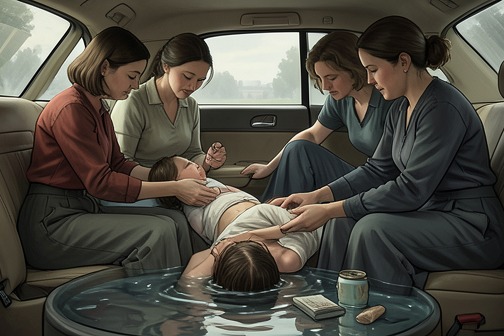
[Delia Ortiz](entity:character-recall-character-delia-ortiz-6e3a2b64eaa4) gives birth to her son in the back seat of [Diana Ladd](entity:character-recall-character-diana-ladd-0a6d9491c5d6)’s 1960 Buick Invicta after labor accelerates beyond the time available to reach the hospital at [Sells](entity:location-recall-location-sells-004492d6e296). The roadside delivery turns an urgent journey into an improvised birth attended by [Lani Walker](entity:character-recall-character-lani-walker-2f6e7ef623c2), [Wanda Ortiz](entity:character-recall-character-wanda-ortiz-d7fa9e598e76), and [Kath Fellows](entity:character-recall-character-kath-fellows-277a3567b3f7). It also becomes a moment of recognition for Lani: the knowledge [Fat Crack Ortiz](entity:character-recall-character-fat-crack-ortiz-b469ce85e59f) and [Nana Dahd](entity:character-recall-character-nana-dahd-f1df44437efb) patiently passed to her is not only hers to keep, but something she may one day pass on.
## Background and Sudden Labor
The birth begins after Delia has stayed at the feast house with the women. [Leo Ortiz](entity:character-recall-character-leo-ortiz-44584a9944fb) and Baby leave, while the others finish wiping tables and sinks and sweeping the floor. Delia is half asleep when a sudden gush of water wakes her; she finds herself sitting in a growing puddle. Wanda Ortiz recognizes that her water has broken and that the baby is coming.
Delia has little time to absorb the news before a powerful contraction folds her over. The pain begins at her rib cage, front and back, then moves through her body so forcefully that she gasps and clutches the bench to keep from falling. Lani appears directly before her, trying to communicate through the contraction. Delia catches fragments about the hospital and walking, and, when the pain eases, insists that she can walk. But standing brings on another contraction, and she drops back onto the bench.
The scene follows labor through Delia’s disrupted awareness rather than through a calm sequence of instructions. She loses the thread of what people say, comes back to Lani’s urgent face, and is lifted from the bench with Lani at one elbow and Christine at the other. Outside, Diana Ladd’s convertible is waiting with its engine running and Kath Fellows behind the wheel. Kath gets out to help ease Delia through the passenger-side back door. Delia is lying flat in the back seat when another spasm overtakes her.
## The Journey Becomes a Birthplace
The plan is to take Delia to the hospital, but the labor is already moving faster than the journey can. Lani kneels between the front and back seats, keeps her face near Delia’s, and tries to guide her through the contractions by telling her to breathe and pant. Delia has little access to such advice: the pains are coming too hard and too fast for her to use it. As Kath slows near the intersection with Highway 86, Lani recognizes that they will not reach the hospital in Sells in time and calls for them to stop soon.
The choice of vehicle has already been a practical compromise. Wanda Ortiz offered her pickup, but Lani rejected the idea of putting a woman in labor in its bed. The Buick’s back seat is only marginally better, and the open top leaves Delia exposed to the night as they travel over a rough dirt road. In a moment of confused awareness, Delia sees stars above her and thinks she may be dead and on her way to heaven with the baby. Lani’s face, and the flashlight she holds between her teeth, bring her back to the immediate reality: she is in the moving convertible, and another contraction is beginning.
## An Improvised Delivery
Kath puts the Buick in park on the roadside and asks whether Lani has delivered a baby before. Lani has not, but the approaching birth leaves little time for experience or preparation. Wanda pulls her Dodge Ram alongside the Buick and turns its headlights through the open back door. In that sudden, brilliant light, Lani sees the baby’s wet, shining head emerging.
Lani steadies herself and eases the baby’s head forward. She asks for something sharp to cut the cord and something to tie it. Kath retrieves a Leatherman from her purse. Wanda has brought extra clean towels, and one becomes part of the improvised equipment: Lani ties the umbilical cord with a strip of hem snipped from a towel, then cuts it with Kath’s tool. These practical acts are shared among the women, each contribution answering an immediate need—the headlights make the birth visible, the towel supplies a tie, and the Leatherman allows Lani to finish the delivery.
Moments after the car stops, Lani is holding a squalling, slippery infant. Wanda wipes him with the clean towels, then hands him back. Wrapped in the soft folds of an immense flannel shirt, the baby is quiet in Lani’s arms. The delivery has taken place outside the hospital and without a practiced attendant, but the scene’s improvised objects and coordinated help carry Delia and her son through the urgent interval before they can continue to medical care.
## Naming and Inheritance
Delia asks whether the baby is all right. Lani smiles and tells her he is perfect, then gives him to his mother and asks what she will name him. Delia names him Gabriel Manuel, after his two grandfathers. The naming gives the child a place within his family history at the same moment that Lani begins to imagine what may be passed forward to him.
Looking at the newborn, Lani understands why Fat Crack Ortiz and Nana Dahd had answered her questions so patiently. Her recognition recalls an earlier exchange with Fat Crack about whether he had taught Baby or Leo Ortiz what he taught her. Fat Crack had explained that the knowledge and gifts entrusted to Lani were treasures to know and keep, but also to pass along to someone worthy. Lani had learned, among other things, how to collect and dry wiw, the wild tobacco used in the [Peace Smoke](entity:expression-recall-expression-peace-smoke-71b11e80fc4d). At the roadside, holding Gabriel Manuel, she sees the possibility that the child may be willing to learn the lore and traditions his father wanted to teach his sons, and imagines herself as the person who will teach him.
That expectation belongs to Lani’s hopeful recognition, not to a demonstrated choice by the newborn. Its significance lies in the change it makes visible in her: learning is no longer only a gift she has received, but a responsibility she can carry into the future. The immediate practical work is not yet over. Kath raises the Buick’s top and prepares to turn up the heat so that mother and baby can continue to the hospital where they belong. The birth ends not with their arrival there, but with the child named, held, and welcomed, while the women ready the car for the next part of their journey.
Event 28
Lani Recognizes Gayle Stryker as Dangerous
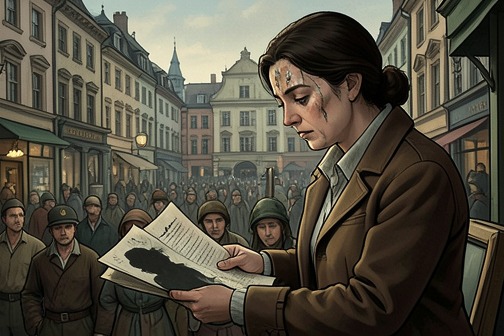
[Lani Walker](entity:character-recall-character-lani-walker-2f6e7ef623c2)’s recognition of Gayle Stryker turns an unsettling vision into a warning with immediate stakes. A newspaper photograph identifies the woman whose face Lani had seen in earlier visions, while the accompanying report and her mother’s account connect Gayle’s household to the murdered girl whose case [Brandon Walker](entity:character-recall-character-brandon-walker-926c548f3946) is investigating. Lani cannot yet explain the danger or leave her father a warning, so she responds with the protective practice taught by [Fat Crack Ortiz](entity:character-recall-character-fat-crack-ortiz-b469ce85e59f) and [Nana Dahd](entity:character-recall-character-nana-dahd-f1df44437efb).
## The Photograph and Its Warning
Lani is waiting in Smitty Coltharp’s office while her mother’s Buick is being repaired. The office’s discarded newspaper catches her attention; on its front page is a photograph of a man and a woman. Recognizing the woman, Lani almost drops the paper. This is the face that had previously appeared over Fat Crack’s in a photograph and in Lani’s dream, then changed in her vision into a skull. Seeing Gayle smiling in the newspaper does not make the image ordinary: it fills Lani with dread.
The report supplies facts but not an explanation. [Erik LaGrange](entity:character-recall-character-erik-lagrange-267f19623518), identified as a murder suspect, had attempted suicide in his [Pima County Jail](entity:location-recall-location-pima-county-jail-8eff1774d85f) cell the previous evening. The pictured couple, Dr. Lawrence and Gayle Stryker, are described as founders of [Medicos for Mexico](entity:organization-recall-organization-medicos-for-mexi-14452984ce53) and as LaGrange’s employers. The article therefore places Gayle within a public, professional context, but it does not tell Lani why the woman seems dangerous or what she has to do with her.
Lani recalls that [Looks at Nothing’s crystals](entity:object-recall-object-looks-at-nothing-s-cry-01354841d539) had warned her about Gayle, just as Fat Crack had warned her in a dream. The photograph is not an isolated image: it joins signs Lani has already received, even though their meaning has remained unclear. She remembers that her mother had suggested Medicos for Mexico as an alternative to [Doctors Without Borders](entity:organization-recall-organization-doctors-without-290d3fe69014), and that the organization was connected to people who had been friends with her mother years earlier, when both women were still on the reservation. The public report thus touches Lani’s family history without yet resolving the threat.
## A Link to the Murder Investigation
Lani calls her mother, [Diana Ladd](entity:character-recall-character-diana-ladd-0a6d9491c5d6), and asks who Gayle Stryker is. Diana’s answer shifts the warning closer to the case: years earlier, [Larry Stryker](entity:character-recall-character-larry-stryker-52f1ff0e9396) had worked as a doctor at the hospital in [Sells](entity:location-recall-location-sells-004492d6e296), at the time the girl whose case Brandon is investigating was murdered. Brandon had intended to speak to Larry to learn who had been the girl’s attending physician during her hospitalization. Diana cannot say whether he met Larry or Gayle; the funeral and its surrounding demands had kept her from asking.
As Lani hears this, her earlier vision returns: she sees the flesh falling away from Gayle’s photograph until only a skull remains. The image gives her no evidence about what happened to the girl, and it does not establish Gayle’s role in the murder. Instead, it changes how Lani reads the connections around the case. The Strykers’ proximity to the hospital and to Brandon’s inquiry makes the warning feel relevant to an investigation already under way, rather than merely private or symbolic.
## Lani’s Interpretation
Studying the photograph, Lani understands Gayle to be evil in the way [Andrew Philip Carlisle](entity:character-recall-character-andrew-philip-carli-8b78d73a8934) and [Mitch Johnson](entity:character-recall-character-mitch-johnson-92cf5e757f76) had been evil. She cannot discern exactly how Gayle is connected to the [Girl in the Box](entity:expression-recall-expression-girl-in-the-box-1c5e6975a7df), but she sees a chain of events behind Brandon’s involvement: Fat Crack had brought Brandon and the dead girl’s mother together. Lani interprets that connection through her spiritual understanding of [I’itoi](entity:character-recall-character-i-itoi-20cb199ab224), Elder Brother, as the force moving the people and events into place.
That interpretation echoes Lani’s earlier experiences. She recalls that I’itoi had brought Carlisle and Mitch Johnson to the reservation so that the evil [Ohbs](entity:creature-recall-creature-ohbs-87d2e0f77a27) could be destroyed, and concludes that this situation must be similar. The recognition is therefore both personal and relational: Lani identifies Gayle as dangerous, but also understands the warning as part of a larger pattern linking her spiritual teachers, her father, and the investigation. The exact danger remains unknown to her; what changes is her conviction that it must be taken seriously.
## Warning and Protection
Lani tries to warn Brandon by calling his cell phone. When the call reaches voice mail, she hangs up, unable to work out how to leave the message. Her failure to communicate is a consequential limit: she believes her father may be in danger, but she has neither a clear explanation nor a completed warning to give him.
Still waiting for the Buick, Lani turns to a response Fat Crack and Nana Dahd had taught her. She sings under her breath for protection, repeating the four stanzas four times because, as they had taught her, all things in nature go in fours. The song does not resolve the investigation or remove the uncertainty surrounding Gayle. It gives Lani a purposeful action where explanation and direct communication have failed, carrying her recognition into a practice of protection. The event closes with Smitty telling her that the car is ready and asking whether she is all right. Lani says that she is fine, keeping her fear and warning to herself.
Event 29
Brandon Obtains a DNA Sample from Larry Stryker
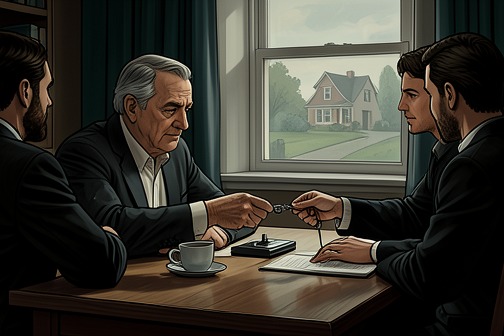
[Brandon Walker](entity:character-recall-character-brandon-walker-926c548f3946)’s collection of a DNA sample from [Larry Stryker](entity:character-recall-character-larry-stryker-52f1ff0e9396) turns an evasive conversation into a possible forensic lead in the decades-old murder of [Roseanne Orozco](entity:character-recall-character-roseanne-orozco-2b8e1f1df4ee). By arranging an ordinary coffee stop and asking one pointed question, Brandon secures a cup that may carry Stryker’s DNA. The sample could help test whether Stryker fathered Roseanne’s baby, but the event leaves the central distinction intact: evidence of paternity could suggest motive without establishing that he killed her.
## Case Background and Unheard Testimony
Roseanne’s case had long been shaped by missing information and testimony that investigators failed to take seriously. As a young child, she was frightened by a school principal’s treatment of her and, according to her sister [Andrea Tashquinth](entity:character-recall-character-andrea-tashquinth-fb3d761ebed0), never spoke again. Years later, Roseanne became ill, underwent an appendectomy, and was admitted to hospital for further tests. When her father arrived to take her home after that later admission, she was gone. Her body was found the following week in an ice chest by the road.
Andrea had suspected that Roseanne’s disappearance was connected to the hospital, but she said nobody listened when she tried to tell the [Papago Tribal Police Force](entity:organization-recall-organization-papago-tribal-po-01871e18d2d3). She was sixteen, and investigators were already focused on the possibility that her father had killed Roseanne. The suspicion collapsed when they learned he was not the father of her baby, and the investigation lost momentum. In the reopened inquiry, Andrea again identified the hospital as a possible point of danger, but could only suggest that the person involved might have worked there or been visiting someone.
The case also bore the effects of divided jurisdiction and unequal investigative resources. Investigators assumed Roseanne had been killed on the reservation, although the murder site was never found. Unlike the off-reservation murder of Gina Antone, which fell under the [Pima County Sheriff's Department](entity:organization-recall-organization-pima-county-sher-28cde77ee195), Roseanne’s case belonged to federal or tribal authorities. Brandon remembered that the Papago Tribal Police Force lacked training, equipment, and money, while FBI investigations into murders of Native people on Native land were often cursory. The resulting failure left the family’s loss unresolved and helped explain why old suspicions had to be examined again rather than treated as settled conclusions.
## Reopening the Trail
Brandon’s renewed investigation drew on both family testimony and the possibility of recovering old records. He remembered that a grant from [Arizona](entity:location-recall-location-4abaad620253) State University had led to the digitization of Indian Health Services hospital records, including records reaching back to the 1950s. The study was intended to compare longevity across populations and track diseases causing deaths on the reservation; funding from tribal casino operations also helped make a kidney dialysis center at the hospital in [Sells](entity:location-recall-location-sells-004492d6e296) possible. Roseanne’s July [1970](entity:time-recall-time-1970-96062041573c) appendectomy record, Brandon reasoned, should therefore be accessible, even if staff might resist releasing it to him.
[Emma Orozco](entity:character-recall-character-emma-orozco-5a01d4c50053)’s account sharpened that concern. She said a hospital employee had claimed there was no record of Roseanne ever being admitted, but Emma’s own file showed three hospital stays, including admissions connected with Andrea’s and Roseanne’s births. Emma believed the denial was false and agreed with Andrea that someone at the hospital might have been involved. Brandon’s approach to Emma reflected his awareness of local etiquette: among the Tohono O’odham, direct questions could be considered impolite, so he began by observing that she had waited a long time to speak. Emma explained that her husband had urged her to forget the past, but after his death she wanted answers as Roseanne’s mother. Her testimony and Andrea’s, once discounted or unheard, became active parts of the investigation.
The paternity question emerged from the original investigative failure. In 1970, investigators had treated Roseanne’s father as a prime suspect because of the baby, then let the case slide after ruling him out as the father. More than three decades later, Brandon recognized that newer investigative tools could reopen that question in a different way. Roseanne’s baby had been buried separately from her, and Brandon considered whether the remains could permit a DNA comparison. The prospect offered a route to test a relationship the earlier investigation had not resolved, though obtaining and handling the remains raised serious procedural and ethical concerns.
## The Coffee-Cup Encounter
Brandon approached Larry Stryker while already worried that he might be dealing not only with a suspect in Roseanne’s murder but with a still-active serial killer. He had come seeking DNA, and he had to control his emotions when Stryker arrived. Rather than confront him in a setting where coffee might be served in reusable cups, Brandon had planned to take him to the Burger King at Speedway and Campbell. Their conversation on the drive included talk about [Diana Ladd](entity:character-recall-character-diana-ladd-0a6d9491c5d6) and Gayle Stryker’s long friendship, a casual subject that allowed Brandon to bring Stryker to the drive-through without announcing the purpose of the meeting.
Stryker ordered coffee with cream and no sugar. Once both cups were in the Suburban, Brandon parked and turned the conversation back to Roseanne. Stryker maintained that he barely remembered her and had nothing more to tell Brandon. Brandon waited until Stryker had lifted his cup for another sip, then asked whether he had fathered Roseanne’s baby.
Stryker’s physical response made the question consequential without answering it. He choked and coughed, splattering coffee on his tie; when he set down the cup, Brandon noticed that his hand was shaking. Stryker demanded to know what gave Brandon the right to ask such a question, then opened the door and refused to dignify the accusation with a response. He rejected Brandon’s offer of a ride back to his office and walked away. His departure left the coffee cup behind in the Suburban—the object Brandon had deliberately arranged to obtain.
## Forensic Possibility and Limits
Brandon later gave [Brian Fellows](entity:character-recall-character-brian-fellows-5c1605d16c35) a paper bag containing the [Burger King coffee cup](entity:object-recall-object-burger-king-coffee-cup-b832bf330795) and explained that it carried some of Stryker’s DNA. He hoped the medical examiner could recover enough DNA from Roseanne’s fetus to compare it with the sample. The result, if a comparison proved possible, could help establish whether Stryker was the baby’s father. Brian immediately drew the evidentiary boundary: even proof of paternity would not prove that Stryker killed Roseanne. Brandon agreed, while noting that paternity would give Stryker a possible motive for wanting her gone.
The event therefore produces a lead, not a resolution. Stryker’s startled reaction may intensify suspicion, but it is not a laboratory finding and cannot stand in for proof. The cup supplies a potentially testable biological sample; the remains supply the hoped-for comparison; and the relationship between paternity, motive, and murder remains to be established. Brandon’s method advances the investigation while making its evidentiary limits explicit.
## Narrative Significance
The coffee cup is an everyday object repurposed by a deliberate investigative tactic. Brandon chooses a drive-through to avoid reusable cups, asks a question timed to Stryker’s second sip, and lets Stryker’s decision to leave create the opportunity to retain the cup. The scene’s quiet mechanics contrast with the scale of the case: a long-dismissed murder may turn on whether a disposable cup and separately buried remains can yield a meaningful comparison.
The encounter also follows a broader shift in the investigation, from institutions that did not listen to renewed attention to family testimony and material evidence. Andrea’s early suspicion had gone unheeded; Emma’s attempt to obtain Roseanne’s hospital record exposed a contradiction; and Brandon now sought a sample that could test a specific possibility. None of these steps alone settles the case. Together, they show how the renewed inquiry advances by treating overlooked accounts as questions worth investigating while keeping suspicion distinct from proof.
Event 30
Fingerprint Match Shifts the Investigation Toward Gayle Stryker
The fingerprint results redirect the investigation from [Larry Stryker](entity:character-recall-character-larry-stryker-52f1ff0e9396) to Gayle Stryker without yet proving her guilt. A print associated with the Orozco case matches an unidentified print from [Erik LaGrange](entity:character-recall-character-erik-lagrange-267f19623518)’s house and another from Yuma County, while the Orozco prints do not match those on the Burger King cup. The comparison changes the suspect picture: Gayle is identified as the only viable suspect who was present both when [Roseanne Orozco](entity:character-recall-character-roseanne-orozco-2b8e1f1df4ee) was killed and at LaGrange’s house on the relevant Saturday night, though investigators still consider whether she acted alone or with Larry.
## The Old Case and Its Unheard Witnesses
The renewed investigation concerns Roseanne Orozco’s disappearance from the hospital and murder in [1970](entity:time-recall-time-1970-96062041573c). Her sister, [Andrea Tashquinth](entity:character-recall-character-andrea-tashquinth-fb3d761ebed0), later recalled that Roseanne had stopped speaking after a traumatic incident at school when she was four. Andrea’s account places Roseanne’s silence within a longer history of adults failing to understand or respond to her distress, but it did not explain what happened at the end of her life.
Andrea also remembered that Roseanne was hospitalized after becoming ill following an operation. When their father arrived to take her home after a later hospital stay, she was gone; the following week, her body was found in an ice chest beside the road. Andrea believed the assault or disappearance might have involved someone at the hospital and said she had tried to raise that possibility at the time. At sixteen, however, she was not taken seriously, and investigators concentrated on her father instead. Her recollection offered a possible direction, not an identification of the killer.
## Fingerprints in the Evidence
The renewed forensic work gave the case a different kind of lead. [Alvin Miller](entity:character-recall-character-alvin-miller-b7c3e2accaab) examined evidence associated with Erik LaGrange’s machete, which had been found soaking in soapy water. The washing had left the weapon without usable fingerprints. Plates and silverware, by contrast, yielded two sets of prints. A comparison showed that the suspected man’s prints were on both sets of dishes, consistent with his having served the meal and cleared up afterward; the second set remained the more important unknown.
When the investigation later compared prints associated with the Orozco case against those on the Burger King cup, none matched. That result did not support the developing theory against Larry Stryker. Instead, one Orozco print matched an unidentified print recovered from LaGrange’s house, with a corresponding link to prints from Yuma County. The findings joined evidence across cases and locations, but the match itself identified a shared print, not the person who left it.
## The Suspect Picture Reverses
The negative comparison involving the cup was a sharp reversal for [Brandon Walker](entity:character-recall-character-brandon-walker-926c548f3946). He had invested considerable belief in the idea that Larry was a serial killer, and the new results forced him to reconsider that conclusion. [Brian Fellows](entity:character-recall-character-brian-fellows-5c1605d16c35) explained the remaining inference: the viable suspect had to be someone present in 1970 when Roseanne was killed and present at LaGrange’s house on Saturday night. Brandon named Gayle Stryker, and Brian agreed that the evidence pointed to her, either alone or together with Larry.
That conclusion was a working investigative judgment rather than a fingerprint identification of Gayle. Investigators did not have an officially identified set of her prints on file, and Brian said he could not obtain a warrant without more specific grounds. He could, however, speak with her and potentially obtain a print by offering her an object to handle. The absence of an official comparison therefore became the next practical obstacle: the evidence had narrowed the field, but it had not yet supplied the direct comparison needed to test the new suspicion.
## What the Turn Establishes
The event shifts the inquiry through exclusion and connection. The cup comparison weakens the case against Larry; the cross-location match ties an Orozco print to unidentified evidence from LaGrange’s house and Yuma County; and the timeline makes Gayle the remaining viable suspect in the investigators’ account. These are related but distinct steps. None, taken alone, establishes who committed the murder or whether one or two people were involved.
The change also throws the earlier investigation into sharper relief. Andrea’s hospital theory had been voiced decades before but dismissed, while the later fingerprint work could connect evidence across cases in a way the original inquiry had not. The plot’s turn is therefore both forensic and institutional: a new comparison changes the suspect ranking, while an old, discounted lead remains a reminder that the case’s unanswered questions were not caused only by missing technology.
Event 31
Gayle and Larry Stryker Plan to Flee Arizona
Gayle Stryker and [Larry Stryker](entity:character-recall-character-larry-stryker-52f1ff0e9396)’s plan to flee [Arizona](entity:location-recall-location-4abaad620253) begins as a joint escape and ends as two separate journeys. Their decision is driven by the prospect that others will discover what has happened, and by their belief that money can smooth their passage in Mexico. But as Gayle quietly arranges a flight to Cabo San Lucas without Larry, he learns that the plan has changed. His response is to arrange a departure of his own, bound for Mexico City.
## The Decision to Leave
Gayle proposes that they head south permanently, and Larry asks whether she means to leave for good. She confirms that she has checked their finances and believes they will be all right. Her calculation is practical and urgent: if they leave that day, she expects to cross the border before anyone realizes what is happening. She also believes that, once in Mexico, money can resolve legal difficulties. Their plan is not simply to take a trip; it is an attempt to get beyond the reach of consequences before their situation becomes widely known.
Larry’s immediate concern is the house. He asks what will happen if someone searches it and finds the room in the basement. He has cleaned it as well as he could, but acknowledges there may still be a chance of discovery. Gayle tells him she will take care of the house, adding that this has always been her intention. When she asks whether he wants anything from it, he says there is nothing he wants to take. The exchange makes the house, and the possibility that its basement may expose them, part of the escape plan rather than a detail they can leave unconsidered.
## Gayle’s Departure Arrangements
Gayle tells Larry she will call for a jet to take them to Cabo, while noting that their contract requires eight hours’ notice and that an aircraft might be available sooner. She assigns them different tasks: she will run errands and go to the ranch to take care of things there; Larry is to remain at home, keep a low profile, and avoid media interviews. He appears indecisive before agreeing. His question about whether she will need his help at the ranch suggests that he still understands their departure as a shared operation.
The arrangement becomes more specific when Gayle calls CitationShares. The company can provide a CJ-1 at the executive terminal at [Tucson](entity:location-recall-location-tucson-01e85518a44a) Airport by six that evening, for a flight to Cabo San Lucas. Gayle confirms that she knows the airport facilities and accepts the departure time. Asked about passengers, she says there will be only one: herself. She explains that Larry will join her later, after his schedule smooths out. She also describes several suitcases and briefcases, but no golf equipment, framing the journey as work rather than leisure. The practical details confirm that she is preparing to leave, while the single-passenger itinerary quietly breaks from the joint plan Larry believes they have made.
## Larry Discovers the Split
On his drive toward the ranch, Larry is delayed by traffic and impatient to get there and back before Gayle. Looking east toward the place where [Erik LaGrange](entity:character-recall-character-erik-lagrange-267f19623518) had lived, he is struck by doubt about Gayle’s willingness to sacrifice Erik without hesitation. The thought precedes his call to CitationShares to reconfirm their flight. His question assumes a shared itinerary, but the representative identifies it as his wife’s flight from Tucson to Cabo San Lucas.
Larry then learns that the departure is scheduled for six, not eight as he had understood, and that the itinerary lists Mrs. Stryker as the sole passenger. The discrepancy changes his understanding of the escape: Gayle is not merely arranging to go ahead while they remain committed to travelling together; the booking gives her a departure of her own. His first reaction is anger at the prospect of being left behind to face the consequences. The call turns an unspoken separation into a fact he can no longer overlook.
## Two Routes Out
By the next traffic light, Larry has moved from anger to action. He calls again and asks to make his own arrangements for that night, as soon as an aircraft can be provided. Unlike Gayle, he does not plan to leave from Tucson Airport. He specifies the fixed-base operator at [Pinal Air Park](entity:location-recall-location-pinal-air-park-a33279551f06), north of the city, and chooses Mexico City rather than Cabo San Lucas. Asked about passengers, he says he will travel alone and requests a Bravo or Excel, large enough to make the journey in one flight.
The sequence ends not with a single escape but with parallel plans: Gayle is booked to fly alone to Cabo, while Larry seeks a separate aircraft to Mexico City. Their original shared intention to leave Arizona remains, but its apparent unity has dissolved into distinct destinations, departure arrangements, and itineraries. The contrast between Gayle’s prepared booking and Larry’s hurried phone calls gives the episode its decisive turn: the plan to flee together reveals that each is preparing to get away independently.
Event 32
Gayle Stryker shoots Larry Stryker
Gayle Stryker’s shooting of [Larry Stryker](entity:character-recall-character-larry-stryker-52f1ff0e9396) turns the couple’s long criminal partnership into a final confrontation: Larry tries to escape with the notebooks he has kept secret, and Gayle kills him rather than let him take them. The scene makes the hidden record of their crimes the immediate object of conflict—and exposes how little protection Larry’s presumed status as her partner affords him when Gayle discovers his betrayal.
## The Hidden Notebooks
Larry’s plan is to take the notebooks and get away, waiting at [Pinal Air Park](entity:location-recall-location-pinal-air-park-a33279551f06). He has reason to doubt that Gayle will destroy the evidence against him, so he decides to secure it himself. In the study, a wall safe concealed behind a large oil painting has served as his private hiding place; Gayle does not know it exists. The notebooks inside record crimes and include photographs of victims, making them both a personal archive and dangerous evidence.
Larry’s hurried attempt to retrieve them brings his secret into the open. His hand shakes as he works the combination, and he needs three tries before the safe opens. He puts the notebooks into a briefcase, then turns to close the safe and replace the painting. Gayle’s arrival interrupts the escape before he can leave with what he has taken. The broken gilt frame on the Saltillo floor marks the instant his concealment fails: she has found him, and the notebooks have become the focus of a confrontation neither can evade.
## The Confrontation
Gayle’s question catches Larry as he turns from the safe. He has not heard her arrive, and her voice frightens him; the painting slips from his hand and its heavy gilt frame breaks against the Saltillo floor. When he turns, he sees a chrome-plated pistol aimed at his chest. He tries to disguise what he is doing as an offer to help her, but she keeps the gun trained on him and says she never knew about the safe, asking what he has kept there.
Gayle presses him about whether he hid money from her. Larry denies it, his face reddening, but her demand to see inside the briefcase makes clear that reassurance will not settle the matter. He recognizes the imbalance between them: for more than thirty years, he has known Gayle as a natural-born killer, yet assumed himself exempt from her violence. With the pistol still pointed at him, that assumption collapses. Larry sees that his only hope is to fight back.
## The Briefcase and the Shot
Larry makes as if to obey Gayle’s order to open the briefcase, but instead lifts it from the desk and hurls it at her. She dodges; her first shot misses, while the second strikes him squarely in the chest and throws him backward. The briefcase, which held the notebooks he had meant to carry away, does not protect him or buy his escape. His attempt to fight back ends with him sliding behind the desk as Gayle remains in control of the room.
Larry calls after her, pleading with Gayle not to leave him in that condition. She does not answer. The study door slams, and its sound is the last thing he hears. The abrupt departure completes the reversal: the partners’ shared criminal history has not bound Gayle to Larry when their interests diverge, and the concealed notebooks that prompted his flight have brought their alliance to its violent end.
## The Criminal System Behind the Confrontation
The notebooks belonged to a wider system of exploitation, not an isolated secret. Gayle Stryker had built [Medicos for Mexico](entity:organization-recall-organization-medicos-for-mexi-14452984ce53) into a cross-border charity that brought her and Larry Stryker money, social standing, and access to girls from detention centers. Donated funds faced little outside scrutiny; generous salaries and vaguely labeled expenses helped finance their lavish lives, while artful skimming paid in part for Gayle’s mansion near Cabo San Lucas. The institution’s respectable face and its private crimes were sustained by the same organization.
The arrangement also shaped the couple’s balance of power. Larry controlled the girls in the basement, but Gayle retained the final veto and could replace one with another drawn from the stream of vulnerable minors available through Medicos for Mexico. She had created the organization after discovering the gratification she took in cruelty, and it gave her both the means to indulge that violence and leverage over Larry. When he tried to flee with his private records, the partnership’s underlying terms became unmistakable: their shared enterprise had never made them equals, and it offered Larry no safety once Gayle chose to act against him.
Event 33
Larry Stryker’s murder
[Larry Stryker’s murder](entity:event-recall-event-larry-stryker-s-murder-cceb20779685) occurs as the Strykers’ planned escape collapses: Gayle Stryker had arranged a private jet to Mexico, but when Larry realized she meant to leave without him, she shot him. [Brian Fellows](entity:character-recall-character-brian-fellows-5c1605d16c35) later reports the killing to [Brandon Walker](entity:character-recall-character-brandon-walker-926c548f3946) and confirms that both Strykers are dead. The disclosure connects Larry’s death to the unresolved murder of [Roseanne Orozco](entity:character-recall-character-roseanne-orozco-2b8e1f1df4ee), while leaving the details of the couple’s wider crimes for a later account.
## Flight Plan and Confrontation
The immediate background is Gayle’s reservation of a private jet for a flight to Mexico that night. According to Brian, she intended to go alone. Larry recognized what she was planning, and the escape arrangement became the setting for a confrontation between the couple. The evidence establishes the discovery of Gayle’s plan and her intention to leave without Larry, but does not explain how Larry learned of it or describe the exchange between them.
## The Killing and Its Aftermath
Gayle shot Larry after figuring out that she was preparing to leave on her own. Brian recounts the event after telling Brandon that he had suffered a heart attack; Brandon redirects the conversation toward the Strykers, and Brian confirms that both are dead. He also tells Brandon that his intervention against Larry had mattered: without Brandon keeping Larry from getting away, one or both Strykers might have escaped. The killing therefore belongs to a larger sequence of attempted flight and confrontation, although the available account does not specify where or precisely when Gayle shot Larry.
## Connection to Roseanne Orozco’s Case
The murder changes the meaning of the Strykers’ deaths for Brandon: when he asks whether both were involved in [Roseanne Orozco’s murder](entity:event-recall-event-roseanne-orozco-s-murde-0cc75b8c4882), Brian confirms that they were involved in that crime and much more, while deferring the fuller explanation. The revelation arrives against a history of neglected leads. [Andrea Tashquinth](entity:character-recall-character-andrea-tashquinth-fb3d761ebed0) had suspected that someone at the Indian Health Services Hospital was connected to Roseanne’s disappearance, but said that investigators did not listen to her when she was sixteen, particularly because they suspected her father. Years later, [Emma Orozco](entity:character-recall-character-emma-orozco-5a01d4c50053) found that hospital records documented her own admissions but showed no admission for Roseanne. These details do not establish how Larry participated in the murder; they show why Brian’s confirmation recasts a case marked by missing records and a witness whose warning went unheeded.