Rong Jinzhen’s Hospital Notebook
DecodedRong Jinzhen’s Hospital Notebook is a personal record from Rong Jinzhen’s 1966 hospitalization, separate from the classified notebooks he produced for Unit 701. Its significance lies partly in what it preserves—his continued need to write while ill—and partly in the limits placed on what can be known from it: the narrator receives only an incomplete photocopy, and its shifting pronouns resist secure interpretation.
Identity and Custody
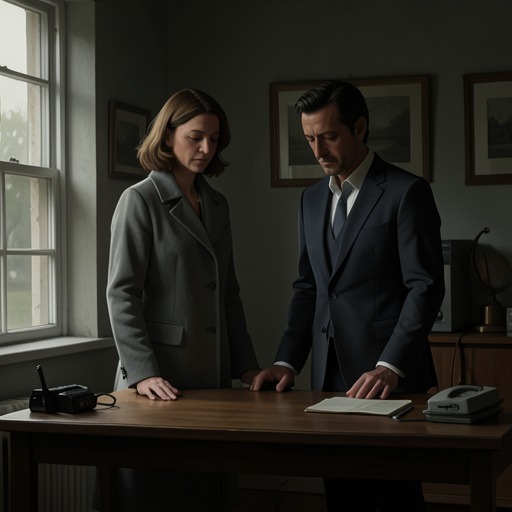
During his years working for Unit 701, from 1956 to 1970, Rong filled twenty-five notebooks. Di Li, his wife and a security officer, held all of them in her official custody. Twenty-four remained locked in an imposing iron cabinet secured by two locks that had to be turned at the same time: Di Li kept one key, while her section chief held the other. Although the notebooks were in her care, she was not free to inspect them or treat them as personal possessions.
Di Li had once used her position as Rong’s wife to take one notebook into her personal possession. The narrator eventually obtained a photocopy of it, not the original. This was no simple transfer of private papers: Unit 701’s secrecy governed the notebooks, their custody, and the possibility of seeing them. The narrator first asked Di Li for the notebook repeatedly and was turned away each time. Only after the first five sections of the manuscript had been reviewed by the authorities, with Di Li among the censors, did she offer to provide it. Before their agreed meeting the next day, she brought the copy herself to the guest quarters.
The Hospital and the Need to Write
The notebook’s early pages concern a period when Rong fell ill. In mid-June 1966, after breakfast and on leaving the canteen, he lost consciousness in a hallway. His head struck the corner of a wooden bench; at the hospital, doctors found that a serious stomach problem had caused the collapse and admitted him for treatment. The hospital belonged to Unit 701 and stood beside the training base in the Southern Complex. It had capable physicians and equipment, but its level of secrecy was lower than that of the Northern Complex. Even there, Rong’s true identity was not supposed to be disclosed, though his importance was already widely understood within the unit.
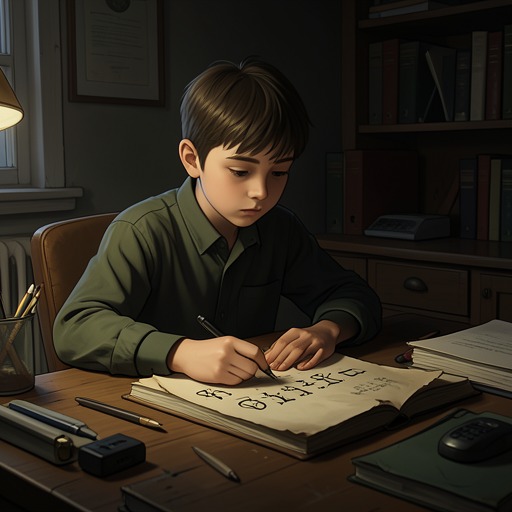
The notebook was an ordinary personal object in an extraordinary working life. Rong was careful to return his work notebook and request a new one, because he knew he needed to keep a notebook with him. The habit had begun when Young Lillie gave him a Waterman pen and persisted even during illness. Since his surroundings in hospital made work-related writing impossible, the notebook was later declassified and Di Li was allowed to keep it personally. The narrator judged that its contents were random thoughts and impressions of hospital life, rather than work records. Its personal status thus depended on a distinction between the classified work notebooks and writing made when Rong could not perform his usual work.
The Incomplete Copy
The photocopy Di Li provided had seventy-two pages. Its top-secret banner and page numbers had been removed, and the narrator recognized that the copy was incomplete because notebooks of this kind contained ninety-nine pages. Di Li explained that Rong had left some pages blank and that others contained private matters between husband and wife, which she did not want the narrator to read. The account does not establish how many pages were missing for either reason. It does make clear that the omitted material was precisely what most interested the narrator, leaving the surviving text marked by an absence that could not be resolved from the copy.
This incompleteness limits the notebook as evidence. It is not a full, unmediated record of Rong’s hospital experience: it reaches the reader through selection, reproduction, and the removal of identifying features. The narrator can infer that the pages concern his illness from their dates and contents, but cannot inspect the original or the withheld pages. The object therefore records both Rong’s private writing and the conditions under which that writing could be preserved and shared.
Ambiguous Voices and Meaning
The notebook’s entries do not consistently identify the people to whom they refer. Rong writes of “you,” “he,” and “she,” but the narrator cannot assign those pronouns reliably to particular individuals. Depending on the passage, they might point to Rong himself, Jan Liseiwicz, Young Lillie, Rong’s mother, Master Rong, Di Li, the chess-playing lunatic, or God; at times, the referent might even be a tree or a dog. These possibilities are offered as uncertainties, not as settled identifications.
The first numbered entry presents a speaker describing someone who demands a life governed by natural growth and death, then observes that this figure has changed into a house pet. Because the pronouns remain unstable, the entry does not disclose with certainty who is speaking or who has changed. The narrator explicitly declines to claim a definitive understanding, leaving readers to respond to the fragments without pretending that the gaps have been solved. The notebook’s force therefore comes not from a clear confession or a dependable key to Rong’s thoughts, but from the tension between the material care taken to preserve it and the uncertainty of what its surviving words mean.