Chandramukhi abandons her former life and moves to Ashathjhuri
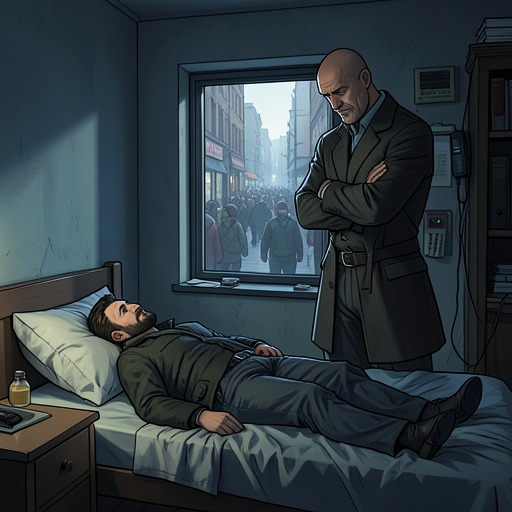
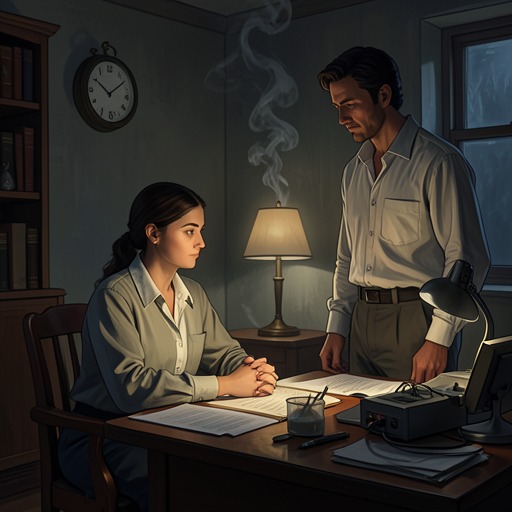
DevdasChandramukhi abandons her former life and moves to Ashathjhuri after deciding, freely and without later regret, to stop the work that had defined her existence in Calcutta. The change begins in a conversation with Devdas Mukherjee: she explains how his first visit wounded and unsettled her, and how his later words about the insults and assaults she endured prompted her to stop the next day. Her departure is more than a change of residence. It is a difficult attempt to claim a life on her own terms, away from the pressures and humiliations of her former occupation.
The Decision to Leave
When Chandramukhi tells Devdas Mukherjee she plans to go, she asks where she should settle. Her explanation reaches back to his first visit. His rejection had struck her as unlike the attentions of the men who had come before him; she recalls that she became drawn to him not because of his wealth, but because of his boldness and the force of his refusal. Over time, her attention to him became an attachment she could not easily explain: his visits made her tense, his absences left her dissatisfied, and his drinking caused her misery rather than anger.
She also recounts the injury of that first encounter: Devdas Mukherjee had turned from her in revulsion and thrown money at her. Later, she says, he spoke of how much women in her position had to endure, including insults and assaults. The following day she stopped her former work. This sequence makes the change a response not to a sudden whim but to a recognition of the conditions she had been tolerating. When Devdas Mukherjee questions how she will survive, she does not present the decision as an easy one; she has already begun planning how to leave.
Her account is marked by conflicted feeling. She touches his feet, asks forgiveness, and admits that his repeated insults and attempts to push her away had only intensified her desire to draw close to him. Devdas Mukherjee says little, and the sentiments distress him. Yet the conversation does not end with her asking him to choose her or provide a home. She asks instead where she can go, making the practical question of a new life the immediate consequence of her decision.
Choosing an Independent Life
Chandramukhi plans to make arrangements the next day and initially expects to sell her bangles. Devdas Mukherjee gives her five hundred-rupee notes and tells her not to sell them, while urging her to meet the grocer. His assistance helps make the move possible, but she determines what kind of life she will seek. She does not want to go on pilgrimage, and she intends to remain within reach of Calcutta, perhaps in a nearby village.
Devdas Mukherjee suggests that she might work as a maid in a genteel household. Chandramukhi rejects that alternative. She wants to live independently and comfortably, not exchange one form of subordination for hard domestic labor. She says she has never done a day of strenuous work and doubts her body could withstand it. Her answer defines the limits as well as the ambition of her new start: she seeks a livelihood that does not require her to return to her former occupation, but she also refuses to pretend that poverty or physical hardship would be easy for her.
Devdas Mukherjee warns that living near the city could expose her to temptation and doubts that she will remain resolute. Chandramukhi acknowledges the risk in general terms, but insists that her own decision is settled. She distinguishes a passing impulse, which might fade, from a choice she has maintained without regret. Her confidence does not rest on distance alone: she believes the decisive safeguard is that she has chosen to leave of her own free will. The exchange places her self-knowledge against Devdas Mukherjee’s dismissive generalization that women are fickle.
A Household in Ashathjhuri
Two years later, Chandramukhi is living in Ashathjhuri, a village named for an ancient peepul tree whose hanging roots have spread over a broad area. Her ramshackle hut stands on a slight slope beside the river. It has two rooms, one serving as kitchen and storeroom and the other as a bedroom; a shed beside it houses a healthy black cow. The yard is kept clean each day by Rama Bagdi’s daughter. Thorny bushes edge the enclosure, a berry tree stands in its middle, and a tulsi plant occupies a place of honor in one corner.
The setting is modest but shaped by her choices. Chandramukhi has had palm trees cut down and their wood used to make steps from her hut to the river, steps used by her alone. In the rainy season, the river rises over its banks and water laps around her doorstep. Villagers bring shovels and spades to raise the ground with soil, a practical act of care that links her home to the community around it. The village includes farmers, people from lower castes, milkmen, and cobbler families, rather than the genteel households Devdas Mukherjee had proposed she serve.
Money, Reciprocity, and Continuing Attachment
After settling in the village, Chandramukhi writes to Devdas Mukherjee, who replies with money. She lends that money in small sums to villagers who come to her when they are in trouble. She charges no interest and does not insist on repayment: those able to return a loan do so, while others do not. In return, neighbors sometimes bring vegetables, milk, or grain. When borrowers plead with her, she laughs that she will never lend to them again, but continues to give what she can when their needs return.
Her help extends beyond these informal loans. When harvests disappoint or villagers face pressure to pay taxes, they come back to her and she gives what she can. She has also helped a milkman’s family build a home near her hut, paid the family’s son’s dowry, and bought farming tools for them. Their dependence on her is matched by their loyalty. The money Devdas Mukherjee sent thus becomes part of a local economy of assistance, returned not through fixed repayments but through gifts, trust, and mutual reliance.
Chandramukhi’s hope that Devdas Mukherjee will live a long life because she need not worry about money while he is there reveals that her independence remains entangled with her attachment to him. After six months without news, her letters go unanswered and registered letters return undelivered. She asks Bhairav how far Talshonapur is, where the estate lies beyond two meadows, and begins seeking a route toward the absent man. The move has given her a home and a role among the villagers, but it has not ended her concern for Devdas Mukherjee. Its decisive change is that concern no longer defines her whole livelihood: in Ashathjhuri, she has made a separate life whose daily acts of lending and care reach well beyond him.