Parvati’s nocturnal visit and Devdas’s rejection
DevdasParvati’s nocturnal visit and Devdas’s rejection is the turning point at which a clandestine appeal for love meets the force of family opposition and Devdas’s inability to answer Parvati with an equal commitment. The night brings them physically close, but it ends not in a promise: a few days later, Devdas’s letter makes refusal explicit and exposes the emotional distance beneath their attachment.
A Secret Departure
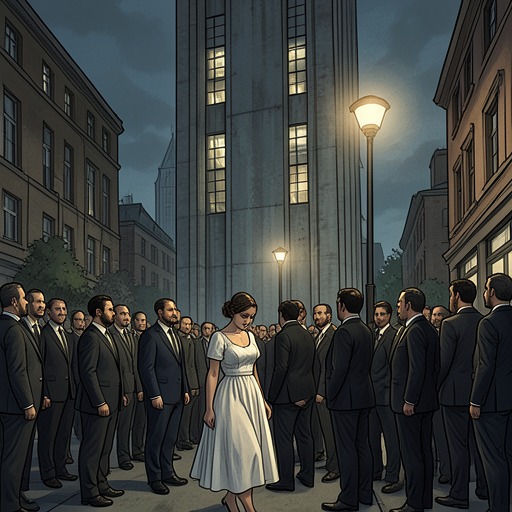
The visit begins almost at one o’clock in the morning. Under faint moonlight, Parvati wraps herself in bedsheets and descends the stairs softly, checking that everyone is asleep before opening the door. The village roads are empty, and she has little chance of encountering anyone. Her passage through the night is therefore both a practical concealment and an image of her isolation: she has to carry her appeal alone, across the boundary between her home and Devdas’s.
At the zamindar’s gate, the old guard, Krishan Singh, is awake on his charpoy reading the Ramayan. He recognizes that someone has arrived and asks who it is; Parvati answers that it is she. The small exchange underscores the risk of her arrival. Although the village seems deserted, she has not entered an unobserved space, and her identity is exposed at the threshold. The scene places her private urgency beside the social world that can witness and judge her.
The Appeal and Its Limits
Inside, Parvati’s plea is not a measured proposal. She lays her head at Devdas’s feet and asks to remain there, speaking through tears. A few drops fall from his feet and stain the clean bed. That concrete mark gives the scene’s emotional reversal its physical form: her distress, brought into his room and set at his feet, cannot be kept separate from the ordinary domestic space around them.
Devdas takes her hands and calls her Parvati, but his tenderness does not settle what she has come to ask. Later, he raises her face and asks whether he is her only salvation. She does not answer; instead, she lays her head at his feet again. The repeated gesture makes her dependence visible, while her silence leaves the question unresolved. When he reminds her that his parents are firmly opposed to the match, she nods to show that she already knows. The obstacle is no revelation to her; the scene turns on whether Devdas will act despite it.
The clock strikes two before Devdas asks why she has come, and the visit ends without a settled commitment. The movement from nearly one o’clock to two gives the encounter a contained, suspended duration: Parvati has crossed the village and disclosed her vulnerability, yet time passing in the room does not produce a decision. Her appeal is intimate, but marriage remains subject to parental consent and Devdas’s willingness to oppose his family.
The Letter of Refusal
The following day, Devdas has a short conversation with his father, who says he should not be surprised that Devdas speaks in a way that will never give him peace. Devdas sits silently and sheepishly. The exchange shows that the conflict reaches beyond the private night: his father’s reaction makes the family opposition immediate, while Devdas’s silence offers no sign that he will challenge it.
Parvati waits in uncertainty, hoping that the visit has not been in vain. A few days later, however, she receives Devdas’s letter. He explains that neither parent wants them to marry and says that making her happy would require inflicting a wound on them that he cannot bring himself to inflict. He also questions how they could proceed against their wishes. His refusal is thus presented not simply as a practical impossibility but as a limit in his capacity to choose between Parvati and his parents.
The letter specifies the social judgments behind that opposition. Devdas says Parvati’s family is not high-born; his mother will not seek an alliance with a trading family and considers a match with neighbours indecent. He also acknowledges that the previous night pains him because he understands how drastic an action it was for someone as proud as Parvati. His awareness of her sacrifice, however, does not become a promise to meet it with one of his own.
Attachment Without Commitment
The letter’s starkest disclosure is Devdas’s admission that he has never felt that he loves Parvati tremendously and cannot now find a deep well of sorrow for her in his heart. He says he feels bad that she will suffer on his account and urges her to forget him. This distinction between concern and love gives the rejection its particular force: Devdas recognizes the harm his decision will cause, but his pity cannot supply the mutual commitment Parvati sought.
The sequence closes on a change in Devdas rather than on any reconciliation. While writing, he is in one frame of mind; once he has posted the letter, he begins to feel differently and watches its departure with growing fear. The image of an arrow already released captures the irreversibility of the message and the belated arrival of doubt. That fear does not undo the refusal. Instead, the event leaves both characters divided between what has been said and what cannot be taken back: Parvati has made her appeal, Devdas has chosen not to marry her, and his misgivings begin only after the letter is beyond his hands.