Parvati’s journey to bring Devdas home
DevdasParvati’s journey to bring Devdas home turns concern into decisive action: after receiving a letter about him, she travels to Talshonapur not merely to see him but to take him away from a place where, she believes, no one is caring for him. The journey ends in a missed encounter—Devdas has already left for Calcutta—but Parvati’s explanation to Manorama reveals the force of her intention. She is prepared to cross the distance, confront the shame others attach to her choice, and claim a bond that society does not recognize as kinship.
Causes and Decision
The journey begins with a letter that had arrived the day before. Its contents are not recounted here, but it prompts Parvati to summon Mahendra and ask for two palanquins and thirty-two bearers, insisting that she wants to leave for Talshonapur at once. The scale of the arrangements makes this an organized expedition rather than a private, solitary visit. Her urgency is clear in her demand to go immediately; the evidence does not disclose any further delay or deliberation after the letter arrives.
Mahendra asks why two palanquins are needed. Parvati answers that he must accompany her, because if she dies on the way she will need her eldest son to perform her last rites. The statement gives the journey a grave personal dimension: she names death as a possibility and makes her son’s presence part of the plan. It does not establish that she expects to die, but it shows that she will not let the possibility of danger prevent her from setting out. Mahendra does not press her for an explanation; he holds his counsel, and the palanquins arrive.
The Road and Its Escort
Parvati and Mahendra depart together. When Bhuvan Chowdhury hears of the trip, he questions the maids and servants, but none can give him a satisfactory reason for it. He responds by sending five more guards and servants after them. One guard asks whether they should bring the travelers back if they catch up with them. Bhuvan declines to order their return, instructing the party instead to travel alongside them and ensure that they arrive safely.
This response shapes the journey without resolving its private purpose. Bhuvan does not stop Parvati or compel her to turn back; the additional attendants are sent to protect her and Mahendra. The escort also makes the trip visible as an undertaking that attracts household concern, even though its reason remains unknown to the people questioned. Parvati’s intention is thus carried out within a network of family authority and service, but the evidence does not show that she has explained it to Bhuvan or that he knows whom she hopes to find.
Arrival and the Missed Meeting
The palanquins reach Talshonapur shortly after dusk. Devdas is not there: he has left for Calcutta at noon that same day. Parvati strikes her brow and blames her fate, a gesture that registers the disappointment of arriving after the opportunity has passed. The journey succeeds in bringing her to the place where she expected to find him, but not in bringing Devdas home; their paths have missed each other by hours.
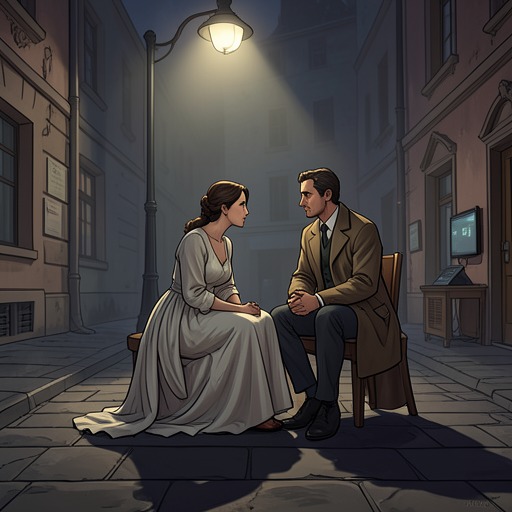
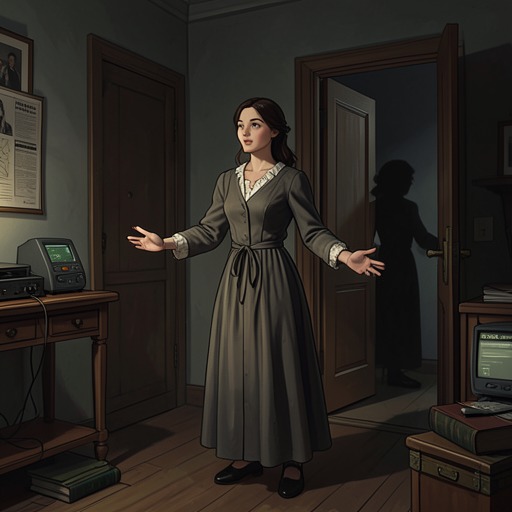
Parvati does meet Manorama, who asks whether she has come to see Devdas. Parvati corrects the description of her purpose: she has come to take him home because, as she sees it, no one there is looking after him. That distinction is decisive. A visit could have meant a brief encounter; taking him home implies responsibility for his care and a willingness to alter his circumstances. The immediate practical result, however, is frustration: with Devdas already gone, she cannot carry out that plan at Talshonapur.
Claim, Shame, and Significance
Manorama is surprised that Parvati would not feel ashamed. Parvati rejects the premise, asking what there is to be ashamed of and asserting that she will take back what is rightfully hers. Manorama counters that Parvati and Devdas are not even related. Their exchange makes the conflict surrounding the journey explicit: Parvati understands her claim through attachment and responsibility, while Manorama measures it against the recognized boundary of kinship and the shame that a woman may be expected to fear.
Parvati’s resolve does not erase that boundary. Her wan smile and her explanation that familiar words sometimes slip out show that the assertion is both deeply rooted and difficult to voice safely. She addresses Manorama as a sister and asks for the understanding available between them, rather than pretending that her declaration has no social cost. In this encounter, the attempted rescue remains incomplete, but the journey makes Parvati’s choice unmistakable: she is willing to act on her sense of connection to Devdas even when the surrounding world can describe them as unrelated. The missed timing leaves that intention without its hoped-for outcome, sharpening the distance between what Parvati feels entitled to do and what she can actually accomplish.