Jaladbala
DevdasJaladbala, the intelligent and efficient wife of Mahendra, enters the household as both a practical presence and an attentive observer. Her concern about rising expenses sets her briefly against her husband, but her candid conversation with Parvati Chakravarty turns that tension into mutual understanding and shows the care that can coexist with household disagreement.
Identity and Household Role
Two years after Parvati Chakravarty’s arrival at the Hatipota household, Mahendra had married Jaladbala. She is described as intelligent and efficient, and she takes over many of the household chores. This practical contribution gives Parvati more time for other responsibilities, including caring for children, the ill and elderly, guests, and people seeking shelter in the household’s guest rooms.
Jaladbala’s introduction is therefore tied to a change in the household’s daily work: Parvati’s public and charitable activity expands while Jaladbala assumes some of the domestic labor. The narrative presents her competence through what she does in the household, rather than through an extended account of her background or ambitions.
The Dispute over Household Expenses
The new pattern of spending becomes a source of worry. Estate clerks and officers discuss Parvati’s secret financial help to poor but respectable families, funded from the monthly allowance her husband gives her for her own upkeep. The servants also gossip that household expenses have nearly doubled and that the vaults are empty, with no savings. Jaladbala hears these conversations and brings the issue to Mahendra, asking whether he has no standing in the house if even the servants can see what is happening.
She urges him to object. In her view, his father may be too taken with his new bride to raise the matter, so Mahendra should do so himself. Her intervention is motivated by a specific household concern: expenses that servants are already discussing. The gap between that circulating account and the actual reason for the spending is important. Parvati’s assistance to needy families is concealed even from her husband, while Jaladbala encounters its effects through gossip and apparent financial strain.
Relationship with Parvati Chakravarty
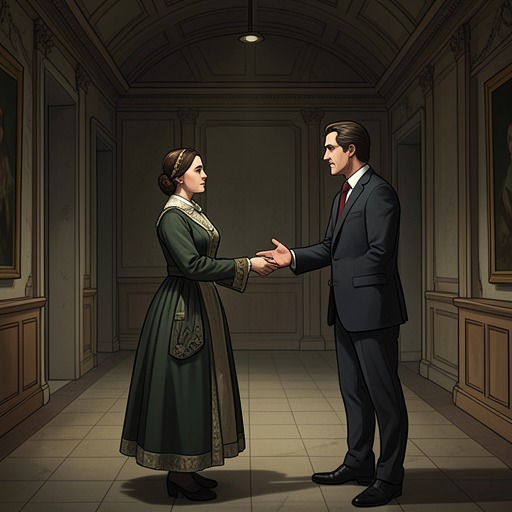
Parvati notices Jaladbala and asks her into her room, where she gently asks whether she and Mahendra have quarrelled. Jaladbala breaks down in tears and admits that the servants’ talk about expenses is what troubled her. Parvati listens, wipes her daughter-in-law’s tears, and tells her that she has spoken rightly; she adds that she is poor at keeping accounts and loses track of expenditure.
The exchange changes the tone of the conflict. Jaladbala’s concern is not dismissed as insolence, and Parvati does not answer her with authority or reproach. Instead, she recognizes the reasonableness of the question and meets her daughter-in-law’s distress with reassurance. Earlier, when the possibility of criticism arises, Parvati calls Jaladbala a gem. Together, these moments present their relationship as affectionate without erasing the practical disagreement that tests it.
Narrative Significance
Jaladbala’s brief appearance makes household labor and money visible as connected pressures. Her efficiency helps free Parvati for charitable work, while the cost of that work generates rumors that reach the servants and unsettle the family. Jaladbala becomes the person who voices that unease to Mahendra; the subsequent conversation with Parvati reveals that candor need not turn into lasting hostility. Her role is modest but consequential: through her, the narrative brings private generosity, domestic finances, and intergenerational relations into the same household scene.