Dharmadas
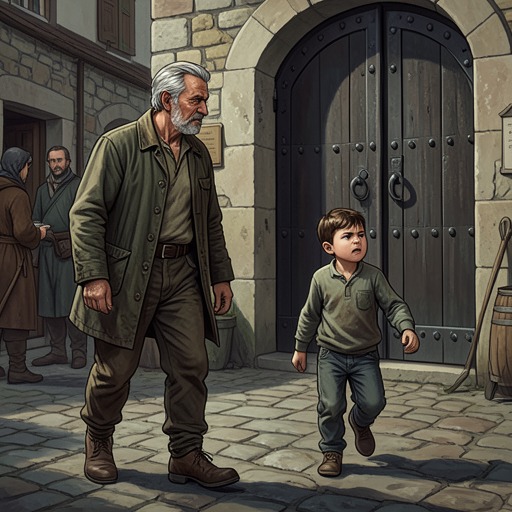
DevdasDharmadas is Devdas Mukherjee’s household servant and the person who cared for him from infancy. His life in the story is marked by the constancy of that service: he attends to Devdas through childhood, responds to his departures and illness, and remains bound to him even when the burden of care has become painful.
Identity and Early Service
Dharmadas had looked after Devdas for twelve years, beginning when Devdas was an infant. His care took the form of a steady daily routine: he escorted the boy to school each morning and collected him at the end of the day. The novel introduces him on his way to school when he encounters Parvati Chakravarty. He asks where Devdas is, and her answer that Devdas has run away leaves him immensely surprised. The exchange establishes how closely Dharmadas’s ordinary duties were tied to Devdas’s whereabouts.
Devdas’s Departures and Dharmadas’s Grief
Later, when Devdas has gone away, Dharmadas arrives with his belongings. Seeing Devdas, he bursts into tears and tells him that his mother has been crying for days. His distress makes the consequences of Devdas’s departure visible through the person who has spent years caring for him: Dharmadas brings not only the things Devdas left behind, but news of the anguish at home.
After Devdas’s father has died, Dharmadas speaks with Parvati and says that now his master is gone, he too wishes to go. Parvati stops him from giving way to that despair and asks who will look after Devdas if he leaves. Her appeal invokes the history of Dharmadas’s care, but his response reveals its cost: he says that he has looked after Devdas enough during childhood and now wishes he did not have to see him. His words do not erase their bond; they show how affection, duty, and accumulated distress have become difficult to separate.
Care During Devdas’s Illness
When Devdas becomes seriously ill, word is sent home and Dharmadas arrives. Money is drawn from the bank for treatment, and the doctor warns that Devdas needs the utmost care or his condition may become fatal. On the third day, fever develops. Devdas sends for Chandramukhi, telling her that she came at the right moment and might otherwise never have seen him again. She tends to him, and after nearly a month bedridden he slowly recovers. Dharmadas’s arrival belongs to this effort to respond to the crisis, though the account does not specify that he arranged the medical funds or performed the nursing himself.
Character and Narrative Significance
Dharmadas’s role is defined less by independent plans than by the repeated work of attending to Devdas. The school journey, the delivery of Devdas’s belongings, his grief after the household’s loss, and his arrival during the illness trace care across markedly different stages of Devdas’s life. His complaint to Parvati is especially revealing: the person whose childhood duty has been to look after Devdas is also allowed to express exhaustion and a wish to turn away. That tension gives his loyalty human limits rather than making it a simple emblem of obedience. The novel’s closing wish that Devdas should not die without a loving touch or a caring face gains resonance beside Dharmadas’s long history of care, although the text does not establish that Dharmadas is present at Devdas’s death.