Abstinence-only recovery
DopesickAbstinence-only recovery is an approach to addiction treatment that makes recovery depend on stopping drug use without continuing medication for opioid addiction. In Dopesick, the model appears not simply as a personal preference but as an institutional rule: facilities may require patients to be medication-free before admission, while families confronting limited beds and urgent need are left to choose among imperfect options. The book sets that rule against evidence favoring medication-assisted treatment and traces the costs of making access to care conditional on abstinence.
Definition and Institutional Divide
Abstinence-only programs often frame recovery as freedom from all drugs, including medications such as buprenorphine and methadone. That premise puts them at odds with medication-assisted treatment (MAT), which uses medication to reduce cravings and prevent withdrawal, often alongside counseling and recovery support. The conflict reaches beyond treatment centers: Dopesick describes opposition to MAT in some Alcoholics Anonymous settings and among many Virginia drug-court prosecutors and judges. People taking Suboxone could be regarded as unclean in some recovery rooms, while some courts prohibited MAT outright.
The disagreement has practical consequences because a treatment program’s admission rules can determine whether someone receives care at all. In 2016, the federal Office of National Drug Control Policy announced that it would deny funding to drug courts that cut off access to MAT. The book also notes that drug courts can coordinate supervision, treatment, and other support, but that their role in recovery sits within a wider argument over whether medication counts as treatment or as continued drug use.
The Access Gap
The book locates the abstinence-only model within an uneven treatment system. It reports one available treatment bed for every five people trying to enter rehab, treatment costs beyond the reach of many heroin users, and MAT availability at only about a third of U.S. treatment centers. Residential treatment was not supported by strong outcome data, while research discussed in the book favored outpatient MAT for preventing overdose deaths. Yet desperate families continued to pay for programs marketed as cures, often without assurance that their practices aligned with that evidence.
The obstacles were not only a matter of what treatment providers believed. In Virginia, federal rules capped the number of patients an MAT-certified doctor could treat at 100 before the limit rose to 275 later in 2016. For Tess Henry, buprenorphine helped her feel normal and was mostly covered by insurance, but appointments with her addiction doctor were cash-only. She needed $700 up front and then $90 to $100 for each follow-up visit, potentially as many as four per month. Waiting lists and cash requirements narrowed the path to continuing treatment even when medication itself was helping.
Admission Rules and Interrupted Care
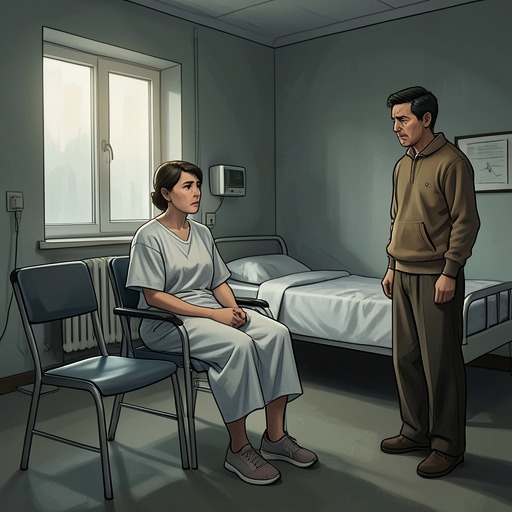
Other accounts show how abstinence requirements could force patients to stop medication to qualify for residential care. In March 2017, the only inpatient facility willing to accept Joey Gilbert was a free faith-based program in Charlotte that did not allow Suboxone or other drugs. Joey chose to taper off MAT to enter. Jamie Waldrop and Cheri Hartman supported her motivation but worried about the risks and the gap between the treatment she needed and the treatment the facility could provide. Cheri described Joey’s severe addiction alongside bipolar depression and probable PTSD, complicating care beyond opioid withdrawal alone. The facility, Jamie explained, could not afford medical staff to supervise detoxification or medication.
Tess’s treatment history presents a related contrast. Nearly seven months pregnant when released from jail, she eventually entered the Life Center of Galax, one of the few Virginia facilities that accepted patients receiving MAT. Her private insurance covered most of the $20,000 bill, while her father paid the $6,500 deductible from the remainder of her college-savings fund. Tess took Subutex during the final month of pregnancy. Her access to a facility willing to treat her while she remained on medication distinguished that placement from programs that required patients to be drug-free first.
The same tension shaped care for Jesse Bolstridge. After a ten-week rehabilitation program in Jacksonville, he had been weaned off Suboxone after three weeks, although the book notes that evidence supported longer-term maintenance with behavioral treatment and recovery support rather than short detoxification aimed at abstinence. Kristi Fernandez could not afford to send him immediately to another rehab or travel with him to secure a transfer. The difference between a treatment principle and a family’s actual ability to obtain continuing care is central to these accounts.
Families, Programs, and Consequences
The Hope Initiative tried to make a fragmented system navigable. Its volunteers assembled a five-page spreadsheet listing 36 rehab and aftercare providers across the southeastern United States, matching referrals to patients’ finances and available beds. Some volunteers helped arrange outpatient MAT, but they were divided over its effectiveness; some believed that treating addiction with another drug was wrong. People could seek help at the Bradley Free Clinic on the second Monday of each month, where trained volunteers could work through care options with them if they had no outstanding warrants. Social-service workers could also help eligible applicants seek Medicaid. The spreadsheet offered a practical response to scarcity, but it could not resolve disagreement about what treatment should count as recovery.
The book also examines the recovery industry’s appeal to families seeking a definitive cure. It cites a reported annual $35 billion industry that was unevenly regulated and largely abstinence-focused, alongside the lack of good data on residential-program outcomes. Cheri Hartman warned that the belief that abstinence is the only true cure could be dangerous when it persuades families to spend heavily on treatment that does not provide evidence-supported care. The criticism is directed not at families seeking help, but at a system that can sell certainty while leaving effective treatment difficult to obtain.
Abstinence-only recovery therefore recurs in Dopesick as both an ideology and a gatekeeping mechanism. Its consequences emerge in rules that separate patients from medication, costs and waitlists that interrupt continued care, and families forced to decide whether to accept the one program available even when it demands a risky change in treatment. The book’s contrast is not between effort and indifference: it is between the promise of a simple cure and a care system whose capacity, financing, and policies often prevent patients from reaching or remaining in treatment.