Abstinence-based rehab
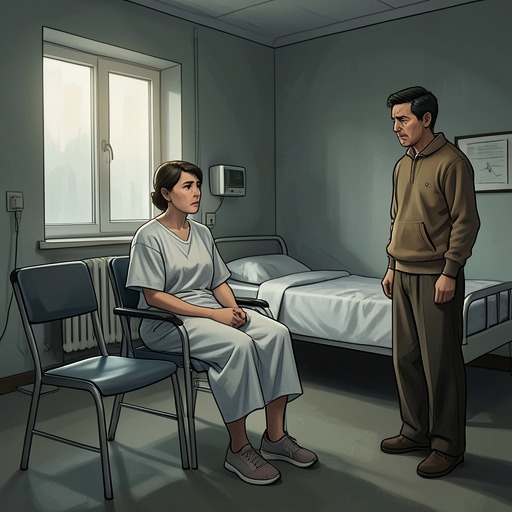
DopesickAbstinence-based rehab seeks recovery through stopping opioid use, counseling, and support rather than maintaining treatment with medications such as methadone, buprenorphine, or naltrexone. In Dopesick, it is both a real source of help and a contested default: families repeatedly turn to abstinence-oriented facilities, while the book weighs their limits against evidence for longer-term medication-assisted treatment (MAT) and the obstacles that keep effective care out of reach.
Definition and Place in the Treatment System
The approach is shown less as a single standardized program than as a prevailing orientation within the rehabilitation system. The facility that treated Jesse Bolstridge in Jacksonville, for example, aimed at abstinence. His ten-week program began with intensive counseling and medical detoxification, and included a brief course of buprenorphine, sold under the brand name Suboxone. He was taken off the medication after three weeks. The book describes this short-term use followed by discontinuation as a common practice, even as maintenance treatment was becoming more prominent and the merits of brief detoxification were increasingly disputed.
That contrast marks a central distinction in the account. A detoxification period can interrupt immediate drug use, but the treatment authorities cited in the book endorse ongoing medication, alongside behavioral care and recovery support, rather than treating withdrawal as the whole course of care. By 2012, even Hazelden Betty Ford Foundation, associated with the development of the twenty-eight-day rehabilitation model, had begun offering Suboxone to some patients. The shift did not mean that abstinence-oriented facilities had disappeared; Jesse's experience illustrates that they remained common.
Treatment Episodes and Unequal Chances
Christopher Waldrop's path shows both the appeal of abstinence-based care and the resources that could make repeated attempts possible. After relapsing, he resisted his counselor's recommendation of a wilderness facility in Montana. Jamie Waldrop then stopped financing his apartment, car, cellphone, and food, but did not abandon him: she spent a week with him in an Asheville hotel while he went through detox and prepared to return to rehabilitation. A day into that process, Christopher chose to try again. He described wanting sobriety for himself, having grown tired of stealing to pay for drugs and recognizing the harm his use had caused his family. After a stay in Montana, he lived in a sober house in Dallas and, by the time of the book's account, had remained sober for four years and returned to college.
The narrative presents that outcome as significant, not typical. Christopher had a mother able to finance another expensive rehabilitation stay and accompany him on the flight so that he would not withdraw from the plan at the last moment. The book reports that fewer than one-quarter of heroin users receiving abstinence-only counseling and support remain clean for two or more years. It contrasts that figure with an estimated 40 to 60 percent for people receiving counseling and support together with MAT. These comparisons do not erase Christopher's recovery; they show why his success cannot be treated as proof that abstinence-only care works equally well for everyone.
Jesse Bolstridge's treatment history makes the difference between access to a medication and continuity of treatment especially clear. His Jacksonville program briefly included Suboxone, but he was weaned off it after three weeks. When he was later dismissed from a sober-living house in Asheville, supportive counselors advised his mother, Kristi Fernandez, not to take him back. She did so because she would not leave her eighteen-year-old son in another state without somewhere to live. Unlike Jamie, Kristi could not afford to send him immediately to another rehabilitation center or travel with him to help secure the transition. She and Jesse were left to navigate recovery with fewer financial options, and he returned home before taking a construction job with his father.
Evidence, Relapse, and Time
The book sets these individual trajectories against treatment evidence that favors maintenance for opioid-use disorder. It reports that NIDA, the Institute of Medicine, the World Health Organization, and the White House drug czar's office supported indefinite, and potentially lifelong, maintenance treatment over abstinence-based rehabilitation. The emphasis is not medication alone: the cited guidance places medication in the context of behavioral treatment and recovery support. Anna Lembke also notes that outcomes can improve when people stay in treatment, while warning that access to good treatment remains limited.
Recovery, in this account, is rarely a clean sequence in which one treatment episode produces a lasting result. Harvard researcher John Kelly describes an average of about eight years from the start of treatment to one year of sobriety, often involving four or five distinct treatment episodes. Many people do not have eight years in which to keep trying. That length of time reframes relapse: it is not simply an individual refusal to recover, but part of a drawn-out course of care in which each interruption may carry serious costs.
The book also records criticism of the rehabilitation system's structure. Tracey Helton Mitchell argues that twelve-step programs are often unaffordable, vary from one facility to another, and are not necessarily effective for people with opioid addiction. At the same time, the evidence does not support a simple opposition between rehabilitation and medication. Counseling, support groups, and medication can be combined; the dispute concerns facilities and systems that treat medication as incompatible with recovery or restrict care to short-term detoxification.
Access, Institutions, and Significance
The practical barriers appear throughout the book: price, waiting lists, limited capacity, and the distance between a person's urgent need and a suitable provider. Tess Henry entered the Life Center of Galax during the final month of her pregnancy after her family found a facility willing to accept patients receiving MAT. Private insurance covered most of a $20,000 bill, while her father paid the $6,500 deductible from the remainder of her college-savings fund. Her treatment relied on Subutex, a form of buprenorphine then recommended for some pregnant patients. The episode demonstrates that access could depend not only on finding a facility that accepted medication-based care, but also on a family’s ability to absorb substantial costs.
Tess's ongoing medication was more affordable than her medical supervision: insurance covered 80 percent of the buprenorphine, but visits to her addiction doctor required cash payments, including $700 up front and $90 to $100 for follow-up visits that could occur four times a month. The book notes federal limits on the number of patients a MAT-certified doctor could treat: the cap stood at 100 before it was raised to 275 later that year. Even after some clinics began accepting insurance, treatment demand remained greater than local capacity.
The Hope Initiative's five-page spreadsheet offers a practical counterpoint to that scarcity. Volunteers assembled a list of thirty-six rehabilitation and aftercare providers across the southeastern United States, matching possible referrals to a patient's finances and available beds. Some also arranged outpatient MAT, although volunteers disagreed about its effectiveness. The process made the system's choices visible: a treatment recommendation mattered only if a provider had a bed, accepted the patient's form of care, and could be paid for.
Abstinence-based rehab therefore carries a double meaning in Dopesick. It is a route some people choose and a setting in which recovery can occur, as Christopher's experience demonstrates. But its prominence also exposes a mismatch between a system organized around repeated abstinence-oriented episodes and evidence supporting sustained treatment. The book's wider account of criminal justice and health care, and of families struggling across the gaps between them, makes treatment access more than a question of willpower. The decisive issue is whether care is continuous, affordable, and available before a person runs out of time.