
The Theme of Good and Evil
East of EdenThe exploration of the nature of good and evil in the novel, particularly through the characters of Cathy, Cal, and Adam.
increasing Bearing strength in each event
 decreasing
Bearing strength in each eventdecreasingThe Monster of Cathy
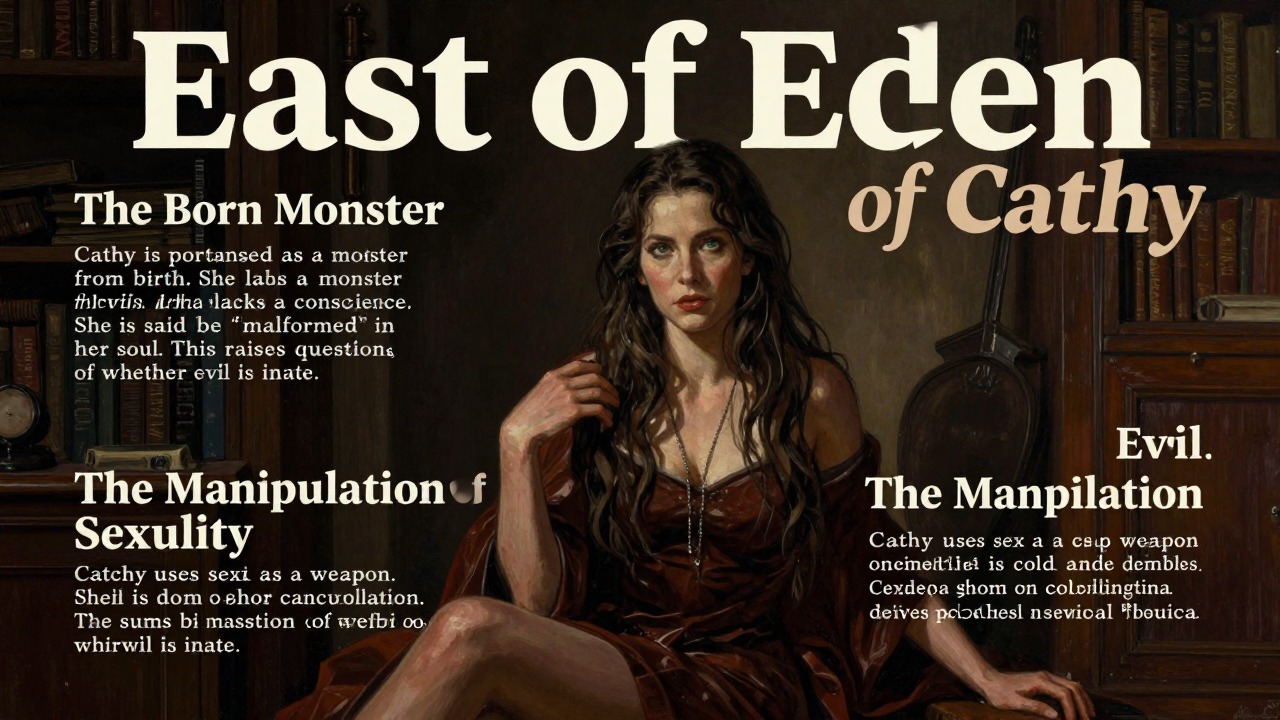
The Inhuman Evil
The Born Monster
Cathy is portrayed as a monster from birth. She lacks a conscience. She is said to be 'malformed' in her soul. This raises the question of whether evil is innate.
The Manipulation of Sexuality
Cathy uses sex as a weapon. She is cold and calculating. She derives pleasure from power and cruelty, not from intimacy.
The Inability to Love
Cathy is incapable of love. She sees others as tools. Her life is a series of destructive acts. She is the embodiment of pure evil in the novel.
The Struggle in Cal
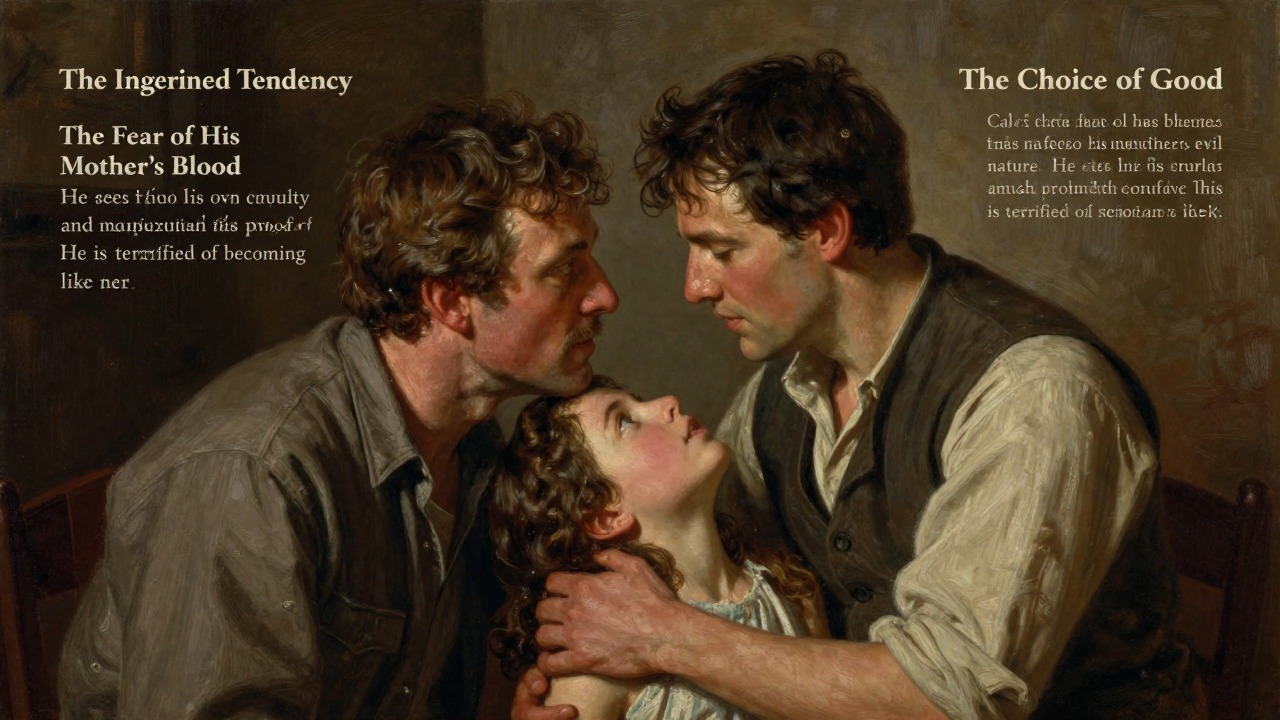
The Inherited Tendency
The Fear of His Mother's Blood
Cal fears that he has inherited his mother's evil nature. He sees his own cruelty and manipulation as proof of this. He is terrified of becoming like her.
The Choice of Good
Despite his fears, Cal is capable of good. He loves his father and wants to be loved. He makes genuine efforts to be kind. His struggle is the central conflict of his life.
The Moment of Crisis
When Cal takes Aron to see Kate, he gives in to his worst impulses. But he immediately regrets it. His guilt shows that he has a conscience. He is not a monster; he is a flawed human being.
Adam's Innocence and Fall
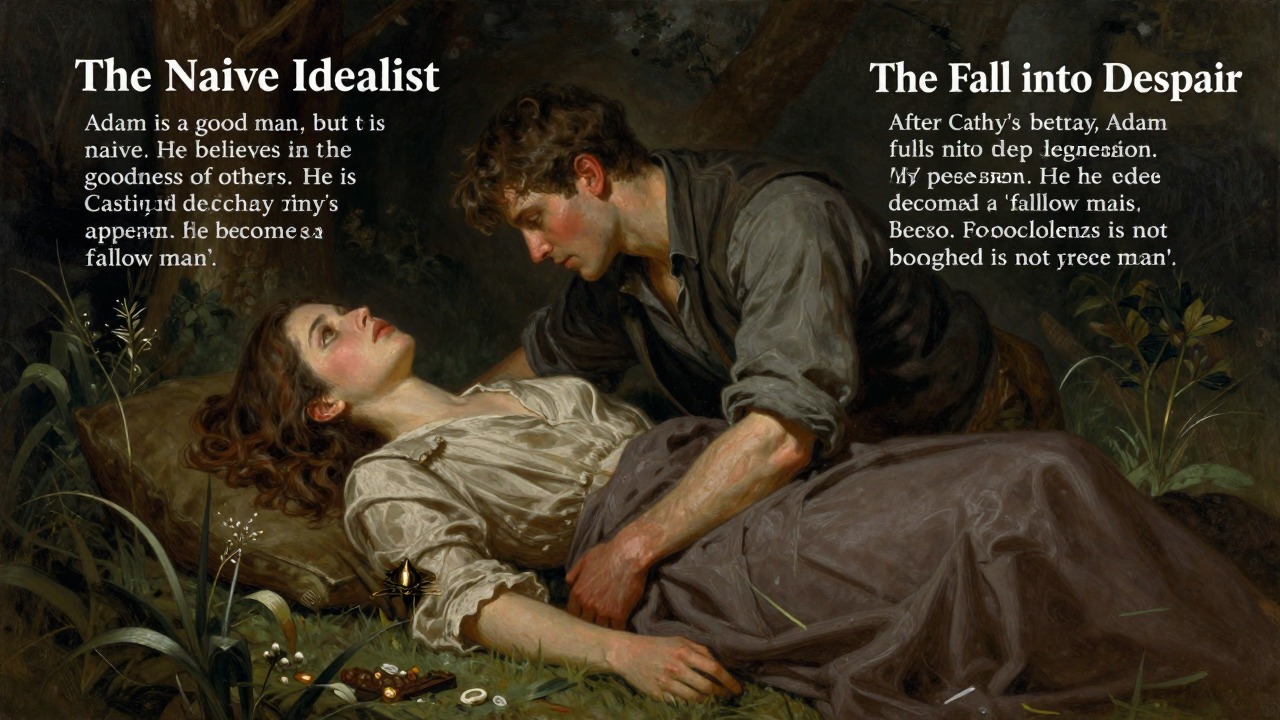
The Good Man
The Naive Idealist
Adam is a good man, but he is naive. He believes in the goodness of others. He is easily deceived by Cathy's appearance.
The Fall into Despair
After Cathy's betrayal, Adam falls into a deep depression. He becomes a 'fallow man'. His goodness is not enough to protect him from evil.
The Rise Again
Through the help of Samuel and Lee, Adam slowly recovers. He learns to accept the world as it is. He finally understands that he must choose to live. His final act of blessing Cal is an act of grace.
The Role of Rejection
The Root of Evil
The Rejected Child
Lee argues that the story of Cain and Abel is about rejection. Cain is rejected by God, and this leads to murder. The novel explores how rejection can create evil.
Cal's Rejection
Cal feels rejected by his father. This feeling drives his jealousy and his desperate attempts to win approval. When he is rejected again, he lashes out.
The Breaking of the Cycle
Adam's final blessing is a rejection of rejection. He gives Cal the gift of acceptance. This breaks the cycle of guilt and allows the possibility of redemption.
The Fallow Man
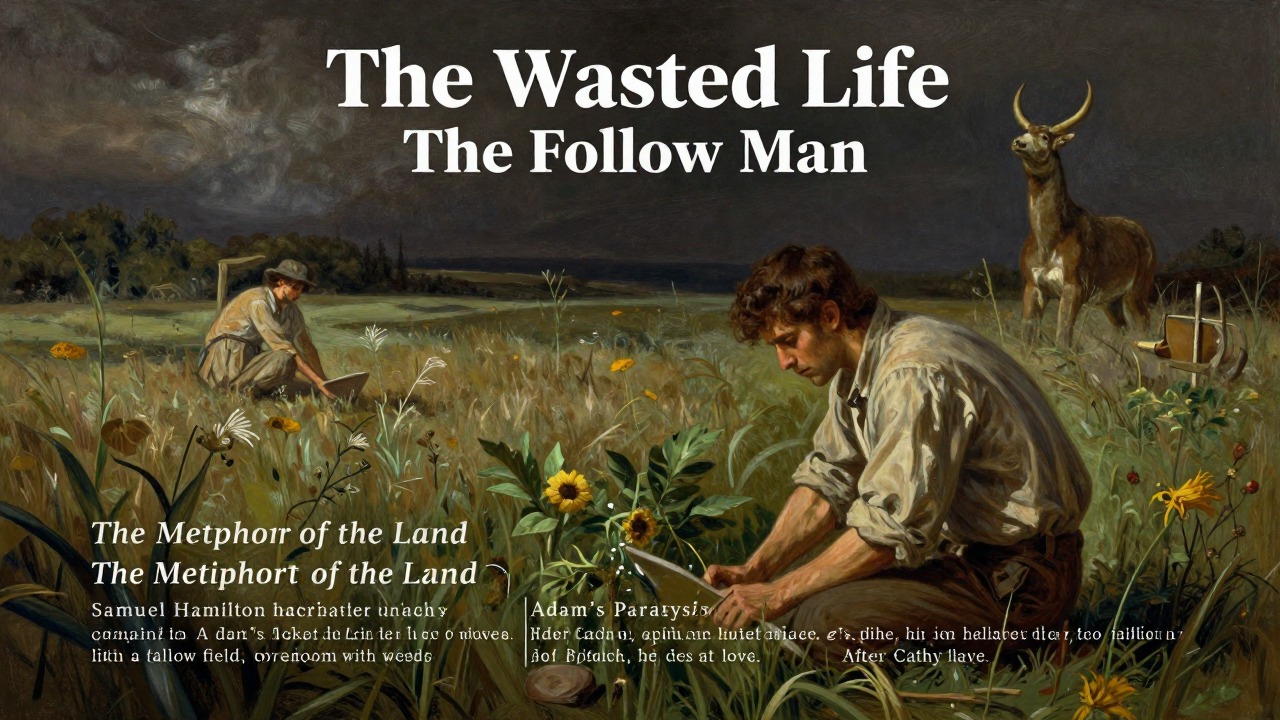
The Wasted Life
The Metaphor of the Land
Samuel Hamilton compares Adam's unused land to his unused life. A man who does not cultivate his life is like a fallow field, overgrown with weeds.
Adam's Paralysis
After Cathy leaves, Adam allows his life to go fallow. He does not work, he does not love, he does not engage with the world. He is a 'fallow man'.
The Call to Cultivation
Samuel's advice to Adam is to 'go through the motions'. He must act as if he were alive, and eventually the feeling will come. This is a call to take responsibility for one's own life.
The Power of Choice
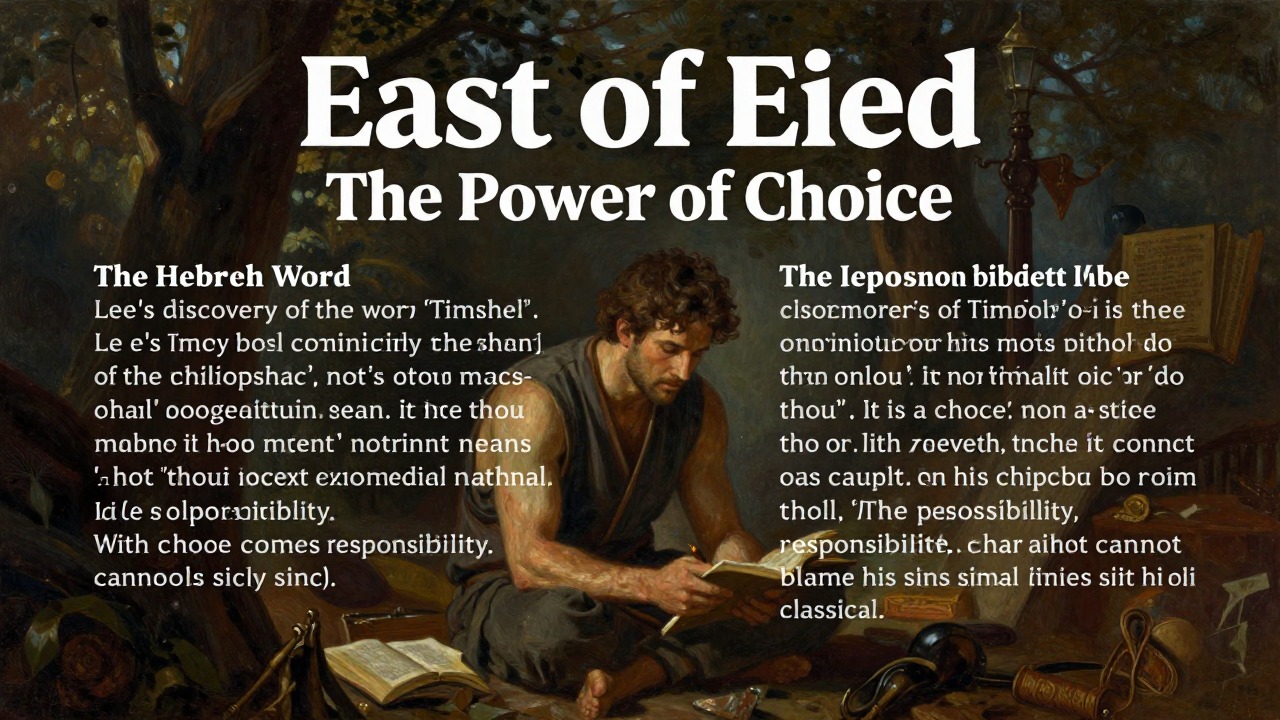
The Freedom of Man
The Hebrew Word
Lee's discovery of the word 'Timshel' is the culmination of the novel's philosophical theme. It means 'thou mayest', not 'thou shalt' or 'do thou'. It is a choice, not a command.
The Responsibility
With choice comes responsibility. Man cannot blame his sins on his father or his mother or his genes. He must choose for himself. This is the burden and the glory of being human.
The Final Gift
Adam's final word to Cal is 'Timshel'. It is a gift of freedom. It tells Cal that he is not condemned to be evil. He can choose to be good. This is the novel's ultimate message of hope.
Cathy's character as a study in evil, 1870s-1918
Cal's internal battle between good and evil, 1900-1918
Adam's journey from innocence to experience, 1860s-1918
The theme of rejection as a cause of evil, 1900-1918
The concept of the 'fallow man' – a life unlived, 1900-1918
The central theme of 'Timshel' – 'thou mayest', 1901-1918
