the free, roving mind
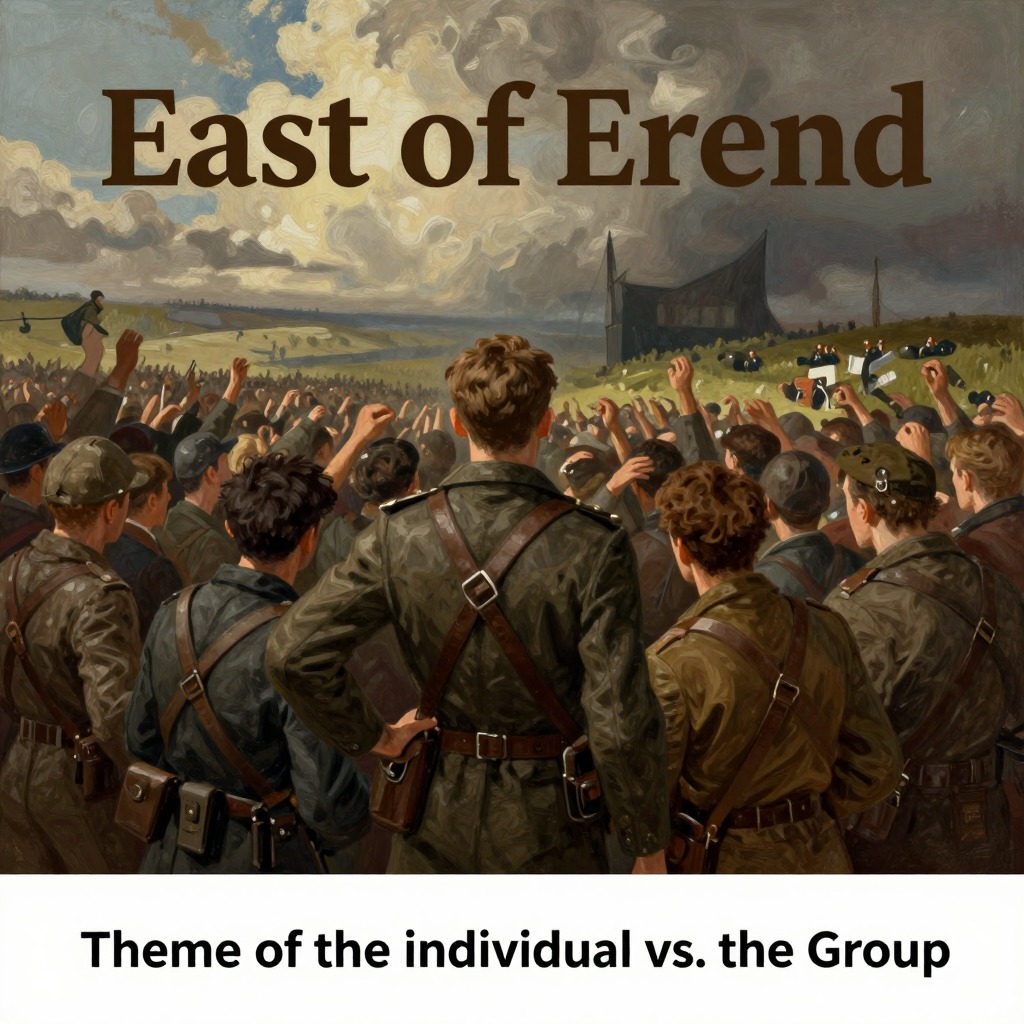
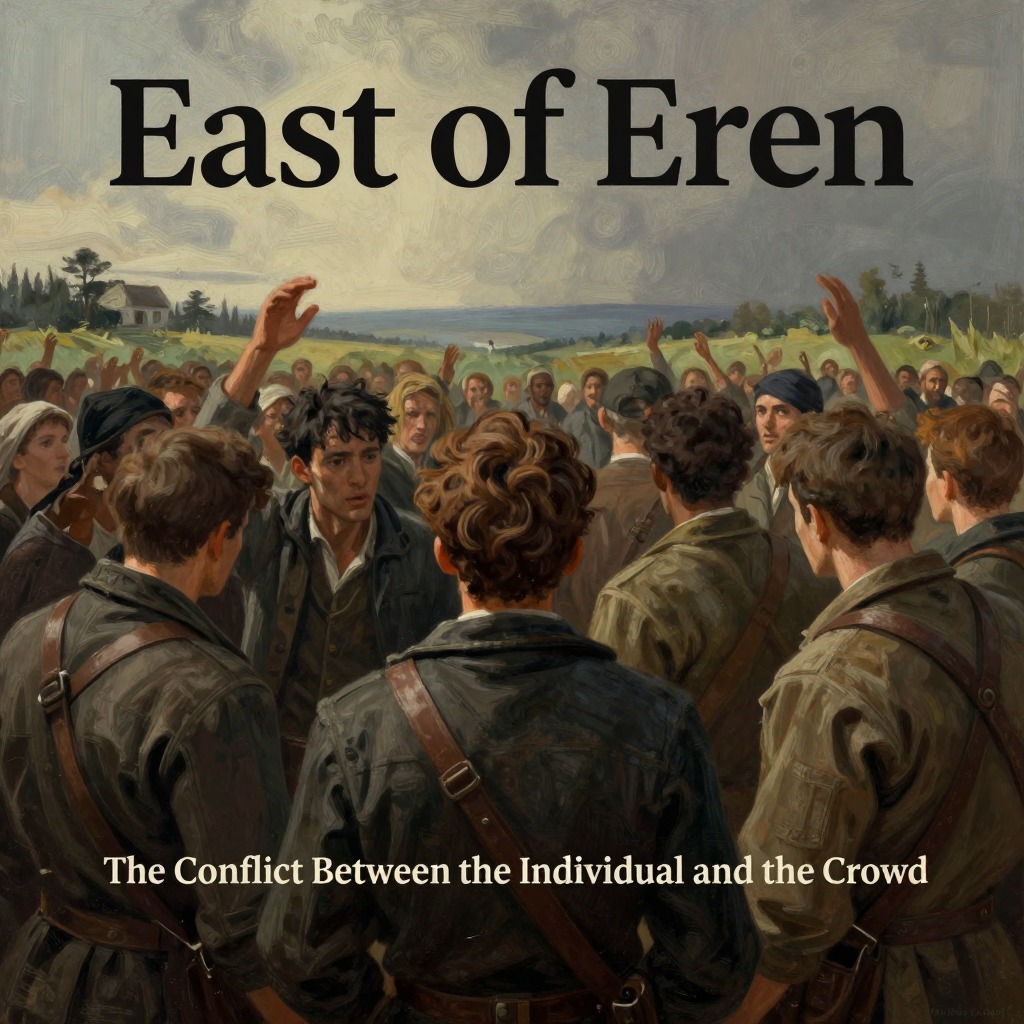
The free, roving mind is the novel's most explicit statement of its own philosophical core, a declaration of what Steinbeck believes is worth fighting for and what must be fought against. It appears in Chapter 13, a chapter that breaks from the narrative to offer a direct, essayistic meditation on the state of the world at the turn of the century and the nature of human creativity. The concept is not merely an abstract idea but the very principle that gives the book its moral and dramatic shape, standing in direct opposition to the forces of mass production, collective thought, and the suppression of the individual that Steinbeck saw as the defining danger of his era.
Definition and Centrality
The free, roving mind is defined as the individual human mind and spirit in its most creative and undirected state. Steinbeck asserts that "our species is the only creative species, and it has only one creative instrument, the individual mind and spirit of a man." He insists that "nothing was ever created by two men" and that there are "no good collaborations, whether in music, in art, in poetry, in mathematics, in philosophy." The miracle of creation, he argues, takes place in the lonely mind of a single person; the group can only build upon and extend what has already been invented. This makes the free, roving mind "the most valuable thing in the world," a preciousness that is under direct attack from the forces of mass society.
The Threat to the Mind
The novel frames the historical moment as one of "monstrous changes" and "great tension in the world, tension toward a breaking point." The forces marshaled around the concept of the group have, in Steinbeck's view, declared "a war of extermination" on the preciousness of the individual mind. This war is waged through "disparagement, by starvation, by repressions, forced direction, and the stunning hammerblows of conditioning." The free, roving mind is "pursued, roped, blunted, drugged." This is presented as a "sad suicidal course our species seems to have taken," a collective turn away from the very source of human creativity and value. The novel's narrator explicitly states his commitment to fight against "any idea, religion, or government which limits or destroys the individual."
Connection to the Novel's Moral Framework
The concept of the free, roving mind is not isolated; it is deeply connected to the novel's central moral and theological explorations. The narrator's defense of the individual mind aligns directly with Lee's discovery of the Hebrew word timshel—"Thou mayest"—which gives a man the choice to triumph over sin. The free, roving mind is the instrument of that choice. It is the capacity to think independently, to question received wisdom, and to make a genuine moral decision that is not predetermined by ancestry, society, or fate. The novel's monsters, like Cathy Ames, are described as variations from the accepted normal, born with a malformed soul or a missing conscience. The free, roving mind, by contrast, is the healthy, creative variation—the individual who chooses to be good, to be great, or to be a creator, not a destroyer.
Narrative and Thematic Significance
The concept serves as a justification for the novel's own narrative method. The narrator, a character who is both inside and outside the story, exercises a free, roving mind in his telling, moving from philosophical meditation to intimate family history, from the geological past of the Salinas Valley to the battlefields of World War I. This narrative freedom is the formal embodiment of the principle he defends. Thematically, the concept is the positive pole of the novel's central conflict between the individual and the collective, between freedom and determinism. It is the answer to the despair of characters like Adam Trask, who nearly succumbs to a life of fallow passivity, and the hope for characters like Cal Trask, who struggles with his own inherited darkness. The free, roving mind is the capacity to break free from the past, to choose one's own path, and to become, as Samuel Hamilton hoped for his son Tom, a truly great individual.