Martha
FaustMartha is Margaret’s neighbor and a widow who remains emotionally attached to her absent husband. Her grief, practical insistence on documenting his death, and willingness to host the men in her garden make her more than a passing witness: she provides the domestic setting and a crucial social pretext for Faust’s approach to Margaret.
Identity and Domestic Circumstances
Martha first appears alone in the neighbor’s house, speaking of a husband who left for the wider world and did not fulfill his duties to her. She says that she loved him and cannot forget him, even as she asks God to forgive him. Her brief lament establishes a tension between attachment and abandonment: she presents herself as faithful in feeling, but left to bear the consequences of his departure.
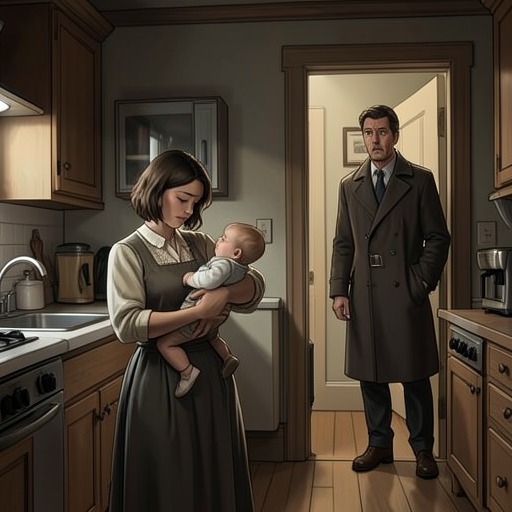
The scene gives Martha a domestic perspective that differs from the men’s romantic and deceptive schemes. Later, she describes the repetitive work of caring for a baby: keeping its cradle near her bed, waking when it stirred, nursing and holding it, carrying it to calm it, then moving on to washing, marketing, and kitchen work. The account makes visible the unending labor behind household life. Martha confirms that women are badly off, while dismissing the prospect of changing a stubborn bachelor’s habits.
The False Report and Its Consequences
When Mephistopheles enters the neighbor’s house, he announces that Martha’s husband is dead and sends his greetings. Martha reacts with sorrow, calling her husband true-hearted and saying that she too might die. Her response follows the loyalty she expressed in her opening lament; the report is not a neutral piece of news, but a sudden confirmation of the loss around which her private life has already been organized.
Martha does not accept the announcement as sufficient proof. Before parting, she asks for a legal witness who can certify where, how, and when her husband died. She dislikes irregular arrangements and wants the death reported in the weekly paper. Her request turns the false report into a practical problem for Mephistopheles: he must help produce the appearance of credible testimony rather than rely on a bare assertion.
Martha then proposes that the gentlemen meet that evening in her garden behind the house. The garden appointment supplies an ordinary social occasion that can bring the characters together, while the demand for a witness gives Faust a reason to participate in a story about the supposed death. Martha’s concern with public and legal confirmation thus helps advance a plan whose underlying account is false.
Role in the Garden Scenes
In the garden, Martha walks with Mephistopheles while Margaret is on Faust’s arm. The staged pairings place Martha alongside the older, practiced deceiver as the younger couple begin their courtship. Martha is not shown directing Faust’s pursuit, but her hospitality and the arrangement she has made help establish the conditions for the encounter.
Her later remarks about women’s work also sharpen the contrast between domestic responsibility and the bachelor’s freedom. She recounts care and household labor as a cycle that leaves little room for ease, then observes that a stubborn bachelor cannot be converted. The exchange gives her a grounded, wry voice within a plot otherwise shaped by seduction and deception: she recognizes the unequal burden without claiming that she can change it.
Characterization and Narrative Function
Martha’s characterization combines fidelity, grief, practical judgment, and comic impatience with irregularity. Her demand for a legally credible account of her husband’s death is sensible on its own terms, even though the men use the occasion to sustain a lie. That contrast lends the episode its dramatic irony: the person asking for orderly proof helps create the setting for a deception that depends on appearances.
The available scenes do not establish what Martha ultimately learns about the report or how her own story ends. They do establish her importance to the sequence: the neighbor’s house first gives her grief a private voice; her request for a witness turns the false report into an arrangement; and her garden becomes a meeting place for the developing relationship between Faust and Margaret. Martha’s domestic world therefore serves both as a character portrait and as the practical bridge into the courtship plot.