Puck
FaustPuck is a fairy dancer in the Walpurgis Night scene on the Harz Mountains. He is presented through two short interventions: first as the leader of a whirling procession, then as the self-declared heaviest of the revelers. The contrast makes his stage presence both nimble and deliberately grotesque.
Appearance in the Revel
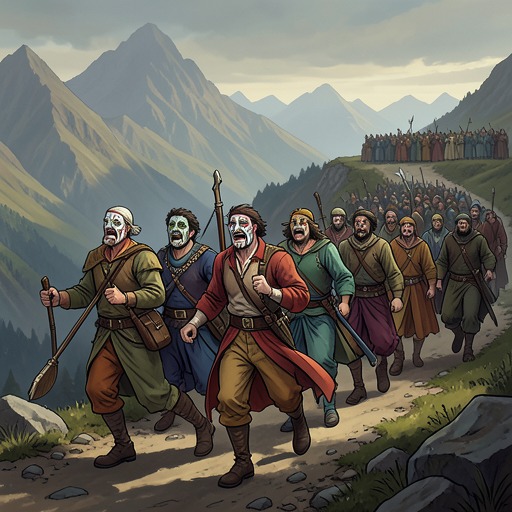
Puck enters after Oberon calls for the spirits to show themselves and announces that the fairy king and queen are newly plighted. Puck answers with movement: he comes “light of limb” and “Whisks and whirls in measure,” with a hundred followers invited to share his pleasure. His entrance gives the revel a dance-like momentum, setting coordinated motion against the tumultuous crowd around it.
Playful Authority
Later, the Heavy Fellows complain that the grasses are being trodden down and that spirits have gathered in bulky masses. Puck rebukes them for entering “stall-fed,” comparing their lumbering bulk to elephant calves. He then turns the accusation into a joke about himself, claiming that he is the stoutest and heaviest Puck that night. The boast reverses his earlier description as light-footed: agility and exaggerated weight become two comic aspects of the same performer.
Dramatic Function
Puck’s brief appearance belongs to the crowded, supernatural pageantry of Walpurgis Night, whose setting is identified as the Harz Mountains, in the district of Schierke and Elend. He does not drive the main plot; instead, his dance, followers, and teasing rebuke add a distinct voice and physical comedy to the assembly. The movement from a hundred dancers to the heavy crowd also gives the revel a deliberately unruly scale, in which Puck’s authority is playful rather than solemn.