Faust
FaustFaust is a scholar who has exhausted the recognized disciplines without finding knowledge adequate to his longing to understand the world. His defining significance lies in the tension between that intellectual hunger and the human consequences of his pursuit: he wagers that no moment of satisfaction can make him willing to stop, yet when Margaret is imprisoned he must confront suffering that his diversions have helped him fail to see.
Identity and Intellectual Crisis
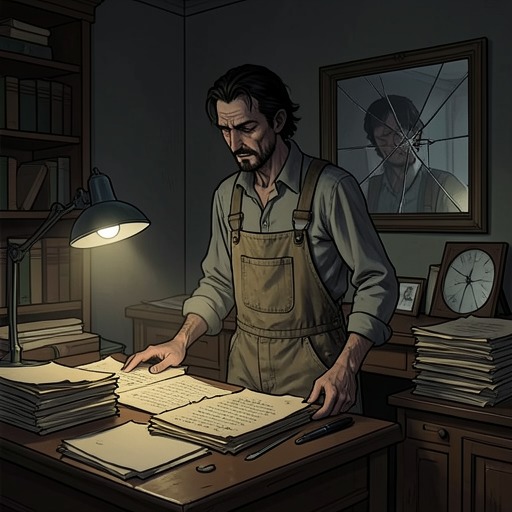
At the beginning of the drama’s study scene, Faust sits restless at his desk and measures the failure of a life devoted to learning. He has studied philosophy, jurisprudence, medicine, and theology from end to end; he holds the titles of Magister and Doctor, and for ten years has led students through instruction. Yet his conclusion is that nothing can be known. Academic achievement has supplied rank and authority, not the understanding he seeks.
His dissatisfaction is not simply a rejection of education. Faust says that he is more clever than the teachers around him and no longer troubled by scruples or doubts, but these claims do not console him. He has given up pleasure, possesses neither property nor wealth nor public honor, and doubts that he can teach or help another person. The contrast between his professional standing and his sense of uselessness makes his crisis both intellectual and existential: he has mastered recognized systems of thought, but sees no way for them to bring him closer to the forces governing life.
Magic therefore presents itself as a practical alternative to book learning. Faust hopes that spirit-power and spirit-speech will let him reach secrets directly, discover the force binding the world, and examine its productive powers. His aspiration is not merely to add another subject to his studies. He wants to escape the condition of speaking about what he does not know and to encounter the world’s hidden workings for himself.
The Pact and the Test of Satisfaction
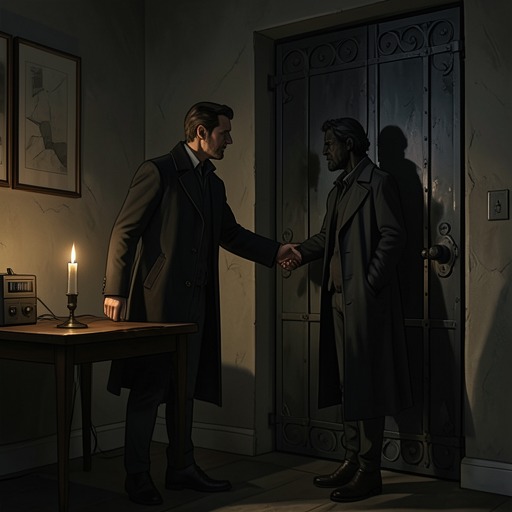
In the study, Faust’s pact with Mephistopheles takes the form of a wager over whether he can be made content with repose. Faust defines the decisive test precisely: if flattery or rich enjoyment can make him pleased with himself, then that day should be his last. The offer turns his restless disposition into a rule with mortal stakes. His desire is not just for pleasure, but for an experience so complete that he willingly abandons striving.
Faust specifies the moment that would settle the wager: if he tells a passing moment to delay because it is beautiful, Mephistopheles may bind him and declare his ruin. The death bell would signal the end of the service, and time itself would be finished for him. By making a moment of satisfaction the condition of defeat, Faust sets an extraordinarily difficult limit on the demon’s power while also making his own appetite for experience the measure of his fate.
Margaret and the Turn Toward Human Consequence
Faust’s first recorded encounter with Margaret occurs in the street. As she passes, he offers her his arm and escort. The brief exchange establishes the beginning of his pursuit of her, but it also places his expansive search for experience in the realm of a particular human relationship. Margaret is not an abstract secret of nature: she is a person whom Faust approaches and whose life will become bound to his choices.
The later crisis in the drama’s final prison sequence reveals how much has followed from that involvement. Faust learns that Margaret has been imprisoned as a criminal and is enduring fearful torments. He calls her gracious and ill-fated, and denounces Mephistopheles for hiding her increasing misery while keeping him occupied with diversions. His anger identifies a real concealment, but it also exposes Faust’s own belatedness: he recognizes the emergency only after it has become nearly irretrievable.
Mephistopheles answers that Margaret is not the first. The reply reduces the particular tragedy to a recurring pattern and sharply contrasts with Faust’s anguished attention to this one imprisoned woman. Faust does not accept that fatalistic perspective. When Mephistopheles warns that bloodguilt remains upon the town and that avenging spirits wait where the victim fell, Faust orders him to take him to Margaret and declares that she shall be free.
Nature, the Brocken, and Restlessness
Elsewhere, in the forest and cavern, Faust addresses a sublime spirit as the giver of the natural world and of his capacity to feel and enjoy it. He describes nature not as an object of cold acquaintance but as a profound realm in which he can gaze as into a friend’s bosom. Living creatures in air, water, and wood become his brothers; the storm that brings down giant firs and the moon rising over precipices and damp thickets disclose both the world’s power and his own inward depths.
This encounter complicates the earlier crisis over knowledge. Faust can speak of a form of understanding that joins observation, feeling, and self-knowledge, rather than reducing nature to empty words. The cavern becomes the place where he is shown his own self, while the moonlit landscape makes thought less austere through visions of ages past. His search is therefore not confined to possession or intellectual mastery: it includes moments of receptive connection, even as his larger course remains marked by dissatisfaction and pursuit.
At the Walpurgis-Night gathering on the Brocken, Mephistopheles leads Faust away from the crowd toward something shining among the bushes. Faust follows, accepting the plan to climb the mountain and isolate themselves from the throng. The movement repeats the partnership’s characteristic rhythm: Mephistopheles proposes a diversion, and Faust goes on. Set beside Faust’s later accusation that diversions concealed Margaret’s suffering, this episode gives that rhythm a grave consequence. Restlessness can open new scenes and sensations, but it can also carry Faust away from the human crisis that demands his attention.
Recognition and Narrative Role
Faust is defined by opposing capacities. He can turn scholarly disappointment into a daring search for the world’s hidden forces, and he can experience nature as intimate kinship rather than inert material. Yet the same forward-driving appetite leaves him vulnerable to distraction and arrives too late at Margaret’s imprisonment. His declaration that she shall be freed is an act of resolve, but it does not erase the bloodguilt or restore the time lost before he learned her condition.
The wager gives this divided character a dramatic measure: Faust stakes everything on remaining incapable of final satisfaction, while the plot tests the cost of continued movement through encounters with nature, Margaret, and suffering. His decisive turn toward the prison does not settle the wager or establish the eventual outcome of the rescue. It does, however, make the moral limit of his striving unmistakable. The search for experience cannot be treated as innocent when another person bears its consequences, and the wish to act at last must contend with harms already done.