Mossbystrand
FirewallMossbystrand is an open, often deserted stretch of coast that brings Kurt Wallander back to both a difficult investigation and the private losses that followed it. In an autumn landscape of dunes, tracks in the sand, and southbound birds, the beach becomes a meeting point between the physical traces of other people and Wallander’s own persistent memories.
Setting and Present-Day Visit
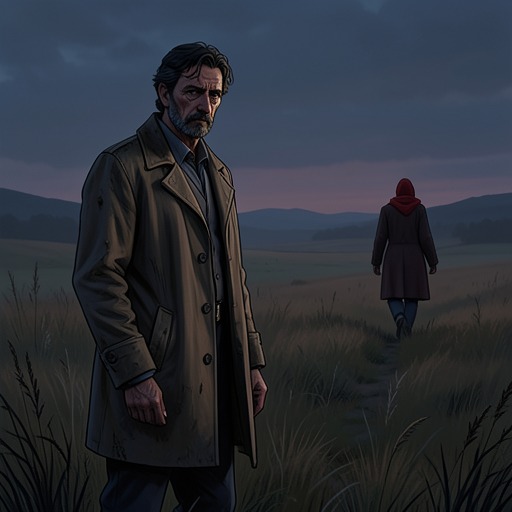
On an autumn morning, Wallander drives past Mossbystrand, finds it empty, and turns back on a whim because he has time. There is no wind, and the temperature is only a couple of degrees above freezing. After buttoning his coat, he follows a winding trail between the sand dunes to the sea.
The beach is unoccupied, but not untouched: tracks left by people and dogs cross the sand, alongside marks made by horses. Offshore, a flock of birds flies south in formation. These small signs of movement contrast with the apparent solitude of the shore, where Wallander pauses to look out over the water.
The Earlier Investigation
The view recalls an event from six years before, when a rubber dinghy carrying two bodies drifted ashore at Mossbystrand. Wallander remembers exactly where the bodies were found. The investigation was difficult and led him to Latvia; it also brought him into contact with Baiba, the widow of a Latvian police officer whom he had known and liked.
The beach thus holds a precise professional memory as well as a personal one. Wallander’s return is not prompted by an active assignment: the remembered discovery surfaces during an unplanned stop, turning a familiar stretch of coast into a record of an investigation whose consequences extended far beyond the shoreline.
Personal Memory and Significance
Wallander and Baiba began seeing each other, and for a long time he believed their relationship might lead to a shared life in Sweden. They even looked at houses. Baiba eventually drew back, not because she had met someone else, as Wallander jealously suspected, but because she doubted marrying another policeman and leaving her homeland, where she had a rewarding though underpaid job as a translator. The relationship ended, and by the time he stands at Mossbystrand he has not spoken to her for a year.
Baiba still appears in his dreams, but whenever he approaches or reaches for her, she is gone. His jealousy has faded; what he recognizes missing is companionship, and the relief from loneliness that he had not known he was carrying. In this way, the shore’s emptiness gives shape to a loss that Wallander can name more clearly than before.
The beach also recalls an earlier period when Wallander, on sick leave with depression, feared he would never return to police work in Ystad. He remembers that bleak landscape and the intensity of his anxiety in unnerving detail, and does not want to experience it again. His thought that he should avoid deserted beaches in autumn links Mossbystrand’s quiet directly to that remembered vulnerability: the place is not merely a scene of past police work, but a setting in which solitude can reopen the fear of being lost to it.