Ystad power substation
FirewallThe Ystad power substation is where a local failure exposes the vulnerability of a much larger system: the discovery of Sonja Hökberg’s body among its power lines plunges a quarter of Skåne into darkness and draws the police into an investigation that reaches beyond the site itself.
Setting and Function
Set in a field outside Ystad, the substation is a central connection point in the network carrying electricity to towns and homes across the countryside. Its fenced grounds are marked with warnings about trespassing and high voltage; inside, a small grey transformer building forms the heart of the facility. The distinction between the two entrances becomes significant: the outer gates have been forced open, but the reinforced steel door to the transformer building is ajar without visible signs of forced entry. The site’s ordinary function depends on security, specialist knowledge, and a network of connections—and its failure makes that normally unobtrusive infrastructure suddenly visible.
The Blackout and the Discovery
On the night of October 8, Sydkraft sent Olle Andersson to investigate the outage at the substation. He reached it in nineteen minutes and found the gates broken open. The transformer building’s steel door stood ajar, though it showed no obvious sign of being forced. Inside, he found a burned body caught among the electrical equipment: the person’s contact with the high-voltage system had caused a short circuit and cut power across a large part of Skåne.
The outage made the site’s local damage a regional emergency. A quarter of Skåne was without electricity, with darkness stretching from Trelleborg to Kristianstad; hospitals relied on emergency generators while Sydkraft worked to restore supply around the damaged substation. When Kurt Wallander arrived with Martinsson and Hansson, the body was blackened beyond recognition and entangled in lines, switches, and circuit breakers. The scene initially raised the possibility of suicide, murder, or sabotage, while the contrast between the breached gates and the apparently intact locks on the inner door became an immediate investigative puzzle.
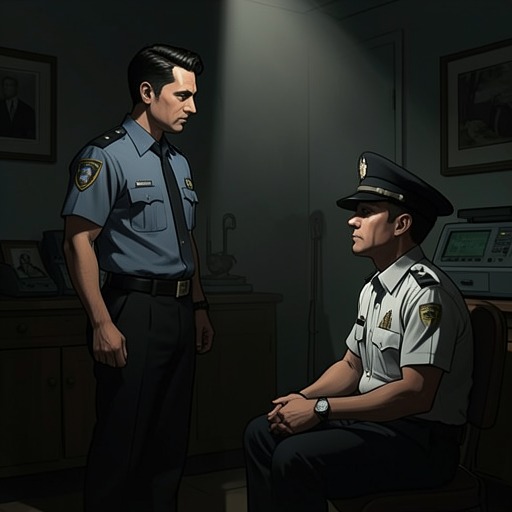
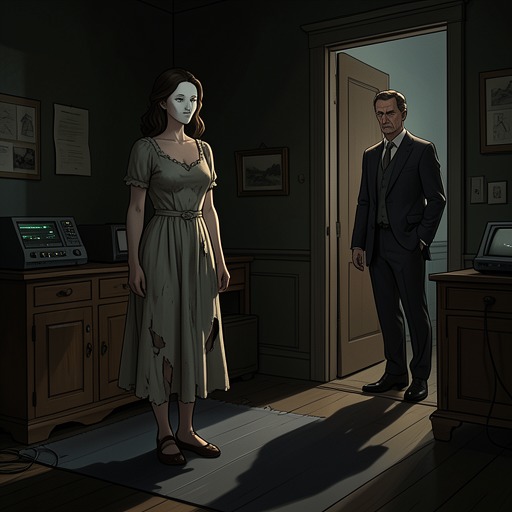
The victim’s identity emerged through an object recovered outside the building. A technician found a handbag by the fence, and Wallander recognized its oak-leaf clasp from the interrogation room: it belonged to Sonja Hökberg. The discovery transformed the site from the scene of an unexplained electrical failure into the place where a missing woman had died. The body was removed and forensic examination continued as crews worked in rain and mud; Ystad’s power was restored shortly after three in the morning.
Access, Evidence, and Unanswered Questions
The contrast between the broken outer gates and the intact-looking locks on the transformer building remained a question after the forensic work at the site. Hansson’s later inquiries established that Moberg, a substation technician, had returned from leave to find his house burgled. The station keys themselves were not taken, but Hansson maintained that the intruders had copied them and obtained duplicates from their American manufacturer. A check of Jonas Landahl’s passport showed that he had travelled to the United States in the month after the burglary, a detail that offered a possible link rather than a definitive account of who arranged the copies.
The explanation of access did not settle what had happened inside the substation. The investigation never established why Sonja Hökberg had been thrown against the high-voltage wires, or why Tynnes Falk possessed the station’s blueprints. The site therefore yields both a practical answer and a larger gap: its security could be circumvented through copied keys, but the purpose behind the killing and Falk’s interest in the facility remained unresolved. Its role in the novel rests on that tension between an infrastructure whose physical vulnerability can be traced and a human motive that cannot.
Infrastructure and the Wider Plot
The substation’s blackout gives physical form to a vulnerability that later widens beyond electricity: the systems that sustain ordinary life can become points of exposure when their connections are disrupted. At the site, Nyberg’s observation that “We live in a vulnerable society” is more than a comment on a damaged grid; the investigation later discovers that Tynnes Falk’s computer contains a countdown connected to institutions forming the global financial network, whose compromise could provoke a worldwide crisis. The novel does not establish that the substation incident and the planned financial attack were parts of the same operation, but it sets them in revealing proximity: a body among electrical lines darkens a region, while concealed weaknesses in digital networks threaten consequences on a vastly larger scale. The substation thus anchors the story’s concern with infrastructure as both an invisible support for daily life and a potential channel for catastrophe.