Ystad Police Station
FirewallYstad Police Station is where Sonja Hökberg is questioned after confessing to the attack on taxi driver Johan Lundberg, and where she later escapes from custody. Its interview rooms, reception area, toilet, and front hall form the practical setting for two sharply contrasting episodes: a recorded interrogation that confirms her involvement, and a breakdown in security that allows her to leave without being seen.
The station as an interrogation setting
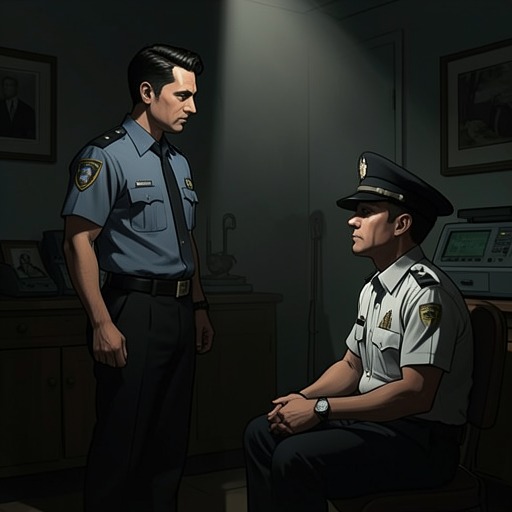
On October 6, 1997, Kurt Wallander arrives to question Hökberg, who is accompanied by her lawyer, Herman Lötberg. In the room, a tape recorder sits on the table. Hökberg appears composed and asks for chewing gum before the interview begins; Wallander obtains a stick from Irene at reception, then returns and starts the recording. The ordinary business of arranging a small comfort sits uneasily beside the seriousness of the case.
The interview establishes that Hökberg struck Lundberg with a hammer while Eva Persson stabbed him. Hökberg says the pair took his wallet and mobile phone, divided the cash, and discarded the wallet. After the questioning, Wallander tells her she cannot go home: at nineteen, she will be tried as an adult and must remain at the station. Her matter-of-fact manner leaves him disturbed, and his conversation with Martinsson afterward turns from the interview to the girls’ apparent lack of remorse and the possibility that the attack had a motive beyond obtaining money.
Custody and escape
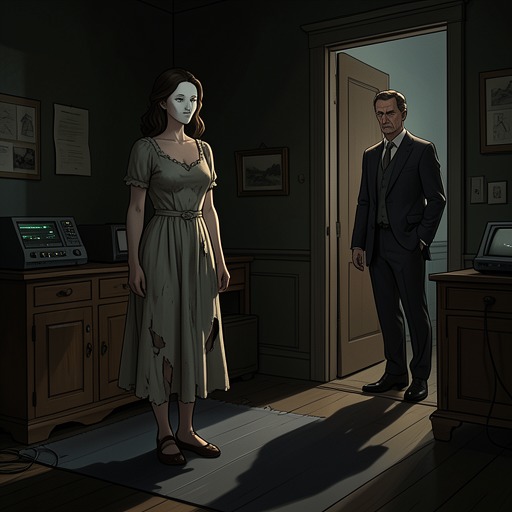
Hökberg’s detention depends on routine transfers between rooms and supervision by an officer. While waiting to be moved from a room where she had met her lawyer back to the holding cell, she asks to use the toilet. When she comes out, the officer on guard has turned away to speak with someone in an office. Hökberg walks in the opposite direction, crosses the front hall, and leaves the building without anyone stopping or seeing her.
The officer discovers her absence only after about five minutes, first checking the toilet and then the room where she spoke with Lötberg before alerting security. By then, she has had roughly ten minutes to disappear. The sequence makes the escape less a matter of a complicated plan than of small, compounding failures: an unattended moment, a missed departure through the front hall, and a delay before the alarm is raised.
Search and institutional response
When Wallander returns, Martinsson tells him that Hökberg has escaped and that available personnel have been assigned to the search. Wallander had just left the house where Hökberg’s mother was staying with her sister in Höör, and he passes on the contact number. The possibility that Hökberg could travel by car or obtain a lift complicates the search; Martinsson notes that she has a driving licence.
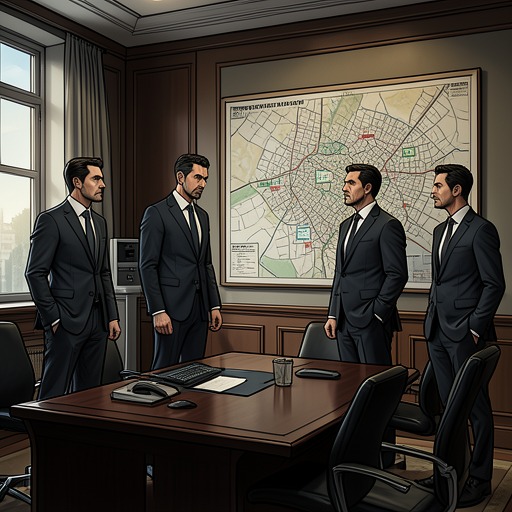
Chief Lisa Holgersson is furious when she learns what happened. Wallander agrees that the failure is unacceptable, but distinguishes the immediate priority—finding Hökberg—from the subsequent need to review security procedures and determine responsibility. Asked whether the escape creates a risk of further violence, he admits they do not yet know enough about her. The station is therefore both the scene of a procedural failure and the center from which the police must respond to the uncertainty that failure has created.