Agnes's New Stratford House
HamnetAgnes's New Stratford House is the large home William Shakespeare buys for Agnes and their daughters in Stratford. Its significance lies in the contrast between the scale of the property and Agnes's intimate, unsettled life within it: she is offered a new place to live, but Hamnet's absence follows her there. The house becomes a public subject of speculation, while its garden offers Agnes a territory she can shape through planting, healing work, and daily care.
The House and the Offer to Leave
When William asks whether Agnes can leave, he offers to take her and the girls away from the place where they have been living, to put them somewhere new and far from everything that has happened. Agnes considers the possibility in concrete terms: perhaps a cottage on the edge of town, with one or two rooms, a small plot for a kitchen garden, and windows looking onto it. The modest home she imagines is very different from the house she eventually receives.
Her answer to William makes clear that a new address cannot resolve the loss she carries. Hamnet, she tells him, is not here. She has looked everywhere, waited, and kept watch, but she does not know where he is. Her distress enters the conversation even as she tries to keep her voice steady. The house may relocate Agnes and her daughters; it cannot provide the certainty or reunion she seeks.
The scale of the actual property is revealed when Bartholomew points across the street. It is the largest house in the town, with a broad central entrance and three storeys. Standing at a corner, it extends along a side that cannot be seen from where Agnes and Bartholomew are looking. Agnes studies both visible sides and frowns before asking where. Bartholomew tells her that all of it is hers. The exchange turns the house from an imposing building in the street into a place meant for Agnes and her family.
A Public House, a Private Unease
The house attracts attention as soon as William buys it. People express surprise to Agnes, and she knows that their talk continues behind her back. They question how her husband could have afforded such a property: he has always seemed absent-minded, they say, and how could work in a playhouse bring in so much money? Some speculate about smuggling in London and connect their suspicion to the reputation of William's father, John Shakespeare. The new home is admired and envied, but it also draws distrust.
That attention complicates the promise of ownership. Agnes hears the gossip and understands that living in the house does not make it feel wholly hers. Its size and visibility place her under scrutiny, and conversation about the property repeatedly turns into speculation about William's money, work, and movements. Bartholomew's assurance that the whole house belongs to her offers a direct counterpoint to the town's fascination with the absent husband and the means by which he acquired it.
Inside, the house is never silent. Agnes walks its corridors, stairs, rooms, and passageways barefoot at night, listening. The windows creak in their frames; wind through the chimney produces a long, mournful note; the wooden panelling crackles as the house settles. Dogs sigh as they change position in their basket, mice run unseen along the walls, and branches move in the large orchard behind the house. These sounds make the building feel inhabited even in its quietest hours, while Agnes's night walks reveal that its many rooms have not brought her rest.
The Daughters and the Night Rounds
The house holds Agnes and her daughters in different ways. Susanna sleeps at the far end of the corridor and bolts her door so that her mother cannot enter during those nighttime walks. Judith's room is next to Agnes's. A light sleeper, she wakes often and never settles into deep sleep; even the sound of the door hinges makes her sit up and ask who is there. Cats sleep on blankets on either side of her. The layout links the bedrooms closely, but the daughters' responses mark distinct boundaries: Susanna bars the door, while Judith remains easily roused by Agnes's passing.
The house's size thus does not dissolve the family's private habits or anxieties. Its corridor connects the rooms Agnes walks through to the daughters' separate sleeping spaces, and the small sounds of a door or a waking child interrupt the quiet. Night after night, Agnes listens through the house, while her daughters either guard their privacy or wake to her presence.
The Garden and the Household's Wider World
Behind the house, the orchard and garden become Agnes's domain. Along the high brick wall she plants a row of apple trees, with pairs of pear trees beside the main path; she adds plums, elder, birches, currant bushes, and rhubarb. She takes a cutting from a wild rose by the river and plants it in the shelter of the warm wall beside the brewing room, and sets a rowan shoot near the back door. Chamomile, marigold, hyssop, sage, borage, angelica, wormwood, and feverfew fill the ground. At the far end she installs seven beehives, whose persistent summer hum can be heard from the house.
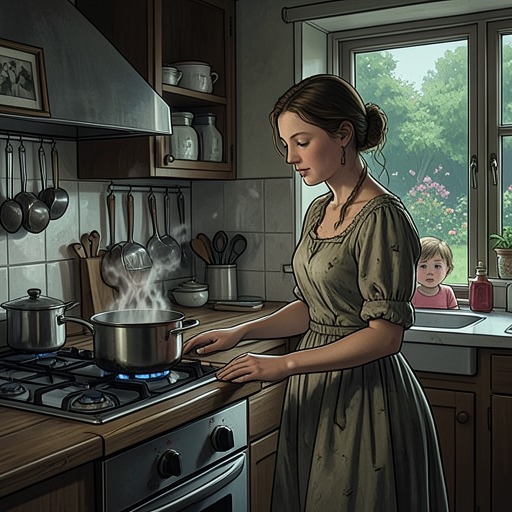
Agnes converts the old brewing room into a place for drying and mixing plants. People come there to ask her for remedies, entering through a small gate at the side of the garden. She has a larger brewing room built at the back of the house, cleans the old courtyard well, and makes a maze garden from interwoven box hedges, filling its empty spaces with lavender. These changes give the grounds practical uses as well as cultivated beauty: the garden supplies plants, receives visitors seeking remedies, and gives Agnes a realm of her own within a property that otherwise attracts so much public attention.
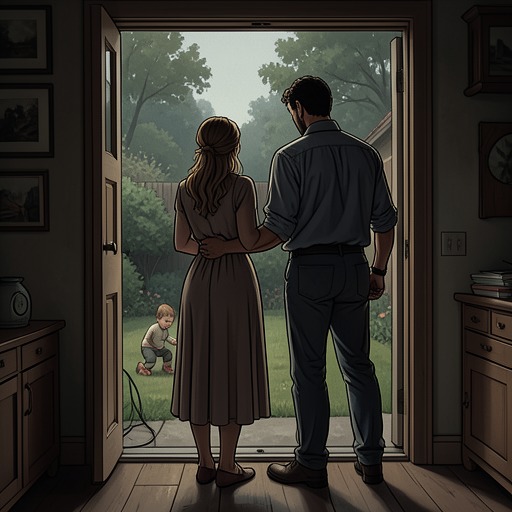
William visits twice a year, sometimes three times. In the second year he stays for a month and reports food riots in London, where apprentices have marched on Southwark and attacked shops. The plague has returned there, he says, and the playhouses have closed. Such news enters the house through William's visits, but it is not discussed aloud. The home is therefore both a Stratford household and a point of contact with events elsewhere, its private routines set beside dangers and disruptions that its residents do not openly name.