Judith Keeps Night Watch for Hamnet’s Ghost
HamnetJudith’s night watch for Hamnet’s ghost turns her twin’s death into a continuing search: after a midwife describes seeing a running figure on Henley Street, Judith returns secretly to the house where Hamnet died, hoping to find him. She experiences a moment of apparent contact, but it ends before she can reach him, and the vigil leaves her collapsed outside in the morning.
The Midwife’s Disclosure
The action begins with a conversation between Judith and an old midwife. The midwife recalls Judith’s birth, when everyone expected the child to die, and points to Judith’s survival as a fact that has outlasted that expectation. Then she reveals what she sees when she passes along Henley Street: not merely a shape, but what seems to be a person running near the house where Judith was born. The apparition travels between the large house and a narrow cottage, moving with startling speed. It appears only at night, never by day.
The midwife’s account gives Judith a possible route by which the dead might still be encountered. When asked whom the woman sees, Judith already knows the answer before it is spoken: Hamnet. The apparition is described indirectly rather than explained, leaving its nature uncertain, but its path makes the vision intimate and specific. It connects a house associated with Judith’s birth to the narrow house in which Hamnet died, placing the siblings’ shared beginning and his absence within the same stretch of street.
The Secret Vigil
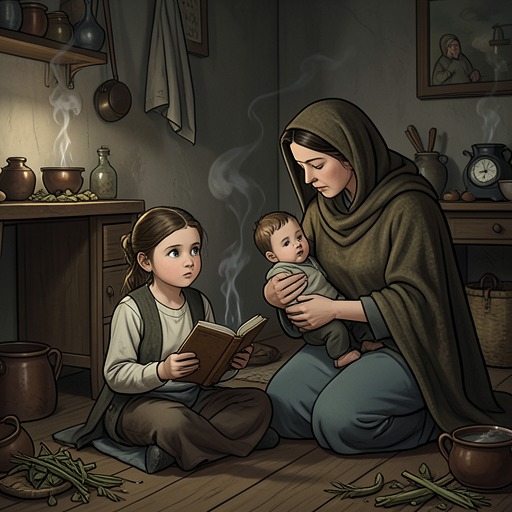
After hearing the midwife, Judith begins leaving home quietly every night and standing watch. She tells neither Susanna nor her mother. The midwife chose to disclose the vision to Judith alone, and the story becomes a private bond between them: the old woman has offered a possible sign, while Judith carries the secret as something belonging to her and her twin. She also keeps silent because the hoped-for encounter may never happen. To speak of it would expose the hope to other people before she knows whether Hamnet will appear to her.
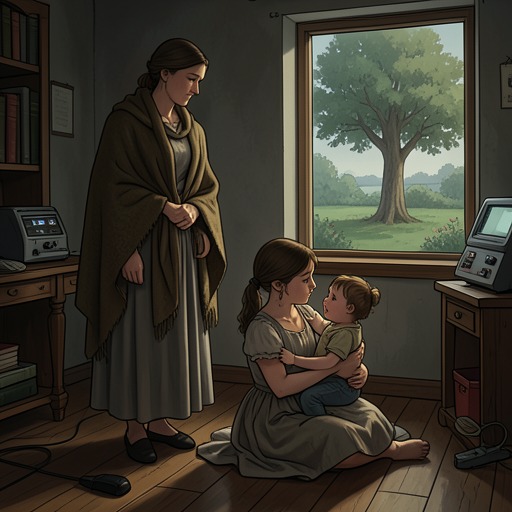
Her vigil takes place in the narrow house, in the room where Hamnet died, convulsing and trembling as fever overwhelmed him. The room is now filled with wooden hatters’ heads, all turned toward the door. Their featureless faces make them a silent crowd of witnesses, but they cannot answer Judith or confirm what she is waiting for. She fixes her attention on the doorway for a long time and begs inwardly for Hamnet to come, even once. Without him, she feels less than whole; she understands his death as an exchange in which he took her place, yet that explanation cannot make his absence bearable.
Judith’s hope is sharpened by the difference between them now. Hamnet would remain a child, while she has grown almost to womanhood. She cannot know whether he would recognize her if he passed her in the street. The vigil therefore asks for more than proof that the dead remain near: Judith longs to meet the brother she remembers, while fearing that time has made them unfamiliar to one another.
A Fleeting Presence
The narrative briefly lifts above Judith’s own awareness. An owl crosses the sleeping village, where the streets appear from above as channels between rooftops. Its view takes in the foliage and chimney smoke, a fox crossing the road, a rat vanishing through a hole, rabbits caged behind a house, horses in a field near the inn, and a man asleep at a tavern threshold, scratching a flea bite. Against this broad inventory of ordinary life, Judith emerges as one small figure moving out into the night. The owl sees her, but she does not know it is above her.
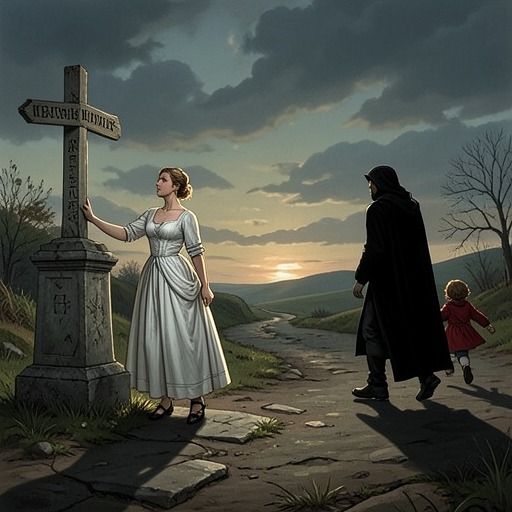
As she goes into the street, Judith senses something: a glimmer, a trace, a movement too slight to identify, yet convincing to her. The moment reaches her through impressions compared to air passing through corn and light caught unexpectedly in a window. She crosses the street; her hood falls. Standing between her old home and her grandparents’ house, she closes her eyes and becomes certain that Hamnet is there. Her skin prickles, and she wants desperately to touch him or take his hand, but she does not dare.
She hears her own pulse and broken breathing, and believes that another breath is present too. Her longing takes the form of a repeated thought: she misses him and would give anything for his return. But the pressure of the encounter eases, as if a curtain has fallen. Judith opens her eyes and braces herself against the wall. Hamnet has gone again, leaving her with the certainty of a brief contact but no lasting reunion.
The Vigil’s Cost and Meaning
At first light, Mary opens the door to let the dogs out and finds someone curled on the ground, head on knees. She initially takes the figure for a drunk who collapsed during the night, then recognizes Judith by her boots and the hem of her skirts. Judith has been left outside, almost frozen. Mary fusses over her, brings her indoors, calls for blankets, and asks for hot broth. The discovery gives the private vigil a physical consequence: Judith’s longing has kept her through the night until her body can no longer endure the cold.
The episode turns the midwife’s sighting into a renewed version of Judith’s bond with Hamnet. The old woman reports a figure moving along the street; Judith waits for that movement to become a meeting, and for one instant believes it has. Yet the encounter offers no escape from bereavement. Hamnet remains the twin who died, and Judith remains the survivor who feels divided by his absence. Her secret watch is both an act of devotion and an attempt to cross a boundary that the scene allows her to approach but not permanently pass.