Before the story
The Flood-Prone Country
The narrative opens by showing how water shapes life in [Holland](entity:location-recall-location-holland-51dd34b9d27c). Dikes, sluices, canals, and windmills are not scenery alone: they are the defenses and machinery on which the country’s survival depends.
The account frames Dutch character through that struggle. The people’s labor and shared vigilance against water help explain the courage and mutual responsibility that later define the Brinker family’s story.
Autumn 1570
The Great Flood of 1570
A violent gale drives water against the Dutch coast until dikes break across the provinces. Floodwaters overwhelm towns and farms, and the account describes widespread deaths among people and animals.
The disaster shows the cost of failing defenses and the need for constant maintenance. The response leads to improved dike construction and a law requiring landowners to maintain the barriers.
Long before the main story
The Dike Hero Legend
Dutch children learn the story of a boy who finds a leak in a dike and plugs it with his finger. He endures a cold night rather than remove it, knowing the breach could grow and drown the surrounding country.
A clergyman discovers the child at daybreak and calls for help. The legend gives the novel a national emblem of vigilance: even a child’s small act can protect an entire community.
Before Raff Brinker’s accident
The Brinker Savings
[Raff Brinker](entity:character-recall-character-raff-brinker-0b28dc19e2e9) and [Dame Brinker](entity:character-recall-character-dame-brinker-982358be54ee) save carefully from his wages, accumulating a thousand guilders for their children’s education and their family’s future. Their thrift makes the loss of the money especially devastating.
The savings disappear just before Raff’s accident. For years, Dame Brinker suspects theft and searches the cottage, while the family’s poverty prevents her from replacing what was lost.
The night before Raff Brinker’s accident
Laurens Flees Holland
A frightened young assistant named [Laurens Boekman](entity:character-recall-character-laurens-boekman-747af48862ae) believes that he has caused a patient’s death by preparing the wrong medicine. Though the poison is never administered, he does not know that his father discovered the mistake and leaves [Holland](entity:location-recall-location-holland-51dd34b9d27c) in shame and fear.
Before fleeing, Laurens entrusts his watch and a message for his father to [Raff Brinker](entity:character-recall-character-raff-brinker-0b28dc19e2e9), who is working near the waterways. He begs Raff to return the watch if his father ever wishes him to come home.
About ten years before the main story
Raff Falls From the Dike
During a storm and a threatened flood near [Veermyk Sluice](entity:location-recall-location-veermyk-sluice-03da5cc0ef88), [Raff Brinker](entity:character-recall-character-raff-brinker-0b28dc19e2e9) works on a damaged dike in darkness and sleet. He falls from the scaffolding and is brought home unconscious.
The injury leaves him unable to think or remember, though his body remains strong. The accident removes the family’s principal wage earner and begins the decade of hardship that shapes Hans and Gretel’s childhood.
After Raff’s accident
The Watch Is Guarded
[Dame Brinker](entity:character-recall-character-dame-brinker-982358be54ee) keeps the watch Raff brought home and follows his instruction to guard it until he asks for it again. She does not know that it belongs to the absent [Laurens Boekman](entity:character-recall-character-laurens-boekman-747af48862ae) or that it carries a message to his father.
Even in hunger, she resists selling it. Her fidelity preserves the link between the families, though its meaning remains hidden until Raff’s memory returns.
During Raff Brinker’s lost decade
Children Carry the Household
[Hans Brinker](entity:character-recall-character-hans-brinker-07db8b11d5bc) takes on labor that would ordinarily fall to an adult, earning money where he can and helping maintain the household. [Gretel Brinker](entity:character-recall-character-gretel-brinker-0786e013e799) tends geese, gathers fuel, and works beside her mother.
The siblings have different gifts: Hans is patient with study and carving, while Gretel is quick, musical, and uneasy with books. Their work keeps the family afloat but leaves little time for school.
A December morning
Handmade Skates on the Canal
Hans and Gretel kneel beside a frozen canal, fastening rough wooden skates made by Hans. When Gretel’s skate string hurts her, he pads her shoe with the lining of his cap and secures it more carefully.
The makeshift skates give the poor children a share in [Holland](entity:location-recall-location-holland-51dd34b9d27c)’s winter freedom. Their teasing turns into a joyful chase, until their mother calls them back to work at the cottage.
Early in the story
The Brinker Family’s Hardship
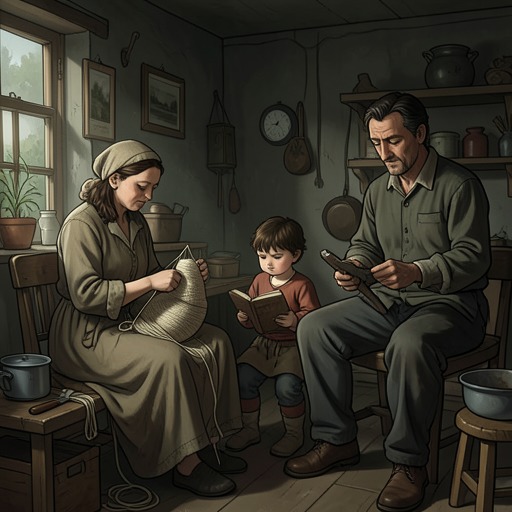
At home, [Dame Brinker](entity:character-recall-character-dame-brinker-982358be54ee) spins, knits, and raises vegetables while caring for [Raff Brinker](entity:character-recall-character-raff-brinker-0b28dc19e2e9), whose mind remains clouded. Hans and Gretel shoulder much of the household work and attend school only when their mother can spare them.
Their circumstances are severe, but the family’s affection and discipline remain strong. Hans protects his mother and sister, while Gretel struggles with fear of her father and guilt over that fear.
Several days before December 20
The Skating Race Announced
A group of young skaters tells [Katrinka Flack](entity:character-recall-character-katrinka-flack-0f85c5027ce7) about a grand race planned for [Madame van Gleck](entity:character-recall-character-madame-van-gleck-ee6492df314e)’s birthday. The prizes will be silver skates, one pair for a girl and another for a boy.
The news excites the children, but it also exposes social divisions. [Carl Schummel](entity:character-recall-character-carl-schummel-8293bb56350e) mocks the poor Brinker siblings, while [Hilda van Gleck](entity:character-recall-character-hilda-van-gleck-0499cd94b27a) notices their skill and treats them with respect.
Before December 20
Hilda Meets the Brinkers
[Hilda van Gleck](entity:character-recall-character-hilda-van-gleck-0499cd94b27a) approaches Hans and Gretel on the ice and asks why they will not enter the race. Hans explains that their wooden runners become damp and stick, making them unsuitable for competition.
Hilda is moved by their situation and wishes she had not spent so much of her allowance on finery. She offers them the money she has left so one of them can buy proper skates.
Immediately after Hilda’s offer
Hans Chooses Gretel’s Skates
Hans refuses to accept Hilda’s money as charity, but agrees to carve a wooden chain for her in exchange. He then decides that Gretel should get the skates, despite his own longing to compete.
Gretel tries to persuade him to buy skates for himself or to share an ill-fitting pair. Hans remains firm: he wants her to practice and win the prize.
The following day
The New Skates Arrive
Hans buys skates for Gretel, and Hilda also gives the girl a warm jacket. [Dame Brinker](entity:character-recall-character-dame-brinker-982358be54ee) repairs Gretel’s shoes, and the child takes to the ice with new confidence.
Other skaters notice Gretel’s speed and skill. The gifts do more than equip her for the race: they allow the neglected girl to be seen as a competitor rather than as a poor goose-girl.
Saint Nicholas’s Eve
Dame Brinker’s Festival Dress
[Dame Brinker](entity:character-recall-character-dame-brinker-982358be54ee) puts on a cherished holiday dress she has rarely worn in years, delighting Hans and Gretel. Her joy fades when she realizes that [Raff Brinker](entity:character-recall-character-raff-brinker-0b28dc19e2e9) cannot recognize or admire her.
The family speaks of the missing thousand guilders and the watch she has preserved. Dame Brinker remembers Raff’s last conscious night, when he handed her the watch before being summoned to the endangered dikes.
Saint Nicholas’s Eve, during the family conversation
The Lost Thousand Guilders
[Dame Brinker](entity:character-recall-character-dame-brinker-982358be54ee) recalls how she and Raff accumulated their savings, putting aside money week after week for their children’s future. The pouch and a stocking had held the family’s wealth, but both vanished around the time Raff was injured.
She has repeatedly questioned Raff, only to receive confused answers. Hans urges her not to distress herself, but he also wonders whether his father might still remember what happened.
Saint Nicholas’s Eve, before Hans leaves
Dame Brinker’s Saint Nicholas Tale
At Gretel’s request, [Dame Brinker](entity:character-recall-character-dame-brinker-982358be54ee) retells the legend of [Saint Nicholas](entity:character-recall-character-e0f524c4efd1) restoring three murdered children to life. The story brings warmth and wonder into a cottage otherwise dominated by work and worry.
Hans listens too, though he pretends not to be childish. His mother finally sends him toward [Amsterdam](entity:location-recall-location-amsterdam-68440c77c10d) to buy his skates, while Gretel stays home to keep her company.
Saint Nicholas’s Eve, on the way to Amsterdam
Hans Seeks a Doctor
On the ice, Hans recognizes the celebrated [Dr. Boekman](entity:character-recall-character-dr-boekman-6c84e2fe9aa0) and abandons his plan to spend all the money on skates. He explains that his father has been mentally absent for ten years and offers his small store of money for a consultation.
Dr. Boekman agrees to examine Raff, though he warns that the case seems hopeless. He promises to come after returning from [Leiden](entity:location-recall-location-leiden-8f3656f9cd89), and Hans, encouraged by the promise, continues to [Amsterdam](entity:location-recall-location-amsterdam-68440c77c10d) and buys the skates.
Later on Saint Nicholas’s Eve
The Hearthside Attack
While [Dame Brinker](entity:character-recall-character-dame-brinker-982358be54ee) tends the peat fire, [Raff Brinker](entity:character-recall-character-raff-brinker-0b28dc19e2e9) suddenly seizes her and holds her near the flames, laughing in a frightening, vacant way. Hans rushes in and tries to pull his father away, but Raff throws him aside.
Gretel puts food on the floor, which distracts Raff and frees their mother. Dame Brinker’s clothes are partly burned, and Raff falls ill with a fever; the incident makes the family fear that he may be dying.
Night of December 5
The Dutch Festival
Across [Holland](entity:location-recall-location-holland-51dd34b9d27c), families celebrate [Saint Nicholas’s Eve](entity:time-recall-time-saint-nicholas-s-eve-ffb3342249f1) with songs, gifts, and playful visits from the saint. In the wealthy home of [Karel van Gleck](entity:character-recall-character-karel-van-gleck-6fdcc0f2e11a), the children receive sweets and hear [Saint Nicholas](entity:character-recall-character-e0f524c4efd1) recite their virtues and faults.
The Brinkers’ cottage receives no such festive visit. Their exclusion sharpens the contrast between public celebration and private hardship, even as the children in richer homes are taught generosity and kindness.
Morning of December 6
The Skating Journey Begins
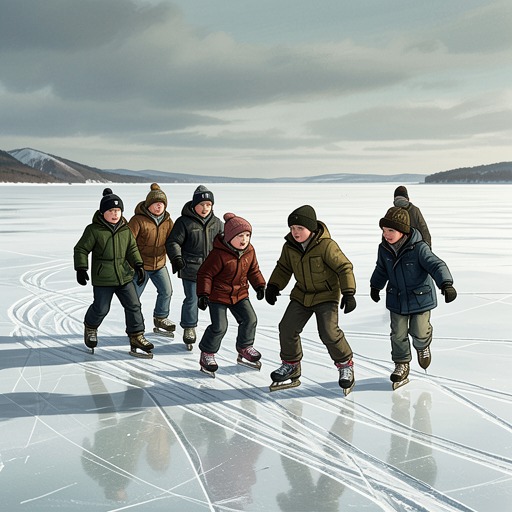
[Peter van Holp](entity:character-recall-character-peter-van-holp-63eeca49d1dd) leads a party of boys from [Broek](entity:location-recall-location-broek-bda04ad8024a) on a long skating journey toward [The Hague](entity:location-recall-location-the-hague-bbb98a42cfcf). Among them are [Carl Schummel](entity:character-recall-character-carl-schummel-8293bb56350e), [Jacob Poot](entity:character-recall-character-jacob-poot-f19fe3fbe2fc), [Benjamin Dobbs](entity:character-recall-character-benjamin-dobbs-31607cac0ec2), [Lambert van Mounen](entity:character-recall-character-lambert-van-mounen-0884b740c036), and [Ludwig van Holp](entity:character-recall-character-ludwig-van-holp-046877aa7970).
The trip is intended as an extraordinary holiday adventure, with visits to cities and landmarks along the route. The boys carry only the money needed for expenses and entrust it to Peter for safekeeping.
December 6, morning
Amsterdam’s Winter Streets
The boys cross the frozen [IJ](entity:location-recall-location-ij-cff7f7844299) and explore [Amsterdam](entity:location-recall-location-amsterdam-68440c77c10d)’s narrow streets, canals, bridges, and tall gabled houses. [Benjamin Dobbs](entity:character-recall-character-benjamin-dobbs-31607cac0ec2) is struck by the city’s mirrors, warehouses, dogcarts, and crowded shops prepared for the festival.
The excursion shows the young travelers how commerce and daily life share space with the waterways. Benjamin is especially tempted by miniature canal boats, but the boys have agreed not to spend beyond their planned allowance.
December 6, late morning
The Amsterdam Picture Gallery
The party visits [Amsterdam](entity:location-recall-location-amsterdam-68440c77c10d)’s picture gallery, where the boys admire a few vivid or amusing works but pass more serious masterpieces quickly. Peter points out paintings and tells stories about their makers.
[Jacob Poot](entity:character-recall-character-jacob-poot-f19fe3fbe2fc) falls asleep in a recess, alarming the others when they mistake a nearby opening in the ice for evidence that he has drowned. Their laughter and the museum official’s rebuke bring the comic episode to an end.
December 6, on the canal toward Haarlem
Tulips and Dutch Curiosities
As the boys skate onward, [Lambert van Mounen](entity:character-recall-character-lambert-van-mounen-0884b740c036) explains the past [Tulip Mania](entity:event-recall-event-67f051027844), when speculators paid extraordinary prices for bulbs and many lost their fortunes when the market collapsed. [Benjamin Dobbs](entity:character-recall-character-benjamin-dobbs-31607cac0ec2) adds what he knows about the flower’s name and the Dutch passion for tulips.
Their conversation ranges over Dutch summer houses and customs. It turns the journey into an informal lesson in the country and reveals how each boy measures the other’s knowledge through friendly national rivalry.
December 6, before noon
The Farmhouse Welcome
The boys seek warmth at a farmhouse but retreat when they find a domestic quarrel in progress. At another cottage, a young woman welcomes them, feeds them gingerbread, and mends [Jacob Poot](entity:character-recall-character-jacob-poot-f19fe3fbe2fc)’s mitten.
The encounter offers a small kindness in the midst of the journey. Soon afterward, the group reaches [Zwanenburg Castle](entity:location-recall-location-zwanenburg-castle-f5ad1196439c) and hears about its sluices, dikes, and history as a center of water management.
December 6, around noon
The Purse Goes Missing
In [Haarlem](entity:location-recall-location-haarlem-24847c646126), [Peter van Holp](entity:character-recall-character-peter-van-holp-63eeca49d1dd) discovers that the purse holding the boys’ pooled money has vanished. The party is hungry, and several members see no easy way to continue without funds.
Peter refuses to blame anyone or let the loss ruin the trip. He urges the boys to return toward [Broek](entity:location-recall-location-broek-bda04ad8024a) in good spirits, showing the steadiness that has made them accept him as captain.
December 6, shortly after the loss
Hans Returns the Purse
[Hans Brinker](entity:character-recall-character-hans-brinker-07db8b11d5bc) meets the boys and hands Peter the missing purse, which he found beneath a log after stumbling nearby. He recognizes it from the day Peter paid him for carving a wooden chain.
Peter offers to share the money, but Hans refuses. The recovery saves the journey, and Peter’s gratitude deepens his respect for the boy’s honesty.
December 6, during the purse reunion
Hans Tells of His Father
Hans explains that [Raff Brinker](entity:character-recall-character-raff-brinker-0b28dc19e2e9) has become dangerously ill after attacking [Dame Brinker](entity:character-recall-character-dame-brinker-982358be54ee). He is hurrying to find [Dr. Boekman](entity:character-recall-character-dr-boekman-6c84e2fe9aa0) and plead for an immediate visit, because his father may not survive a week’s delay.
Peter agrees to carry the message to [Leiden](entity:location-recall-location-leiden-8f3656f9cd89) and promises to speak to the doctor. He also offers Hans work carving a portal for the van Holp family’s summer house, giving the boy hope of earning money without accepting a handout.
December 6, during the journey
The Boys Learn the Dike Legend
[Benjamin Dobbs](entity:character-recall-character-benjamin-dobbs-31607cac0ec2) recalls hearing a school lesson about the boy who saved [Haarlem](entity:location-recall-location-haarlem-24847c646126) by plugging a dike leak with his finger. [Lambert van Mounen](entity:character-recall-character-lambert-van-mounen-0884b740c036) confirms that Dutch children grow up with the story and sees it as an image of national character.
The legend echoes the present danger facing the Brinker family: one person’s courage can matter greatly to others. It also prepares the reader to understand the pride [Holland](entity:location-recall-location-holland-51dd34b9d27c) takes in protecting its vulnerable land.
December 6, afternoon
The Haarlem Organ
In [Haarlem](entity:location-recall-location-haarlem-24847c646126), the boys hear the great organ at St. Bavon’s Church. Its stormlike opening and tender resolution leave [Peter van Holp and Benjamin Dobbs](entity:relation-recall-relation-peter-van-holp-benja-d806252df625) deeply moved, while [Carl Schummel](entity:character-recall-character-carl-schummel-8293bb56350e) impatiently urges the group onward.
The music briefly suspends the boys’ jokes and rivalry. On leaving, they discuss the organ’s size and the stories surrounding its celebrated players.
December 6, afternoon
Stories of Haarlem and Leiden
The boys talk about Dutch history as they move through [Haarlem](entity:location-recall-location-haarlem-24847c646126), including the Siege of Haarlem and the brutal aftermath under Spanish rule. [Benjamin Dobbs](entity:character-recall-character-benjamin-dobbs-31607cac0ec2) contrasts it with the Siege of [Leiden](entity:location-recall-location-leiden-8f3656f9cd89), describing the courage of the besieged and the city’s eventual relief by water.
The accounts make the modern streets feel layered with remembered suffering and resistance. The Dutch boys listen with pride, while Benjamin’s knowledge challenges their assumption that an English visitor will know little of their history.
December 6, afternoon
Jacob Falls at Leiden
At a high old tower in [Leiden](entity:location-recall-location-leiden-8f3656f9cd89), [Jacob Poot](entity:character-recall-character-jacob-poot-f19fe3fbe2fc) leans over a wall and a heavy stone crashes down. [Benjamin Dobbs](entity:character-recall-character-benjamin-dobbs-31607cac0ec2) fears that Jacob has fallen, but the boys find him safe on the wall, laughing after narrowly avoiding the same fate.
Jacob admits that he feels some pain when he stands, though he tries to dismiss it. The mishap adds to the fatigue of the long journey and will soon force the party to change its plans.
December 6, later afternoon
The Leiden Museums
The party visits the [Egyptian Museum of Leiden](entity:location-recall-location-fd91c823dee7) and the [Leiden Museum of Natural History](entity:location-recall-location-9f0b1ec133a6), seeing mummies, artifacts, fossils, and skeletons. The boys are impressed by the collections, even when they lack the knowledge to understand every specimen.
They also visit Saint Peter’s Church and the town hall, where monuments and historical paintings connect the city’s scholarship with its past. The excursion gives Benjamin and his companions more to remember than the skating miles alone.
December 6, toward evening
The Hague Forest Park
Near [The Hague](entity:location-recall-location-the-hague-bbb98a42cfcf), the boys leave the ice and walk through the Hague Forest Park to see the [House in the Wood](entity:location-recall-location-79a9781239f1). The park’s old trees have been protected for generations, even when war and financial necessity threatened them.
The quiet landscape offers a pause before the city. [Peter van Holp](entity:character-recall-character-peter-van-holp-63eeca49d1dd) imagines the comfortable welcome waiting at his married sister’s home and urges the tired travelers onward.
December 6, evening
Welcome at the Van Gend Home
Peter’s sister and her husband, [Jasper van Gend](entity:character-recall-character-jasper-van-gend-ca5d6de2c511), welcome the boys into their elegant home in [The Hague](entity:location-recall-location-the-hague-bbb98a42cfcf). After the rough lodging and hard skating, the warm rooms and generous meal seem almost enchanted to the young travelers.
The boys tell their hosts about the lost purse, the recovered money, and Jacob’s mishap. Peter’s sister decides that they should stay longer than planned, and she promises to attend the coming skating race.
December 6, evening
Historical Treasures at Home
At the Van Gend home, the boys discuss Dutch and European history, including William of Orange and the women who gave jewelry to help defend Prussia. Their host shows them artifacts and tells stories of Antwerp and its artists.
[Benjamin Dobbs](entity:character-recall-character-benjamin-dobbs-31607cac0ec2) finds the room’s portraits and books a bridge between England and [Holland](entity:location-recall-location-holland-51dd34b9d27c). The visit makes the travelers feel welcomed not merely as guests but as participants in a shared world of memory and learning.
December 7
The Boys Explore The Hague
The party spends the next day sightseeing in [The Hague](entity:location-recall-location-the-hague-bbb98a42cfcf), visiting public buildings, the palace, foundries, and the [Mauritshuis](entity:location-recall-location-b5ed38bb4cc0). They also see the city’s parks and collections of Japanese and Dutch objects.
[Benjamin Dobbs](entity:character-recall-character-benjamin-dobbs-31607cac0ec2) reflects on the country’s long struggle for independence and the endurance of its people. Although the boys do not skate that day, their journey continues through the places and histories that have shaped [Holland](entity:location-recall-location-holland-51dd34b9d27c).
Sunday during the journey
A Day of Rest
The boys spend a quiet Sunday in [The Hague](entity:location-recall-location-the-hague-bbb98a42cfcf), walking with their hosts to church. [Benjamin Dobbs](entity:character-recall-character-benjamin-dobbs-31607cac0ec2) joins the hymn even though he cannot understand much of the sermon, and he notices customs that differ from those in England.
His discomfort at seeing some men keep or replace their hats in church gives way to the realization that local practice deserves patience. The day slows the adventure and broadens his understanding of cultural difference.
Monday morning after the rest day
The Return Journey Begins
The boys leave [The Hague](entity:location-recall-location-the-hague-bbb98a42cfcf) and return to the frozen canals, eager to skate again. [Peter van Holp and Benjamin Dobbs](entity:relation-recall-relation-peter-van-holp-benja-d806252df625) race ahead, and Peter proves faster in a direct contest.
The friendly competition foreshadows the public race. The other boys catch up, and the party continues northward together, tired but in high spirits.
During the return journey
The Wind Stops the Party
A rising wind makes skating against it dangerous, and the boys agree to stop at [Voorhout](entity:location-recall-location-49b15dd4cad5) rather than let the strongest dictate the pace. They take shelter at an inn and turn the delay into a game of skittles.
After a night’s rest and a large breakfast, they set out again. Their decision reflects Peter’s concern for the whole party rather than for speed or pride.
On the return through Leiden
Peter Searches for the Doctor
At the [Golden Eagle Inn](entity:location-recall-location-54d01c1bc276), [Peter van Holp](entity:character-recall-character-peter-van-holp-63eeca49d1dd) learns that [Dr. Boekman](entity:character-recall-character-dr-boekman-6c84e2fe9aa0) has left [Leiden](entity:location-recall-location-leiden-8f3656f9cd89) for [Broek](entity:location-recall-location-broek-bda04ad8024a) after receiving an urgent summons to visit a sick woman. Peter fears the patient may be his own mother, but discovers the call concerns someone else.
He also learns that the doctor has departed without any clear assurance that Hans’s message caused the journey. Peter nevertheless leaves with hope that the doctor will reach the [Brinker cottage](entity:location-recall-location-3797d642ff9c) in time.
Several days after December 6
The Travelers Return Home
The skating party reaches [Broek](entity:location-recall-location-broek-bda04ad8024a) safely, where families and friends welcome the boys. Hans is not among them, and [Annie Bouman](entity:character-recall-character-annie-bouman-9d8a8e4c6816), returning to her grandmother, wonders how Gretel and her family are faring.
The boys’ holiday adventure ends with the return of ordinary school duties. Meanwhile, the Brinker family remains caught in a more urgent struggle, with Raff’s condition worsening and Hans away seeking help.
Four days after the attack
Dr. Boekman Examines Raff
[Dr. Boekman](entity:character-recall-character-dr-boekman-6c84e2fe9aa0) arrives at the [Brinker cottage](entity:location-recall-location-3797d642ff9c) with his assistant, Vollenhoven, and studies Raff’s symptoms. He suspects pressure on the brain, recalling a similar case treated by surgery.
He explains to Hans that an operation may save Raff but could also kill him. Because [Dame Brinker](entity:character-recall-character-dame-brinker-982358be54ee) must decide, Hans speaks with her privately and helps her face the terrible choice.
Immediately before the operation
Dame Brinker Consents
[Dame Brinker](entity:character-recall-character-dame-brinker-982358be54ee) looks from her unconscious husband to Hans and asks what she should do. Hans does not pretend to know the outcome; he tells her to choose what she believes is right.
After a prayer, she consents to the operation. When Gretel sees the instruments and fears that the doctors intend to murder her father, she runs from the cottage in terror.
During the operation
Gretel Waits in the Cold
Gretel sits outside the cottage, overwhelmed by exhaustion, fear, and cold. She hears no reassuring sounds from inside and imagines that the doctors may be killing her father.
Her strength fails, and she drifts into confusion on the frozen mound. The delay in returning to her family puts her at risk just as the operation reaches its crucial moment.
During the school recess
Hilda Finds Gretel
[Hilda van Gleck](entity:character-recall-character-hilda-van-gleck-0499cd94b27a) notices Gretel collapsed outside the cottage and realizes the girl is dangerously cold. She shakes her awake and makes her walk, helping her circulation return before trying to learn what has happened.
Gretel explains that her father is undergoing an operation and that she fears he may be dying. Hilda listens with sympathy and helps her look through a broken window before returning to school.
At the end of the operation
Raff Awakens
After the operation, [Raff Brinker](entity:character-recall-character-raff-brinker-0b28dc19e2e9) stirs and speaks as if he were back at the dike, giving instructions during a flood. [Dame Brinker](entity:character-recall-character-dame-brinker-982358be54ee) recognizes his voice and cries out to him; Hans and Gretel hear their father call them by name.
The surgery has relieved the pressure that clouded his mind. The family kneels in gratitude, while [Dr. Boekman](entity:character-recall-character-dr-boekman-6c84e2fe9aa0) orders quiet and leaves, concealing his own emotion behind brusque instructions.
The next day
The Doctor Prescribes Nourishment
[Dr. Boekman](entity:character-recall-character-dr-boekman-6c84e2fe9aa0) returns and finds Raff improving, but weak. He orders fresh meat, white bread, wine, and warm bedding, insisting that the patient needs better nourishment than the family can afford.
When the doctor leaves, [Dame Brinker](entity:character-recall-character-dame-brinker-982358be54ee) breaks down, convinced that Raff may starve. Hans promises to find the needed provisions and leaves to search for work and help.
That same day
Hans Decides to Sell His Skates
Hans considers asking [Peter van Holp](entity:character-recall-character-peter-van-holp-63eeca49d1dd) for help, but the thought of appearing to beg troubles him. He decides instead to sell his new skates, reasoning that he can earn them back once work becomes available.
The choice costs him the chance to compete in the approaching race. Hans puts his family’s immediate needs before his own pleasure and skates toward [Amsterdam](entity:location-recall-location-amsterdam-68440c77c10d) on his old wooden runners.
That day, on the canal
Annie Arranges the Sale
[Annie Bouman](entity:character-recall-character-annie-bouman-9d8a8e4c6816) meets Hans and persuades him to let her find a buyer for his skates. She knows someone who wants them, though Hans does not ask her to reveal the person’s identity.
Annie is angry at [Janzoon Kolp](entity:character-recall-character-janzoon-kolp-1cba1aba8cb9) for his cruelty and for killing the stork, but her loyalty to Hans is immediate. She carries the skates away, determined to secure a fair price.
The same afternoon
Hans Searches for Work
Hans looks for employment in [Amsterdam](entity:location-recall-location-amsterdam-68440c77c10d), asking at shops and factories, but finds no steady opening. He earns a few stivers helping with a train of loaded mules, yet every other employer turns him away or asks him to return later.
As evening approaches, he heads back to [Broek](entity:location-recall-location-broek-bda04ad8024a) discouraged but still determined. He hopes Peter may have returned and remembers the promise of work from the van Holp family.
That evening
Peter Offers Hans Work
[Peter van Holp](entity:character-recall-character-peter-van-holp-63eeca49d1dd) tells Hans that he has arranged a carving job in the family workshop. Hans will work on the doors of a summer house, where tools and space are ready for him.
Peter has gone out of his way to secure the opportunity, though he does not boast of the effort. Hans is grateful, but he says he will not enter the race because he has sold his skates.
That evening, outside the cottage
Annie Pays Seven Guilders
Annie returns to the [Brinker cottage](entity:location-recall-location-3797d642ff9c) with seven guilders for Hans’s skates, three times what he paid for them. Hans worries that the buyer has overpaid and asks Annie to return the excess.
Annie assures him that the purchaser insisted on the price, and Hans accepts her word. Her gift and the new work offer ease the family’s immediate crisis, though the missing savings remain unresolved.
That night
Raff Reveals the Burial
As the family discusses the lost money, [Raff Brinker](entity:character-recall-character-raff-brinker-0b28dc19e2e9) awakens and assumes that the thousand guilders have supported them during his illness. He then says that he buried the money before his accident because he suspected [Jan Kamphuisen](entity:character-recall-character-jan-kamphuisen-6c6d36eb7453).
Hans carefully asks where the hiding place was. Raff remembers the south side of the willow sapling behind the cottage, giving the family its first real clue after a decade of uncertainty.
That night until daybreak
The First Search Fails
Hans and [Dame Brinker](entity:character-recall-character-dame-brinker-982358be54ee) dig around the living willow, taking turns through the frozen night. They search carefully on the south side and then extend their efforts around the tree.
At daybreak, the money is nowhere to be found. The failed search leaves them exhausted, and the family must continue to live without the savings despite Raff’s recovered memory.
The following day
The Fairy Godmother’s Wish
[Annie Bouman](entity:character-recall-character-annie-bouman-9d8a8e4c6816) meets Hans and Gretel near the cottage and playfully pretends to be their fairy godmother. She asks each of them to name a wish, and Hans says that he wants to find what he searched for the night before.
Annie gives him a glass bead and jokingly tells him to bury it where she has stamped. Gretel laughs at the game, but Hans suddenly understands that the old willow was cut down and replaced by a stump.
Immediately after Annie leaves
The Buried Money Returns
Hans drives his tool into the ground beside the stump of the old willow and finds the stone pot. Inside are the missing pouch and stocking, still filled with the thousand guilders.
The discovery restores the family’s security and confirms that Raff had hidden the money rather than lost or spent it. [Dame Brinker](entity:character-recall-character-dame-brinker-982358be54ee) and the children celebrate, and they can finally provide Raff with nourishing food and comfort.
That evening
Raff Tells the Watch Story
With his memory returning in fragments, Raff explains why he carried the watch home. A frightened young man had asked him for help escaping and entrusted him with a message for his father, insisting that he had never intended the crime he feared he had committed.
Raff remembers the man’s face and the initials on the watch but cannot recall where the father lives. [Dame Brinker](entity:character-recall-character-dame-brinker-982358be54ee) suspects the family name may be Boomphoffen, though the details remain uncertain.
The day after the money is found
The Watch Reaches the Doctor
[Dr. Boekman](entity:character-recall-character-dr-boekman-6c84e2fe9aa0) visits the cottage and learns that the Brinkers have recovered their savings. When [Dame Brinker](entity:character-recall-character-dame-brinker-982358be54ee) shows him the watch, he recognizes the initials L.J.B. and breaks down.
The watch belongs to his son, [Laurens Boekman](entity:character-recall-character-laurens-boekman-747af48862ae), who had disappeared ten years earlier. Raff’s account reveals that Laurens had tried to send a message home, and that his flight began with a mistaken belief that he had caused a death.
During Dr. Boekman’s visit
Hans Promises to Find Laurens
[Hans Brinker](entity:character-recall-character-hans-brinker-07db8b11d5bc) embraces [Dr. Boekman](entity:character-recall-character-dr-boekman-6c84e2fe9aa0) and offers to search for Laurens wherever he may be. The promise comforts the doctor, who has spent years believing that his son abandoned him.
Dr. Boekman explains that the patient never received the poison and died for another reason. He now knows Laurens was innocent and had continued to love his father, even while separated from him.
December 20
The Skating Race Begins
On [Madame van Gleck](entity:character-recall-character-madame-van-gleck-ee6492df314e)’s birthday, crowds gather beside the frozen [IJ](entity:location-recall-location-ij-cff7f7844299) to watch a major skating contest. The racers include wealthy children and poor villagers, while pavilions, music, and holiday finery turn the ice into a public festival.
Hans has recovered his skates, which Annie’s mysterious buyer had purchased for seven guilders. Gretel is also entered, wearing the clothes that help her stand confidently among the other girls.
December 20, first girls’ race
Gretel Wins Her First Mile
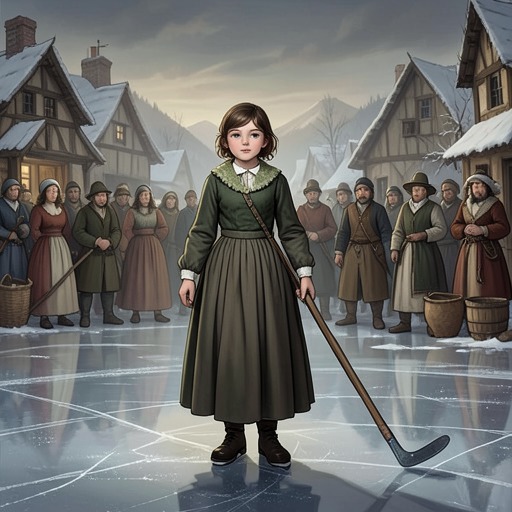
The girls start their first mile, and [Katrinka Flack](entity:character-recall-character-katrinka-flack-0f85c5027ce7) leads for part of the return. [Gretel Brinker](entity:character-recall-character-gretel-brinker-0786e013e799) steadily closes the distance, skating with strength and control until she crosses the line first.
The crowd recognizes her victory, and the judges record it. Gretel has begun as an overlooked poor child; now she has proved that she belongs on the ice beside the richest competitors.
December 20, first boys’ race
Carl Takes the First Boys’ Mile
The boys race their first mile, with [Peter van Holp](entity:character-recall-character-peter-van-holp-63eeca49d1dd) and Hans among the leaders. [Carl Schummel](entity:character-recall-character-carl-schummel-8293bb56350e) gathers speed near the end and slips ahead of them to claim the first victory.
[Jacob Poot](entity:character-recall-character-jacob-poot-f19fe3fbe2fc) drops out of the contest and joins the spectators, laughing at himself rather than pretending to keep pace. The race begins to expose both the strength and limits of the young competitors.
December 20, second girls’ race
Hilda Wins the Second Mile
In the girls’ next race, [Hilda van Gleck](entity:character-recall-character-hilda-van-gleck-0499cd94b27a) skates with exceptional steadiness and wins the mile. Gretel does not take this round, while [Rychie Korbes](entity:character-recall-character-rychie-korbes-99cea4951922) and the other competitors continue to test their speed.
Hilda’s victory pleases the crowd and her family, but she remains attentive to Gretel’s progress. Her example helps make the contest a test of skill rather than of social rank.
December 20, second boys’ race
Peter Wins the Second Mile
[Peter van Holp](entity:character-recall-character-peter-van-holp-63eeca49d1dd) wins the boys’ next mile, while [Carl Schummel](entity:character-recall-character-carl-schummel-8293bb56350e) falls after finishing and is briefly stunned. The crowd’s attention quickly shifts back to the racers preparing for another round.
Peter’s victory makes him a favorite, but the contest is still open. His calm sportsmanship contrasts with Carl’s bitterness and the pressure each boy feels to win.
December 20, third girls’ race
Gretel Wins the Silver Skates
[Gretel Brinker](entity:character-recall-character-gretel-brinker-0786e013e799) sets off more determinedly in the girls’ third mile and passes the other racers on the return. She crosses the line first, securing the required second victory and the girls’ prize.
The crowd celebrates her achievement, and Hilda’s welcome makes clear that Gretel is no longer treated as an intruder. Gretel gathers the prize and flowers and hurries toward her parents in the spectators’ crowd.
December 20, before the final boys’ mile
Hans Lends Peter a Strap
Peter discovers that his skate strap is nearly cut through and cannot safely continue. [Hans Brinker](entity:character-recall-character-hans-brinker-07db8b11d5bc) removes his own strap and insists that Peter use it, though doing so means giving up his place in the race.
Peter protests, but Hans reminds him that he has called him a friend. The sacrifice turns the final contest into a test of loyalty as well as speed.
December 20, final boys’ mile
Peter Wins the Boys’ Prize
Peter joins the final race with Hans’s strap secured to his skate. The boys race through the cheering crowd, and Peter reaches the finish ahead of the others.
He wins the boys’ silver skates, while Hans watches with pride rather than regret. The victory belongs partly to the friendship and generosity that made Peter’s final run possible.
December 20, after the races
The Prizes Are Presented
The racers form a procession that weaves through decorated arches to the pavilion. [Gretel Brinker](entity:character-recall-character-gretel-brinker-0786e013e799) and [Peter van Holp](entity:character-recall-character-peter-van-holp-63eeca49d1dd) stand forward as the winners, and [Madame van Gleck](entity:character-recall-character-madame-van-gleck-ee6492df314e) presents their prizes.
Gretel is overwhelmed by the silver skates and bouquets and rushes to find her parents. The girl once mocked for her poverty is publicly honored for her ability and perseverance.
Evening of December 20
Raff Remembers Thomas Higgs
Back at the [Brinker cottage](entity:location-recall-location-3797d642ff9c), [Raff Brinker](entity:character-recall-character-raff-brinker-0b28dc19e2e9) suddenly remembers the name of the young man whose watch he carried: Thomas Higgs. He urges Hans to write the name down before it vanishes from his memory again.
The name comes from an English maker’s mark on Gretel’s skate case, which Peter and [Lambert van Mounen](entity:character-recall-character-lambert-van-mounen-0884b740c036) read aloud during a visit. The coincidence gives the family a practical lead and sends Hans toward [Amsterdam](entity:location-recall-location-amsterdam-68440c77c10d) at once.
That same evening
The Birmingham Clue
Peter and Lambert identify the skate-case maker as a [Birmingham](entity:location-recall-location-birmingham-a4a4e6efdf8b) leatherworker named Thomas Higgs. [Benjamin Dobbs](entity:character-recall-character-benjamin-dobbs-31607cac0ec2) recognizes the name and says the factory is near his home in England.
Raff and [Dame Brinker](entity:character-recall-character-dame-brinker-982358be54ee) realize that this must be the same man who entrusted the watch to Raff. Hans leaves immediately to carry the news to [Dr. Boekman](entity:character-recall-character-dr-boekman-6c84e2fe9aa0), whose son may now be traceable.
Soon after the December 20 race
Laurens Returns to His Father
Thomas Higgs is identified as [Laurens Boekman](entity:character-recall-character-laurens-boekman-747af48862ae), who had built a life in [Birmingham](entity:location-recall-location-birmingham-a4a4e6efdf8b) after fleeing [Holland](entity:location-recall-location-holland-51dd34b9d27c). He returns with [Dr. Boekman](entity:character-recall-character-dr-boekman-6c84e2fe9aa0) to the Brinker family, ending ten years of separation.
Father and son are reunited, and the watch’s message is finally understood. The reunion resolves the mystery that Raff’s accident had left suspended and restores Dr. Boekman’s lost hope.
Soon after Laurens returns
Hans Chooses Medicine
During a visit to the [Brinker cottage](entity:location-recall-location-3797d642ff9c), Hans praises surgery as a noble calling because it can heal and save lives. [Dr. Boekman](entity:character-recall-character-dr-boekman-6c84e2fe9aa0) asks whether Hans would devote himself to study and eventually train as a physician.
Hans accepts without hesitation, and Raff and [Dame Brinker](entity:character-recall-character-dame-brinker-982358be54ee) agree. Dr. Boekman offers to pay for his education and take him as a student, giving Hans a future shaped by the compassion he has witnessed.
At the same time
Raff Finds New Work
[Raff Brinker](entity:character-recall-character-raff-brinker-0b28dc19e2e9) is offered a position overseeing work in [Laurens Boekman](entity:character-recall-character-laurens-boekman-747af48862ae)’s new [Amsterdam](entity:location-recall-location-amsterdam-68440c77c10d) warehouse. He is reluctant to leave the dikes, but recognizes that the opportunity will support his family.
The offer marks a reversal of the years when the family depended on the children’s labor and struggled to meet basic needs. Raff can return to useful work, while Hans prepares for a different vocation.
Years after the main events
The Brinker Family Flourishes
Hans studies medicine and becomes a respected doctor, while [Annie Bouman](entity:character-recall-character-annie-bouman-9d8a8e4c6816) becomes his wife. Raff and [Dame Brinker](entity:character-recall-character-dame-brinker-982358be54ee) live comfortably in [Amsterdam](entity:location-recall-location-amsterdam-68440c77c10d), and Hans’s sister Gretel grows into a beloved singer and wife.
[Peter van Holp](entity:character-recall-character-peter-van-holp-63eeca49d1dd) marries [Hilda van Gleck](entity:character-recall-character-hilda-van-gleck-0499cd94b27a), while other members of the skating party follow varied paths. Gretel’s victory remains a cherished family memory, and the Brinker household’s later prosperity stands against the years of hardship that came before.