Plow
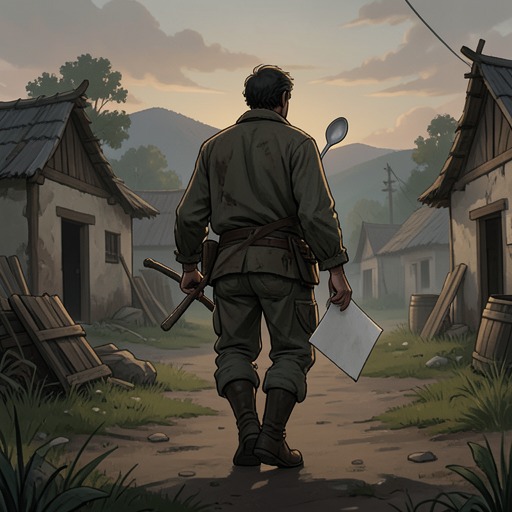
HarvestThe Plow is the instrument through which the novel makes land use tangible: its blades open and turn the soil, but its return to the field also contests the assumption that farming has no future. After the barley harvest, Walter Thirsk assembles a wheeled plow with Young Beldam and draws a narrow furrow across the field. He then sows winter wheat there, answering Edmund Jordan’s sheep-farming plans with a small, deliberate act of cultivation. The implement joins bodily skill, communal memory, and resistance to enclosure in one piece of working equipment.
Forms and Working Parts
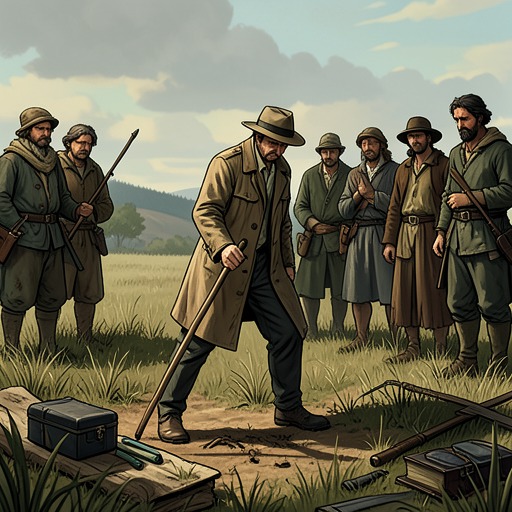
The narrative distinguishes a lighter swing plow from the wheeled plow Thirsk selects. With only two Oxen rather than the usual team of four, and only two pairs of hands, the swing plow would be too difficult to control. Without wheels supporting the front of its beam, it would not cut a furrow of sufficient depth; its weight would press against the stilts and handles, beyond what the workers could manage. Thirsk therefore sets the swing plow aside and brings out the components of the wheeled implement, arranging them outside the tool barn.
The plow’s parts have a necessary order. Its coulter knife, the nose, cuts into the soil ahead of the wider share; the moldboard, or ear, follows to turn the earth and raise the ridge. Young Beldam recognizes the work and offers the maxim Nose before ear. It is both practical instruction and a test of country knowledge: fit the components out of order and the soil will not open or turn properly. Thirsk lets Young Beldam take charge of assembly, steadying the share-beam while his helper secures the blades, moldboard, and yoke. The wheeled plow is not simply a tool placed in the field; it depends on recognizing its parts, assembling them correctly, and coordinating the people and animals that draw it.
From Harvest to the Threat of Sheep
The plow’s significance comes from the agricultural cycle it serves. The barley harvest has demanded the village’s collective labor: children clear weeds, workers swing sickles and scythes, women bind sheaves, and older men build stooks. The cut stubble records how the harvest was done, preserving traces of neighbors’ different habits and skills. Thirsk reads in the field both evidence of shared work and a promise of what should follow it.
That promise is put in doubt by the proposed conversion to sheep raising. At an earlier feast, Charles Kent presented wool as a more dependable source of prosperity than crops vulnerable to wind, rain, mildew, disease, and birds. The vision replaces plowing and reaping with shepherding and shearing, and promises villagers work at looms rather than in the fields. Thirsk recognizes what the attractive prospect conceals: the sheaf is giving way to sheep. Later, Edmund Jordan tells him that the villagers will never need the plow again. In the harvested field, where wheat is supposed to follow barley, that declaration makes the implement a measure of whether another crop—and another year—will be permitted.
The Fieldwork and Its Collaborators
Thirsk chooses the wheeled plow because the work must be done with the limited means available. The barley field would ordinarily take twelve days to plow with four Oxen and twenty men taking turns. Thirsk and Young Beldam do not attempt to finish it: they mean to make only one length down the field and back, leaving a single central ridge and two furrows. A tapered oak above the dell gives them a headland to steer toward, a fixed point against which they can try to keep a straight line.
Thirsk leads and urges the Oxen while Young Beldam grips the handles and works against the pull of cattle, beam, and soil. His uneven stride suggests that he has plowed before; the plowman’s long and short legs belong to the different levels of furrow and ridge. As they work, Young Beldam whistles and Thirsk talks, their exchange carried less by conversation than by the labor they share across the backs of the Oxen. The implement brings them into an intimacy grounded in work. Mud soon clogs its wheels, which Thirsk has to clear every twenty paces, sometimes with a kick and sometimes with his bare hands. The plow’s progress is therefore not effortless symbolism: it is slow, physical work against resistant ground.
Sowing as Resistance
Once the plowing is done, Thirsk sends Young Beldam away and returns to the field alone. He brings in a bag of wheat seed and selects the heaviest grain for his baskets, although the turned strip ought to lie and mellow before sowing. There is no time to wait for good practice or for the rain to break down the soil. He scatters the seed by hand as the drizzle begins, turning the plowed strip into a winter-wheat crop rather than leaving the land to the sheep planned by Edmund Jordan.
Thirsk understands the sowing as a countryman’s revenge on Jordan and his sheep, but the act is also more than a gesture of defiance. He knows the seedling wheat will later be rolled and crushed to firm the ground, a harsh treatment that helps the plants take hold. The plow begins a sequence of cultivation that requires further labor and endurance. Its furrow makes a future possible without guaranteeing it; Thirsk acts because waiting for permission would surrender even the chance of a harvest. In his recollection, the promise that winter will provide the spring gives the work its horizon.
Meaning and Narrative Role
The Plow concentrates the novel’s contrast between agricultural labor and the wool economy in a visible mark on the land. Sheep pasture promises predictable wool and easier work, but Thirsk’s account of the field insists on the knowledge, effort, and shared responsibility that growing grain entails. The implement demands the correct order of parts, a steady line, adequate animal power, and repeated physical attention. Its use makes farming neither idyllic nor easy; it makes cultivation a practiced response to scarcity and seasonal uncertainty.
The final plowing and sowing also reverse the claim that the old agricultural cycle is finished. The field has already been harvested, its stubble bearing the signatures of the workers, and the light fades as Thirsk completes his seed scattering. The narrow furrow cannot undo the estate’s plans, but it alters what the field has been made to signify: the land is still being prepared for wheat. In the novel, the Plow is at once a tool of ordinary husbandry and the means of Thirsk’s farewell act of resistance, setting winter work against a future intended for sheep.