About twelve years before the opening
Walter’s Arrival
[Walter Thirsk](entity:character-recall-character-walter-thirsk-d48b46f3bbd4) comes to the isolated estate as [Charles Kent](entity:character-recall-character-charles-kent-a8429cd102e2)’s manservant. Though the two men are nearly the same age and grow up together in the manor, Walter remains conscious of the difference in their stations.
The country unsettles and delights him. He finds work, land and possibility there, and gradually moves from the manor into the life of [The Village](entity:location-recall-location-the-village-326b8e2d15d9).
In the years after Walter’s arrival
Walter and Cecily
Walter falls in love with [Cecily](entity:character-recall-character-cecily-6001fff48486) while working beside her in the fields. Their shared labor becomes the foundation of his life in the country, and he comes to understand husbandry as both work and devotion.
After Charles gives him leave to make his own life, Walter settles among Cecily’s neighbors. Her later death leaves him without the home and purpose that their marriage had made for him.
Before the opening and continuing into the harvest week
The Village’s Common Life
[The Village](entity:location-recall-location-the-village-326b8e2d15d9) sustains itself through shared labor, customary distributions and common access to land. Families harvest together, divide food by household need and depend on gleaning, grazing and other customary rights more than on written deeds.
Its population has dwindled, cottages stand empty and the remaining families are tightly interrelated. The community’s intimacy offers security, but its suspicion of outsiders makes belonging difficult for anyone not born within its bounds.
About twelve years before the main events
Walter and the Fairy Caps
During an earlier harvest rest day, Walter and [John Carr](entity:character-recall-character-john-carr-e063f2c5da8e) eat [Fairy Caps](entity:object-recall-object-936650f4db3c) in the woods. Their altered senses bring dancing lights, fearlessness and a moon that seems to change from blue to red.
The experience stays with Walter as both enchantment and warning. Much later, the memory will connect the mushrooms to the dangerous mischief of the present harvest week.
Before dawn on the first day
Smoke on the Commons
Walter sees two plumes of smoke rising over the estate. The darker one comes from a new hut on common ground, where newcomers have built a shelter and lit a hearth, invoking the custom by which a dwelling and fire establish a right to stay.
A second, paler plume rises from the manor’s farm buildings. The villagers hurry toward it, fearing that the manor itself is burning and that they will be blamed for sleeping through the fire.
The day before the opening fire
The Last Harvest
The villagers finish cutting a meager barley crop, dividing their work among reapers, binders, children and the elderly. The harvest is a communal ritual as well as a necessity: its shared effort briefly makes the villagers open and playful with one another.
Their unease grows when a limping, smiling surveyor records the fields and counts fifty-eight people. His chart and tally suggest that someone may be measuring the land for sale or change, and the villagers begin to fear for their customary lives.
The final afternoon of harvest
The Surveyor’s Arrival
[Charles Kent](entity:character-recall-character-charles-kent-a8429cd102e2) introduces the visitor as a land surveyor employed to map the estate. The man’s careful clothes, waxed beard and stiff left side make him an object of curiosity, and the villagers mock him while he works beyond their hearing.
Walter recognizes that the man’s maps may affect the people as well as the fields. The surveyor’s cheerful smile begins to look threatening once the villagers realize how precisely he has counted them.
The evening before the fire
The Mushroom Foragers
[Christopher and Thomas Derby](entity:character-recall-character-christopher-and-tho-91c43a7064d6) and [Brooker Higgs](entity:character-recall-character-brooker-higgs-c97f6a6bd641) return from [The Woods](entity:location-recall-location-the-woods-e05f0f275389) with [Fairy Caps](entity:object-recall-object-936650f4db3c), golden shawls and a giant [Moonball](entity:object-recall-object-1b44a5f79b45). Walter recognizes the mushrooms and recalls their intoxicating effects, but the young men have already eaten some and are too merry to hide their haul.
The dry, hollow Moonball can carry fire. The three bachelors, angered by the master’s doves gleaning their grain, decide to use it to smoke the birds from their dovecote.
Before dawn on the first day
The Stable and Dovecote Fire
The three young men place their smoldering [Moonball](entity:object-recall-object-1b44a5f79b45) among dry nesting litter in the dovecote. The fire catches the roof, spreads through the stable block and consumes hay, timber and the painted dovecote before the village can stop it.
The men had meant to drive away the birds, not destroy the buildings or kill so many of the doves. The fire nevertheless begins a chain of blame and retribution that will undo the village’s fragile peace.
The morning of the fire
Walter’s Burned Hand
Walter joins the effort to save the master’s hay and pushes against a burning bale with [John Carr](entity:character-recall-character-john-carr-e063f2c5da8e). His left hand plunges into the flames, leaving him badly burned and unfit for ordinary work.
The injury keeps him away from the confrontation that follows and gives him a reason to watch events rather than act. He recognizes the young arsonists’ guilt but stays silent, hoping the day’s celebration will not be spoiled and unwilling to sacrifice neighbors’ sons for property.
The morning of the fire
The False Accusation
[Brooker Higgs](entity:character-recall-character-brooker-higgs-c97f6a6bd641) takes charge of the search for whoever caused the blaze, insisting that it must have been deliberate. He steers suspicion away from himself and the Derby brothers by pointing to the strangers’ distant smoke.
The villagers accept the convenient explanation without demanding proof. Walter understands that the newcomers are being made scapegoats, but he does not expose the true arsonists or interrupt the village’s appetite for an easy answer.
Later on the first morning
The Mob Approaches
After the stable fire is put out, the villagers set off for the newcomers’ hut with sticks, staves and farm tools. They defend their customary claim to the land despite knowing that some of their own families once arrived as settlers.
Their fear of scarce food and threatened common rights turns quickly into hostility. [Charles Kent](entity:character-recall-character-charles-kent-a8429cd102e2) and the surveyor follow the armed party, while Walter remains at home nursing his injured hand.
The first morning
The Attack on the Hut
The villagers find the newcomers’ fire extinguished and discover bird bones near the makeshift shelter. They treat the remains as proof that the strangers ate one of the master’s doves, though the bones could belong to a wild bird.
Brooker strikes the hut’s roof, bringing it down. Two men appear with longbows and draw on the crowd, turning an act of intimidation into a dangerous standoff.
The first morning
The Injured Woman
As the armed villagers edge closer, the woman emerges from beneath the fallen roof with blood running down her face. She has been struck on the head when Brooker’s blow collapsed the shelter.
Her wound changes the mood: the villagers’ women call for restraint, and the men lower their weapons. [Philip Earle](entity:character-recall-character-philip-earle-35fa1d07b2ac) steps forward despite the bow aimed at him and helps her out of the wreckage.
The first morning
The Pillory Sentence
[Charles Kent](entity:character-recall-character-charles-kent-a8429cd102e2) takes control of the confrontation and charges the two men with eating a bird that belongs to him. He orders a week in the pillory, their bows broken and their heads shaved, a punishment he regards as mild compared with what the law might impose elsewhere.
The woman protests the villagers’ violence and spits at the ground, then at [Willowjack](entity:character-recall-character-willowjack-04382c2bf3be). Kent warns her that she too may be punished. The sentence divides the newcomers from their remaining kin and leaves the villagers complicit in a cruel display of authority.
Evening of the first day
The Feast of Harvest
The villagers gather in the surviving barn for meat, bread and ale after the harvest. They eat the calf [Charles Kent](entity:character-recall-character-charles-kent-a8429cd102e2) has provided, while the burned stable and the morning’s confrontation hang over the celebration.
The community privately understands that the newcomers have been blamed for a fire caused by its own young men. Yet no one, including Walter, is willing to confess or speak up for the prisoners; the villagers choose comfort and solidarity over truth.
Evening of the first day
Kent’s Sheep-Farming Dream
[Charles Kent](entity:character-recall-character-charles-kent-a8429cd102e2) presents a vision of a more secure future in which the villagers tend sheep, shear wool and weave cloth instead of relying on uncertain crops. He has [Philip Earle](entity:character-recall-character-philip-earle-35fa1d07b2ac) show maps that reduce the familiar landscape to lines and squares, then gestures toward a changed future.
Kent couches the plan as a dream and speaks of benefits for his neighbors, but Walter hears the unspoken word: [Sheep](entity:creature-recall-creature-sheep-fc2e92cc9afd). Enclosure would clear woods and commons, end plowing and transform the community’s subsistence economy into wool production.
Later on the first evening
The Fiddle and the Dance
[Philip Earle](entity:character-recall-character-philip-earle-35fa1d07b2ac) joins the village piper with his fiddle, first accompanying and then overtaking the music. The dance gathers children, young people and married couples into a temporary collective joy.
The usual Gleaning Queen is not chosen before the celebration is interrupted. Earle’s music reveals a gentleness and artistry that complicate the villagers’ first impression of the surveyor, even as his charts and his presence remain tied to the uncertain future.
Late on the first evening
Beldam Leaves the Feast
[Mistress Beldam](entity:character-recall-character-mistress-beldam-a57ae5467af7) appears at the barn door with her head newly shaved and her velvet shawl around her shoulders. The dancers stop as she stands in the darkness, a living reminder of the village’s violence.
For a moment the crowd imagines welcoming her as its Gleaning Queen, but she turns away and disappears into the night. [Charles Kent](entity:character-recall-character-charles-kent-a8429cd102e2) asks Walter to find her and make sure she has shelter, while the men’s unspoken desires make that request more complicated than it sounds.
Midnight after the first day
Rain at the Pillory
Walter walks through heavy rain to the pillory, intending to keep his promise to give the shorter prisoner a place to stand. He cannot move a churchyard stone with his injured hand and leaves the men exposed to the storm.
The sight forces him to recognize his earlier silence as cowardice rather than prudence. He introduces himself, tries to help, and then withdraws without receiving a word from either prisoner.
The same rainy night
The Search for Beldam
Walter obeys [Charles Kent](entity:character-recall-character-charles-kent-a8429cd102e2)’s request and searches for [Mistress Beldam](entity:character-recall-character-mistress-beldam-a57ae5467af7) at the ruined shelter. He calls for her repeatedly but finds only the remains of the hut and the noise of rain in [The Woods](entity:location-recall-location-the-woods-e05f0f275389).
His search is driven by duty, attraction and a wish to make amends. He returns without finding her, uneasy that other men may also be roaming the darkness looking for the same woman.
Morning after the first day
Gleaning Day
The villagers gather at [The Gleaning Field](entity:location-recall-location-the-gleaning-field-8f875d66f9fe) after the storm. Their harvest custom grants them the first pick of the remaining grain before cattle, geese and pigs are turned in to glean and forage.
The village’s familiar seasonal order continues, but Kent’s silence about the plow and the next crop makes Walter wonder whether this is their last harvest. The ceremony’s cheerful repetition now carries the threat of an ending.
Morning of Gleaning Day
Lizzie’s Crowning
[Philip Earle](entity:character-recall-character-philip-earle-35fa1d07b2ac) is asked to choose the Gleaning Queen and selects [Lizzie Carr](entity:character-recall-character-lizzie-carr-2ca4fe52852d), a girl not yet five. [Charles Kent](entity:character-recall-character-charles-kent-a8429cd102e2) places his wife’s green sash on her head, and her family carries her to the edge of the field.
Barefoot, Lizzie finds an intact ear of barley and presents its grains to the villagers. The ritual briefly condenses a year of labor into a child’s hand, but its promise of continuity will soon be shattered.
Morning of Gleaning Day
The Map Tour
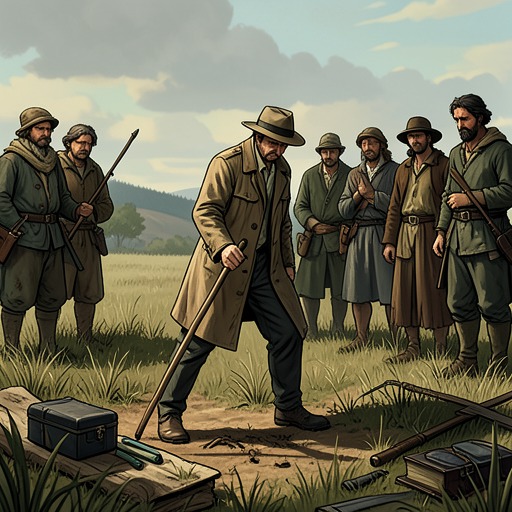
Instead of gleaning, Walter accompanies [Philip Earle](entity:character-recall-character-philip-earle-35fa1d07b2ac) around the estate as his assistant. They visit the marsh the villagers call [The Bottom](entity:location-recall-location-the-bottom-9a53cfbf68c1); Earle renames it [Blossom Marsh](entity:location-recall-location-blossom-marsh-1dc08d374225), seeing beauty where Walter remembers practical work, waste and decay.
Earle asks Walter to name the plants and places, while Walter realizes how much of his former wonder has been worn away by labor. The surveyor’s attention makes the familiar landscape strange again, even as his map turns lived terrain into a view from above.
Late morning of Gleaning Day
The Inheritance Revelation
During the tour, [Philip Earle](entity:character-recall-character-philip-earle-35fa1d07b2ac) confides that the estate belongs by inheritance to a blood relative of [Lucy Kent](entity:character-recall-character-lucy-kent-d03710e3eb51). Because Charles and Lucy had no surviving son, Charles is not the sole heir; the younger [Edmund Jordan](entity:character-recall-character-edmund-jordan-ac2e65c2e84c) has a claim to the land.
Earle explains that the enclosure plans and the coming [Sheep](entity:creature-recall-creature-sheep-fc2e92cc9afd) are demanded by the cousin, not freely chosen by Charles. Walter understands that the map is part of a legal and economic transfer that threatens the village as well as his old master.
Around noon of Gleaning Day
The Changed Maps
Earle shows Walter two painted maps: one of the present landscape and one of the proposed sheep farms. From above, the current fields form a human-like profile, but the new plan subdivides the land and erases its forests and recognizable features.
Walter admires the maps while seeing their limits. They are beautiful, but they flatten distance, effort and time; the future chart is orderly precisely because the lived world has been stripped away.
By the morning of Gleaning Day
The Elder Stranger’s Death
The older prisoner falls from his stretched toes in the pillory and breaks his neck. A pig later tears at his body, leaving the village with a corpse disfigured by neglect and animal scavenging.
[Charles Kent](entity:character-recall-character-charles-kent-a8429cd102e2) and [Philip Earle](entity:character-recall-character-philip-earle-35fa1d07b2ac) help carry the remains to the manor, but their efforts cannot undo the death. The villagers’ sentence, which they had considered a modest punishment, has become a fatal act of collective responsibility.
Afternoon of Gleaning Day
Edmund Jordan Arrives
[Young Edmund Jordan](entity:character-recall-character-edmund-jordan-a1aa5899be31) arrives at the estate with his steward, groom and attendants, expecting a settled welcome. Instead, he encounters the burned farm buildings and sees [Charles Kent](entity:character-recall-character-charles-kent-a8429cd102e2) and [Philip Earle](entity:character-recall-character-philip-earle-35fa1d07b2ac) carrying the mutilated body of the dead prisoner.
The arrival makes the family inheritance dispute an immediate exercise of power. Jordan hears the account of the pillory but treats the death as a matter within the bounds of punishment, not as a reason to reconsider the village’s treatment of the strangers.
Afternoon of Gleaning Day
The Cousin’s Reform Plan
Walter secretly listens as [Young Edmund Jordan](entity:character-recall-character-edmund-jordan-a1aa5899be31) outlines his plan for the estate. The commons and woods will be enclosed, trees cut and land converted to pasture, with sheep and hired workers replacing the old village economy.
Jordan speaks of profit, progress and society as if the villagers’ part is simply to make the lives of others more comfortable. [Charles Kent](entity:character-recall-character-charles-kent-a8429cd102e2) objects weakly, while [Philip Earle](entity:character-recall-character-philip-earle-35fa1d07b2ac) challenges the language of economies; Jordan answers that charity and a church will accompany the loss of livelihoods.
Night after Gleaning Day
Walter’s Night with Kitty
Walter takes refuge in the widowhood bed of [Kitty Gosse](entity:character-recall-character-kitty-gosse-407294238873), with whom he has a secret physical relationship. He reflects on [Cecily](entity:character-recall-character-cecily-6001fff48486)’s absence, his unease about the village and what he overheard in the manor gallery.
The conversation he has witnessed leaves him convinced that enclosure is imminent and that the newcomers, especially [Mistress Beldam](entity:character-recall-character-mistress-beldam-a57ae5467af7), are in danger. He keeps the information to himself, uncertain whom he can serve without betraying someone else.
During the night after Gleaning Day
Willowjack’s Murder
[Willowjack](entity:character-recall-character-willowjack-04382c2bf3be) is found dead in the straw, killed by a metal tethering prong driven into her head and a heavy stone used as a mallet. [Charles Kent](entity:character-recall-character-charles-kent-a8429cd102e2)’s beloved mare, once closely associated with his late wife, has been murdered while the village slept.
The killing turns the estate’s already charged conflict into a hunt for a culprit. Suspicion falls on the outsiders and on villagers with the strength or skill to kill a horse, while Walter recognizes that the truth may be harder to determine than the village expects.
Morning after Willowjack’s murder
The Search Begins
[Young Edmund Jordan](entity:character-recall-character-edmund-jordan-a1aa5899be31) orders every villager to remain in place while his men search houses, gardens and outbuildings for bloody clothes. He treats the murder as an occasion to demonstrate formal authority and warns that the killer may lose both life and burial.
[Charles Kent](entity:character-recall-character-charles-kent-a8429cd102e2) stands subdued beside him, grieving for [Willowjack](entity:character-recall-character-willowjack-04382c2bf3be) and unable to protect the village from his cousin’s methods. Walter is questioned but cleared after Kent explains his injured hand and his actions during the stable fire.
During the search that morning
The Velvet Shawl
[Young Edmund Jordan](entity:character-recall-character-edmund-jordan-a1aa5899be31) finds a bloodstained velvet shawl in the derelict where [Cecily](entity:character-recall-character-cecily-6001fff48486) was raised. Its distinctive weave identifies it as a garment associated with [Lucy Kent](entity:character-recall-character-lucy-kent-d03710e3eb51) and the woman who had worn it at the barn.
[Charles Kent](entity:character-recall-character-charles-kent-a8429cd102e2) claims the shawl as his dead wife’s and invents a story about a passing thief who stole it and killed [Willowjack](entity:character-recall-character-willowjack-04382c2bf3be). His lie shields [Mistress Beldam](entity:character-recall-character-mistress-beldam-a57ae5467af7) from immediate accusation, though it deepens his conflict with the cousin who is trying to impose order.
Later that morning
Charges Against the Prisoner
[Young Edmund Jordan](entity:character-recall-character-edmund-jordan-a1aa5899be31) declines to accuse anyone of [Willowjack](entity:character-recall-character-willowjack-04382c2bf3be)’s murder, but turns his attention to the surviving prisoner. He says the man threatened [Charles Kent](entity:character-recall-character-charles-kent-a8429cd102e2) and proposes a formal case for sedition and incitement.
The gesture lets Jordan appear committed to justice while preserving the spectacle of punishment. He reads Walter as potentially useful and as someone who may be relied upon, though Walter does not yet know what that confidence will cost him.
The following day
The Women and Lizzie Disappear
[Lizzie Carr](entity:character-recall-character-lizzie-carr-2ca4fe52852d), [Kitty Gosse](entity:character-recall-character-kitty-gosse-407294238873) and [Anne Rogers](entity:character-recall-character-anne-rogers-58ff292b3ef1) are taken into custody after Lizzie leaves the threshing barn and the women intervene. The village learns that the three are being held by Jordan’s men, while [Christopher and Thomas Derby](entity:character-recall-character-christopher-and-tho-91c43a7064d6) and [Brooker Higgs](entity:character-recall-character-brooker-higgs-c97f6a6bd641) flee the estate.
Rumors blame [Mistress Beldam](entity:character-recall-character-mistress-beldam-a57ae5467af7) for the village’s troubles, and the villagers begin to close ranks against Walter. His work with Earle and his failure to join the crowd make him seem separate from the community he has lived among for years.
Night of the women’s arrest
The Couple’s Kinship
At the pillory, [Philip Earle](entity:character-recall-character-philip-earle-35fa1d07b2ac) explains that the newcomers are a married couple fleeing an earlier enclosure. The dead man was [Mistress Beldam](entity:character-recall-character-mistress-beldam-a57ae5467af7)’s father, and the young prisoner is her husband, [Young Beldam](entity:character-recall-character-young-beldam-9096ca945fe0).
The revelation changes the village’s fantasy of an unattached, available woman into the story of a family already driven from its home. Earle and Walter wait for her to visit her husband, but she slips away before they can warn her of the danger.
Night after the villagers’ appeal
The Confession and Accusation
[Kitty Gosse](entity:character-recall-character-kitty-gosse-407294238873) and [Anne Rogers](entity:character-recall-character-anne-rogers-58ff292b3ef1) are interrogated by Jordan’s men, who use accusations of witchcraft to justify tormenting them. Under pressure, the women name villagers and finally identify [Philip Earle](entity:character-recall-character-philip-earle-35fa1d07b2ac) as the supposed leader of a conspiracy.
Lizzie is frightened into corroborating their story, with the green sash and Earle’s choice of her as Queen recast as suspicious acts. The interrogation turns private grievance and fear into an official-looking case against the surveyor.
The same night
The Hunt for Earle
Jordan’s men search [Philip Earle](entity:character-recall-character-philip-earle-35fa1d07b2ac)’s room and interpret his pigments, fiddle, plant notes and colorful charts as evidence of sorcery. They do not find him there: Earle has gone to the pillory and then followed [Mistress Beldam](entity:character-recall-character-mistress-beldam-a57ae5467af7) into the night.
The accusations give the authorities a way to turn art, natural history and mapping into proof of guilt. Walter is implicated by association, while the women and child are bound and held inside the manor.
The day after Willowjack’s murder
The Groom’s Threat
Jordan’s Groom wanders the village looking for [Mistress Beldam](entity:character-recall-character-mistress-beldam-a57ae5467af7) and making threats about the detained women. When Lizzie’s father asks where his daughter is, the groom jokes that she will burn with the supposed sorcerers.
His words provoke the villagers, and Lizzie’s mother grabs him before the men and women surge into a beating. A Saxton cuts his face with a pruning blade; the sudden blood finally stops the crowd, but the assault exposes everyone to formal punishment.
Afternoon after the groom is attacked
The Flight Begins
The Carrs and Saxtons leave first, fearing retribution for the groom’s beating. The Higgs and Derby families follow, and then the rest of [The Village](entity:location-recall-location-the-village-326b8e2d15d9) begin packing possessions, livestock and food.
The departure is both a flight from likely punishment and an escape from the coming enclosure. Some people feel grief, but others discover a startling hope in leaving a life that had seemed to offer no alternatives.
The same afternoon
The Forest Exodus
The Carrs and Saxtons choose a difficult route through [The Woods](entity:location-recall-location-the-woods-e05f0f275389), while most families use the broad lane and take carts or animals. They cross the estate’s boundaries without knowing where they will settle next.
Walter watches the customary names and kinship networks disappear from the land. The departing families hope to establish themselves elsewhere by building shelters and lighting fires, invoking the same right of settlement that brought the first newcomers to the commons.
The morning after the exodus
Charles Kent’s Bargain
[Young Edmund Jordan](entity:character-recall-character-edmund-jordan-a1aa5899be31) tells Walter that [Charles Kent](entity:character-recall-character-charles-kent-a8429cd102e2) has negotiated an agreement: the women and Lizzie will be released once they are taken beyond the estate, while Charles accompanies them to ensure the promise is kept.
In return, Walter must remain as Jordan’s eyes and ears, overseeing the deserted estate until the [Sheep](entity:creature-recall-creature-sheep-fc2e92cc9afd) arrive. The arrangement spares the captives further immediate punishment but makes Walter a watchman for the transformation that drove his neighbors away.
Midday after the villagers flee
Jordan’s Party Departs
[Young Edmund Jordan](entity:character-recall-character-edmund-jordan-a1aa5899be31) leaves with [Charles Kent](entity:character-recall-character-charles-kent-a8429cd102e2), his attendants, the injured groom and the three captives. Lizzie rides among the luggage, while Kitty and Anne are tied to the panniers and forced to walk.
Walter remains behind rather than joining the procession. Charles tells him that the land is older than its inhabitants, then corrects himself: it will not remain so once the woods and old boundaries are remade.
Night after the departure
Walter’s Decision to Plow
Alone in the manor, Walter sleeps in [Young Edmund Jordan](entity:character-recall-character-edmund-jordan-a1aa5899be31)’s bed and finds [Mistress Beldam’s velvet shawl](entity:object-recall-object-mistress-beldam-s-velv-77b06a6e8d5b). Its presence sharpens his sense that he must make one final stand for the old farming life before the [Sheep](entity:creature-recall-creature-sheep-fc2e92cc9afd) take over.
He resolves to plow the barley field and sow winter wheat, despite the order that the estate will never need a plow again. He also decides that the remaining prisoner need not serve out the full sentence if he will help.
Before dawn the next morning
The Shawl Vanishes
Walter leaves [Mistress Beldam](entity:character-recall-character-mistress-beldam-a57ae5467af7)’s shawl on the manor porch, hoping she will find it and reveal that she is alive. By dawn it has disappeared, confirming that she has moved through the abandoned estate unseen.
The discovery frightens Walter. He realizes that his choice to stay has left him alone with a woman who may be grieving, vengeful and capable of striking without warning.
Early morning after Jordan’s departure
The Prisoner Freed
Walter returns to the pillory with a key and a short sword. He tells [Young Beldam](entity:character-recall-character-young-beldam-9096ca945fe0) that the villagers are gone and offers food, freedom and a share of the estate’s remaining goods in exchange for a day’s help with the field.
Young Beldam gives his name but accepts Walter’s proposal without pretending to trust him. Walter unlocks the stocks, gives him bread and an apple, and places the sword at his feet as a sign that he will not treat him as a prisoner again.
Morning after the prisoner’s release
The Plow Assembled
Walter finds two remaining oxen and brings them to the tool barn. [Young Beldam](entity:character-recall-character-young-beldam-9096ca945fe0) recognizes the plow parts and advises Walter to put the coulter before the share and the moldboard after it: “Nose before ear.”
The phrase is both practical instruction and a principle of order. Together, the two men assemble the wheeled plow, each contributing the kind of knowledge that makes the old agricultural life possible.
Later that morning
The Final Furrow
[Young Beldam](entity:character-recall-character-young-beldam-9096ca945fe0) takes the plow handles while Walter leads the oxen across the harvested field. They cut a narrow, deliberate furrow through the stubble, a small mark against a vast landscape already promised to [Sheep](entity:creature-recall-creature-sheep-fc2e92cc9afd).
Walter talks about [Cecily](entity:character-recall-character-cecily-6001fff48486), [Charles Kent](entity:character-recall-character-charles-kent-a8429cd102e2), [Philip Earle](entity:character-recall-character-philip-earle-35fa1d07b2ac) and the labor of the village. The plowing becomes a shared act of work and resistance, giving the two displaced men a temporary purpose in the land that has displaced them both.
Late afternoon of the same day
Winter Wheat Sown
After the plowing, Walter scatters wheat seed across the turned soil before the rain can settle it. The planting is rushed and imperfect, but he means the green crop to stand as a farewell gift and a refusal of the claim that the land’s next season has been cancelled.
Rain begins as he finishes. Walter feels a fierce happiness in the work, trusting that the soil will endure even if the village and its customs do not.
Night after the plowing
A Lonely Night
Walter searches the abandoned cottages for the Beldams but finds no candlelight or sign of their company. Alone in [Kitty Gosse](entity:character-recall-character-kitty-gosse-407294238873)’s home, he drinks heavily, hoping for courage and instead summoning imagined witnesses: his neighbors, [Charles Kent](entity:character-recall-character-charles-kent-a8429cd102e2), the Beldams, [Philip Earle](entity:character-recall-character-philip-earle-35fa1d07b2ac) and [Cecily](entity:character-recall-character-cecily-6001fff48486).
His visions turn against him, accusing him of having done too little. He dreams that the people he longs to please strike him with the stone and prong that killed [Willowjack](entity:character-recall-character-willowjack-04382c2bf3be), and insists that a single furrow is not enough to resist the new order.
Morning after the plowing
Walter Eats the Mushrooms
Hungover and ashamed of his fear, Walter finds [Fairy Caps](entity:object-recall-object-936650f4db3c) growing beneath a willow. He blames them for the week’s disasters and then eats three, hoping to recover the fearlessness he remembers from his earlier experience with [John Carr](entity:character-recall-character-john-carr-e063f2c5da8e).
The mushrooms bring terror, sickness and a day of missing time. Walter experiences himself as seed beneath a plow, then imagines a second self pulling him upright and guiding him through the deserted estate.
During Walter’s mushroom-induced absence
The Beldams Loot the Village
As Walter’s perception breaks apart, the Beldams gather a cart and the oxen and load it with property from the deserted cottages and manor. [Mistress Beldam](entity:character-recall-character-mistress-beldam-a57ae5467af7) carries Walter’s short sword and a burning brand as the couple strip the houses of usable goods.
She and [Young Beldam](entity:character-recall-character-young-beldam-9096ca945fe0) set fire to the tool barn, the whitehouse and the cottages, destroying the homes of people who had driven them from their own. Young Beldam also chops down the pillory that held him and his father.
During the same fire
Philip Earle’s Death
From the manor’s turret, Walter discovers [Philip Earle](entity:character-recall-character-philip-earle-35fa1d07b2ac)’s body hidden beneath the lining of an old travel chest. Earle has been stabbed repeatedly and has died in the attic, his paint-stained fingers and familiar lopsided form marking the loss of Walter’s closest companion in the estate.
Walter cannot determine who killed him or when. He leaves the body in place because the fire and the Beldams’ flight make it impossible to carry Earle to the marsh for burial.
Late afternoon after the fires begin
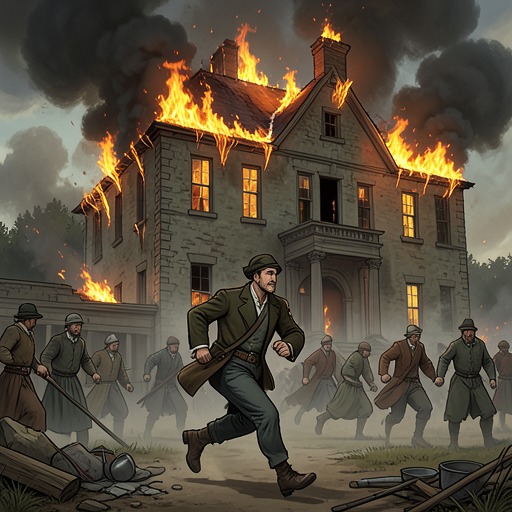
The Manor Burns
Walter sees the Beldams leave with their loaded cart and does not stop them. He recognizes that their smoke and stolen goods are part of a revenge that has swept through the village, though he cannot know whether [Mistress Beldam](entity:character-recall-character-mistress-beldam-a57ae5467af7) killed Earle.
Rather than preserve the estate for [Young Edmund Jordan](entity:character-recall-character-edmund-jordan-a1aa5899be31), Walter rekindles the parlor fire and uses the dry legal papers from [Charles Kent](entity:character-recall-character-charles-kent-a8429cd102e2)’s coffer as kindling. The manor catches, and Walter chooses to burn the property whose future had been planned without the people who lived on it.
The following day
The Unmarked Vellum
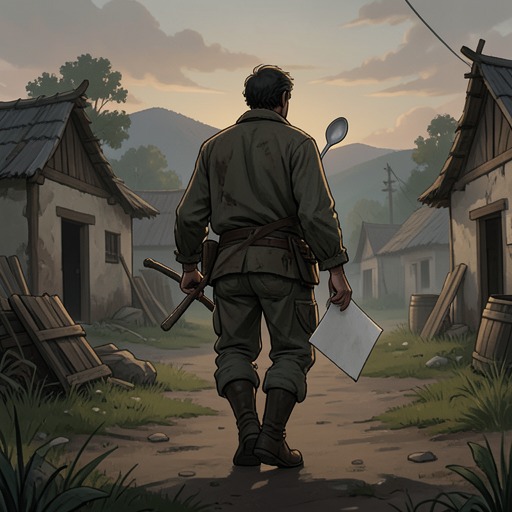
Walter reaches the estate boundary carrying provisions, a walking stick, a silver spoon and the piece of calfskin vellum he prepared for [Philip Earle](entity:character-recall-character-philip-earle-35fa1d07b2ac). He has burned Earle’s maps of the existing village and its proposed pastures, but keeps the blank sheet.
At the boundary stone, Walter tastes the grass and bumps his head against the marker as village children do during the beating of the bounds. He leaves behind the estate, the ashes and the winter wheat, carrying grief and memory into an unknown future.