Sheep
HarvestSheep are at once livestock and the anticipated agents of a remade countryside. In the narrated scenes, they are chiefly prospective: their distant bleating signals the change to come, while the actual plans for pasture, fencing, and wool production turn them into the material focus of conflict. Their significance lies in the contrast between an existing community organized around crops and shared resources and an estate recast for commercial wool. The promise of less vulnerable production for landowners and investors is also a threat to the inhabitants’ customary work and place.
A Future Animal
Sheep first enter the crisis as a sound heard at a distance, an advance warning of animals that are neither the familiar cows, pigs, nor goats. The narrator understands that the sound belongs to a plan to close off fields and convert The Village’s mixed subsistence landscape to wool production. The animals are not yet present in the fields, but their anticipated arrival changes how the land and its future are understood: what had supported crops and common use is being imagined as pasture.
That future is made particularly visible through contrast with the barley harvest. The crop’s yield is uncertain: shaded or stony ground produces weak plants, while the higher field offers a more promising harvest. The village depends on labor, seasonal timing, and shared attention to secure grain for the year. Wheat is also expected to follow barley, with plowing and sowing keeping the cycle in motion. Against this precarious but familiar agricultural calendar, sheep appear as a new basis for production and as a break with the field’s established purpose.
Charles Kent’s Case for Wool
Charles Kent initially introduces the change as a dream of relief. He contrasts crop farming, vulnerable to unreliable sun and rain, wind, mildew, animal disease, and birds, with wool, which he presents as more dependable and able to grow without sunlight. In his account, flocks would replace much of the exhausting labor of plowing and reaping. Villagers would shepherd rather than cultivate, shear rather than harvest, and turn wool into cloth at home. The imagined products include broadcloth, fustian, worsted, and twill, made from fleece and sold beyond the village.
This vision depends on treating sheep as the solution to material uncertainty. It offers a persuasive contrast with harvest failure and hard seasonal labor, but it also recasts the inhabitants’ relationship to their land. Instead of producing grain for their own provisions and common stores, they would supply wool and cloth for distant buyers. The appeal of the proposed change is therefore inseparable from its economic reorientation: the village’s work is described as lighter, while its products and purposes are redirected toward a market beyond the community.
Enclosure and the End of the Plow
Edmund Jordan removes the uncertainty from Kent’s presentation. He says that the estate’s future is to be organized for sheep, with Mr. Baynham preparing land for pasture. The announced works include fences, ditches, walls, and the clearing of the commons; trees are to be cut where Jordan judges their shade unprofitable. His declaration that the land will no longer need a plow makes the stakes explicit. Sheep are not simply added to existing farming: their pasture is to displace cultivation.
The scale of the intended change also reaches beyond the fields. Jordan speaks of buying rough wool, having hired women weave it on looms, and selling finished cloth for profit. He expects only some inhabitants to find work as shearers or shepherds, with employment determined by the labor his estate operation requires. His plan therefore promises no universal security. It replaces a local system that feeds the community, even if unevenly, with a commercial one whose jobs and returns are controlled by the estate.
Work, Provision, and Unequal Benefit
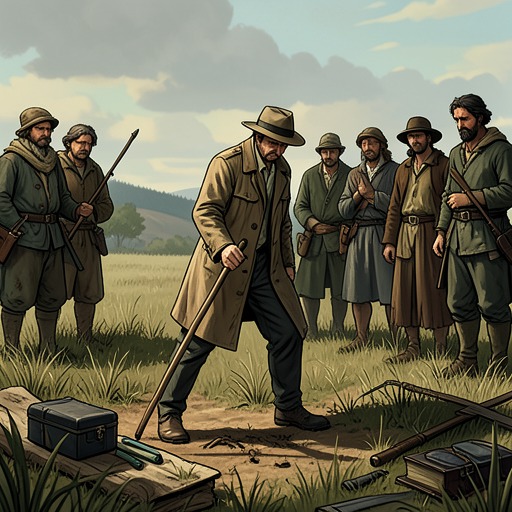
The contrast is sharpened by the villagers’ existing practices. At harvest, people of different ages and abilities have assigned tasks: children remove weeds, stronger workers wield sickles and scythes, women bind sheaves, and older people arrange the cut grain. The work is exhausting, but it gathers the community in a shared field and contributes to its food supply. Gleaning likewise allows families to keep barley for their own kitchens rather than place every grain in common stores. This economy is not free of hardship, but its labor and produce are organized around immediate collective need.
Jordan’s scheme changes both the work and the decision-making behind it. The estate will choose how much labor to hire; the new operation will direct land previously used for crops and common purposes toward pasture. Jordan describes this hierarchy as a society in which each person’s part serves another’s, while the narrator and villagers can see that their own prospects are sharply limited. Sheep thus stand for an economic order in which access to livelihood depends less on shared custom and more on an owner’s plans and a steward’s requirements.
Harvest Customs and the Meaning of Change
The sheep proposal also casts a shadow over the annual harvest ceremonies. On Gleaning Day, the villagers choose a Gleaning Queen, who takes the first step into the stubble and finds a grain; the remaining barley is then gathered for household use before livestock enter the field. Charles Kent’s failure to repeat that the oxen and plow will follow the hogs is noticed as a possible sign that cultivation may not return. The ceremony remains vivid, but its future is made uncertain by the prospect that the barley field will become pasture.
That uncertainty is not abstract: the ceremony joins land, food, and collective memory. The bare field after harvest is understood through its expected next season, and the villagers’ customary tasks give it meaning beyond its value as acreage. Sheep would reorganize that landscape around fleece, shepherding, and commercial cloth. In that sense, the proposed conversion threatens not only a crop but the conditions that make existing communal practices possible.
Narrative Significance
The sheep are powerful in the story precisely because they remain largely anticipated rather than observed. Their arrival is forecast by bleating and by plans for purchase, fencing, and hired shepherds; the evidence here does not show them established in the converted fields. That delay lets the animal function as a sign of approaching change. The village can still remember the field as a place of barley, gleaning, and plowing even as its owners describe a future in which those practices are no longer needed.
The animal itself is not blamed for the conflict. The consequential choices belong to the estate’s human authorities, who make sheep pasture the means of enclosure and commercial reform. Yet the sheep’s practical role gives those choices a visible form: land must be cleared, bounded, and reassigned to feed them. Their fleece promises a more predictable commodity than grain, while the proposed system leaves the community uncertain about its home, work, and access to shared land. Sheep therefore embody the difference between a landscape organized to sustain its inhabitants and one organized to produce profit.