before the main narrative
The Warning
The book opens with the stark warning "This is not written for you," establishing a hostile relationship between text and reader. Its narrative will repeatedly question whether reading is discovery, trespass, or possession
late 1990s, before the manuscript is assembled
Johnny’s Nightmares
[Johnny Truant](entity:character-recall-character-johnny-truant-46bc0975c6d7) describes recurring nightmares, insomnia, substance use, panic, and an inability to find any chemical refuge from fear. His unstable voice becomes the first human register through which the later manuscript will be encountered.
late 1996
Johnny Meets Lude
Johnny lives precariously in [Los Angeles](entity:location-recall-location-los-angeles-11eff639bdf5), works at a tattoo shop, and spends nights drinking and wandering with [Lude](entity:character-recall-character-lude-e15e2dfb9d71). Their friendship is built on reckless sociability, invented stories, and a shared refusal to examine the wounds beneath their performances.
January 1997
Zampanò’s Death
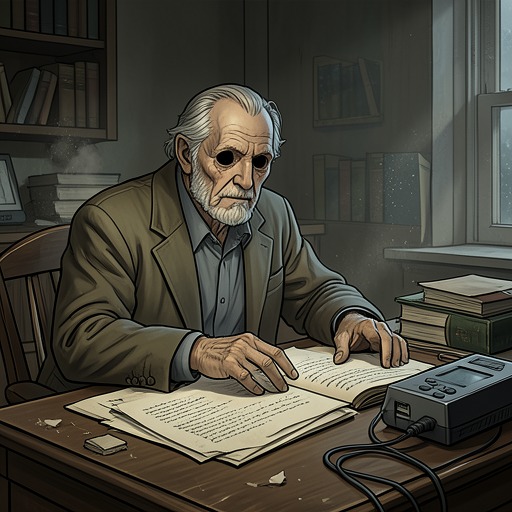
[Zampanò](entity:character-recall-character-zampan-2501d375ce44) dies alone in his apartment after years of blindness, isolation, and obsessive writing. The cats that once surrounded him have vanished, and unexplained gouges scar the floor, hinting that his death belongs to a larger and less rational history.
January 1997
The Manuscript Discovery
[Lude](entity:character-recall-character-lude-e15e2dfb9d71) brings Johnny into [Zampanò](entity:character-recall-character-zampan-2501d375ce44)’s abandoned apartment, where Johnny discovers a massive black trunk filled with fragmented notes about a film called [The Navidson Record](entity:object-recall-object-the-navidson-record-97ed2958e0ab). He takes the trunk home, beginning the inheritance that will reorganize his life.
early 1997
Johnny Begins Reading
At first Johnny reads [Zampanò](entity:character-recall-character-zampan-2501d375ce44)’s fragments casually, but the scattered references gradually consume his attention. Time disappears, his social life contracts, and the manuscript begins to blur the boundary between scholarly labor and psychological contamination.
spring 1997
Johnny Seals His Room
As his anxiety intensifies, Johnny nails windows shut, removes doors, buys locks, and fastens measuring tapes across his room. He tries to create an immutable refuge against shifting space, darkness, and whatever he believes is approaching.
April 1990
Navidson’s Pastoral Project
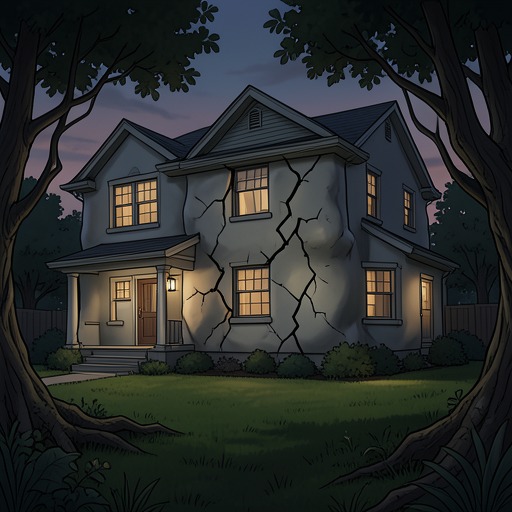
[Will Navidson](entity:character-recall-character-will-navidson-d247708166b0) moves with [Karen Green](entity:character-recall-character-karen-green-775dff1d05b4) and their children into a [Virginia](entity:location-recall-location-virginia-3350de451826) house, intending to document domestic life rather than war, famine, or catastrophe. His stated aim is to create a stable outpost for a family threatened by years of absence.
spring 1990
The Family’s New Home
Navidson films the family unpacking, decorating, and inhabiting the house. Daisy approves of the country setting, while Chad misses urban traffic and senses that the surrounding silence feels like something waiting.
before June 1990
Karen and Navidson’s Fracture
The apparent domestic idyll conceals a relationship damaged by Navidson’s assignments abroad and Karen’s fear of abandonment. Their documentary project is also an attempt to repair intimacy by turning reconciliation into a record.
before the house anomaly
The Delial Secret
Karen repeatedly hears Navidson mention [Delial](entity:character-recall-character-delial-7d943da5398a) in his sleep, but he refuses to explain the name. The secret later becomes tied to his Pulitzer-winning photograph of a dying Sudanese child and to the guilt that drives his return to the house.
June 1990, after the Seattle wedding
The House Changes
After the Navidsons return from four days away, a new dark closet-like space stands between the master bedroom and the children’s room. Blueprints and surveillance tapes cannot explain its appearance, and the family’s ordinary home becomes uncanny.
June 1990
The Quarter-Inch Anomaly
Navidson measures the house from inside and outside, discovering that the interior exceeds the exterior by a quarter inch, later refined to five sixteenths. The discrepancy turns an intellectual puzzle into a physical violation of reality.
June 1990, after the anomaly
Tom Returns
[Tom Navidson](entity:character-recall-character-tom-navidson-41dc702d3c7d) arrives from Massachusetts with tools and an easy humor that contrasts with Will’s intensity. Their collaboration over measurements briefly restores a brotherly connection strained by eight years of silence.
summer 1990
Reston Joins the Investigation
[Billy Reston](entity:character-recall-character-billy-reston-341d60480cad), a paraplegic engineer and Navidson’s old friend, examines the measurements with professional skepticism. His equipment confirms the impossible dimensions, forcing the group to confront a spatial condition that ordinary engineering cannot resolve.
summer 1990
The Bookshelf Gap
A bookshelf built by Karen and Audrie appears to end short of the wall, revealing more impossible space. The domestic act meant to impose order instead becomes another proof that the house cannot be contained by familiar architecture.
summer 1990
The Five and a Half Minute Hallway
The children wander into a long, doorless hallway that has appeared in the living room. Their voices echo at impossible distances, and Navidson retrieves them while Karen freezes at the threshold in terror.
after the hallway appears
Karen’s Claustrophobia Emerges
Karen’s previously hidden claustrophobia becomes unmistakable when she cannot enter the hallway to follow her children. She demands that Navidson promise never to go inside again, turning the spatial anomaly into a direct crisis of trust and intimacy.
late summer 1990
Tom Seals the Hallway
Tom installs a steel door with four locks to close off the hallway. The barrier provides only temporary reassurance: the corridor grows beyond it, while the locked door becomes an object around which the family’s fear and resentment accumulate.
early August 1990
Exploration A
Navidson secretly enters the hallway alone with a camera and flashlight. The passage expands into branching corridors and rooms, and he becomes disoriented until echoes of Daisy’s voice guide him back to the living room.
August 11, 1990
The Pets Reject the House
[Hillary](entity:character-recall-character-hillary-90946c2163b8) and [Mallory](entity:character-recall-character-mallory-216a835c5561) chase one another through the hallway but reappear outside, as if the house cannot sustain animals. The event is barely investigated, leaving a disturbing boundary between human trespass and animal refusal.
late summer 1990
Holloway Arrives
[Holloway Roberts](entity:character-recall-character-holloway-roberts-7f09e73320d3) arrives with [Jed Leeder](entity:character-recall-character-jed-leeder-96dff814a1a7) and [Kirby “Wax” Hook](entity:character-recall-character-kirby-wax-hook-31e009fe120d) after seeing the hallway footage. His confidence, professional hunting experience, and appetite for fame make him both an apparent protector and a dangerous rival to Navidson.
late summer to early fall 1990
The First Three Explorations
Holloway’s team maps the expanding interior, moving through the Anteroom and into the Great Hall. They discover a vast chamber, a gigantic spiral staircase, and a growl that seems to accompany the house’s shifts.
during the first three explorations
Holloway and Navidson Clash
Holloway’s authority and flirtation with Karen aggravate Navidson, who resents needing another man to explore his own house. Karen’s attention toward Holloway exposes the couple’s old patterns of jealousy, distance, and withheld communication.
Exploration #2 and Exploration #3
The Great Hall and Staircase
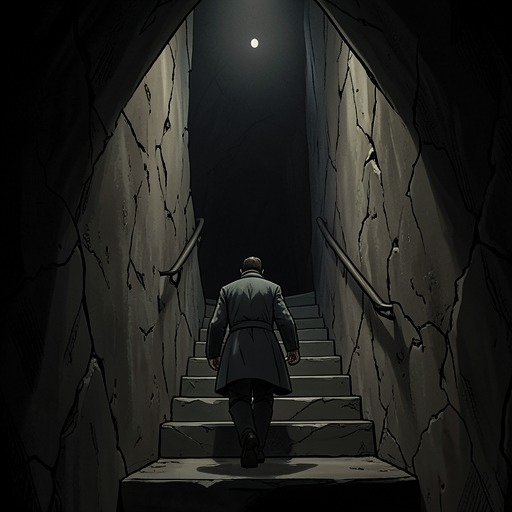
The explorers reach the Great Hall, whose scale approaches a mile, and find a spiral staircase hundreds of feet wide descending into darkness. The house becomes less a distorted dwelling than an environment without measurable limits.
after the first three explorations
The SOS Sequence
As radio contact with Holloway’s team deteriorates, the household hears a rhythmic knocking from inside the walls: three short knocks, three long, then three short. Navidson edits the sequence around this visual and acoustic pattern, turning the household’s waiting into its own plea for rescue.
early fall 1990
The Fourth Exploration Begins
Holloway, Jed, and Wax begin a prolonged expedition with provisions, markers, fishing line, cameras, and Holloway’s rifle. The mission shifts from mapping the house to reaching the bottom of the staircase and discovering whatever may inhabit the darkness.
sixth day of Exploration #4
The Expedition Mutiny
After supplies and trail markers begin disappearing, Holloway becomes convinced that a creature is hunting them. Jed and Wax insist on returning, but Holloway refuses, transforming the expedition into a mutiny and abandoning the cooperative purpose that brought them inside.
seventh day of Exploration #4
Holloway Shoots Wax
Holloway reappears near the staircase and shoots Wax, apparently mistaking him or the surrounding darkness for the pursuing creature. Jed tries to save Wax, but Holloway refuses to help and disappears again into the maze.
shortly after Wax is wounded
Holloway Shoots Jed
When Jed attempts to carry Wax through a side corridor, Holloway fires again and kills him. The expedition’s leader has crossed from paranoia into murder, while the house’s darkness makes motive, distance, and responsibility increasingly difficult to separate.
third night after the SOS
The Rescue Begins
Navidson, Tom, and Reston enter the house to rescue Holloway’s team. Reston establishes a relay point while Navidson and Tom descend, and the mission exposes the brothers’ different relationships to danger, responsibility, and fear.
during the rescue
Jed’s Death
Navidson and Reston find Jed alive but trapped with Wax. Before they can save him, a shot passes through Jed’s head, killing him in the instant between two frames of film and making the limits of representation part of the tragedy.
during the rescue
Wax Is Recovered
Navidson and Reston treat Wax’s shoulder wound and improvise a stretcher. Wax survives, but the rescue has become a retreat through a hostile architecture carrying one dying man, one corpse, and the evidence of a broken expedition.
third day of the rescue
The Falling Quarter
Tom uses a rope and pulley to hoist Wax, Jed, and Reston up the staircase. After Reston reaches safety, the staircase stretches, the rope snaps, and Navidson is left impossibly far below.
during Navidson’s disappearance
Tom’s Vigil
Tom remains near the staircase, alone with radios, cold, fear, and a growing dependence on jokes and hand shadows. His humor becomes a form of resistance against the void, even as he recognizes that the house is steadily erasing every ordinary comfort.
after four days in the house
Navidson Returns
Navidson unexpectedly emerges from the hallway, dehydrated and nearly destroyed, carrying Holloway’s equipment. His return briefly restores hope, but the house has already killed Tom, Jed, and Holloway’s sense of reality, and Navidson cannot accept that the experience is finished.
immediately after Navidson’s return
The Evacuation
Karen prepares to leave with Chad and Daisy while Navidson packs the recordings. The house suddenly contracts and expands, swallowing rooms, collapsing floors, and turning the family’s escape into a physical siege.
during the evacuation
Tom Saves Daisy
Tom crosses the shifting house to rescue Daisy, carrying her toward a broken window. Navidson pulls Daisy to safety, but the collapsing floor crushes Tom’s fingers and then drops him into an unseen shaft.
after the evacuation, late 1990
Karen Leaves Virginia
Karen takes the children to [New York City](entity:location-recall-location-new-york-city-65df0a129d4c), leaving Navidson behind in [Virginia](entity:location-recall-location-virginia-3350de451826). Her departure is both an escape from the house and a recognition that their relationship has been hollowed out by secrecy, infidelity, grief, and Navidson’s obsession.
late 1990
The Delial Revelation
Karen edits a short film from Navidson’s photographs and discovers that [Delial](entity:character-recall-character-delial-7d943da5398a) was the name he gave the starving child in his Pulitzer-winning photograph. The revelation reframes his entire career as a struggle between witnessing suffering and failing to save the people he records.
winter 1990–1991
Karen’s Reconciliation Project
Karen makes A Brief History Of Who I Love, a film devoted to Navidson’s childhood, war photographs, and tenderness toward his family. By seeing him beyond her fears, she begins to understand the man she loves and prepares to return to him.
March 31, 1991
Navidson’s Final Letter
Before returning to the house, Navidson writes Karen a drunken, fragmented letter declaring that he must confirm what the house is. He links the house to God, [Delial](entity:character-recall-character-delial-7d943da5398a), Tom, and his own guilt, revealing that his final journey is driven by grief as much as by curiosity.
historical parallel, 1610
The Jamestown Journal
A journal from the Starving Time describes three settlers who become trapped by cold, hunger, silence, and impossible stairs. Its fragmented testimony suggests that the house’s history predates Navidson by centuries and that its labyrinth has repeatedly absorbed the desperate.
April 1, 1991
Exploration #5
Navidson returns alone with extensive recording equipment, supplies, a bicycle, and a single book. He descends through corridors that continually slope downward, traveling hundreds of miles as the house turns direction, distance, and gravity into unreliable impressions.
during Exploration #5
The Abyssal Edge
Navidson reaches an apparent edge where the floor ends in immeasurable darkness. A small structure and a sideways staircase offer temporary shelter, but the house rotates, removes the exit, and forces him into a vertical climb away from a void that may have no bottom.
late in Exploration #5
The Burning Book
With his supplies gone and his lights failing, Navidson burns the pages of [House of Leaves](entity:expression-recall-expression-house-of-leaves-3a8cbe7e3efc) one by one to create enough illumination to read. The act turns reading into literal consumption, binding the survival of the explorer to the destruction of the book itself.
end of Exploration #5
Navidson’s Apparent Death
Navidson drifts or falls through darkness, recording fragments of memory, fear, and names. He believes he is dying, but a tiny blue light appears in the final frames, leaving open whether the house has killed him or offered a way back.
shortly after Exploration #5
Karen’s Final Descent
Karen enters the black space in search of Navidson, overcoming the claustrophobia that once immobilized her. She finds him nearly dead, embraces him in darkness, and the space dissolves, returning them to the front yard.
after Karen’s rescue, spring 1991
Navidson Survives
Navidson reaches the hospital with severe hypothermia, frostbite, an injured hip, and the loss of an eye and part of a hand. He survives, but his body permanently records the cost of returning to the house.
after Navidson’s recovery
Karen and Navidson Marry
Karen and Navidson eventually marry in Vermont and raise their children together. Their happiness is not presented as a clean restoration: Karen develops cancer, Navidson remains disabled, and the house survives as a memory that cannot be escaped.
1993
The Navidson Record Is Released
[Miramax](entity:organization-recall-organization-miramax-388ab8c00c74) releases [The Navidson Record](entity:object-recall-object-the-navidson-record-97ed2958e0ab) after earlier circulation of the short films [The Five and a Half Minute Hallway](entity:location-recall-location-the-five-and-a-half-de11ed73cd88) and Exploration #4. The documentary becomes a cultural enigma, dividing audiences between belief, skepticism, interpretation, and denial.
late October 1996, end of The Navidson Record
The Final Film Image
The film closes on [Halloween](entity:time-recall-time-halloween-c9b359236295) with Navidson’s family moving through a Vermont evening. After the children disappear into the dark, the camera remains on the empty road and a street lamp that finally goes out, refusing a comforting resolution.
1982–1989, parallel history revealed late
Pelafina’s Breakdown
Letters from [Pelafina Heather Lièvre](entity:character-recall-character-pelafina-heather-li-ae97bfa5e038) reveal a brilliant, loving, and increasingly psychotic mother writing to her son Johnny from the Three Attic Whalestoe Institute. Her language moves between tenderness, conspiracy, literary play, and desperate attempts to preserve a bond with the child she fears losing.
March 19, 1988
Pelafina’s Confession
Pelafina writes that she once tried to strangle Johnny before Donnie intervened. Johnny’s later memories contradict parts of the letter, suggesting that her account may itself be a delusion, but the confession confirms the violence and love entangled within his childhood.
May 4, 1989
Pelafina’s Death
Pelafina dies by suicide at the Three Attic Whalestoe Institute, using bed linen tied to a closet hook. The institutional letter reduces her life to a clinical notice, while the later manuscript restores her as a voice whose love and madness shaped Johnny’s entire narrative.
1997–1998
Johnny’s Decline
As Johnny continues reading, he loses work, money, sleep, weight, and contact with ordinary life. His panic becomes indistinguishable from hallucination, and the manuscript increasingly appears to generate memories, encounters, and identities rather than merely record them.
1997–1998
Johnny’s Relationships Collapse
Johnny’s fixation on [Thumper](entity:character-recall-character-thumper-fe216952448c) remains largely unconsummated, while encounters with Amber, [Christina](entity:character-recall-character-christina-6af790722d1a), [Kyrie](entity:character-recall-character-kyrie-0539cd91b3ed), Tatiana, Ashley, Hailey, and others become fragments of desire, projection, and loneliness. His sexual stories protect him from intimacy even as they expose how desperately he wants connection.
October 25, 1998
Lude’s Death
[Lude](entity:character-recall-character-lude-e15e2dfb9d71)’s drug dependence worsens after his beating by Gdansk Man, and he dies in a high-speed motorcycle crash near Union. His death removes Johnny’s last worldly companion and leaves the manuscript as the only remaining structure around Johnny’s isolation.
October 29, 1998
Johnny’s Confrontation
After Gdansk Man attacks him, Johnny retaliates with an empty whiskey bottle and nearly kills him. The violence reveals Johnny’s transformation into the very kind of creature he has feared, although a final interruption prevents him from completing the murder.
October 31, 1998
Johnny Rewrites the Violence
Johnny later revises the account, deciding that Gdansk Man apologized and that the murder never occurred as he described it. The contradiction exposes his narration as an unstable struggle to distinguish memory, fantasy, guilt, and responsibility.
October 25–31, 1998
Johnny Leaves the Hotel
Johnny realizes that the hotel is an asylum rather than a refuge and leaves with the manuscript. He alternates between intending to burn the book, protect it, or finish it, recognizing that the thing he wants to destroy may also be the only thing keeping him coherent.
August 28, 1999
Johnny Finds the Echo
In Flagstaff, Johnny hears a band perform lyrics about the Five and a Half Minute Hallway and discovers that the musicians have read [House of Leaves](entity:expression-recall-expression-house-of-leaves-3a8cbe7e3efc). Their annotated copy proves that the manuscript has escaped him and begun generating new readers, interpretations, and lives.
near the ending
The Manuscript Continues
Johnny remains uncertain whether he wrote the manuscript, inherited it, or was created by it. Yet he finds a measure of peace in the possibility that stories can carry memory through darkness, imperfectly but persistently, from one isolated consciousness to another.