Shaltiel Abravanel
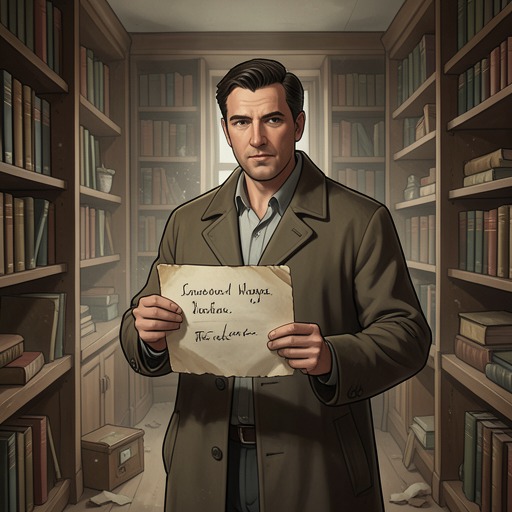
JudasShaltiel Abravanel is a Jerusalem-born lawyer, Arabist, and longtime Zionist official whose opposition to a Jewish state made him an isolated dissenter within the movement he had served. He believed Jews and Arabs could share the land, first as neighboring or interwoven communities and ultimately in a world no longer divided into nation-states. His political defeat did not end with dismissal: branded a traitor, cut off from former friends, and bereaved of his son Mija, he retreated into the family home and died there alone. Through Shmuel Ash’s archival discoveries and the memories of Atalia and Gershom Wald, Abravanel’s story tests the boundary between treason and dissent, and between political realism and the cost of abandoning a possible peace.
Identity and Political Formation
The surviving descriptions identify Abravanel as a Jerusalem native of long local lineage, a lawyer and Arabist, and a member of the leadership of the Zionist Executive and the Jewish Agency. Shmuel first approaches his identity through scattered recollections: perhaps Abravanel had been the sole opponent of the state’s creation, or perhaps he had opposed David Ben-Gurion’s line; perhaps he was an opposition of one. These uncertain questions anticipate how little public record remains of a man once placed near the center of Zionist institutions.
Abravanel’s opposition emerged gradually rather than as a settled position from the outset. Atalia traces its development through the Arab Revolt of 1936, Hitler, resistance and reprisals, British executions, and, above all, his many conversations with Arab friends. He had once shared the widespread belief that Jews could build a home in the Land of Israel without dispossessing anyone. Doubts arose in the 1920s; by the 1930s he feared that the two peoples were moving toward a collision in which the defeated would be unable to remain. For years he swallowed those doubts, followed institutional discipline, and spoke in the expected voice of a Jerusalem Sephardic representative, occasionally calling for dialogue and criticizing violence. His appeals attracted little interest.
A Shared Home Beyond the State
Abravanel’s position was not simply a call for a binational state. He came to believe that the Jewish home in the land should be shared by Jews and Arabs, but he also rejected the state as a political form, including a state shared by both peoples. He saw borders, barbed wire, passports, flags, armies, and separate currencies as primitive and destructive arrangements that the world would eventually outgrow. In their place he imagined communities of different languages living beside and among one another without sovereignty, military forces, or borders.
In the immediate crisis of 1947–48, he proposed that the ending British Mandate be replaced by an international mandate or a provisional government under American supervision. He expected that around 100,000 Holocaust survivors displaced in European transit camps might be permitted to immigrate, bringing the Jewish population in the country from roughly 650,000 to three-quarters of a million. After that, he urged a pause: the Arab population might gradually come to terms with the Jewish presence over ten or twenty years if Jews stopped making an ostentatious demand for a Hebrew state. He believed Arab opposition was driven especially by fear of Jewish educational, technological, and organizational strength, and of the expansion that might follow—not only by the small Zionist presence then established, but by the larger power it might become.
Gershom Wald recalls that Abravanel maintained these arguments even as war approached and fighting was already under way. He continued to say that establishing a Jewish state was a tragic mistake and that the movement’s course risked a bloody war whose outcome could not be assured. Wald, by contrast, had once sided with Ben-Gurion’s hard realism and thought Abravanel’s proposals unfounded. Later, Shmuel also calls the ideas attractive to the heart but over-sweetened, arguing that Arabs might have been tempted by present Jewish weakness rather than chiefly frightened by future Jewish power. The disagreement leaves Abravanel’s program neither vindicated nor neatly dismissed: it is set against the immediate fear and urgency that made its alternatives seem impossible to his opponents.
Dismissal and the Making of a Traitor
Abravanel’s conflict with the Zionist leadership became visible in his attempt to present an individual position to the United Nations Special Committee on Palestine. On June 18, 1947, he asked to appear before the committee and explain his minority view of the Jewish-Arab conflict, offering what he regarded as an original path to peace. The Jewish Agency rejected the request, insisting that it and the Zionist Executive must speak with one voice. Abravanel considered defying the decision but ultimately accepted the majority’s discipline, possibly because he had been warned that an independent appearance would end his place in the movement’s leading institutions.
On December 20, 1947, he was removed from his posts in the Zionist Executive and the Jewish Agency over disagreements with colleagues. A newspaper account reported that he declined to tell the reporter why he had been dismissed; it attributed to him the warning that Ben-Gurion’s chosen course led inexorably toward bloody war between the two peoples, with the lives of 600,000 Jews in the Land of Israel at stake. Abravanel still believed a historical compromise remained possible. He had served in the leadership for nearly nine years. Atalia later says that he was given two hours to choose between resignation and expulsion; after resigning, he said nothing publicly, wrapping himself in resentment like a shroud because he understood that he had no interlocutor.
The label traitor attached itself to both his political dissent and his friendships. He visited Arabs in Katamon, Sheikh Jarrah, Ramallah, Bethlehem, and Beit Jala, and often welcomed Arab journalists, politicians, union leaders, and professors into his home. He continued to oppose the establishment of a Jewish state in 1947 and 1948, and argued that the dissolving British Mandate should give way to international or provisional authority. Neighbors and Hebrew newspapers called him the Muezzin, Sheikh Abravanel, or the Sword of Islam; some accused him of selling himself to Arabs or even of being an Arab’s bastard. He considered himself a Zionist, indeed one of the few authentic Zionists not drunk on nationalism, and called himself the last disciple of Ahad Haam. The gulf between that self-understanding and the accusations against him shows how a political community can make dissent legible as disloyalty.
Family, Loss, and Withdrawal
Abravanel’s opposition had intimate consequences as well as public ones. He urged young people on both sides to lay down their arms and refuse to fight, and, even after the bloodshed and roadblocks began in autumn 1947, continued traveling at least twice a week to speak with Arab friends. He asked Mija not to fight and made him promise he would not. Yet Wald admits that his own language of holy war, and the stories of Tel Hai’s defenders, Wingate’s night squads, Jewish police special forces, and the Maccabees with which he had raised his son, helped send Mija into the war. The household’s competing convictions thus converge in a consequence neither father could undo.
Mija was killed on April 2. After his death, Abravanel, Atalia, and Wald lived together in near-total isolation, as if shut inside a submarine. Wald and Abravanel had once argued vehemently; after the loss, they never argued again. Wald suffered in the silence, while Abravanel was comfortable in it. Atalia cared for them and worked several hours a day at a real-estate office on Straus Street. During the siege of Jerusalem, the house’s thick stone walls protected them from bullets and shells; Atalia alone sometimes went out to queue for kerosene, ice, and rationed food.
Abravanel lived two years beyond Mija’s death. He died alone in the kitchen, hated and disparaged, with his Arab friends either beyond the new borders or displaced from their homes in Katamon, Abu Tor, and Baka, and no Jewish friends left to him. Atalia describes the routine of his final day: after the seven o’clock news, he sat with coffee and a newspaper, as he did each afternoon. His head suddenly fell onto the cup and overturned it; the right lens of his glasses shattered, and the coffee ran over the newspaper, table, chest, legs, and floor. She found him with his face on the floral oilcloth and his forehead and hair in the spreading coffee. The ordinary domestic scene completes his political isolation without turning it into a public reckoning: the man who had lost his audience died in the quiet of the home where his family had withdrawn.
Memory, Dissent, and the Name of Betrayal
Abravanel survives in the novel through competing acts of remembrance. Shmuel searches old issues of Davar at the National Library, first finding the account of Abravanel’s June 1947 request to address the United Nations committee and then the notice of his December dismissal. The brief reports give documentary shape to a life that otherwise appears through family testimony, but they also reveal the limits of the archive: Shmuel finds no evidence of a public debate or of an appeal to Jewish or Arab opinion. Wald tells him that Abravanel had spent years writing an article or book about Abravanel’s history and memoirs about Mija, perhaps seeking a connection between his political ostracism and his son’s death.
Wald and Shmuel also recast the word traitor. Wald compares the accusation against Abravanel with labels applied to figures who defied prevailing loyalties, including Jeremiah, Abraham Lincoln, and David Ben-Gurion when he accepted partition. Shmuel argues that people willing to change are called traitors by those who fear and abhor change. That defense does not resolve the political dispute or erase the war’s losses; it changes what the accusation can mean. Abravanel’s fate remains bound to the people who rejected his proposal, the son whose death silenced the household, and the friends left on the other side of new borders. His dissent endures as a record of an alternative that was considered politically untenable—and of the price paid when the possibility of coexistence was treated as betrayal.