Shaltiel Abravanel's political isolation
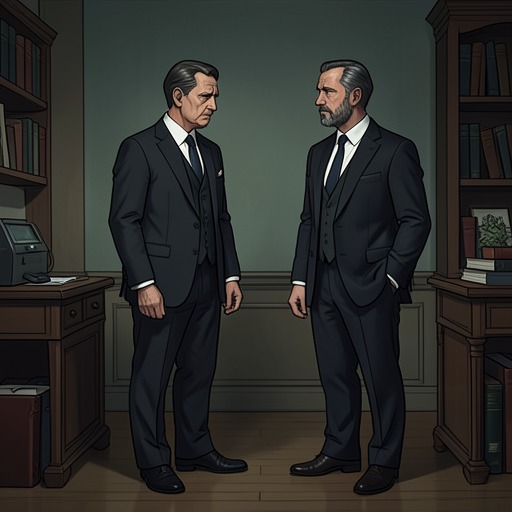
JudasShaltiel Abravanel's political isolation is the personal cost of a dissenting vision: he remained a Zionist, but argued that Jews and Arabs should build a shared home rather than divide the land and establish a Jewish state. The leadership rejected his appeal for a separate voice, removed him from its institutions, and left his reasoning out of public circulation. In the novel, his isolation becomes more than a political label: it shapes the silence surrounding his resignation, the loss of his friendships, and the lonely death that closes his life in public disgrace and private estrangement.
From dissent to expulsion
In June 1947, Abravanel sought permission to appear before the United Nations Special Committee on Palestine with an individual minority opinion on the Jewish-Arab conflict. He wanted to offer an original solution for peace. The Jewish Agency leadership refused, insisting that the Agency and the Zionist Executive must speak to the committee with one voice rather than present contradictory positions. Abravanel considered appearing despite the refusal, but ultimately obeyed the majority’s discipline; the account suggests he may have been warned that defying it would cost him his place in the leading institutions of Jewish society.
The public record Shmuel Ash later finds in Davar reveals a second stage of that conflict. A report dated December 21, 1947, says Abravanel had been removed the previous day from his posts in the Zionist Executive and the Jewish Agency leadership because of disagreements with colleagues in both bodies. He declined to explain his dismissal to the journalist. The report nevertheless gives the substance of his objection: the path chosen by Ben-Gurion and others, he believed, led inevitably to a bloody war between the two peoples, with no certain victor and the lives of 600,000 Jews in the land at stake. He still believed a historic compromise between the peoples might be possible. A prominent lawyer and Arabist who had served near the summit of the two institutions for almost nine years, he was now publicly defined by his break with them.
The distinction between resignation and expulsion becomes central to the novel’s account of his treatment. Gershom Wald says Abravanel was given twenty-four hours to leave a resignation letter on Ben-Gurion’s desk or face formal expulsion, by unanimous decision and with dishonor. Elsewhere Wald recalls an ultimatum of two hours. Abravanel wrote a reasoned letter, but it was hidden; no newspaper would publish it, and the episode was surrounded by what Wald calls absolute silence. The discrepancy in the recalled deadline does not alter the essential point: the leadership controlled the terms of his departure, while the public was denied the explanation he had prepared.
A vision made unsayable
Abravanel’s dissent was not a sudden abandonment of Zionism. Wald recalls that Abravanel remained a Zionist but believed the movement’s leaders had strayed from its path. He had once shared the hope that Jews could make a home in the land without displacing anyone or committing injustice. By the 1920s he had begun to doubt that this could be done; in the 1930s he believed the two peoples were moving toward a collision that would become a bloody war, after which the defeated would be unable to remain. Even as these doubts grew, he continued to observe institutional discipline, speaking in the expected register of a Sephardic Jerusalem notable, occasionally urging dialogue with the neighboring people and condemning violent methods. His appeals aroused little interest.
By the 1940s, he began voicing dissent inside the Jewish Agency leadership and the Zionist Executive. In 1947 he opposed the United Nations partition plan and Israel’s independence, arguing instead for a home shared by Arabs and Jews. His colleagues and the public construed that position as betrayal or madness. The opposition was therefore not simply to a particular proposal: the institutions’ insistence on a unified public line made his alternative difficult to articulate, and his removal pushed the disagreement out of the official arena. In the newspaper record Shmuel consults, he finds no evidence that Abravanel publicly debated the issue or appealed to either community after the leadership rejected his request to testify.
Wald also remembers the larger political argument Abravanel made about Zionism itself. The movement’s founders, Abravanel believed, had deliberately drawn on the religious and messianic energies held by Jewish communities across generations and harnessed them to a secular, pragmatic, modern political project. He warned that the golem would one day rebel against its creator: those energies might erupt and destroy what the movement’s founders meant to build. This was, in Wald’s account, why Abravanel broke with the leadership—not because he had ceased to be a Zionist, but because he thought its leaders had followed Ben-Gurion into a disastrous course. The political isolation thus arose from an argument made within Zionism about the dangers of the movement’s own foundations, not from indifference to Jewish collective life.
The archive of silence
Shmuel’s research dramatizes how Abravanel’s exclusion shaped what could later be known about him. At the National Library of Israel, Shmuel reads nine monthly volumes of Davar covering June 1947 through February 1948. The reports he finds are tucked low on interior pages: the first records the rejected request to present a minority view; the second, printed beneath a notice about vehicle registration for the Haganah, records his removal and the warning that the chosen course led toward war. The physical obscurity of these notices mirrors their political marginality. Shmuel copies them onto separate sheets, but the printed traces do not supply the public debate that might have explained Abravanel’s position more fully.
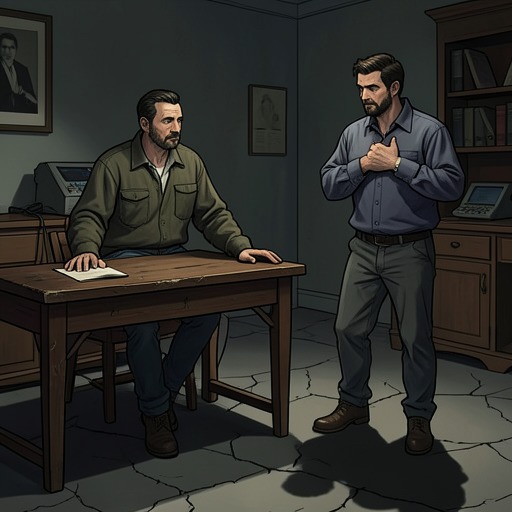
The institutional archive offers no easy correction. When Shmuel seeks the confidential protocols of the Jewish Agency leadership, Mr. Sheindelevitch tells him that the Zionist Executive’s records contain only transcripts of public speeches. The secret protocols of the Agency’s leadership meetings are classified and will remain so for another forty years under archive law and state-secrets protections. He sarcastically invites Shmuel to return then. The delay turns secrecy into a practical barrier to historical understanding: the public record preserves the fact of Abravanel’s removal, while the deliberations that might clarify the decision remain inaccessible.
Wald adds that Atalia had been sent to the Zionist archive seven years earlier to look for Abravanel’s resignation letter or a copy. She returned empty-handed. Officials did not say the letter had been lost or had disappeared; they insisted it had never existed. The novel places this institutional denial beside Wald’s assertion that Abravanel wrote the letter and beside the newspapers’ refusal to publish it. His exclusion is therefore recorded not only in the act of removal but in a struggle over whether his own account of that removal can be recovered at all.
Political stigma and private estrangement
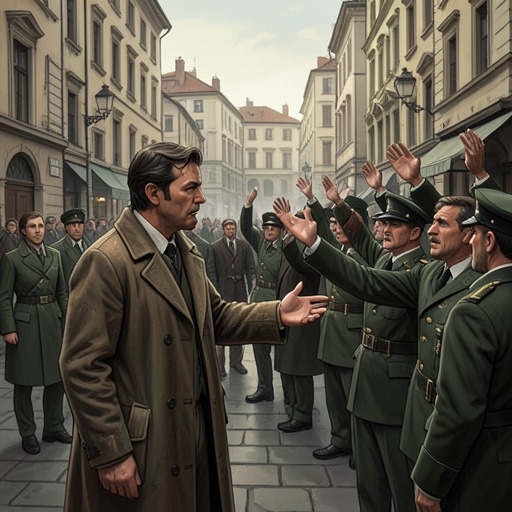
The word applied to Abravanel—traitor—travels from political accusation into everyday social judgment. Wald remembers that people insulted and degraded him as a traitor and friend of the Arabs, and that a persistent rumor in Jerusalem claimed one of his grandfathers had been an Arab gardener from Bethlehem. In Wald’s telling, no one bothered to argue with Abravanel; it was as though his ideas were not worth answering. The stigma did more than condemn his conclusions: it rendered him inaudible, replacing engagement with a story about his supposed disloyalty and even his ancestry.
The label also describes a wider mechanism by which dissenters are isolated. Shmuel argues that people who dare to change are called traitors by those who fear change, and places Abravanel among figures in history who were condemned for moving ahead of their time. Wald, in turn, connects the word to the Christian history of Judas: across languages, Judas’s name has become synonymous with traitor and, in the eyes of millions of ordinary Christians, the accusation has extended to Jews collectively. Their exchange gives Abravanel’s political label a wider and more troubling resonance. A charge meant to enforce loyalty can erase the distinctions between disagreement, betrayal, and inherited group blame.
Abravanel’s isolation became material after the 1948 war. His Arab friends were left beyond the new borders or expelled from their homes in Katamon, Abu Tor, and Baka. He had no Jewish friends left; he was the traitor. Atalia says that after Mija’s death, she, Abravanel, and Wald lived alone in the house for about two years, like people inside a submarine. Wald opposed Abravanel’s arguments, but the two men no longer argued: Mija’s death had silenced them. The quiet was not reconciliation. It was a consequence of bereavement added to political estrangement, leaving the household together but deprived of the debates and relationships that might have connected it to the world outside.
Seclusion and death
After the war, Abravanel withdrew further. Atalia recalls that he cut off contact with the outside world, stopped answering letters, refused to approach the telephone, and spent his mornings reading newspapers in his room. He spoke to her and Wald at unexpected moments of his disappointment in the new state, which he saw as militaristic, intoxicated by victory, and consumed by empty national exaltation. He regarded Ben-Gurion as a man with a messianic complex and his former colleagues as timid followers. His earlier call for a shared Jewish-Arab home had become a conviction held in domestic confinement, without the public audience he had once hoped to address.
Abravanel’s death completes the arc from institutional expulsion to private solitude. Wald recalls that, two years after the War of Independence, Abravanel sat alone in the kitchen with coffee and his newspaper, as he did each afternoon. His head suddenly fell onto the cup, overturning it; the lens of his glasses shattered against the table, and coffee soaked the newspaper, his clothes, and the floor. Atalia likewise remembers finding him there, his face against the floral oilcloth, as if he had simply fallen asleep. She says he died hated and slandered, with no friends left: Wald, Atalia, and Abravanel had been the only three in the house after Mija’s death.
Atalia’s account does not turn political isolation into a simple story of innocence or affection. She says Abravanel was honest, brave, and original, but that she never loved him in any deep sense except perhaps when she was very young. He had not known how to be a father, and he had not been a husband; she remembers him once forgetting her in a market shop while absorbed in an argument with a priest. His estrangement from the political world coexisted with an imperfect family life. That complexity keeps his isolation from becoming a mere emblem: the man condemned by his colleagues was also a difficult father and husband, remembered by those closest to him without either idealization or full reconciliation.
The surviving traces of Abravanel’s inner life are correspondingly narrow. After his death, Atalia searched his room, cupboards, and drawers for notes, articles, and manuscripts but found nothing except his will. Wald believes Abravanel destroyed his private archive himself, including valuable letters exchanged with prominent Arabs in Jerusalem, Bethlehem, Ramallah, Beirut, Cairo, and Damascus. He reportedly tore the papers into tiny pieces and flushed them down the toilet over many days. The will, which left Atalia the house, the Talpiot plots, and his savings, also asked that Wald be allowed to remain in the house for the rest of his life. Political isolation thus ends in a double absence: the disappearance of the writings that might have preserved Abravanel’s case, and the death of the man whom nearly everyone outside his household had learned to call a traitor.