Aino's Unwanted Betrothal
KalevalaAino’s Unwanted Betrothal describes the grief and resistance that follow Youkahainen’s promise of his sister to Wainamoinen. The proposed marriage is welcomed by Aino’s mother as a family alliance, but Aino experiences it as the loss of a life she had not chosen. Her repeated weeping, objections to the obligations of a wife, and preference for life among the sea’s creatures make this more than a moment of sadness: they expose the conflict between a betrothal arranged by others and the young woman’s refusal to embrace it.
The Promise and Its Unequal Reception
Youkahainen offers Aino to Wainamoinen while pleading to be freed from torment. The bargain makes his sister the price of his own release: he promises her as a bride to the man who has him in his power. Aino is thus committed to the match through her brother’s action, rather than through any choice of her own described in these scenes.
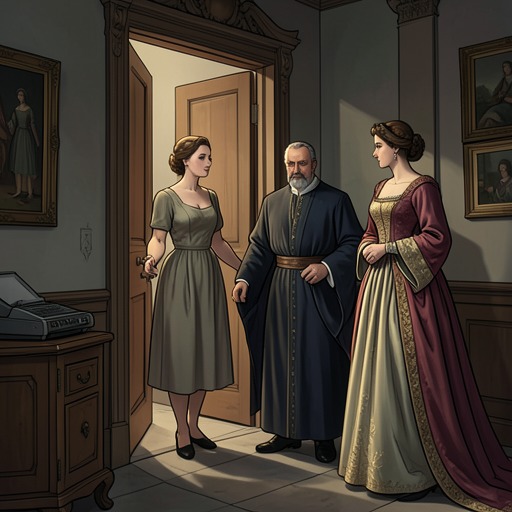
The family receives this promise unevenly. Aino’s mother regards the prospect positively, imagining Wainamoinen as her spouse’s son-in-law and Aino as his bride. The language of kinship turns the proposed marriage into a welcome addition to the household from the mother’s perspective. Aino’s response sharply counters that welcome: the event celebrated by one generation is experienced by the bride-to-be as a personal loss.
Grief at the Threshold
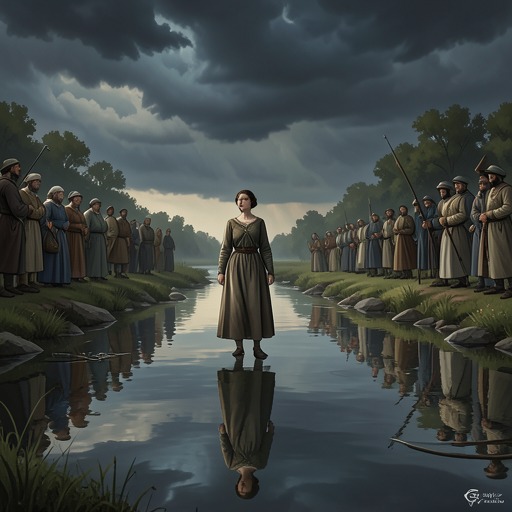
Aino’s distress is immediate and sustained. She falls into bitter weeping, lingers on the threshold, and weeps through both day and night. The threshold gives her sorrow a visible setting: she is placed at the boundary of the home, while the marriage being contemplated would carry her into another household and a different role. Her tears are not presented as a passing hesitation that the family promptly resolves; their duration makes the mismatch between her feelings and the family’s approval unmistakable.
When her mother asks why she grieves, Aino answers by returning to the consequences she foresees. Her speech gives the betrothal an inward perspective that the bargain itself does not supply. Youkahainen’s promise establishes who has arranged the match, and the mother’s welcome reveals how it is received within the family; Aino’s answer shows what that arrangement means to the person expected to live with it.
The Future Aino Fears
Aino imagines marriage as a change in both appearance and status. She says that the ornaments and ribbons with which she might adorn her hair will be hidden beneath the wife’s linen bonnet. The contrast is specific: visible decoration belongs to the unmarried life she is losing, while the bonnet marks the married role she expects to occupy. Her objection is not simply to a new item of clothing. In her account, becoming a wife means that her former self will be covered over by the identity imposed on her.
The household future also appears in practical terms. The expected bride is associated with rinsing golden platters and walking as a queen within Wainamoinen’s dwelling. Aino does not accept those prospects as consolation. The promise of a queen’s place cannot undo the fact that the marriage has been offered without her assent, and domestic provision cannot answer her grief over losing the life she recognizes as her own.
Most starkly, Aino compares the proposed future with an imagined existence in the sea. She would prefer to swim through sea-foam as a mermaid and be the companion of nimble fishes rather than become an old man’s solace, a prop when he totters, or a hand to aid him when he trembles. The comparison turns an impossible alternative into a forceful measure of her refusal: even a life among fish seems preferable to the caregiving role she associates with marrying Wainamoinen. Her image of an old man needing physical support makes the age difference, and the burden she anticipates, central to her protest.
Significance of the State
The betrothal’s defining tension lies in the difference between the people who arrange or approve it and the person whose future it determines. Youkahainen speaks of Aino as the bride he will give; her mother welcomes the resulting kinship; Aino instead describes concealed adornment, household service, and support for an elderly husband. These are distinct views of the same proposed marriage, and the contrast prevents family approval from standing in for the bride’s consent.
Aino’s words also give her resistance a clear form without suggesting that she controls the arrangement. She can name what she fears and declare that another existence would be preferable, but the evidence here does not show the family withdrawing the promise or the marriage being settled according to her wishes. The state therefore remains one of unresolved refusal: the match has been made for her, while her grief insists that being promised is not the same as choosing.