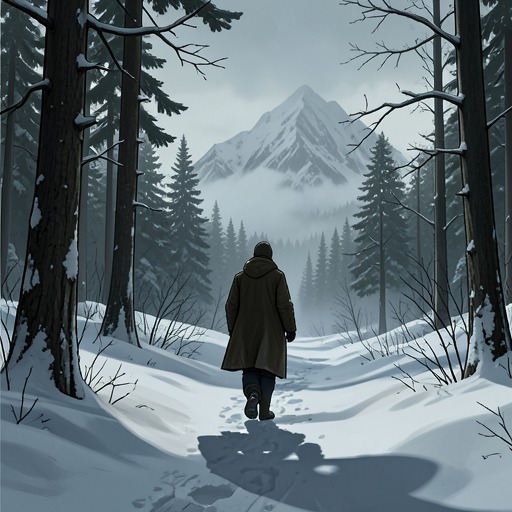
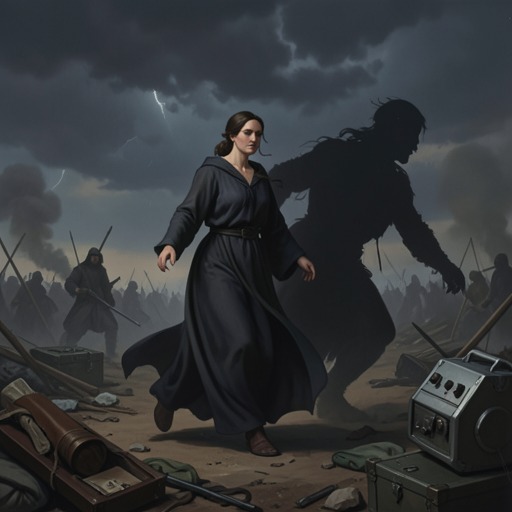
Lemminkainen's death
KalevalaLemminkainen’s death marks the hero’s passage into the death-land after Nasshut throws him, already dying, into the River of Tuoni. The account gives the moment a stark narrative shape: a daring hero is brought to the edge of death, and the shepherd’s action carries him across that boundary. His death is a major reversal, though not the final end of his story, since he is later restored.
Identity and Narrative Position
Lemminkainen is identified here as a hero, and the surrounding lines characterize him as wild and daring. That description sets his forceful public identity beside his vulnerable condition: at the moment Nasshut acts, he is dying and no longer controls what happens to him. The contrast makes the state more than a simple report of danger; it shows the hero’s power checked by an enemy’s decisive action.
The passage also associates him with the death-land. Its language places him within the realm of death rather than presenting his condition as an ordinary defeat. The River of Tuoni gives that transition a concrete destination, connecting the personal crisis to the larger supernatural geography of the story.
Nasshut’s Action
Nasshut is called a wretched shepherd. The account gives no further explanation of his background or motive in these lines, but it gives him a clear role in Lemminkainen’s fall: he throws the dying hero into the river. The action moves Lemminkainen from a mortal crisis into the domain of the dead, making Nasshut the immediate agent of that passage.
The sequence is compressed but consequential. Lemminkainen is already dying when Nasshut throws him; the act therefore does not begin the crisis but carries it to a new threshold. The emphasis rests on the transfer itself and its destination, not on a detailed account of the violence. That restraint keeps attention on the change in Lemminkainen’s status: from endangered hero to figure delivered into the death-land.
Death and the Larger Arc
The designation of this episode as Lemminkainen’s death conveys the seriousness of his condition, while the broader narrative arc prevents that designation from being read as a permanent ending. Lemminkainen is later restored. His death is therefore a rupture in the hero’s course, not the conclusion of it: the story takes him into the realm of death before returning him to life.
That later restoration gives the episode its structural force. Nasshut’s action appears to close the hero’s immediate struggle, but the larger story reverses that outcome. The death-state consequently serves both as a real crisis within the narrative and as the threshold from which Lemminkainen’s return becomes possible. The juxtaposition of his daring identity, his helpless condition, and his eventual restoration makes the episode a turning point in the hero’s arc.