Massimo Alberti
LeilaMassimo Alberti’s story joins a difficult love to a crisis of religious allegiance. A medical student who once admired the Church’s authority and the spiritual example of Benedetto, he becomes deeply attached to Lelia Camin after the death of his friend Andrea Trento. His attraction does not resolve into a simple romance: it intensifies his conflict between desire and conscience, while his changing views of Catholic authority unsettle the identity by which he has understood himself. At Benedetto’s funeral, grief and remembered loyalty bring that religious struggle to a turning point.
Identity and Early Connections
Massimo is from Milan and is several years older than Andrea Trento. He began studying medicine in Rome and continued at the University of Padua while Andrea moved from school to university. Their friendship is grounded partly in longstanding connections between their families, rather than in shared university life. Andrea admires Massimo’s unusual intelligence and culture, as well as the severity of his habits, and considers him more worthy than himself as a possible husband for Lelia. Lelia, who has not met Massimo, rejects Andrea’s self-effacing recommendation as virtuous but unwelcome; she does not understand love as a reason to substitute one man for another.
Massimo’s friendship with Andrea therefore precedes his own encounter with Lelia and gives that encounter an unavoidable history. When he goes to the Trento family's Montanina villa, he remembers Andrea’s confident plans for a shared future there: the young man had described a three-room apartment and a west-facing terrace intended for his married happiness. The landscape remains, but Andrea is dead. Massimo’s memory sets the continuing mountains, woods, and voice of the Posina against the life and hopes that have disappeared, making the visit an encounter with both Lelia and his friend’s absence.
Another important bond is his friendship with Don Aurelio. Don Aurelio, a Roman priest, had studied at the Collegio di Propaganda Fide hoping to become a missionary, but illness and his superiors’ doubts about his physical strength prevented that vocation. He later became close to Benedetto and Massimo. Massimo had met him in Rome as a medical student; a priest who had known Don Aurelio at the Collegio helped secure his reception into the Vicenza Diocese and assignment to Lago di Velo. This shared history places Massimo within a network of religious friendship before his own beliefs begin to change.
Love, Grief, and Self-Examination
Massimo’s feelings for Lelia develop during a brief period of life together at the villa. Ten days of proximity, exchanged looks, and indirect, fleeting signs of intimacy make a powerful impression on him, although Lelia often surrounds herself with emotional coldness and darkness. He recalls that his first impression of her photograph had already stirred him while Andrea was alive. After meeting her, he finds himself drawn to what he perceives as the depth of her character, yet is troubled by the sense that his love might betray his dead friend. The encouragement he reads in remarks by Donna Fedele Vayla and Marcello Trento partly quiets that initial remorse, but does not make the situation uncomplicated.
In a frank conversation with Don Aurelio, Massimo describes his attraction, his guilt, and his bewilderment at Marcello’s apparent encouragement. He confesses a fixed dream of leaving ordinary society with Lelia, living in a mountain solitude, practising medicine, serving people, and keeping his religious life free from what he regards as despotism. This imagined retreat combines a practical vocation of care with a desire to escape institutional constraint. It also reveals the tension in his position: he longs to serve others through medicine and religion, but imagines freedom as a life removed from the authorities whose claims he increasingly questions.
Massimo’s inner life does not remain idealized. In a letter to Donna Fedele, he admits to a jealous episode in which he imagined Lelia passionately devoted to someone else in order to provoke himself into anger and force her out of his heart. Once the emotional fit passes, he is left disgusted with his own unfairness. He recognizes that he had built an idealized image of Lelia from her appearance and the impression of intelligence and feeling he had attributed to her, and that she may have judged him false and base. The admission complicates his romantic self-conception: he can name his own possessiveness and the gap between the woman he loves and the ideal he had made of her.
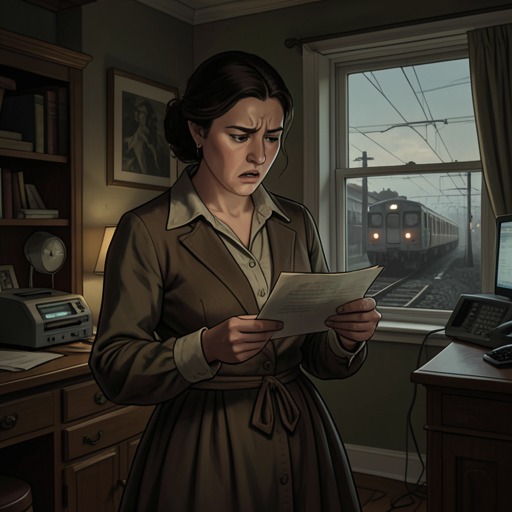
After Donna Fedele tells him that Lelia loves him, Massimo is overwhelmed. He boards the train without being able to respond coherently. As it travels, he imagines Lelia approaching him, embracing him, and declaring her love; the episode is presented as an inward vision, not as an actual meeting. His mind alternates between opening his eyes to the moving valley and closing them to see her again. The imagined encounter shows how abruptly hope has entered his life, but it does not settle what either of them will do.
Religious Doubt and Moral Conflict
Massimo’s crisis of Catholic belief has, by his own account, a long history. In a letter to Donna Fedele, he says that doubts troubled him when he was young and that he eventually failed to suppress them. Meeting Benedetto in a village in Lazio changed that course: while Benedetto lived, Massimo says, doubt did not disturb him, and he would gladly have given his life for his faith and the Church. He could wish that Church authority took a different course in particular matters, but his attachment to Benedetto had held his faith together. His account distinguishes disagreement over institutional decisions from the more profound loss of belief that follows the end of that personal bond.
His conduct during a dispute over church attendance shows that doubt has not made him indifferent to religious duty or to the people caught in conflict. When Lelia is angry at the treatment of Don Aurelio, Massimo tries to calm matters and defend both the priest and the bishop from the effects of malicious reports. He warns that refusing to attend church would cause Don Aurelio pain and could damage his standing with his superiors. He also insists on respect for the sacrament apart from the conduct of any particular priest. Lelia is not persuaded, but Massimo feels that he has risen above resentment in the manner he believes Don Aurelio would have wished. At this point, he can still act in defence of church practice even while his confidence in church authority is weakening.
In a later letter, Massimo tells Donna Fedele that he is turning to her in part to hold on to her older, steady faith, which he contrasts with modern criticism and theological battles. His words convey both affection and dependence: he treats her belief as a possible support for his own, while acknowledging that the doubts cannot simply be wished away. Yet when he considers his future, he distinguishes the suffering caused by religious uncertainty from his despair over Lelia. He says that, if faith were the only difficulty, he would want to live: he imagines serving poor people as a father, brother, and friend, living modestly, loving a companion, and entrusting himself to a mystery he cannot know. He connects his wish to die instead to the renewed and consuming force of his love for Lelia. The distinction makes clear that religious doubt and romantic anguish are entangled but not identical.
Lelia, Donna Fedele, and Practical Responsibility
The relationship with Lelia repeatedly demands restraint as well as emotional openness. During the period when she is seriously agitated by family events, she leaves at night and is found unconscious near a gate. Donna Fedele discreetly asks the doctor to accept the explanation that Lelia’s departure was sleepwalking, because Lelia’s private feelings matter to her. Lelia refuses both food and medicine, speaks almost continuously about sleepwalking, and once softens when she remembers Marcello. Donna Fedele stays beside her, not because the doctor understands the cause of her own distress, but because she wants to give herself to Lelia in memory of Marcello and of the love Marcello had continued to bear for his dead son. This episode shows the emotional care surrounding Lelia, even when Massimo is not present in the room.
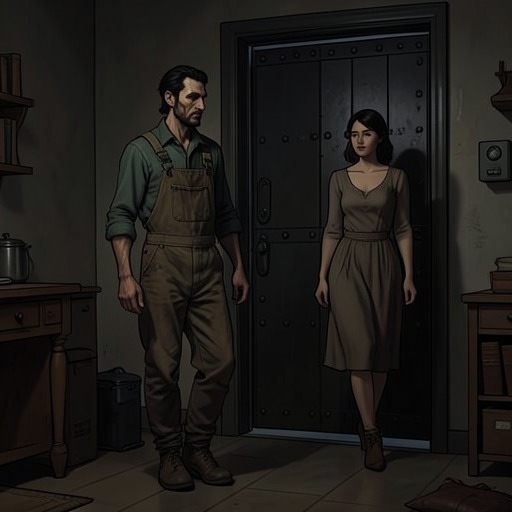
When Massimo and Lelia meet again in Valsolda, their reunion is marked by uncertainty rather than an easy return to intimacy. He sees her by a tree and initially cannot believe she is there; she appears pale and tearful, and he hesitates instead of assuming that he understands what she wants. They enter the village together, but at the hotel he arranges for her to stay in a separate part of the building and leaves, citing visits in Puria. Before he goes, a telegram from Donna Fedele reaches him with an appeal to be a Christian and a gentleman. He does not discuss its message with Lelia at that moment.
In a subsequent letter to Donna Fedele, Massimo describes the previous day as dreamlike and recalls seeing Lelia again in the woods near Muzzaglio. He says that a moment there seemed to erase the bitterness and pain of the past, and asks Donna Fedele not to insult Lelia’s memory with accusations or to call his feeling pity. His defence of Lelia is also a defence of the reality of what he has experienced: he refuses both to reduce her to her past conduct and to present himself as a magnanimous rescuer. Yet practical choices still constrain the pair. When he learns that Lelia’s letter to her father may receive a favourable answer and that he hopes to secure a post as a public doctor in Valsolda, he agrees that she must leave with Donna Fedele. The plan is for Donna Fedele to travel with her toward Turin, with Lelia to be received at Santhià by a cousin, while letters for her are redirected there. Their reunion therefore leads not to a settled shared life but to another separation arranged around safety, family authority, and uncertain prospects.
Benedetto’s Funeral and Massimo’s Return
Benedetto’s death makes Massimo’s conflict between private loyalty and public religious allegiance unavoidable. Before the funeral, Massimo has arranged for a steamer to carry Benedetto’s remains from Porto Ceresio to Oria. He is tormented by the meaning of attending: a public tribute would appear to affirm beliefs and ideas he no longer holds, while refusing to participate would feel like an injury to the memory of his friend and teacher. To Massimo, Benedetto embodied complete Catholic belief, trust in the Church, and humble obedience to its authority. Massimo no longer shares that certainty, and the ceremony exposes the cost of the distance he has created from it.
As he faces the still water and reflected mountains, the figures of Lelia, Donna Fedele, and Benedetto occupy his thoughts together. He remembers Benedetto’s injunctions to holiness and to fulfil the duties of worship prescribed by the Church. He also recognizes that he had neglected Mass the previous Sunday, something he had never done before. The remembered instruction does not arrive as an abstract argument; it is bound to the presence of the dead teacher whose faith he had once trusted and whose memory he has struggled to honour.
During the transport of the coffin, Massimo watches the black cloth with its silver fringe and is overcome by the contrast between Benedetto’s enduring fidelity and his own abandonment of belief. He withdraws below deck and weeps. Inwardly, he insists that he will not abandon his friend and that he will return to him. The declaration makes the funeral more than a ceremonial duty: it becomes the scene in which grief, remorse, and the remembered authority of a beloved person converge.
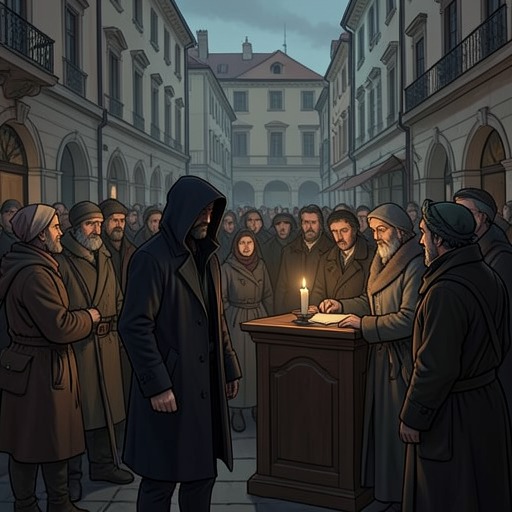
At the funeral Mass, Massimo kneels and prays throughout. Afterward, when asked about his faith, he announces that he has returned to Christ and the Church. His statement marks a decisive change in his spiritual trajectory, though the evidence does not resolve every intellectual question that had led to his crisis. Nor does it conclude his relationship with Lelia. Donna Fedele, whose health is failing, is most concerned that Massimo return; after receiving religious rites she understands his trip to Porto Ceresio as a choice he might have spared himself. The funeral thus restores Massimo’s declared religious allegiance while leaving his personal future bound to the unresolved demands of love, care, and separation.