Lelia Camin
LeilaLelia Camin’s defining struggle is to turn a painful inheritance—dishonored parents, a dead beloved, and an uncertain claim to a new family—into a life governed by uncompromising purity. Taken into the Trento household after Andrea Trento’s death, she comes to regard herself as both a living memorial to him and the guardian of her own dignity. Her resistance to Massimo Alberti is therefore more than romantic reluctance: it tests the vow she has built from grief, pride, and fear of resembling her parents.
Identity and Family Background
Lelia is the daughter of Girolamo Camin and Chiara Camin, who lived apart and used the name da Camin. Her father is an unsuccessful speculator, repeatedly bankrupt and entangled in politics; her mother, after separating from him, settles in Milan with an Austrian gentleman whose death leaves her a modest fortune. She subsequently opens her home to religious visitors and cultivates a reputation for piety. Lelia’s early knowledge of her parents is not abstract: by twelve, she believes that what she sees and hears at home has stripped life of its mysteries. She despises the tendencies she senses in herself as inherited from them, and her contempt for her mother sometimes breaks through her otherwise correct manners.
Between twelve and fifteen, Lelia attends a boarding school run by the Sacred Heart, where she distinguishes herself through intelligence, devotion to study, and unusual musical ability. She is born in Padua, where the student Andrea Trento, her neighbor, begins to love her. At sixteen she believes she loves him in return. Her later understanding is less certain: she recognizes that gratitude and the pleasure of being admired may have mattered more than a fully reciprocal passion.
Andrea Trento and the Trento Household
Andrea is handsome, generous, intelligent, and humble about his own gifts. To Lelia, however, he is also too young, too cheerful, and too immature to enter the deeper moral drama she feels within herself. He admires her, speaks often of his friend Massimo Alberti, and even tells her that Massimo would be a worthier husband. Lelia refuses to meet the man her beloved praises. She regards Andrea’s suggestion as virtuous but unwelcome, and its memory later becomes entangled with her resistance to Massimo.
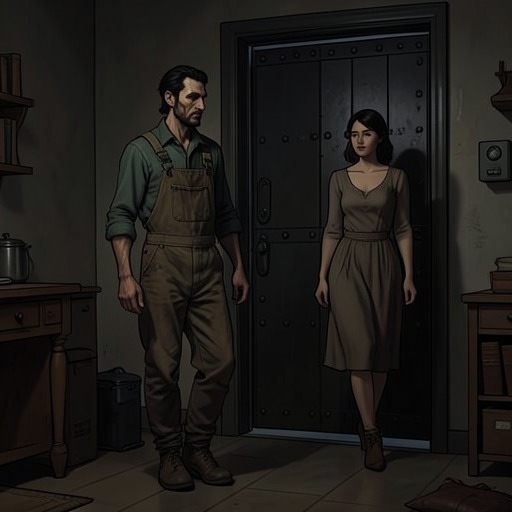
After Andrea dies, Lelia’s grief intensifies her sense of how much she loved him; she cannot separate love from pity. Girolamo presents her with the Trentos’ proposal that they take her into their home, casting it as a sacrifice for her welfare while concealing the bargain behind it. Lelia recognizes that her father is trading her presence for money. She first reacts with offended dignity, then accepts, partly because of her disgust with her father and partly from devotion to Andrea’s memory. She understands that one condition is that Girolamo must not enter the Trento villa. Being bought into the household is at once painful and a relief.
She initially treats Marcello Trento coldly, as if to make clear that the Trentos are the beneficiaries: they have taken in a living relic of their son, while she has agreed only for Andrea’s sake. Her stance brings her close to a rupture with Marcello, whose temper is quick. His wife’s gentleness and Lelia’s music help prevent it. Marcello and Lelia share an intense musical sensibility; at the piano he seeks expression for grief, hope, memory, and religious feeling. Music does not erase their antagonism, but it allows them intermittent recognition of one another’s moral qualities and a measured tolerance of their differences. A melody Andrea used to hum can still draw Marcello and Lelia into a shared remembrance, even as its association with Andrea makes the memory painful.
The Vow Against Love and Massimo’s Arrival
In the years after Andrea’s death, Marcello occasionally speaks to Lelia of Massimo, who remembers Andrea and sends affectionate greetings on anniversaries and at New Year. Lelia’s dislike of the name grows rather than fades. She connects it to the gradual paling of Andrea’s image and to unruly feelings stirred by music, spring fields, and June woods. She fears that she may be drawn toward love by instincts inherited from her parents. For her, never loving again becomes a duty: to Andrea, to Marcello, who has accepted her as a memorial to his son, and to herself, whose dishonored origins make purity seem like a distinction she must defend.
When Marcello announces Massimo’s visit to the Trento villa, Lelia’s insistence that she does not care about him is already compromised by the intensity of her reaction. On the day of his arrival she sits with her back to the staircase, conscious of her racing heart and unwilling to admit her curiosity. After Massimo has stayed, Don Aurelio learns that she cannot bear him and advises him to delay his departure long enough to make a farewell visit. Marcello then asks Lelia, gently but gravely, to treat Massimo kindly and to let him remain as a guest. She stands rigidly and protests that she did not know she had been unkind.
Alone, Lelia imagines that Massimo’s invitation and the Trentos’ hospitality are parts of a scheme arranged by Don Aurelio, Donna Fedele, and Marcello: Massimo, she suspects, has come to win the wealthy heir. The suspicion turns her fear of desire into anger at being managed. She goes out into the dark park, where an old fantasy of escaping the world returns. She has previously shut the windows of a room filled with lilies and tuberoses, but, waking oppressed by their scent, opened a window; that earlier brush with danger had never become a settled resolve to die. Now the park’s deep shadows and a pool more than two metres deep offer her the imagined assurance that she could escape whenever she wished. She moves quietly through the grounds, and the darkness briefly feels like a world apart.
Lelia’s guardedness is not simply hostility. Donna Fedele sees that her denials disclose what she will not say openly. When Massimo leaves, Lelia avoids a farewell by going to church; afterward she is irritated by his seemingly indifferent manner and interprets it as evidence that he has discovered a failed scheme rather than a failed love. A nervous crisis follows beside the Riderella. She asks herself whether she would be glad if he returned and answers no, but the question itself registers how much his absence has come to matter. In another conversation with Donna Fedele, she offers to leave if her presence obstructs a visit Massimo wants to make. Her words remain guarded, but her voice and expression reveal more than she intends.
Inheritance, Dependence, and Crisis
Lelia’s independence is constrained by money and family circumstance. She sends her father much of the personal allowance Marcello gives her, routing it through Teresina in Schio so that Marcello will not learn of it. She despises Girolamo and suspects him of concealing money while pleading poverty, yet continues to send funds without advice or reproach. She refuses her mother’s occasional appeals for affection and has returned her letters unopened. Her refusal to depend on either parent coexists with material obligations to the father she distrusts.
After Girolamo dies, his will makes Lelia his universal heir and leaves Teresina a daily allowance of five lire. A telegram from Padua announces that Girolamo’s daughter is an adult, though Marcello had believed her older. Lelia is twenty years and a few months old. Her inheritance gives her a legal and financial position her father had not previously possessed, but it does not dissolve her attachment to Andrea’s family. She tells Donna Fedele that she intends to refuse Marcello’s estate when she comes of age. Donna Fedele rebukes her for what she considers unreasonable pride and for the injury such a refusal would do to the dead Marcello.
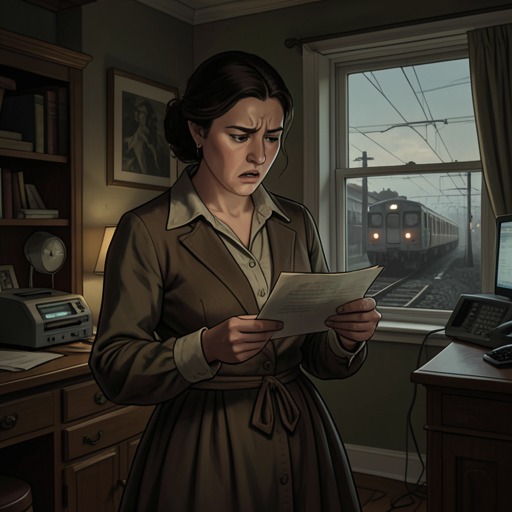
Lelia’s despair eventually becomes an actual suicide attempt. Before leaving, she begins a note to Donna Fedele saying that she is going to die without knowing why, then tears it up. She changes out of the close mourning dress lent by Donna Fedele and takes up a silver-mesh purse, a gift from Andrea that holds a few mementos. A small plaque engraved with the name Leila recalls an old dispute. She repeatedly sets the purse down and picks it up, then leaves it behind. That gesture breaks through her cold resolve: desire for Massimo surges into consciousness. She opens the window and, in an inward appeal to him, imagines giving herself to him before she dies. She writes the date and the word Vengo beneath Andrea’s photograph. Donna Fedele later has her carried unconscious to a room with two beds. When Lelia wakes, Donna Fedele conceals that she has recognized the attempt, telling her it was an episode of sleepwalking; she is concerned not only for Lelia’s life but for the humiliation she might feel at having failed to die.
Lelia’s crisis also sharpens the conflict over where she can live. Girolamo’s letter revokes permission for her to travel with Donna Fedele, claims that his failing health requires her return, and reports that both household servants have left. An appeal from the parish priest asks her to continue charitable work Marcello had supported. Lelia breaks down at the order to return, while Donna Fedele urges her to consider whether she can help her father and reminds her that she will soon be of age. Lelia, in turn, discloses her plan to refuse Marcello’s inheritance. When Girolamo later visits, he is awkwardly deferential and gives her a packet of ten-lira notes, saying the money is hers and that he will account for it. His outward submission sits uneasily beside his earlier efforts to control her return and preserve access to the Trento property.
Separation, Attachment, and Narrative Role
In Valsolda, Donna Fedele and Massimo agree that Lelia cannot stay there. Donna Fedele believes the reply from Girolamo will be negative and says she will take Lelia back to her father’s house or, at least, to the villa for a few days. Massimo reports the substance of Lelia’s letter and thinks her father’s answer may not be negative; he also hopes to obtain the post of district doctor in Valsolda. Even so, he agrees that Lelia must leave with Donna Fedele. Lelia pleads not to be sent away. She had hoped Donna Fedele would rest there and then take her to Turin; she is distressed to leave Valsolda and horrified by the prospect of returning to Velo before she reaches adulthood.
Donna Fedele proposes a temporary refuge with her cousin in Santhià, if Girolamo permits it. They agree that Donna Fedele will rest, see a doctor the following morning, and, if cleared to travel, leave for Turin with Lelia. The cousin will meet Lelia at Santhià, while another companion continues on with her; letters for Lelia arriving at San Mamette are to be forwarded. Donna Fedele ultimately decides that she can act without waiting for her father’s permission, because Lelia abhors returning to Velo and the proposed home seems safe. She also insists that Massimo leave for Dasio and see Lelia later in her presence. Lelia initially resists, but Massimo calls her Leila, and she is immediately gentled. Donna Fedele notices the name and asks whether Lelia has changed it; the episode leaves the question open.
Across these episodes, Lelia’s proud declarations repeatedly collide with bodily signs she cannot command: a racing heart before meeting Massimo, tears after kissing Andrea’s portrait and ring, a nervous seizure after Massimo’s departure, and the sudden collapse of her resolve when she leaves Andrea’s purse behind. Her story is shaped by the gap between the purity she demands of herself and the desires, dependencies, and attachments she tries to deny. The surviving scenes do not resolve that conflict into an easy reconciliation. Instead, they show her beginning to yield—first to the evidence of her own love, then to the practical care of Donna Fedele and Massimo—while her next destination remains a negotiated refuge rather than a settled home.