Girolamo Camin
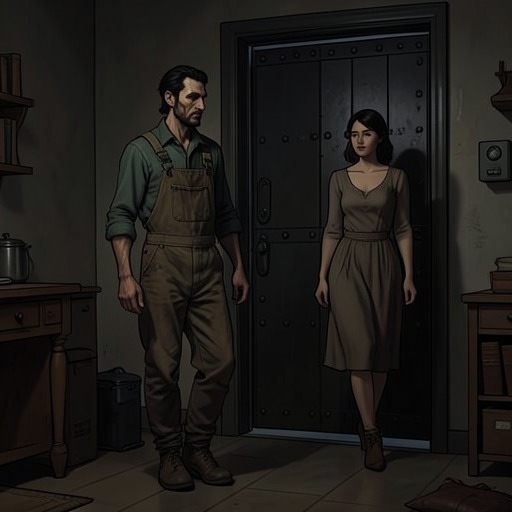
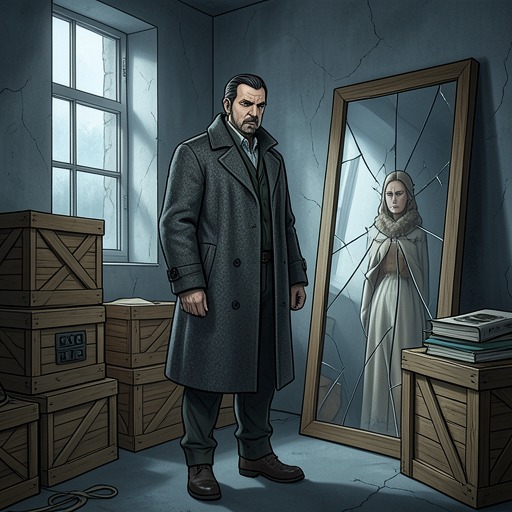
LeilaGirolamo Camin is Lelia Camin’s biological father, a disgraced businessman whose debts and political opportunism repeatedly shape his dealings with her. He presents himself as a father with claims on his daughter, but the plot repeatedly sets that claim against his efforts to secure money from her and the revulsion she feels toward him. His awkward manner can make him appear foolish; behind it, however, he calculates how to exploit Lelia’s inheritance and his remaining time as her guardian.
Identity and Background
Camin is a failed businessman who has gone bankrupt more than once and has been mixed up in politics in various ways. He styles himself da Camin, invoking an old, celebrated family name. The distinction between that self-presentation and the narrator’s account of his financial failures establishes a recurring gap between the status he claims and the reputation he has actually earned.
His marriage to Chiara Camin had already broken apart by the time Andrea Trento, then a young student and neighbor of the Camin family, began falling in love with Lelia. Chiara separated from her husband and later settled in Milan with an older Austrian man, whose death left her a modest fortune. Girolamo, meanwhile, kept a disreputable housekeeper in his own home, concealing some of his weaknesses while tolerating her pretensions to being its mistress. Lelia, who knew her parents intimately from childhood, came to despise her mother and to hate tendencies she believed she recognized in her own blood. The account makes her estrangement from Girolamo part of a larger rejection of the household and family life in which she grew up.
Political and Domestic Position
Girolamo’s political affiliations shift with his prospects. As a young man he belonged to the clerical party, but was excluded after becoming vulnerable to imprisonment over financial irregularities. He briefly moved to anticlerical radicalism, where, as the narrative wryly observes, there was little to gain, and then worked as an appreciated yet despised electoral agent for the moderates. The prospect of a clerical-moderate alliance brings him back into contact with former clerical associates; he hopes to regain the party’s favor. Some of those associates consider him maligned, while the party leaders are less easily persuaded.
His domestic relationship with Carolina Gorlago complicates that attempted rehabilitation. She serves as his housekeeper and governs his home; respectable clerical acquaintances prefer to believe that keeping her there is merely imprudent. The narration is less charitable: neither Girolamo nor Carolina is faithful, yet they are attached to one another in their own fashion. They quarrel fiercely but do not separate. He cannot imagine having Lelia live in the same house as Carolina, but dismissing Carolina seems even less possible to him. This practical constraint helps explain why his efforts to bring his daughter under his roof are selective rather than a straightforward attempt to reunite the family.
The Inheritance and Financial Schemes
After Marcello Trento’s death, the estate makes Lelia its universal heir. A letter from the estate agent reports that the will has been opened before the magistrate in Schio and that Teresina Scotz has received a small daily bequest of five lire. It also reports a telegram from Girolamo, who claims that Lelia is a minor, identifies himself as her father, and announces that he will arrive that evening. Lelia says she is twenty and a few months old; Marcello, the letter adds, had believed her older. The difference between her actual age and Girolamo’s claim puts questions of her independence and his authority directly into the inheritance story, without resolving them by itself.
Girolamo’s debts give him a strong financial interest in the estate. He has taken money from many people through a tangle of dealings, then offered his creditors twenty percent of what he owes on the ground that he cannot pay more. Francesco Molesin, who presents himself as a doctor of law despite having studied law for only two years, takes the creditors’ case on the condition that he receive thirty percent of whatever he can obtain from Girolamo above that offer. Girolamo does not know of this private arrangement. He believes instead that a sufficiently generous gift might persuade Molesin to accept his proposal.
Molesin, for his part, expects that Lelia’s inheritance will make her father able to repay more. He assumes she will want to preserve the family’s honor, and sees an opportunity to manage both Girolamo and the newly wealthy young woman. Girolamo’s own conduct is similarly opportunistic: he complains of hardship to Lelia and asks her for money, while hiding as much as he can of the good food and wine he enjoys at home. The inheritance raises Molesin’s hopes and sharpens his attention to both father and daughter; it does not make Girolamo’s debts or his motives disappear.
A Visit to Lelia
When Girolamo visits Donna Fedele at the Rose Villa, he has a carefully limited plan. With only a few months of guardianship left, he intends to take as much as possible from the estate’s movable assets and to present himself as humble and contrite, so that Lelia might grant him generous support once she comes of age. He understands that Molesin wants him to bring Lelia home, control her, and prevent her from marrying, thereby gaining effective command of the Trento property. Girolamo does not seek that complete conquest: he knows Lelia would leave at once if he tried to keep her in a household shared with Carolina.
Before Donna Fedele, he is rigid and halting, offering broken phrases and repeated assurances that he will leave Lelia free to decide. He approves of the proposed trip to Torino and asks, with difficulty, to see his daughter. Donna Fedele had firmly instructed Lelia to receive him if he asked, and Lelia complies. She stands to meet him, pale and stiff. Girolamo approaches more eagerly than he had before, kisses her on both cheeks, and asks after her repeatedly; she shivers but allows it, does not invite him to sit, and remains as rigid as a statue. He praises the journey and produces a packet of ten-lire notes, presenting the money as funds for her and saying he will account for it later. The exchange shows both his attempt to perform fatherly generosity and the coldness with which Lelia receives him.
His apparent helplessness breaks when his negotiations with Molesin turn to the creditors’ proposed settlement. Molesin says he will try to persuade them to accept seventy-five percent, and Girolamo praises him as a good fellow before suddenly speaking with color, force, and rapid fluency. He protests that he had offered twenty percent when he thought Lelia might help him, but that she is now hostile and unwilling even to live with him. He says he cannot pay what he does not have, rejects the implication that he should steal from his own daughter, and takes comfort in the belief that, whether she wishes it or not, she is legally obliged to provide him with bread. The outburst reveals a more energetic and argumentative side than his deferential performance at the villa, while exposing the possessive financial claim beneath it.
Relationships, Conflict, and Narrative Role
Girolamo’s relationship with Lelia is defined less by mutual intimacy than by competing interpretations of obligation. He treats her inheritance as a potential answer to his debts and imagines that her resources should provide for him. Lelia, by contrast, has long feared being used for money: she resents her father’s letters asking for funds and dreads the prospect that he might arrive at La Montanina and attach himself to her after Marcello’s death. Her aversion is not simply a refusal to help him; she fears the return of a family presence she associates with corruption and humiliation.
The conflict also links private dependence to social respectability. Girolamo hopes to regain standing among clerical political allies while his finances, his past dealings, and his household with Carolina undermine that hope. Molesin sees both the debts and the inheritance as opportunities for advantage. In the midst of these arrangements, Girolamo’s claim that Lelia owes him support stands beside his inability to persuade her to live with him or show him affection. The contrast makes paternal authority a contested resource in the story, not proof of a restored family bond.
The evidence leaves the relationship unsettled. Later, when Donna Fedele and Massimo discuss what to do with Lelia in Valsolda, Fedele expects a negative answer from Girolamo but acknowledges that the letter Lelia has written may not receive one. She ultimately agrees that Lelia can be placed with her cousin in Santhià, yielding on the need for paternal permission because of the circumstances and Lelia’s dread of returning to Velo. No reply from Girolamo is reported here. He remains a force in Lelia’s choices through his financial and parental claims, but the record does not show reconciliation, consent, or a final resolution between them.