Benedetto
LeilaBenedetto, formerly Piero Maironi, is a religious figure whose life is chiefly encountered through the memories and disputes of those who knew him. His withdrawal from the world to devote himself to God, his death in Rome, and his insistence on obedience to the Roman Catholic Church make him both a beloved teacher and a contested legacy. In the novel’s present, his memory draws Massimo Alberti and Don Aurelio into questions of faith, while the debate over how to honor his grave exposes the distance between Benedetto’s convictions and Massimo’s changing beliefs.
Identity and Religious Life
Before taking the name Benedetto, he was Piero Maironi. The novel presents the central movement of his life as a departure from his home in Oria and from the world, undertaken so that he might give himself to God. He died in Rome, in the gardener’s cottage at Villa Mayda. These facts reach the reader through Massimo’s account to Marcello Trento, which also includes Benedetto’s final hours and Jeanne’s part in them. His life is therefore reconstructed through testimony and recollection rather than through scenes of his own actions in the narrative present.
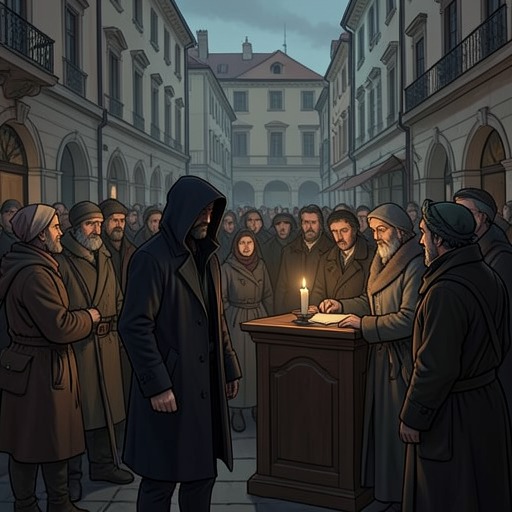
The name Benedetto carries the authority of a religious teacher, but his reputation is not uncontested. Marcello asks whether he was a heretic, and Massimo recounts accusations that Benedetto had been a theosophist, denied Christ’s divinity and Resurrection, and rejected the Real Presence. Those charges had circulated among people who did not have authority to judge him. Massimo says he had to persuade a man who repeated them that they were mistaken; once convinced, that man was relieved, though he still advised Massimo to see him sparingly. The episode shows how a reputation formed by rumor could complicate even personal remembrance.
The Teacher Remembered by Massimo Alberti
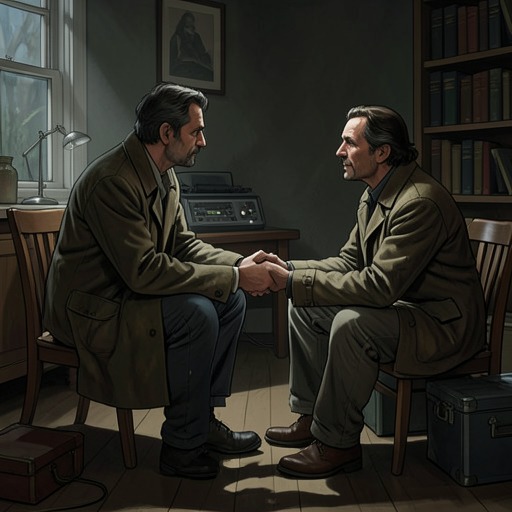
Benedetto’s relationship with Massimo began when Massimo was a medical student in Rome and encountered him in a small town in Lazio. Massimo later described Benedetto as a shared friend of his and Don Aurelio’s, a kind of lay apostle about whom people had spoken both favorably and unfavorably. When Massimo told Marcello this history, Marcello did not recognize either the name Piero Maironi or the name Benedetto, a contrast that underscores how privately consequential Benedetto could be while remaining unknown to others.
In a letter written during his crisis of faith, Massimo recalls that he had once been assailed by doubts as a young man. Meeting Benedetto restored his confidence: for as long as Benedetto lived, Massimo says, doubt did not trouble him, and he would gladly have given his life for his faith and the Church. He could imagine wishing that Church authorities had chosen a different course in particular matters, but at that time rebellion against their authority never occurred to him. Benedetto’s influence thus joined personal attachment to religious certainty; Massimo’s account makes clear that the later weakening of his faith is also a bereavement of the intellectual and emotional world he had shared with his teacher.
After Benedetto’s death, Massimo’s account traces a gradual unmaking of that certainty. He attributes it not to dislike of particular forms of worship, but to the pressure of accusations against Benedetto, the hostility directed at Massimo as his disciple, and the corrosive influence of hypercriticism and negative religious innovators. He fears that the structure of his beliefs is disintegrating, and worries that speaking at Benedetto’s grave as a faithful Catholic would become hypocrisy if he no longer believed in the Church’s immortality and the duty of obedience. His dilemma arises from reverence, not indifference: he does not want either to betray his own conscience or to use Benedetto’s memory to affirm convictions that may no longer be his.
Don Aurelio and the Community of Disciples
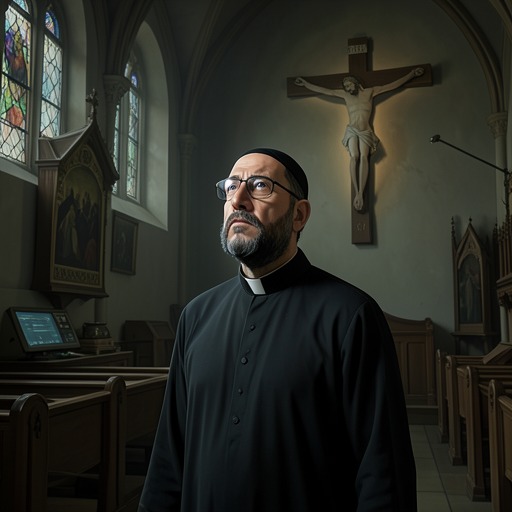
Don Aurelio had met Benedetto at Subiaco through Don Clemente, a Benedictine of Santa Scolastica, and later saw him again in Rome at his friend’s request. He became deeply attached to Benedetto and to Massimo. His own history helps explain the significance of these bonds: born in Rome, he had studied at the Collegio di Propaganda Fide intending to become a missionary, but a long illness and his superiors’ doubts about his physical strength forced him to abandon that plan. A recurrence of illness led his doctor to recommend mountain air; with help from a former fellow student and admirer, Don Aurelio entered the Diocese of Vicenza and was assigned to parish work at Lago di Velo.
Don Aurelio’s character and conception of clerical duty made him unlike Massimo. He was not a man of religious combat; on religious questions he turned his mind to God and prayed for the triumph of truth and the Church. Massimo, by contrast, had moved further into religious disputes and suffered attacks after lecturing in Milan on Italian heretics of the sixteenth century. Don Aurelio’s affection for both men made him a mediator, but not an advocate of conflict. When a letter from the Vicenza diocesan curia abruptly dismissed him from his parish within fifteen days, ordering the house cleared for his successor and the successor’s mother and sister, the separation also threatened the small community formed around him and Massimo.
Benedetto’s disciples later divided over a proposal to raise a modest memorial for him in Campo Verano. Some thought a subscription would yield too little and that a monument would offend the spirit of their teacher. Massimo opposed the proposal and sought a peaceful resolution by recalling that Benedetto had once said he would prefer to be buried in the cemetery at Oria, though he considered that preference a vanity. Massimo proposed abandoning the memorial and honoring this wish instead: a small place away from worldly disputes, in the cemetery where Piero Maironi’s parents lay and where his wife had also wished to rest. Benedetto’s imagined humility thus became a practical point of disagreement among his followers, as well as the basis for a compromise centered on burial rather than public commemoration.
Funeral, Memory, and Conflicting Allegiances
As Benedetto’s body was to be brought from Rome to Oria, the arrangements turned Massimo’s private conflict into a public obligation. He made practical arrangements for burial in the cemetery at Albogasio and hired a steamer in Lugano to carry the body from Porto Ceresio to Oria. Yet he believed that a public address beside the coffin would imply assent to beliefs that were no longer his. A private tribute to his friend and teacher would have been welcome; a public declaration of Benedetto’s faith seemed close to dishonesty, while refusal risked seeming an insult.
Don Aurelio accepted responsibility for accompanying the funeral from Milan to Oria. He wanted to prevent speeches or actions that would have offended the person the mourners meant to honor, and the journey would also let him see Massimo. The friends in Rome had asked Massimo to arrange the burial and speak over the coffin. His earlier fear that he could not do so without hypocrisy therefore forms the tension behind the funeral address that he ultimately gives. The narrative preserves an important distinction: Massimo speaks in Benedetto’s name and defends the character of Benedetto’s life, even as his own religious certainty has faltered.
In the address, Massimo argues that Benedetto’s defining work was not the agitation of theological questions in which he might have erred, but the call for believers of every rank and condition to embody the spirit of the Gospel in life, feeling, and action. He presents Benedetto as someone who had professed faithful submission to the authority of the Church and the Holy See. He also asks forgiveness, in Benedetto’s name, for those who condemned him without authority as a theosophist, pantheist, or enemy of the sacraments, while insisting that Benedetto rejected those errors and conformed to Catholic belief and practice from his turning toward God until his death. The speech is at once a defense against damaging accusations and an act of filial fidelity. It does not erase Massimo’s crisis; instead, it shows him trying to protect Benedetto’s memory without pretending that the teacher’s convictions remain fully his own.
Legacy in the Living
Benedetto’s importance extends beyond the funeral because the people around him continue to measure their choices against his example. Don Aurelio hopes to help Massimo through a depression that has clouded his understanding, and plans to visit him when the transport of Benedetto’s remains makes the journey possible. Donna Fedele, meanwhile, reads Massimo’s latest letter as evidence of spiritual distress and hopes that Don Aurelio may help him. She also believes that Lelia loves Massimo but struggles against love through pride, and fears that Lelia cannot offer him religious support because her own soul, as Donna Fedele sees it, has become a desert of faith. Benedetto’s memory therefore inhabits a living network of concern: his former companions seek to sustain one another in the wake of his death, even where their beliefs and needs diverge.
For Massimo, the pressure of mourning and desire becomes acute. He confesses that, apart from his attachment to Lelia, he would want to live, give what good he could to poor people, and seek a companion he could love with both soul and senses. He says instead that the renewed fever of his love for Lelia has become unbearable. The contrast does not make Benedetto responsible for Massimo’s suffering; it shows how the teacher’s death and the loss of religious assurance coincide with a personal crisis that Massimo can no longer master. On the night before the funeral, he struggles to pray for faith before an image of the Savior and Peter on the waters, then turns in pain to Lelia’s memory. His teacher remains the measure of a faith he cannot recover by force.
Benedetto is also recalled through the bodily grief of those who never knew him in the same way. When Lelia hears the story of his last hours and Jeanne’s part in them, she asks whether Massimo knew Jeanne; he answers that he had seen her that evening at Villa Mayda. Later, news that Benedetto’s body is expected to travel to Oria gives Don Aurelio a reason to visit Massimo, while Lelia’s thoughts repeatedly return to the letter and to the conflict between light and shadow in her own heart. Benedetto’s story does not resolve the living characters’ conflicts. Its force lies in the questions it leaves among them: whether love can survive a crisis of belief, whether loyalty can be expressed without false assent, and whether a person’s memory can be defended without simplifying the life that produced it.