Marcello Trento
LeilaMarcello Trento’s last years are shaped by two intertwined concerns: the memory of his dead son Andrea and the future of Lelia Camin, the young woman Andrea loved. Having taken Lelia into his home after Andrea’s death, Marcello treats her as a daughter and makes her his universal heir. Yet his protection cannot settle her feelings about the inheritance or prevent her biological father from re-entering her life. As Marcello approaches old age, his private religious disillusionment deepens the sense that his arrangements for Lelia are also a reckoning with his own life.
Identity and Background
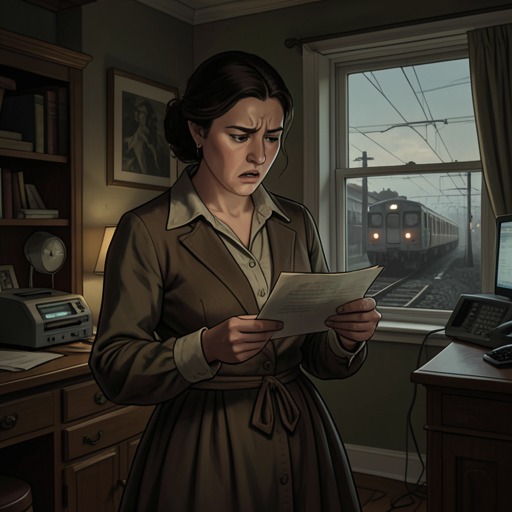
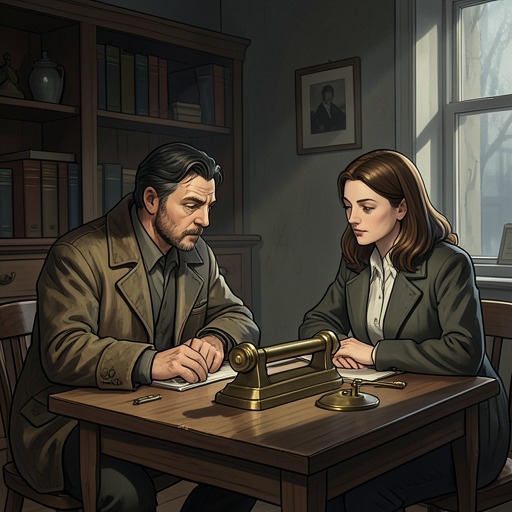
At seventy-two, Marcello is a physically imposing and emotionally divided figure. In his study, papers cover the table beneath the three-spouted Florentine brass lamp that once illuminated his father’s white-haired head and now lights his own. Marcello’s hair is a bristling mixture of grey and reddish-brown; his moustache and pointed beard retain a stronger colour. His pale eyes can look terrible in anger and tender in affection. When Teresina enters, his severe, inquisitorial expression makes her blush despite herself: authority is immediately visible in his face, but so is the capacity for tenderness.
That household lamp connects Marcello’s age to a family history of sudden bodily decline. His father had also reached seventy-two when he briefly seemed to lose consciousness while speaking, then recovered believing he had merely slept. A doctor diagnosed arteriosclerosis and warned the family to prepare for the worst; five months later, the old man was found dead in bed, with the same lamp burning beside him. When Marcello later stands pale at his window and joins his hands in prayer, the resemblance is difficult to miss. He looks out toward Mount Torraro and the chestnut-covered slopes descending toward the ravine of the Posina, while the memory of his father’s death shadows his own uncertain future. The parallel gives his gestures of prayer the gravity of a man conscious of mortality, without establishing a diagnosis or specifying the cause of his own death.
Andrea, Lelia, and the Household
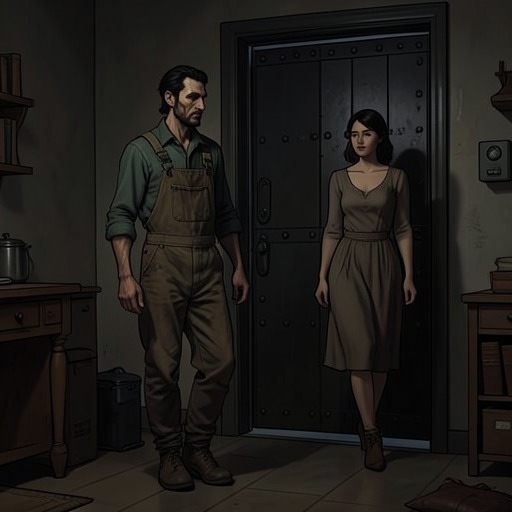
Lelia is neither Marcello’s daughter nor his relative by birth. She is, instead, bound to the family through Andrea, Marcello’s only son, who loved her when she was still very young and intended to marry her. His parents had firmly opposed the marriage. After Andrea died, they took Lelia into their home, both to keep her from what they regarded as the world’s corruptions and out of remorse—not simply moral guilt, but grief at having caused their beloved son suffering.
Marcello’s attachment to Lelia thus carries the weight of a relationship once resisted and then preserved. He cares for her as his own, while his hopes for her future remain inseparable from Andrea’s memory. The same tension helps explain why the prospect of Lelia’s biological parents gaining influence over the household is so painful to him. After she refuses to accept the inheritance he offers, Marcello imagines her parents dominating the villa and reads their presence there as an injury to his memory. He is affronted by the possibility of losing control of the home and, more deeply, of seeing the life he built around Andrea’s memory altered by the very people whose past separation from Lelia he fears.
The Inheritance and His Plan for Lelia
Marcello’s arrangements are not merely a transfer of property. He has made Lelia his heir because he fears she may otherwise fall into the power of one or the other of her biological parents. When she resists the prospect of inheriting the Montanina villa, he tries to understand her refusal: perhaps it comes from pride, from not wanting a reward for her faithful affection, or from a wish to remain free to choose her own future. The refusal wounds him, but it also sharpens his urgency. He believes she will eventually marry and wants to influence that choice while he still can.
He therefore asks Don Aurelio to sound out Lelia’s feelings for Massimo Alberti. After Massimo arrives, Marcello explains that he had already hinted to Lelia that he intended to leave her the villa; her resistance distressed him. Remembering conversations with his late wife, he concludes that Lelia, passionate by nature, will probably marry, and that he should help shape the decision rather than leave her future wholly exposed to chance. His first plan is for Don Aurelio to investigate her feelings discreetly. He then becomes impatient with that indirect approach and asks him to tell Lelia outright that he would die in peace if Massimo proposed and she consented. The proposal joins affection to succession: Marcello hopes for a marriage that would comfort him while also giving Lelia a future he considers secure.
After Marcello’s death, the will confirms Lelia as universal heir. The handwritten testament is opened at Schio by the magistrate, with the notary present; it also leaves Teresina a daily allowance of five lire, exempt from tax. The inheritance gives Lelia a clear legal claim to the estate, but not an uncomplicated independence. A telegram from Padova announces that Girolamo da Camin, her biological father, claims her as his daughter and intends to arrive that evening. Lelia acknowledges that she is his daughter and is twenty years and a few months old, although Marcello had believed her older. Her father’s arrival brings the household conflict Marcello feared into the aftermath of his bequest. He cannot control what happens to Lelia once he is gone.
Faith, Doubt, and Late Conduct
Marcello’s concern for Lelia unfolds beside a less settled struggle over religious commitment. Alone after one encounter, he imagines withdrawing from the religious field in which he had become active alongside his deceased master in Roma, and in which he had gone further than that master with others. His efforts, as he sees them, have brought wounds, disappointments, and humiliations in service of a cause that may have been lost from the start. He wonders whether religion itself might be doomed to perish, and whether he might instead live for the beauty of the world—for love, joy, and a pleasure in which intellect, heart, and sense are joined. The thought is a temptation that has returned repeatedly, not a decision he is shown carrying out.
His private uncertainty contrasts with his reverent public bearing. After speaking with Don Aurelio following Mass, Marcello receives his friend in the house with affectionate informality, taking him by the arm and leading him into the dining room while protesting the unnecessary ceremony of an unannounced visit. In their serious conversation, Marcello speaks as someone who believes himself close to death, though he does not explain why, and refers to his age. Don Aurelio notices a new placidity and gentleness in his voice and eyes. Marcello’s inward struggle does not cancel his capacity for friendship, prayer, or practical care; rather, it makes the tenderness of his final plans feel hard-won.
That practical care appears in small acts as well as in his testament. On a rainy day, Marcello carefully separates the servants’ wages and prepares monthly sums for poor people. Remembering two cyclamens that had been removed from their earthen pots and placed in crystal goblets in the dining room, he retrieves the pots, replants them, and carries them outdoors. He sets the two plants beside one another behind the villa, at the edge of the grassy slope, without heeding the rain. The act is modest, but it belongs to the same pattern as his concern for Lelia: he notices what has been displaced, restores it to a more fitting place, and takes responsibility for its immediate welfare. When he straightens up and feels dizzy, he dismisses the sensation because it has happened to him before, even when he was young.
Death and Legacy
Marcello’s death turns his intentions into an inheritance and leaves others to carry the care he had tried to provide. Donna Fedele Vayla later understands her devotion to Lelia partly through Marcello’s memory: she feels that caring for the young woman continues the love Marcello had given to his dead son. Her presence therefore extends a bond that began with Andrea and was sustained by Marcello, even as Lelia’s relationship with her father threatens to pull her in another direction.
The service for Marcello’s soul is scheduled for ten o’clock. Unable to attend, Donna Fedele asks Girolamo to let Lelia remain with her until the following day; no answer comes from the Montanina villa. Lelia, unwilling to leave before Donna Fedele’s expected visitor arrives, sets out on foot for Velo with her maid at about half past nine. The scene makes the limits of Marcello’s protection plain: his will can name Lelia heir, and his care can shape the loyalties of those around her, but neither can decide where she will live or whom she will trust. His legacy is both substantial and incomplete—a home and an inheritance secured for Lelia, a continuing memory of Andrea, and a responsibility that passes to the people who remain.